How to Make a Homemade Water Filter
You can create an effective homemade water filter using simple materials like gravel, sand, clay, and activated charcoal. Making a homemade water filter is a practical way to reduce contaminants and improve water quality in emergency situations or outdoor activities.
By layering these components carefully and maintaining sanitary conditions, you’ll reduce contaminants such as sediments and some microbes. Understanding the correct preparation and assembly is essential to ensure your filter performs well.
Before you start, consider how each layer contributes to filtration and what tests will confirm your filter’s success. This knowledge will help you build a more reliable and efficient homemade water filter.
Key Takeaways
- Use a clean, sturdy container like a plastic bottle or PVC pipe as the base for your water filter.
- Layer materials in order: coarse gravel, medium sand, prepped clay, and fine activated charcoal for effective filtration.
- Place a cloth or coffee filter at the bottom to prevent sediment from escaping with filtered water.
- Wear gloves and a mask during assembly to avoid inhaling charcoal dust and maintain hygiene.
- Test filtered water for clarity and safety, and clean or replace filter materials when flow decreases or contamination appears.
Materials Needed for a Homemade Water Filter

What materials do you need to build an effective homemade water filter? Start with a clean, sturdy container like a plastic bottle or PVC pipe. You’ll require activated charcoal, which is essential for adsorption of impurities and improving water taste.
Use granular charcoal rather than lump charcoal for better filtration. Include fine sand and gravel to trap particulate matter. You’ll also need a piece of cloth or coffee filter to prevent materials from escaping.
When handling charcoal, prioritize DIY safety. Wear gloves and a mask to avoid inhaling dust or contaminants. Make certain all materials are thoroughly cleaned before assembly to prevent introducing bacteria.
Preparing Layers for Your Water Filter
Arranging the filtration materials in proper layers is essential for maximizing your water filter’s effectiveness. Start by prepping clay thoroughly to remove impurities, as it acts as a fine particulate barrier. Next, focus on sourcing sand with the right grain size to enhance filtration efficiency.
Proper layering and thorough preparation of clay and sand are key to effective water filtration.
Follow this sequence for layering:
- Coarse gravel at the bottom for drainage and support.
- Medium sand, sourced carefully, to capture smaller particles.
- Prepped clay, spread thinly to trap fine sediments and contaminants.
- Fine activated charcoal or additional sand on top to improve purification.
Each layer must be level and compact but not overly compressed, ensuring optimal water flow and filtration performance. Proper preparation and layering are critical before assembly.
How to Assemble Your Homemade Water Filter

A sturdy container serves as the foundation for assembling your homemade water filter. Begin by making a small hole at the bottom for filtered water to exit. Place a fine cloth or coffee filter inside to prevent sediment from passing through.
Carefully assemble the layers in the correct order: activated charcoal, sand, and gravel. Each layer should be evenly distributed and compacted slightly to maximize filtration efficiency. Avoid mixing materials to maintain proper flow and filtering function.
Once all layers are in place, secure the filter’s top to prevent contamination. Before using, verify safety by inspecting the filter for gaps or leaks, ensuring all components fit snugly. This precise assembly guarantees optimal performance and reduces contamination risks during filtration.
Testing and Using Your Water Filter Safely
How can you guarantee your homemade water filter performs safely and effectively before regular use? Prioritize testing safety through systematic water quality testing. Follow these steps:
1. Pre-test Source Water
Analyze the raw water to establish baseline contaminants and turbidity levels.
2. Filter Trial Run
Pass a sample through your filter and collect output water for testing.
3. Water Quality Testing
Use test kits or laboratory analysis to measure parameters like pH, turbidity, and microbial presence.
4. Evaluate Results and Adjust
Compare filtered water quality against safety standards. If contaminants remain high, modify filter materials or replace them.
Contaminants Removed by Homemade Water Filters
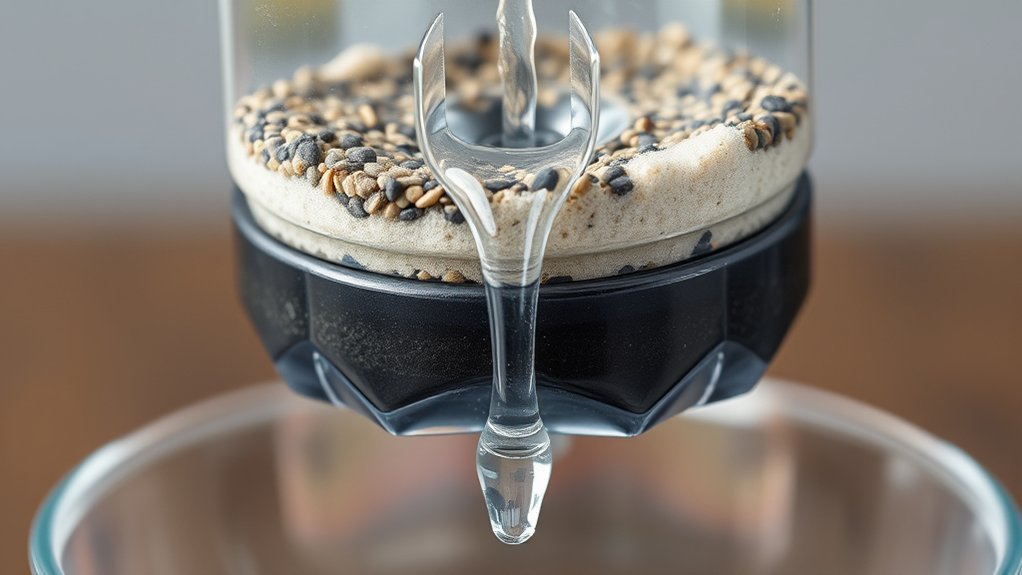
After verifying your filter’s effectiveness through testing, understanding the specific contaminants it can remove helps you optimize its design and use. Homemade water filters primarily remove physical impurities such as sediment, dirt, and debris through mechanical filtration layers like sand and gravel.
Activated charcoal plays a critical role by adsorbing organic compounds, chlorine, and volatile chemicals, improving taste and odor. However, it’s important to note that homemade filters generally do not eliminate microorganisms like bacteria or viruses unless combined with additional disinfection methods.
Heavy metals and dissolved salts also tend to pass through these filters. By knowing these limitations and the contaminants removed, you can better tailor your filter’s composition to target unwanted substances effectively, ensuring safer and cleaner water for your needs.
When to Clean or Replace Your Water Filter
Since a homemade water filter’s efficiency depends on its cleanliness and integrity, you should monitor it regularly to determine when cleaning or replacement is necessary. Proper maintenance ensures optimal filtration performance and water safety.
Regularly monitoring your homemade water filter ensures effective cleaning, replacement, and safe, optimal filtration.
Consider these factors to assess when to replace or clean your filter:
- Reduced flow rate: A noticeable drop in water output signals clogging and indicates it’s time for cleaning or replacement.
- Visual contamination: Sediment buildup or discoloration on filter materials requires immediate cleaning.
- Cleaning intervals: Establish routine cleaning every 1–2 weeks, depending on water quality and usage frequency.
- Filter material degradation: If filter components break down or lose structure, replace them promptly to maintain effectiveness.
Tips to Improve Your Homemade Water Filter’s Effectiveness
You can substantially enhance your homemade water filter by layering materials strategically, starting with coarse particles and finishing with fine ones to maximize filtration.
Incorporating activated charcoal is essential, as it adsorbs impurities and improves water taste. These adjustments will boost your filter’s overall effectiveness and extend its usability.
Layer Materials Strategically
How can layering materials in your homemade water filter enhance its performance? By carefully calibrating each layer, you improve filtration efficiency and flow rate. Proper layering ensures contaminants are trapped effectively while maintaining water throughput.
Here’s how to layer strategically:
- Start with coarse materials like gravel to remove large debris and support upper layers.
- Add medium sand to filter smaller particles and aid water flow regulation.
- Follow with fine sand for trapping finer sediments.
- Finish with a dense fabric or cotton layer to capture remaining impurities and prevent material mixing.
Always test durability after assembly to ensure layers remain intact during use. This methodical layering maximizes your filter’s ability to purify water consistently and reliably without compromising flow.
Use Activated Charcoal
Why does activated charcoal play a pivotal role in enhancing a homemade water filter’s effectiveness? Activated charcoal is highly porous, offering an extensive surface area that adsorbs impurities, chemicals, and contaminants from water.
When you include activated charcoal in your filter, it effectively reduces chlorine, volatile organic compounds, and unpleasant odors, improving the water tasting quality significantly. To use it, add a layer of activated charcoal between your coarse and fine filtration materials.
Make sure the charcoal is crushed into small granules to maximize contact with water. Replace the charcoal regularly, as it loses adsorption capacity over time. By incorporating activated charcoal, you’ll enhance your homemade water filter’s ability to produce cleaner, better-tasting water efficiently and reliably.
Frequently Asked Questions
Can Homemade Water Filters Remove Viruses Effectively?
You can’t rely on homemade water filters for effective viral mitigation since most lack the pore size precision of ceramic filters designed to block viruses. For true viral removal, use certified ceramic filters with proven filtration standards.
How Long Does It Take to Filter One Liter of Water?
How long it takes to filter one liter depends on your filter’s design and materials. Filtering speed often compromises virus removal effectiveness, so you’ll balance flow rate with thorough purification to ensure optimal water safety and clarity.
Are Homemade Water Filters Safe for Emergency Survival Situations?
Are homemade filters safe? They provide limited contaminant reduction, primarily removing sediments and some particulates.
You shouldn’t rely on them for pathogens or chemicals; use additional purification methods to ensure water safety in emergencies.
Can I Use the Filtered Water for Cooking and Drinking?
You absolutely can use filtered water for cooking and drinking, but comparing filter materials is essential to avoid harmful contaminants.
What Are the Environmental Impacts of Disposing Used Filter Materials?
You’ll face environmental impacts like soil contamination and microplastic pollution from improper disposal. Prioritize disposal considerations such as separating biodegradable materials and recycling plastics to minimize harm and support sustainable waste management practices effectively.
Conclusion
Building your homemade water filter is like crafting a precision instrument—each layer plays a critical role in purifying your water. By carefully assembling and maintaining your filter, you guarantee cleaner, safer water for your needs.
Regular testing and timely replacement keep it functioning at its best, preventing contamination. Stay meticulous with materials and sanitation, and your filter will serve as a reliable barrier against impurities.
This attention to detail ensures your homemade water filter delivers clear water with consistent flow and effectiveness, making it a valuable tool for safe hydration.