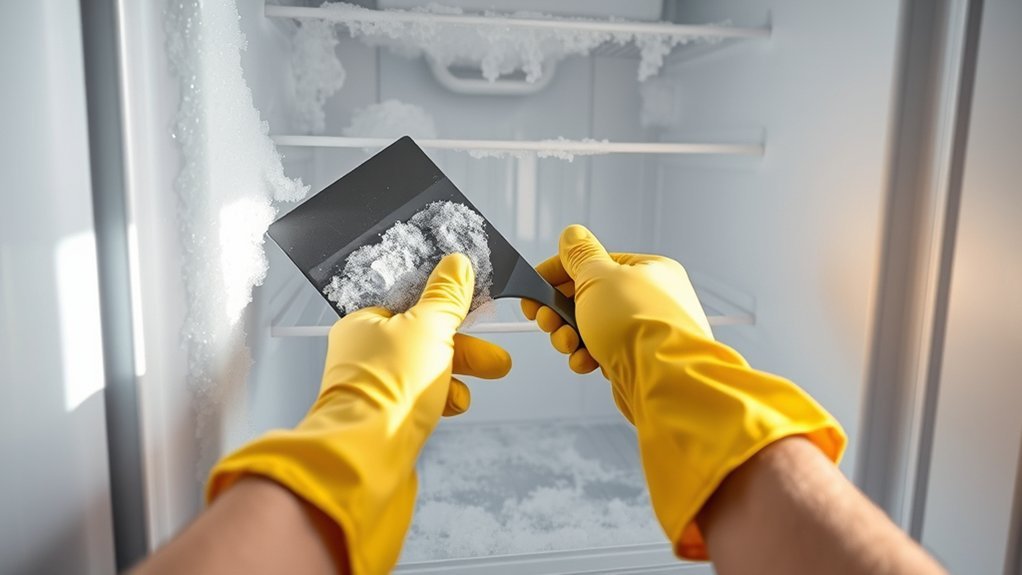
How to Defrost Freezer
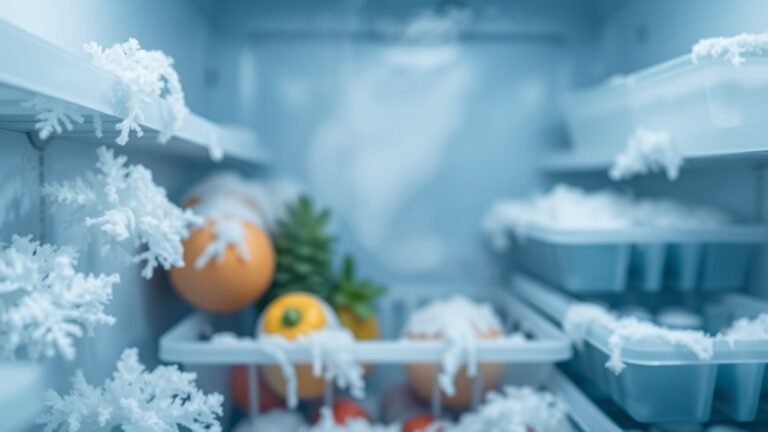
If you’ve noticed frost building up in your freezer, it’s time to take action before it affects performance and food quality. Defrosting your freezer isn’t just about removing ice; it involves careful preparation and safety measures to avoid damage or spoilage.
Knowing the right steps to safely unplug, empty, and clear the frost can save you time and hassle.
But there are key details you shouldn’t overlook to ensure the process goes smoothly.
Following these guidelines will help maintain your freezer’s efficiency and keep your food safe.
Taking the time to defrost properly can extend the life of your appliance and improve its overall function.
Key Takeaways
- Unplug the freezer and remove all food, using coolers to keep perishables safe during defrosting.
- Place towels or a drip tray around the freezer to catch melting ice and prevent water damage.
- Allow ice to soften naturally or use warm water; avoid sharp tools to prevent appliance damage.
- Wipe away softened ice with a soft cloth, then clean and dry all surfaces to prevent mold and odors.
- Inspect door seals for airtight closure and maintain proper airflow after defrosting to preserve efficiency.
Why You Need to Defrost Your Freezer Regularly
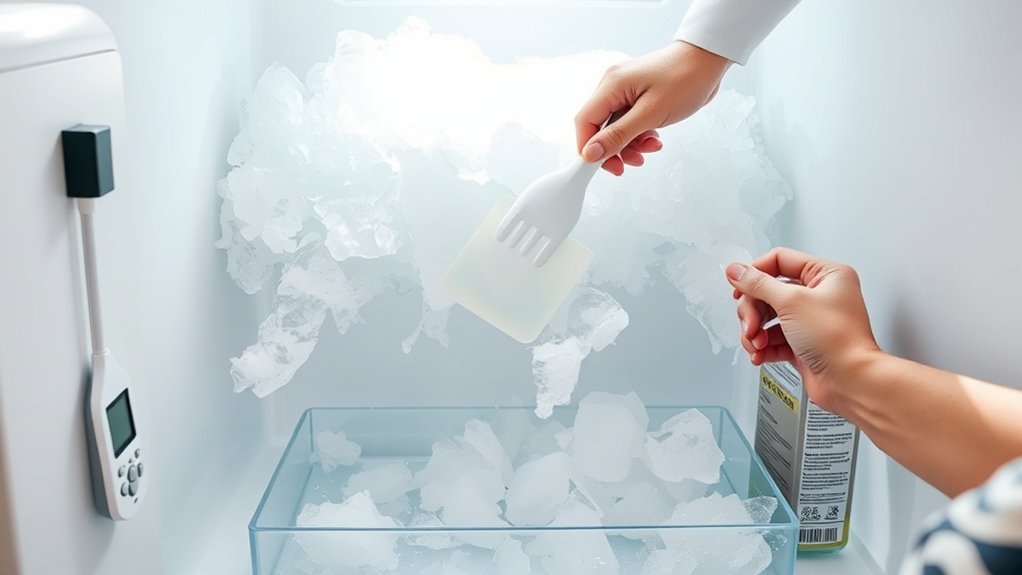
Regularly defrosting your freezer is essential to maintain its efficiency and prevent ice buildup that can reduce storage space. When ice crystallization occurs inside, it not only limits the available room but also forces the freezer to work harder, increasing energy consumption.
If you ignore frost prevention, thick layers of ice will form, which can damage the appliance’s cooling system over time. You must address ice buildup promptly to avoid compromised food preservation and higher electricity bills.
When Is the Best Time to Defrost Your Freezer?
Ignoring the signs of frost buildup can lead to costly repairs and wasted energy, so knowing the right time to defrost your freezer is important. Defrost your freezer when ice buildup exceeds 1/4 inch thick, or when you notice decreased cooling efficiency.
Seasonal changes, like the end of winter, also provide a convenient moment for defrosting, ensuring energy saving throughout the year.
| Indicator | Action Needed |
|---|---|
| Ice buildup > 1/4 inch | Defrost immediately |
| Reduced cooling power | Check and defrost if needed |
| Unusual noise | Inspect frost accumulation |
| Seasonal change | Schedule regular defrost |
| Energy bills increase | Consider defrosting soon |
Stay alert to these signs to maintain optimal freezer performance and prevent excessive energy costs.
How to Prepare Your Freezer for Defrosting
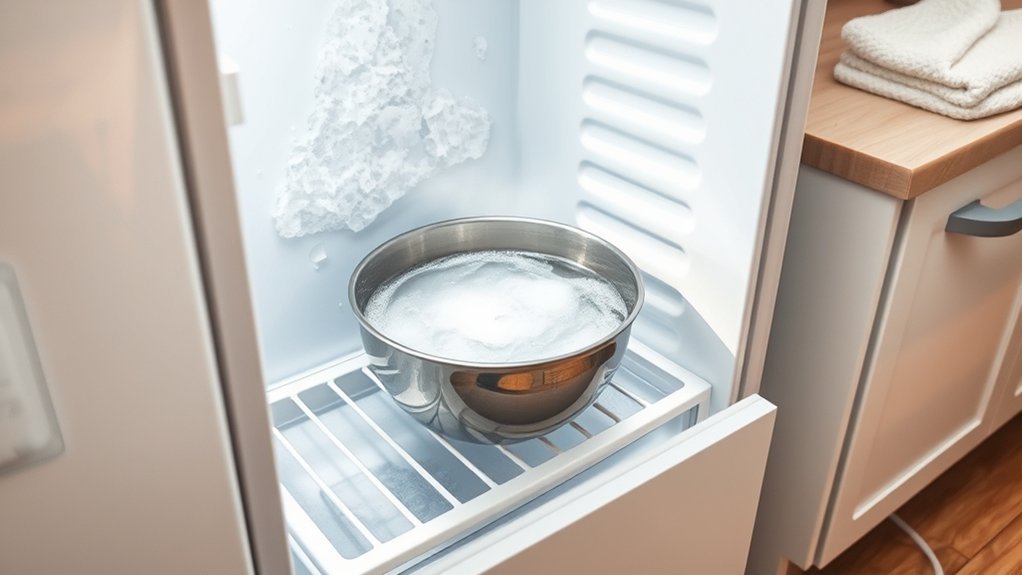
Before you start defrosting your freezer, take some essential steps to ensure the process goes smoothly and safely. Begin by checking the extent of ice buildup, as heavy accumulation can affect how you prepare the freezer.
Clear the area around the freezer to prevent water damage during defrosting. Have towels or a drip tray ready to catch melting ice. Remove any items stored near the freezer to avoid damage from water or cold.
Review your freezer’s manual for specific instructions related to freezer maintenance, which can help prevent future ice buildup. Taking these precautions minimizes risks and makes the defrosting process more efficient.
Proper preparation not only protects your freezer but also extends its lifespan by maintaining optimal performance.
Safely Unplug and Empty Your Freezer
To begin defrosting, unplug your freezer carefully to cut off power and avoid any electrical hazards. Next, empty all contents quickly to prevent food spoilage. Use insulated coolers or bags to store perishable items temporarily.
This two word discussion idea1 ensures your food stays safe while you work. Handle frozen goods efficiently to minimize thaw time and maintain freshness.
| Task | Tip |
|---|---|
| Unplug Safely | Pull plug, avoid wet hands |
| Empty Contents | Use coolers, label items |
| Two Word Discussion | Idea1: Food Safety, Idea2: Timing |
Step-by-Step Guide to Defrosting Your Freezer Quickly
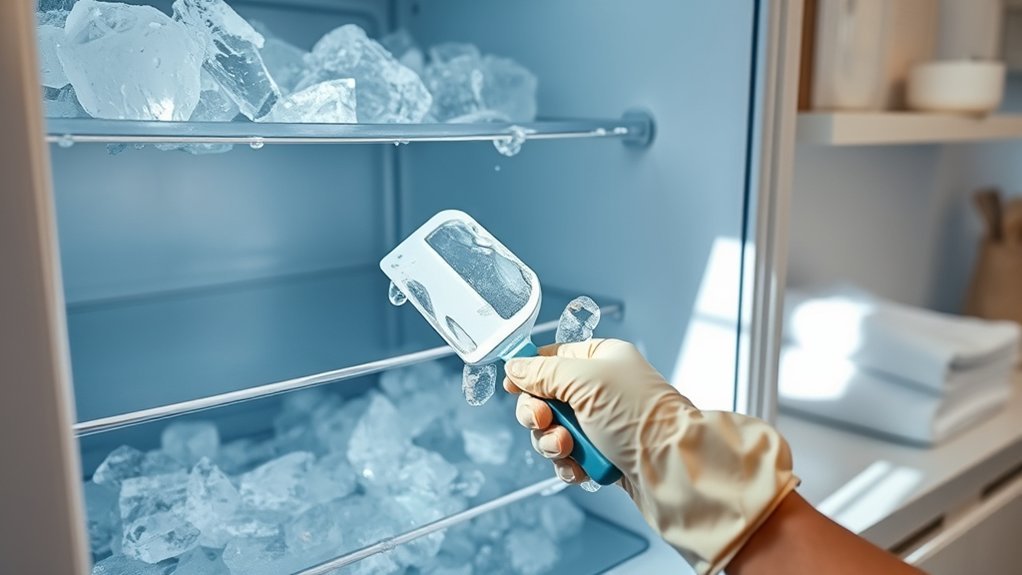
Once your freezer is unplugged and emptied, you can begin the defrosting process efficiently. Place towels around the base to catch melting water and open the freezer door to allow warm air inside. Avoid using sharp tools to chip away ice, as this can damage the ice installation or internal walls.
Instead, let the ice sculpting naturally soften. To speed melting, you can place a bowl of hot water inside and close the door, but monitor it closely to prevent moisture buildup. As ice softens, gently wipe it away with a soft cloth.
Tips to Speed Up Freezer Defrosting Safely
You can speed up defrosting by carefully using hot water to loosen ice without damaging your freezer. Place towels inside to soak up moisture and prevent water from pooling.
Also, improve air circulation by keeping the freezer door open and using a fan if possible.
Use Hot Water Safely
How can hot water speed up defrosting without damaging your freezer? Using hot water safely involves careful temperature control to avoid harming the appliance’s surfaces and seals. Avoid pouring boiling water directly onto the ice, as extreme heat can crack plastic or damage rubber gaskets.
Instead, use warm water around 100°F (38°C) to gently loosen the ice. You can place a bowl of this water inside the freezer compartment and close the door, allowing steam to soften the ice naturally.
Always monitor the water temperature and never leave it unattended to maintain hot water safety. This method speeds up defrosting while protecting your freezer’s components, ensuring efficient ice removal without causing damage.
Utilize Towels For Moisture
Why is it important to utilize towels during defrosting? Towels play a pivotal role in managing the moisture released as ice buildup melts. When you place towels inside the freezer, they absorb water, preventing puddles that could cause slips or damage nearby flooring.
Use thick, absorbent towels to catch drips efficiently and replace them as they become saturated to maintain effective moisture control. Avoid letting water pool, as excess moisture can prolong the defrosting process and create a messy environment.
Additionally, towels help protect your freezer’s interior surfaces from excessive water exposure, reducing the risk of corrosion. By actively using towels, you speed up defrosting safely and keep your workspace clean, ensuring a smoother, more efficient ice removal process.
Improve Air Circulation
To speed up freezer defrosting safely, focus on improving air circulation inside and around the appliance. Proper airflow optimization helps melt ice faster while preventing moisture buildup that can damage components. To achieve this, follow these steps:
- Position a small, oscillating fan near the freezer door to enhance air movement without blowing directly inside.
- Keep the freezer door propped open slightly to allow warm air to circulate naturally.
- Remove any items blocking internal vents to ensure even air distribution.
- Place towels around the base to absorb any dripping water and prevent slips.
Be cautious not to use high-heat fans or heaters, as they risk damaging the freezer or causing electrical hazards. Effective fan placement and airflow optimization accelerate defrosting safely.
How to Clean and Dry Your Freezer After Defrosting
Proper cleaning and thorough drying are essential steps to prevent mold and odors from developing inside your freezer after defrosting. After removing ice, use a mild detergent mixed with warm water to wipe all surfaces.
Avoid harsh chemicals that may damage the freezer lining or leave harmful residues. Thorough drying is crucial to maintain defrosting safety and ensure effective freezer maintenance.
| Step | Purpose | Tip |
|---|---|---|
| Wipe Down Surfaces | Remove residue and moisture | Use soft cloth or sponge |
| Dry Completely | Prevent mold and odors | Leave door open briefly |
| Inspect Seals | Ensure airtight closure | Clean and check for cracks |
Mistakes to Avoid When Defrosting Your Freezer
When should you be cautious during the defrosting process? Right from the start, avoid rushing. Thawing ice cream or other frozen goods too quickly can damage their texture. Also, don’t use sharp tools to chip away ice; this risks puncturing your freezer. Here are four key mistakes to avoid:
- Using heat sources like hairdryers or stoves, which can warp freezer components.
- Neglecting to vacuum the coils before defrosting, reducing efficiency.
- Leaving water pooled inside, which can cause mold or damage electrical parts.
- Defrosting without removing all food, especially ice cream, which can melt and spoil.
Stay cautious and follow these tips to keep your freezer safe and functional.
How to Prevent Ice Buildup in Your Freezer
Avoiding common mistakes during defrosting helps maintain your freezer’s condition, but preventing ice buildup altogether saves you time and effort in the long run. Ice makes your freezer work harder, so controlling moisture and temperature is critical.
Check door seals regularly to stop warm air from entering, which causes frost patterns and ice buildup. Don’t overload your freezer; proper airflow reduces moisture accumulation. Also, avoid leaving the door open too long.
| Preventive Action | Reason | Result |
|---|---|---|
| Check door seals | Prevents warm air entry | Reduces frost patterns |
| Control humidity | Limits moisture inside freezer | Minimizes ice makes |
| Avoid overloading | Maintains proper airflow | Decreases ice buildup |
| Quick door access | Limits warm air exposure | Stops frost formation |
Follow these steps to keep your freezer ice-free and efficient.
How Defrosting Saves Energy and Extends Freezer Life
How often do you think about the impact of ice buildup on your freezer’s efficiency? Defrosting science shows that excess ice forces the compressor to work harder, increasing energy consumption and wear. By defrosting regularly, you ensure optimal performance and energy savings.
Here’s how defrosting benefits you:
- Maintains proper airflow, preventing cold spots and uneven freezing.
- Reduces compressor workload, lowering electricity bills.
- Prevents ice damage to seals and internal components, extending freezer life.
- Enhances temperature stability, keeping food safely frozen.
Ignoring defrosting can lead to costly repairs and higher energy costs. Keep your freezer efficient by defrosting when ice exceeds 1/4 inch thickness. This simple step safeguards your appliance and wallet.
Frequently Asked Questions
Can I Use a Hairdryer to Defrost My Freezer?
You can use a hairdryer, but it risks defrosting hazards like electrical shock or fire from hairdryer misuse. Always keep it away from water, avoid overheating, and never leave it unattended while defrosting your freezer.
How Often Should I Defrost a Frost-Free Freezer?
You rarely need to defrost a frost-free freezer, so defrost frequency is minimal. Don’t fall for frost-free misconceptions. It prevents ice buildup automatically, but if you notice excess frost, defrost promptly to maintain efficiency and avoid damage.
Is It Safe to Leave the Freezer Door Open Overnight?
Leaving the freezer door open overnight is like leaving a faucet running; it’s not safe. Poor defrost timing wastes energy, raises your bills, and risks food spoilage.
Always monitor defrosting to minimize energy impact and keep food safe.
What Should I Do With Food During Defrosting?
You should store your food in a cooler with ice packs to maintain food safety during defrosting. Keep items sealed to prevent odor transfer and avoid spoilage.
Don’t leave perishable food out too long.
Can Defrosting My Freezer Remove Bad Odors?
About 60% of people notice odors fade after defrosting. Yes, defrosting can remove bad odors, but don’t get off topic with unrelated ideas. Clean thoroughly and dry completely to avoid lingering smells or mold growth.
Conclusion
Defrosting your freezer regularly isn’t just about keeping it ice-free—it truly saves energy and extends its lifespan. While some think skipping defrosting saves time, ice buildup actually forces your freezer to work harder, using more power.
By unplugging safely, removing contents, and cleaning thoroughly, you prevent damage and costly repairs. Stay vigilant with door seals and moisture to avoid future buildup.
Taking these steps protects your appliance and your wallet in the long run. Properly defrosting your freezer is essential for maintaining efficiency and durability.