When to Take Turkey Out of Freezer
Timing your turkey’s thaw is the pivot on which a successful meal turns. Knowing when to take turkey out of freezer is crucial for ensuring safety and quality. You can’t just pull it out the day before and expect perfect results—each pound demands a calculated thawing period.
This timing depends on your chosen thawing method and the bird’s weight, but the specifics might surprise you. Let’s explore how to plan this essential step meticulously.
Key Takeaways
- Take the turkey out of the freezer at least 24 hours per 4 to 5 pounds for refrigerator thawing.
- For faster thawing, submerge turkey in cold water, changing water every 30 minutes, allowing 30 minutes per pound.
- Maintain refrigerator temperature at or below 40°F (4°C) during thawing to ensure safety.
- Avoid thawing at room temperature to prevent harmful bacterial growth.
- Plan thawing time based on turkey weight and chosen method to ensure it is fully thawed before cooking.
When to Thaw Your Turkey Based on Weight
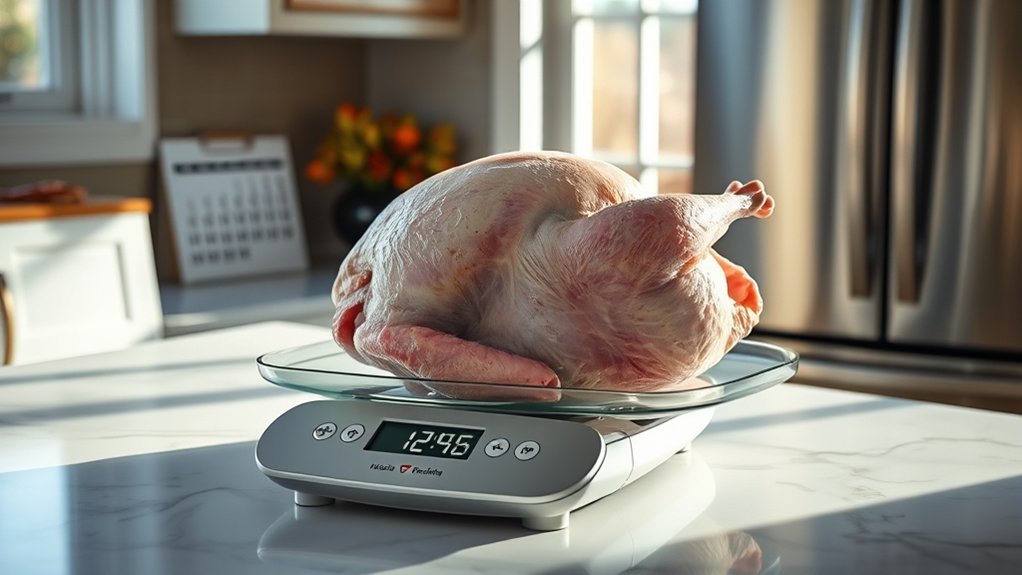
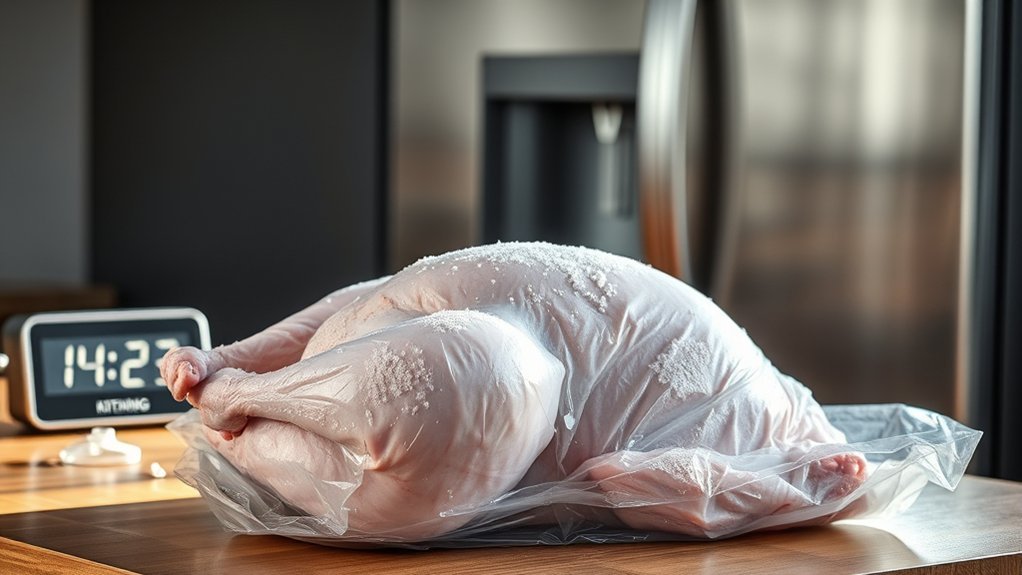
How long should you thaw your turkey? The answer depends directly on its weight. Generally, you need 24 hours of refrigerator thawing for every 4 to 5 pounds.
This guideline debunks common thawing misconceptions and safety myths suggesting faster methods compromise food safety. For example, a 12-pound turkey requires approximately three days in the fridge.
Thawing in cooler temperatures (below 40°F) inhibits bacterial growth, ensuring safety. Avoid room-temperature thawing, which is unsafe regardless of weight.
Remember, planning based on weight allows precise timing and reduces risks. Ignoring these evidence-based recommendations can lead to uneven thawing or bacterial proliferation.
How Long It Takes to Thaw a Turkey Safely
You’ll need about 24 hours of refrigerator thawing time for every 4 to 5 pounds of turkey to ensure it thaws safely. If you’re short on time, cold water thawing is faster. Allow 30 minutes per pound while changing the water every 30 minutes to maintain a safe temperature. Both methods require careful timing to prevent bacterial growth and ensure food safety.
Refrigerator Thawing Time
When should you remove your turkey from the freezer to guarantee safe thawing in the refrigerator? The USDA recommends allowing approximately 24 hours of thawing time for every 4 to 5 pounds of turkey. For example, a 16-pound bird requires about 4 days in the fridge.
Maintain your refrigerator temperature at or below 40°F (4°C) to inhibit bacterial growth. Avoid mixing unrelated topics or ideas like cooking methods or cold water thawing here; focus solely on refrigerator thawing parameters.
Place the turkey in a tray or pan to catch drippings and prevent cross-contamination. This method ensures a consistent, safe thaw without temperature fluctuations that can promote pathogen proliferation.
Planning ahead with precise timing prevents last-minute risks and guarantees food safety.
Cold Water Thawing
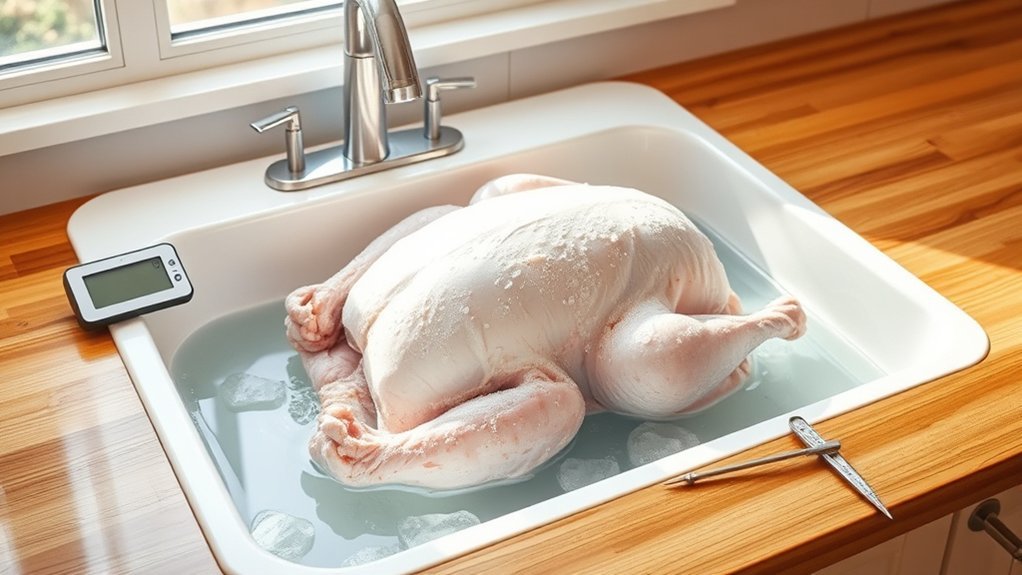
While refrigerator thawing provides a controlled environment for safe defrosting, cold water thawing offers a faster alternative when time is limited. To thaw a turkey safely using cold water, submerge it in its original packaging, ensuring it’s airtight to prevent contamination.
Change the water every 30 minutes to maintain a safe temperature below 40°F (4°C). Plan for approximately 30 minutes of thawing time per pound of turkey. Proper freezer organization and turkey storage help you retrieve your bird promptly, reducing thawing time.
Key points to remember:
- Use cold tap water, never warm or hot, to avoid bacterial growth.
- Keep the turkey sealed to prevent water absorption.
- Immediately cook the turkey after thawing to ensure safety.
This method balances speed with food safety, minimizing bacterial risks during thawing.
Safe Thawing Methods for Frozen Turkeys
How do you guarantee your frozen turkey thaws safely without risking bacterial growth? Effective thawing logistics are critical for kitchen safety. The USDA recommends three safe methods: refrigerator thawing, cold water thawing, and microwave thawing. Each method controls temperature to prevent the growth of harmful bacteria.
| Thawing Method | Key Consideration |
|---|---|
| Refrigerator Thawing | Maintain ≤ 40°F; plan 24 hrs/4-5 lbs |
| Cold Water Thawing | Water ≤ 70°F; change every 30 mins |
| Microwave Thawing | Use defrost setting; cook immediately |
Sticking to these protocols ensures your turkey remains safe to cook and consume. Avoid room temperature thawing, which promotes rapid bacterial growth and foodborne illnesses.
Planning Your Turkey Thaw: Tips for Safety and Evenness
Why does planning your turkey thaw matter for safety and evenness? Proper planning prevents bacterial growth and ensures uniform thawing, crucial for food safety and cooking quality. You’ll avoid common thawing myths, like rushing with warm water, which can promote unsafe temperatures. Instead, focus on precise timing and organization.
To plan effectively:
- Calculate thawing time based on weight and method, allowing 24 hours per 4–5 pounds in the refrigerator.
- Use freezer organization to place the turkey where cold air circulates evenly, preventing temperature fluctuations.
- Avoid thawing on countertops to eliminate bacterial risk.
Signs Your Turkey Is Ready to Cook
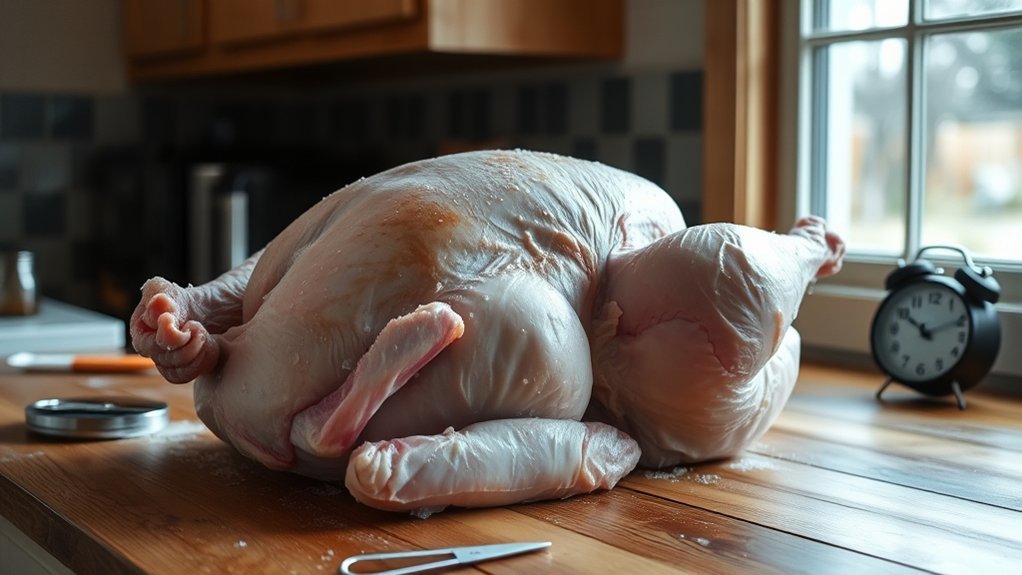
You’ll know your turkey is fully thawed when the meat feels pliable and no ice crystals remain in the cavity. Use a food thermometer to confirm the internal temperature has reached 32°F (0°C) or above throughout.
These checks guarantee the turkey is safe and ready for cooking.
Thawing Completion Indicators
When can you be certain that your turkey has fully thawed and is safe to cook? Proper thawing etiquette ensures food safety and optimizes your kitchen workflow. To confirm completion, check these key indicators:
The turkey’s cavity should feel soft and pliable, without ice crystals. The surface temperature should be above freezing but below 40°F (4°C) to prevent bacterial growth. There should be no visible ice pockets, particularly around the joints and wings.
These evidence-based signs help you avoid premature cooking or foodborne risks. By adhering to thawing etiquette, you maintain an efficient kitchen workflow, ensuring your turkey is ready exactly when needed. Remember, rushing this process compromises both safety and quality, so verify these indicators before proceeding.
Texture and Temperature Checks
How can you accurately determine if your turkey is ready to cook after thawing? Focus on texture checks and temperature checks. First, press the thickest part of the breast; it should feel firm but not hard or icy. A rubbery or overly stiff texture indicates incomplete thawing.
Next, use a calibrated food thermometer to measure the internal temperature of the turkey’s cavity or thickest meat. It must register above 32°F (0°C) to confirm full thawing. Temperatures below this threshold suggest parts remain frozen, posing food safety risks.
Combining these texture checks with precise temperature checks ensures your turkey is properly thawed, safe to cook, and will yield optimal texture and flavor once prepared.
Last-Minute Solutions If You Forgot to Thaw Early
What steps can you take if your turkey is still frozen and dinner is approaching? Employing a last minute thaw method is essential to ensure food safety and proper cooking. Here are three quick fix thaw techniques backed by USDA guidelines:
Cold Water Thawing: Submerge the turkey in its original packaging in cold water, changing water every 30 minutes. Allow 30 minutes per pound.
Microwave Thawing: Use the microwave’s defrost setting based on weight. Cook immediately after thawing to prevent bacterial growth.
Cooking from Frozen: Increase cooking time by 50%, ensuring the internal temperature reaches 165°F (74°C).
These approaches minimize bacterial risks and preserve texture, giving you safe and timely turkey preparation despite a forgotten thaw.
How to Store Your Turkey After Thawing to Keep It Fresh
Where you store your turkey after thawing directly impacts its safety and freshness. Once thawed, keep the turkey in its original turkey packaging to minimize contamination and moisture loss.
Storing your thawed turkey in its original packaging helps prevent contamination and keeps it fresh longer.
Place it on a tray to catch any drips and store it in the coldest part of your refrigerator, ideally below 40°F (4°C). Avoid leaving it at room temperature, as bacterial growth accelerates above 40°F.
If you’ve purchased the turkey from grocery storage pre-packaged, maintain the original wrapping until cooking. Use the turkey within 1-2 days after thawing to ensure optimal freshness and reduce foodborne illness risks.
For best results, do not refreeze thawed turkey unless you cook it first. Following these precise storage guidelines preserves quality and maintains food safety.
Frequently Asked Questions
Can I Refreeze a Turkey After Thawing Partially?
You shouldn’t refreeze a turkey after partial thawing unless it’s been kept below 40°F continuously, as safety concerns include bacterial growth. Refreezing can compromise quality and increase foodborne illness risks. Cook it instead.
Does the Type of Turkey (Organic vs. Regular) Affect Thawing Time?
Picture a dense organic turkey versus a regular one; organic differences in muscle structure and fat content subtly influence thawing rate.
You’ll find organic turkeys often thaw slightly slower due to these precise physical factors.
How Does Brining Impact the Thawing Process?
Brining effects slightly increase thawing time because the added moisture and salt alter the turkey’s freezing point. You’ll notice a thawing impact of about 10-15% longer, so plan accordingly for safe, even defrosting.
Can I Cook a Turkey Straight From Frozen Safely?
You can cook a turkey straight from frozen safely, but thawing misconceptions often cause safety concerns. Ensure you increase cooking time by at least 50%, use a food thermometer, and cook to an internal temperature of 165°F for safety.
What Tools Help Monitor Turkey Temperature During Thawing?
You’ll find digital thermometers and probe thermometers essential for precise temperature monitoring during thawing. Additionally, using insulated thawing bags and temperature data loggers helps you track safe, consistent thawing conditions effectively.
Conclusion
Don’t let thawing your turkey turn into a frozen fiasco! Plan ahead using weight-based estimates—about 24 hours per 4–5 pounds in the fridge or 30 minutes per pound in cold water. Stick to safe methods to keep temps below 40°F (4°C) and avoid countertop thawing.
Follow these guidelines precisely, and your turkey will thaw evenly and safely, ready for a perfect cook. Remember, timing is everything to avoid any last-minute scrambling!
Knowing when to take turkey out of freezer is key to ensuring a delicious and safe meal every time.