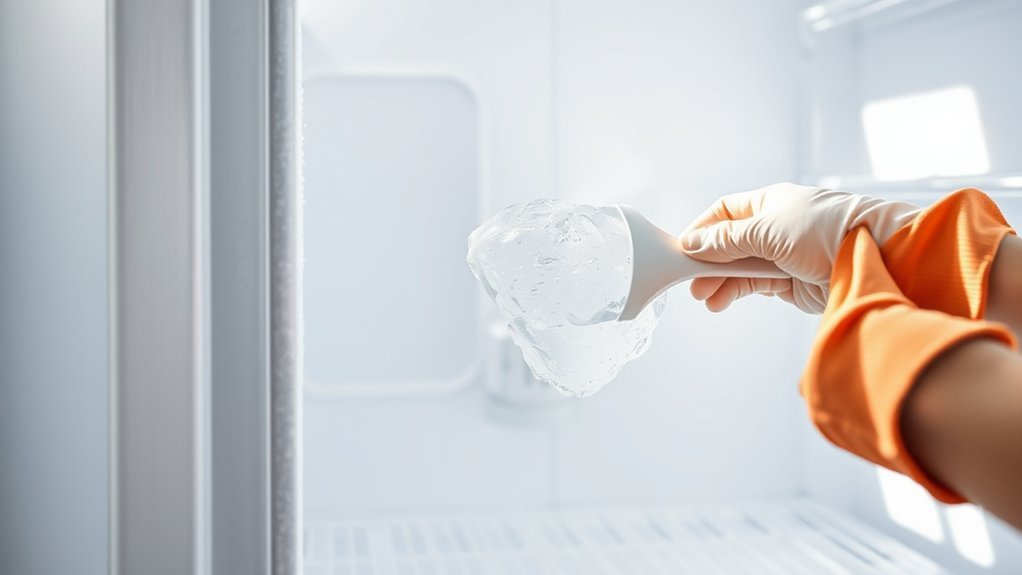
How to Defrost a Freezer
You need to unplug the freezer, remove all food, and prepare towels for melting ice. Defrosting a freezer requires careful steps to avoid damage and food spoilage. By following clear instructions, you can speed up the process and maintain your freezer’s efficiency.
Understanding these essential actions will help you complete the task smoothly and prevent common mistakes that might otherwise cause issues down the line.
Key Takeaways
- Unplug the freezer and remove all food, placing perishables in a cooler to maintain safe temperatures.
- Lay towels around the base and open the freezer door fully to speed up ice melting.
- Use a bowl of hot water inside to soften ice and avoid sharp tools to prevent freezer damage.
- Gently remove softened ice with a plastic or wooden spatula, regularly mopping up melting water.
- After defrosting, clean and dry the interior thoroughly to prevent mold and odors.
Prepare Your Freezer Before Defrosting
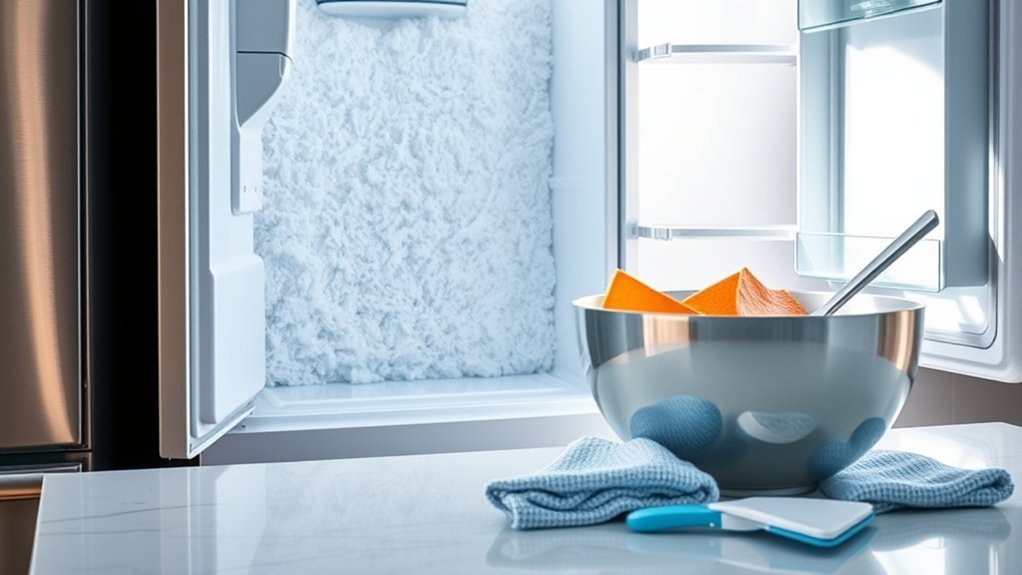
Before you start defrosting, you need to prepare your freezer properly to guarantee safety and efficiency. Begin by unplugging the appliance to eliminate electrical hazards during the thawing process. Remove all food items and place them in a cooler to maintain safe temperatures.
Next, lay towels or absorbent cloths around the base to catch melting ice and prevent water damage. Open the freezer door fully to allow air circulation, accelerating ice melt. These preparation steps establish a controlled environment for effective thawing techniques.
Avoid using sharp tools to chip away ice, which can damage the freezer walls. Instead, focus on gradual melting facilitated by ambient room temperature. Proper preparation ensures a smooth, safe defrosting process and prevents damage to your freezer components.
Quick and Safe Ways to Defrost Your Freezer
How quickly you defrost your freezer depends on the method you choose and the thickness of the ice buildup. For a quick and safe approach, start by unplugging the freezer and removing all contents. Place towels at the base to absorb water.
Use a bowl of hot water inside the freezer compartment, closing the door to trap steam; this softens ice efficiently. Alternatively, a fan directed at the open freezer speeds melting by circulating warm air. Avoid sharp tools to prevent damage.
Regularly mop up water to maintain safety and cleanliness. These defrosting tips ensure you remove ice swiftly without harming the appliance. Once ice is fully melted, dry the interior thoroughly before restarting the freezer to maintain optimal performance and prevent refreezing.
How to Remove Ice Without Damaging Your Freezer
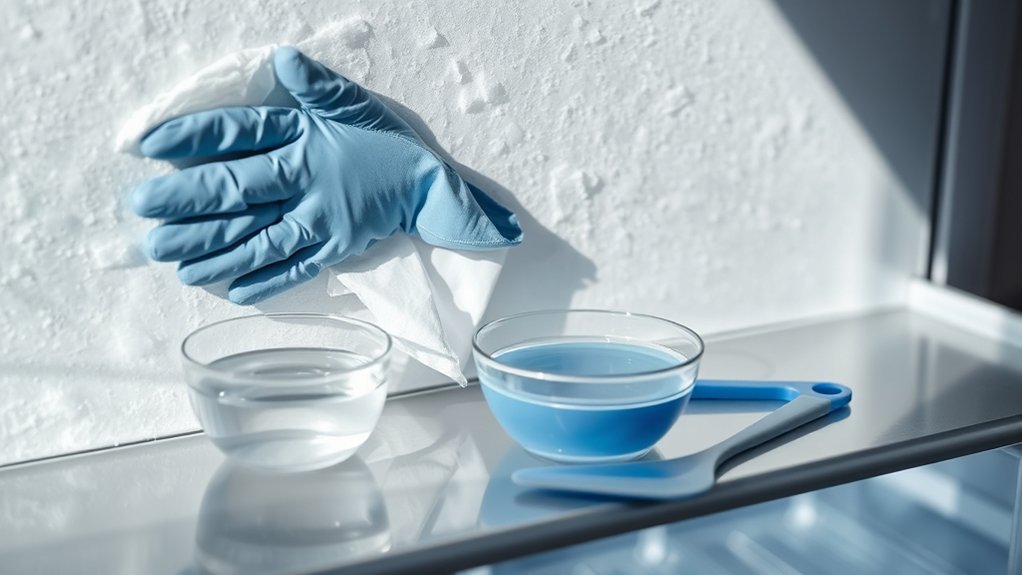
Why does removing ice carefully matter? Excessive force or sharp tools can damage the freezer’s interior lining or cooling elements, leading to costly repairs. To safely remove ice buildup, never use knives or metal objects.
Instead, use a plastic or wooden spatula to gently chip away softened ice after letting it thaw slightly. You can speed this process by placing bowls of hot water inside to loosen frost. Always work patiently, avoiding sudden jerks or scraping.
After ice removal, wipe the interior dry to prevent moisture accumulation that causes frost buildup. Regularly maintaining this practice supports frost prevention, ensuring efficient freezer operation and prolonging its lifespan without compromising structural integrity.
How to Handle Food During Defrosting
When you defrost your freezer, what should you do with the food inside? First, remove all food items before starting the defrosting process to prevent spoilage. Place perishable items in a cooler with ice packs or transfer them to a functioning freezer temporarily.
Avoid leaving food at room temperature for extended periods, especially during longer defrost intervals required to clear heavy ice buildup. Label and organize food to maintain a clear inventory, reducing time food is out of cold storage.
If you notice significant ice buildup, plan defrost intervals accordingly to minimize food exposure time. Keep frozen goods in airtight containers or sealed bags to prevent moisture loss and contamination during transfer.
Properly managing food ensures safety and maintains quality throughout defrosting.
Clean and Dry Your Freezer After Defrosting
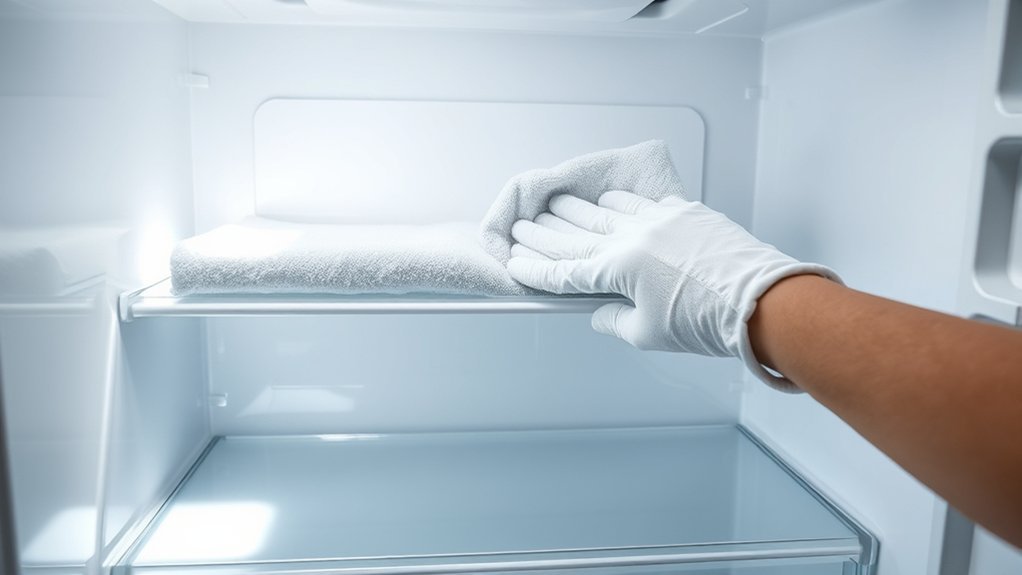
Where should you begin once the ice has fully melted? Start by removing all water with a sponge or towel to guarantee the interior is completely dry. Use a mild detergent solution to clean the freezer walls, shelves, and door seals. Avoid harsh chemicals that can damage surfaces or leave residues.
After cleaning, thoroughly dry all areas with a clean cloth to prevent mold growth and odors. Once dry, inspect the freezer for any damage or wear that may need attention. This step is essential for effective post defrost organization.
Arrange shelves and compartments logically, maximizing space and ensuring airflow. Properly clean and dry your freezer after defrosting extends its lifespan and maintains peak freezing efficiency, preparing it for safe food storage.
Common Mistakes to Avoid When Defrosting Your Freezer
After thoroughly cleaning and drying your freezer, it’s important to handle the defrosting process carefully to avoid common pitfalls that can compromise your appliance’s performance. First, don’t rush defrosting timing by using sharp objects to chip away ice; this risks damaging internal components.
Also, avoid leaving the freezer door open longer than necessary, as extended exposure increases energy impact by forcing the compressor to work harder. Never use boiling water or high heat sources, which can warp surfaces and reduce efficiency.
Lastly, don’t skip drying the interior completely; residual moisture promotes faster ice buildup. By managing defrosting timing properly and minimizing energy impact, you ensure optimal freezer operation and prolong its lifespan. Stay methodical and patient throughout the process.
How Often to Defrost Your Freezer
You should defrost your freezer when you notice ice buildup thicker than 1/4 inch or if the door doesn’t close properly.
Most manufacturers recommend defrosting every 6 to 12 months to maintain efficiency. Regularly checking for these signs will help you determine the best defrosting schedule.
Signs You Need
How can you tell when your freezer needs defrosting? Monitoring specific signs helps maintain defrosting efficiency and frost prevention. If you notice any of the following, it’s time to act:
- Thick layers of frost or ice buildup on the walls or shelves, reducing cooling performance
- Difficulty closing the freezer door due to ice obstructing the seal
- Increased frost accumulation on stored food items, indicating poor air circulation
- Higher energy consumption or a noticeable rise in freezer temperature
These indicators suggest frost has compromised your freezer’s efficiency. Addressing them promptly prevents further frost buildup, ensuring optimal cooling and energy use. Regularly checking for these signs helps you maintain your freezer’s performance without unnecessary defrosting.
Recommended Defrost Frequency
When should you defrost your freezer to maintain optimal performance? Establish a consistent defrost cadence based on ice buildup and usage frequency. Typically, you should defrost every 3 to 6 months, but heavy use or visible frost accumulation over 1/4 inch warrants earlier action.
Use two word discussion ideas like “ice buildup” and “energy efficiency” to guide your maintenance reminders. Set calendar alerts or notes to prompt timely defrosting, preventing excessive frost that hampers cooling and increases energy consumption.
Regular defrosting ensures your freezer operates efficiently and prolongs its lifespan. Monitor frost levels monthly, and adjust your defrost cadence accordingly. Following these technical steps helps maintain optimal freezer performance and avoids costly repairs.
How to Prevent Ice Buildup and Keep Your Freezer Efficient
To prevent ice buildup, you need to perform regular maintenance like checking door seals and removing frost promptly.
Keep your freezer set at the optimal temperature, typically around 0°F (-18°C), to maintain efficiency. These steps will help reduce ice formation and ensure your freezer runs smoothly.
Regular Maintenance Tips
Why does ice buildup occur in freezers, and how can you minimize it effectively? Ice buildup forms when moisture enters the freezer, condenses, and freezes. To maintain frost prevention and keep your freezer efficient, perform regular maintenance focusing on moisture control and proper usage.
Follow these tips:
- Check and replace door seals if cracked or damaged to prevent air leaks.
- Avoid frequent or prolonged door openings to reduce moisture influx.
- Store food in airtight containers to limit moisture release.
- Regularly clean the freezer interior and drain holes to ensure proper airflow.
Consistent adherence to these steps will significantly reduce ice buildup and enhance your freezer’s performance, saving energy and prolonging appliance life.
Optimal Temperature Settings
How exactly does setting the right temperature prevent ice buildup and maintain your freezer’s efficiency? Maintaining a consistent temperature around 0°F (-18°C) ensures temperature stability, which minimizes moisture condensation inside the freezer.
Excess moisture leads to ice buildup, forcing the compressor to work harder and reducing energy efficiency. Avoid setting temperatures too low, as this can cause unnecessary frost formation and increase energy consumption.
Use a reliable freezer thermometer to monitor internal conditions regularly. Adjust settings gradually to prevent sudden fluctuations that disrupt temperature stability.
Consistent, optimal temperature settings reduce defrost frequency, saving energy and prolonging your freezer’s lifespan. In summary, precise temperature control is essential to prevent ice accumulation and maintain energy-efficient operation, ensuring your freezer runs smoothly without wasting power.
Frequently Asked Questions
Can I Use a Hairdryer to Speed up Defrosting?
You can use a hair dryer to speed up defrosting, but keep it at a safe distance to avoid damage.
Ensure all food is removed or properly sealed to prevent thawing or contamination of unfrozen food.
Is It Safe to Eat Food That Was Partially Thawed?
It’s best to avoid risking your health; eating partially thawed food isn’t safe due to bacterial growth concerns.
Prioritize defrosting safety by fully thawing and promptly refrigerating or cooking items to ensure food safety and quality.
What Causes Ice to Build up so Quickly?
Ice build-up happens because frost causes moisture to freeze inside your freezer, often from frequent door openings or poor seals.
To maintain defrost safety, regularly check seals and limit door openings to reduce moisture intrusion.
Can Defrosting Damage the Freezer’s Warranty?
Don’t worry, defrosting won’t magically void your warranty discussion unless you’re using a flamethrower. Proper, manual defrosting follows guidelines, avoiding damage warranty implications by preventing ice buildup that stresses components and ensures the best possible freezer performance.
Are Frost-Free Freezers Maintenance-Free?
No, frost-free freezers aren’t completely maintenance-free. You’ll still need to clean filters, check door seals, and occasionally defrost if ice buildup occurs.
Regular upkeep ensures optimal performance and extends your freezer’s lifespan.
Conclusion
So, unless you enjoy chipping away at your freezer like a frustrated archaeologist, it’s best to defrost it regularly. Unplug the freezer and remove all the food inside before you begin. Avoid using anything sharper than a plastic spatula—your freezer isn’t an ice sculpture!
Speed up the melting process by using hot water or a fan to help loosen the ice. Once the ice has melted, clean the interior thoroughly and dry it completely to prevent new frost from forming.
Keep up with these steps, and your freezer will stay frost-free and efficient, sparing you from an unexpected icy excavation expedition. Regularly learning how to defrost a freezer will save you time and effort in the long run.