How Long Is Meat Good in Freezer
You might assume freezing meat keeps it safe indefinitely, but how long meat is good in the freezer depends on the type and cut. Beef, pork, poultry, and fish each have specific timelines to maintain taste and texture.
Freezing slows spoilage but doesn’t eliminate bacteria or oxidation, so understanding the science behind proper storage is essential. Before you freeze your next batch, consider what factors influence meat’s shelf life in the freezer.
Key Takeaways
- Beef cuts stay optimal for 6 to 12 months, while ground beef lasts 3 to 4 months in the freezer.
- Poultry (chicken and turkey) maintains quality for 9 to 12 months; ground poultry lasts 3 to 4 months.
- Lean fish can be frozen up to 6 months, but fatty fish should be used within 2 to 3 months.
- Freezer temperature must be at or below 0°F (-18°C) with airtight packaging to prevent spoilage and freezer burn.
- Label meat with freeze dates and avoid frequent thaw-freeze cycles to maintain quality and safety over time.
How Long Different Types of Frozen Meat Last
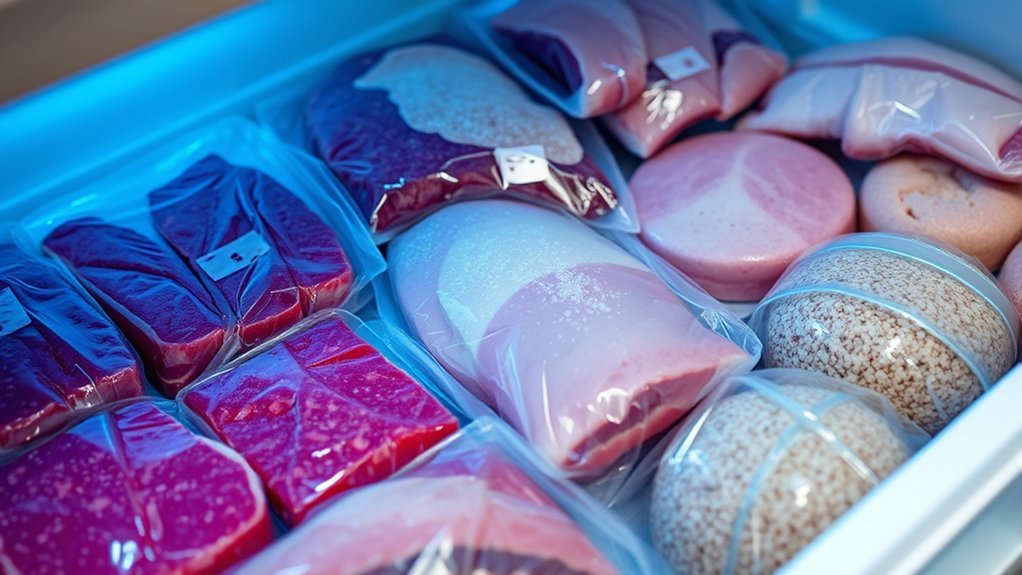
Although freezing preserves meat by halting bacterial growth, the duration different types of meat remain safe and maintain quality varies substantially. You need to consider freezing timelines specific to each species to optimize storage.
For example, beef cuts can maintain optimal quality for 6 to 12 months, whereas ground beef typically lasts 3 to 4 months. Pork cuts usually retain quality for 4 to 6 months, with ground pork closer to 3 to 4 months.
Poultry, including chicken and turkey, generally lasts 9 to 12 months, but ground poultry is best consumed within 3 to 4 months. Fish and seafood freezing timelines differ widely by species; lean fish can last up to 6 months, while fatty fish typically maintain quality for 2 to 3 months.
Adhering to these species specific durations helps ensure safety and flavor retention.
What Freezing Does : and Doesn’t : Do to Meat
When you freeze meat, you effectively halt microbial growth and slow enzymatic reactions, preserving its safety and quality over time. However, freezing doesn’t kill all bacteria or prevent chemical changes like oxidation, which can affect flavor and texture.
Understanding these effects helps you store meat properly and know its true shelf life in the freezer.
Preservation Effects Explained
Because freezing slows down microbial growth and enzymatic activity, it effectively preserves meat by halting spoilage processes without killing all bacteria. When you freeze meat, water inside forms ice crystals, reducing available moisture and limiting microbial proliferation.
However, freezing doesn’t sterilize; dormant bacteria remain viable and can reactivate upon thawing. Repeated freeze thaw cycles accelerate cellular damage, compromising texture and increasing susceptibility to microbial growth during thawing. You should minimize these cycles to maintain meat quality.
Freezing also slows enzymatic reactions that degrade proteins and lipids, preserving nutritional and sensory attributes. By understanding these preservation effects, you can optimize storage conditions to extend meat’s shelf life safely, ensuring it retains its safety and quality until you’re ready to use it.
Limitations Of Freezing
Freezing substantially slows spoilage by inhibiting microbial and enzymatic activity, but it doesn’t eliminate all risks or preserve meat indefinitely. Understanding freezer myths helps you avoid overestimating freezing’s protective effects. Here’s what freezing does and doesn’t do to meat chemistry:
- Halts microbial growth but doesn’t kill all bacteria: Some pathogens survive freezing and reactivate upon thawing.
- Slows enzymatic reactions but doesn’t stop oxidation: Lipid oxidation can cause rancidity and off-flavors over time.
- Preserves structure but can cause cellular damage: Ice crystals rupture cell membranes, leading to texture degradation after long storage.
Knowing these limitations ensures you manage frozen meat safely and maintain quality, rather than relying on misconceptions about indefinite preservation.
How Packaging and Freezer Temperature Affect Frozen Meat
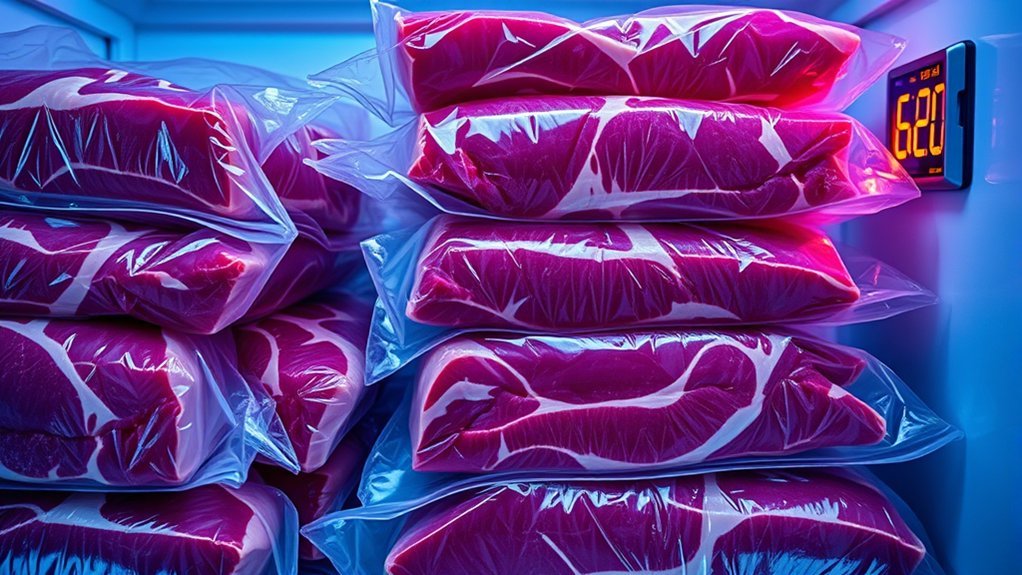
You should use airtight, moisture-resistant packaging to minimize freezer burn and preserve meat quality. Maintaining a consistent freezer temperature at or below 0°F (-18°C) slows enzymatic activity and microbial growth.
Exposure to air accelerates oxidation and dehydration, reducing the meat’s shelf life and texture.
Packaging Types Impact
How does packaging influence the quality and longevity of frozen meat? The choice of packaging types directly impacts moisture retention, freezer burn prevention, and overall shelf life. Using appropriate freezer options complements this effect by maintaining a stable environment.
Consider these factors:
- Vacuum-sealed packaging removes air, significantly reducing oxidation and freezer burn, thus extending meat quality for up to 12 months.
- Heavy-duty aluminum foil or freezer paper provides a strong moisture barrier but requires a secondary airtight layer to prevent air exposure.
- Plastic freezer bags offer convenience but vary in thickness; thicker, BPA-free bags better prevent moisture loss and contamination.
Selecting optimal packaging types alongside consistent freezer options ensures your meat stays fresher, safer, and retains its texture longer during storage.
Optimal Freezer Temperatures
Packaging plays a significant role in preserving meat quality, but maintaining the right freezer temperature is just as important to prevent spoilage and texture degradation. You should keep your freezer at or below 0°F (-18°C) to ensure microbial activity halts and enzymatic reactions slow down effectively.
Consistent temperatures prevent ice crystal growth that damages meat fibers. Proper freezer organization helps maintain this stability by allowing even air circulation and avoiding temperature fluctuations caused by overloading or frequent door openings.
Incorporating clear labeling practices with dates helps you monitor storage times, reducing the risk of extended freezing that compromises quality. Combining optimal packaging with precise temperature control, organized storage, and systematic labeling maximizes the shelf life and safety of your frozen meat.
Air Exposure Effects
Why does air exposure dramatically impact the quality of frozen meat? When meat is exposed to air, surface oxidation accelerates, degrading flavor, texture, and nutritional value. Controlling air exposure is crucial for preserving meat quality during freezing.
- Packaging Integrity: Vacuum-sealed packaging minimizes air exposure, reducing oxidation and freezer burn risk.
- Freezer Temperature Consistency: Stable temperatures below 0°F (-18°C) slow oxidative reactions, preserving meat’s sensory and nutritional properties.
- Moisture Barrier: High-quality packaging materials prevent moisture loss, limiting ice crystal formation that damages meat structure.
Signs Your Frozen Meat Has Gone Bad
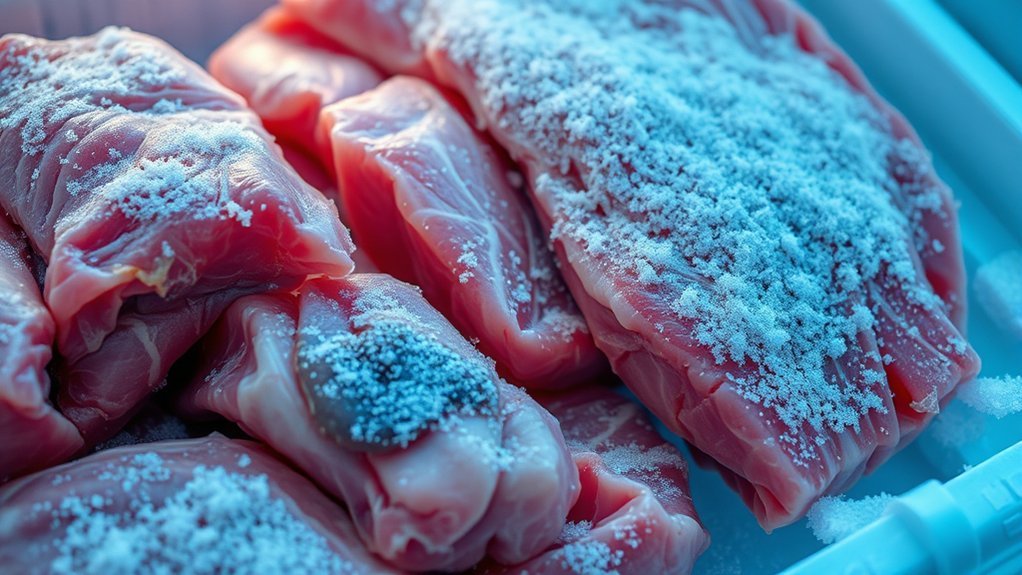
When can you be certain that your frozen meat is no longer safe to consume? Changes in meat texture and color are key indicators. If freezer storage causes excessive ice crystals or freezer burn, the meat’s quality deteriorates.
Also, an off odor or slimy surface signals spoilage despite freezing.
| Sign | What It Means | Your Action |
|---|---|---|
| Texture | Grainy, dry, or mushy | Discard immediately |
| Color | Grayish, brown, or greenish | Do not consume |
| Odor | Sour, rancid, or ammonia-like | Dispose; unsafe to eat |
Trust scientific evidence: altered texture and smell result from protein and fat degradation, indicating microbial growth or enzymatic activity beyond safe limits.
Tips to Freeze Meat and Keep It Tasty Longer
How can you guarantee your frozen meat stays flavorful and safe for extended periods? Proper freezing techniques and storage practices are key. Follow these evidence-based tips:
- Optimize freezer organization: Store meat in uniform, airtight packaging to prevent freezer burn and cross-contamination. Keep raw meat separate from ready-to-eat items.
- Ensure labeling reliability: Use waterproof labels with clear dates and meat types. This prevents guesswork and reduces the risk of consuming spoiled products.
- Freeze meat promptly: Freeze meat within two hours of purchase or preparation. Rapid freezing limits ice crystal growth, preserving texture and flavor.
How to Safely Thaw Frozen Meat Without Losing Quality
Although freezing preserves meat for extended periods, improper thawing can compromise its safety and quality. To ensure thawing safety, always thaw meat in the refrigerator, maintaining a temperature below 40°F (4°C) to inhibit bacterial growth.
For faster thawing while preserving quality, you can use the cold water method: submerge the meat in a sealed plastic bag in cold water, changing the water every 30 minutes. Avoid thawing meat at room temperature, as it increases microbial risk and accelerates spoilage.
Microwaving can be used for immediate cooking but may negatively affect thawing quality by partially cooking the meat unevenly. Always cook thawed meat promptly to maintain safety and optimal texture.
Following these evidence-based practices ensures both thawing safety and thawing quality.
Common Mistakes That Shorten Frozen Meat’s Shelf Life
Proper thawing techniques help maintain meat quality, but freezing alone won’t guarantee its longevity. Several common mistakes can reduce frozen meat’s shelf life, impacting safety and texture. Here are key errors to avoid:
- Labeling mistakes: Failing to date packages leads to prolonged storage beyond recommended times, increasing freezer burn risk and nutrient loss.
- Inconsistent temperatures: Power outages or frequent door openings cause temperature fluctuations, promoting ice crystal growth that damages meat fibers.
- Improper packaging: Using non-airtight materials allows moisture loss and oxidation, accelerating spoilage.
Frequently Asked Questions
Can You Refreeze Meat After It Has Thawed Completely?
You can refreeze meat after thawing only if it thawed while frozen and stayed below 40°F. Refreezing safety depends on preventing bacterial growth; otherwise, it’s risky and reduces quality substantially.
Does Freezing Meat Kill Bacteria or Parasites?
Freezing meat doesn’t kill bacteria or parasites; it only halts their growth temporarily. You’ll find bacterial survival remains possible, so proper cooking after thawing is essential to ensure food safety and eliminate harmful pathogens effectively.
How Does Freezing Affect the Nutritional Value of Meat?
Freezing nutrition in meat doesn’t turn it into a nutrient void; it slightly slows nutrient degradation, preserving meat quality well.
Vitamins may dip mildly, but protein and minerals remain stable, keeping your meat’s nutritional value mostly intact.
Can Frozen Meat Cause Freezer Burn if Stored Too Long?
Yes, if you store meat too long, you’ll risk freezer burn. This happens when moisture evaporates due to prolonged storage duration, compromising texture and flavor despite the meat remaining safe to eat.
Is It Safe to Eat Meat Frozen Past Its Recommended Storage Time?
It’s unsafe to eat meat frozen past recommended storage times. Old habits of ignoring defrost timing risk bacterial growth and toxin formation.
Always follow evidence-based guidelines to ensure safety and maintain meat quality during freezing and thawing.
Conclusion
You might think freezing meat means it lasts forever, but quality fades even at 0°F. While freezing halts bacteria growth, it doesn’t stop oxidation or enzyme activity completely—so packaging and temperature precision matter.
By understanding how long each meat type truly stays fresh and avoiding common mistakes, you’ll preserve taste and safety effectively. Your freezer isn’t just a storage space; it’s a delicate balance between preservation and gradual decline.
Handle it wisely to maximize how long meat is good in the freezer.