How to Choose a Water Filter
When selecting a water filter, you need to start by analyzing your home’s water quality report to pinpoint specific contaminants and their sources. Understanding whether you’re dealing with chemicals, dissolved solids, microbes, or particulates will guide you toward the appropriate filtration technology. Choosing the right water filter isn’t just about contaminant removal—it also involves weighing factors like flow rate, maintenance demands, and long-term reliability.
The next step is deciding which filter type aligns best with your precise needs. Consider how each option performs in relation to the contaminants present, ease of upkeep, and how it fits your household’s water usage patterns. Making an informed choice ensures cleaner, safer water tailored to your situation.
Key Takeaways
- Test your water for contaminants like microbes, heavy metals, and chemicals to identify filtration needs accurately.
- Select filtration technology based on contaminant removal efficiency and compatibility with your household water usage.
- Consider filter types: activated carbon, reverse osmosis, UV, or ceramic, weighing their pros, cons, and maintenance requirements.
- Evaluate long-term costs including filter replacement frequency, cartridge availability, and maintenance labor or time.
- Purchase certified filters from trusted dealers with clear performance data, warranty, and positive customer reviews.
How to Assess Your Home’s Water Quality Issues
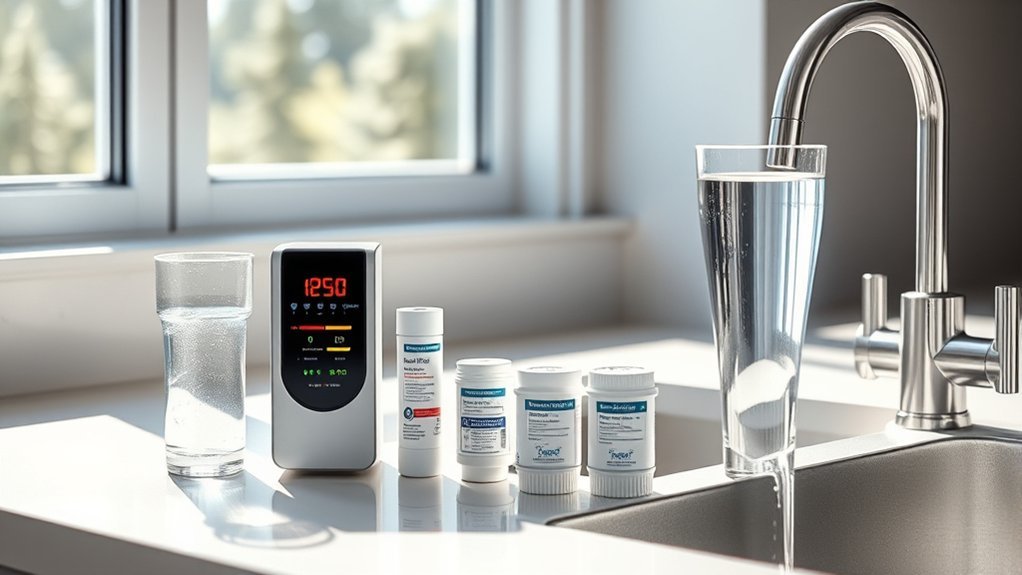
How do you determine the specific water quality issues affecting your home? Start by evaluating contaminants through thorough water testing, which measures parameters like microbial presence, heavy metals, pH levels, and chemical pollutants.
Begin by testing your water for microbes, heavy metals, pH, and chemical pollutants to identify home water quality issues.
You’ll want to collect samples from different points, such as tap, well, or municipal supply, to get accurate data. Identifying sources is critical; contaminants may originate from aging pipes, agricultural runoff, industrial discharge, or natural mineral deposits.
Analyze historical water reports and local environmental factors to pinpoint likely contamination pathways. After gathering this data, compare results against regulatory standards to understand severity and potential health risks.
This precise approach ensures you address the exact contaminants present, enabling you to make informed decisions about necessary water treatment solutions tailored to your home’s unique conditions.
Types of Water Filters Available for Your Home
After identifying the specific contaminants affecting your water, selecting the appropriate filtration system becomes a targeted process. You’ll encounter several types of filters: activated carbon, reverse osmosis, ultraviolet (UV), and ceramic.
Activated carbon filters excel at removing chlorine and organic compounds but may not eliminate heavy metals or pathogens. Reverse osmosis systems provide comprehensive purification, including dissolved solids, but they waste water and require maintenance.
UV filters effectively neutralize bacteria and viruses but don’t remove chemical contaminants. Ceramic filters physically block particles and microorganisms but may have limited chemical removal capabilities.
Each type of filter comes with pros and cons related to effectiveness, cost, maintenance, and water wastage. Understanding these distinctions helps you narrow down your options before choosing the best technology for your needs.
Choosing the Best Water Filter Technology for Your Needs
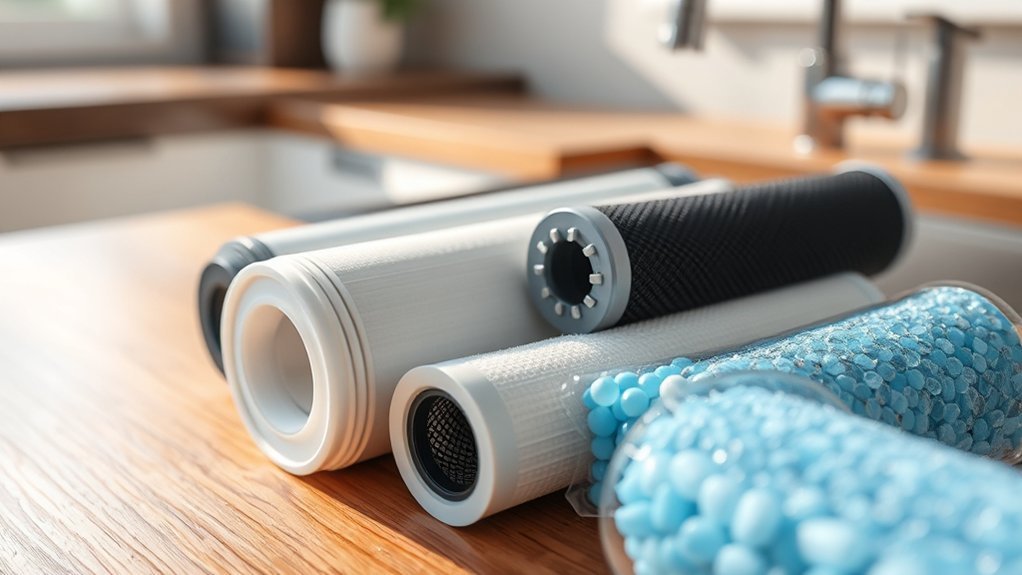
Which water filter technology aligns best with your household’s specific needs depends on several critical factors, including the contaminants present, water usage patterns, budget constraints, and maintenance capabilities. When choosing filtration technology, start by evaluating contaminants through water testing to identify impurities like chlorine, heavy metals, or microbial pathogens.
Consider these key points:
- Target contaminant removal efficiency relevant to your water quality report
- Compatibility with your daily water consumption and flow rate demands
- Filtration mechanism type: activated carbon, reverse osmosis, UV, or ceramic
- System scalability and integration potential for future upgrades
Comparing Water Filter Maintenance and Costs
When evaluating water filters, understanding maintenance requirements and ongoing costs is crucial to making an informed choice. You need to analyze the maintenance cost relative to the filter’s replacement frequency.
Filters with higher initial costs may have lower maintenance expenses if their replacement frequency is extended. Conversely, inexpensive filters often require frequent replacements, increasing long-term maintenance cost.
Consider the availability and price of replacement cartridges, as these significantly impact your total expenditure. Additionally, factor in labor or time costs for maintenance tasks, especially for complex systems requiring professional servicing.
Where to Buy Reliable Water Filters and What to Look For
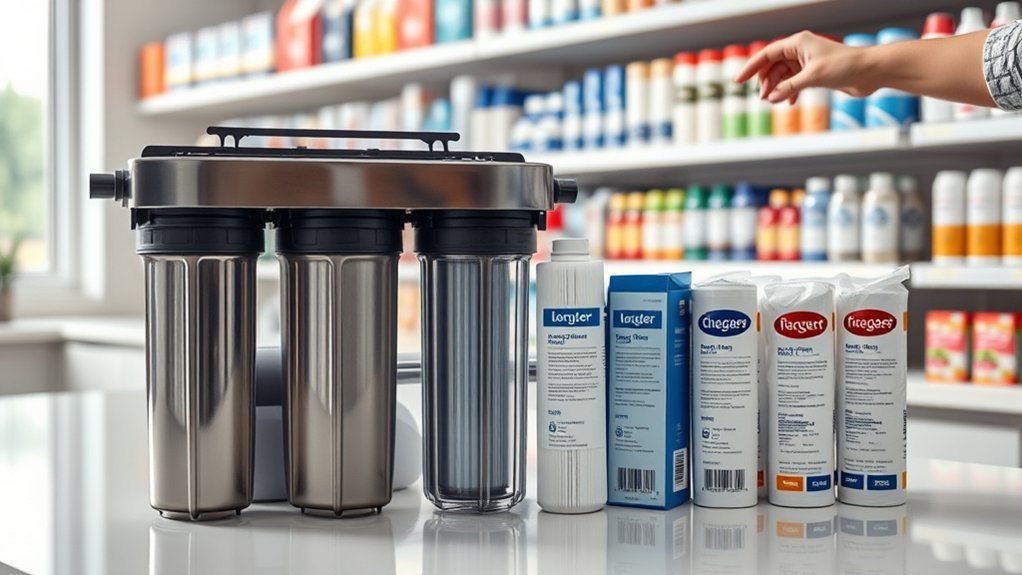
Where should you purchase reliable water filters to guarantee quality and authenticity? Knowing where to buy is crucial to avoid counterfeit or substandard products that compromise filtration performance. Focus on authorized dealers and trusted platforms that provide verified products with clear specifications.
When selecting where to buy reliable filters, consider these factors:
- Certification labels from NSF, WQA, or equivalent bodies ensuring tested performance
- Transparent product details including contaminant removal rates and filter lifespan
- Verified customer reviews and expert endorsements confirming reliability
- Availability of manufacturer support and warranty services for accountability
Frequently Asked Questions
Can Water Filters Remove Fluoride From Drinking Water?
Yes, you can remove fluoride from drinking water, but filter effectiveness varies. Activated alumina and reverse osmosis systems provide reliable fluoride removal.
You’ll need to verify the filter’s specifications to guarantee proper fluoride reduction.
How Often Should I Replace My Water Filter Cartridge?
You should follow the replacement schedule specified by your filter’s manufacturer, typically every 3 to 6 months. Always verify cartridge compatibility to ensure optimal performance and avoid contamination or reduced filtration efficiency.
Are Water Filter Pitchers Effective for Everyday Use?
Pitcher performance proves practical for everyday use, providing potable, purified water promptly. You’ll appreciate their affordable, accessible appeal, though considering capacity constraints and filter lifespan is essential for consistent, clean consumption in your two-word discussion: maintenance, efficiency.
Can Filtered Water Improve Skin Health?
Yes, filtered water can improve skin health by enhancing water purity, which supports hydration benefits and maintains mineral balance. This optimized mineral content helps your skin stay hydrated, reducing dryness and promoting a healthier complexion overall.
Is It Safe to Drink Water From a Recently Installed Filter?
Is it safe to drink water from a recently installed filter? You’ll want to flush it thoroughly first, as initial residues or loose particles might linger.
Proper flushing ensures your water’s purity meets safety standards precisely.
Conclusion
When choosing a water filter, remember that 77% of U.S. households use at least one type of filtration system, highlighting its importance. Start by pinpointing your water’s contaminants, then select a filter technology that targets them effectively.
Factor in maintenance, costs, and certifications like NSF to ensure reliability. By analyzing your needs precisely and investing wisely, you’ll secure cleaner, safer water without unnecessary expense or hassle.
Ultimately, choosing the right water filter is key to providing your home with pure, healthy water tailored to your specific needs.