How Can We Filter Water
You need reliable ways to filter water, especially when contaminants vary widely. Using effective water filters can ensure the water you drink is safe and clean. Mechanical filters remove visible debris, but that’s just the start.
Activated carbon tackles chemicals affecting taste and odor, while advanced methods like reverse osmosis and UV light address dissolved metals and pathogens. Understanding how these technologies work together helps you select the right solution.
Yet, choosing the best approach depends on your specific water quality challenges.
Key Takeaways
- Mechanical filters remove sediment and improve water clarity by physically trapping particles using screens or granular media layers.
- Activated carbon filters adsorb chlorine, volatile organic compounds, and odors, enhancing taste and removing many organic contaminants.
- Ultrafiltration and nanofiltration membranes physically block bacteria and viruses by filtering particles smaller than 0.2 microns.
- UV purification disinfects water by inactivating pathogens without chemicals, requiring clear water for optimal effectiveness.
- Combining filtration methods based on contaminant type and water quality ensures comprehensive removal and safe drinking water.
Common Water Contaminants to Filter?
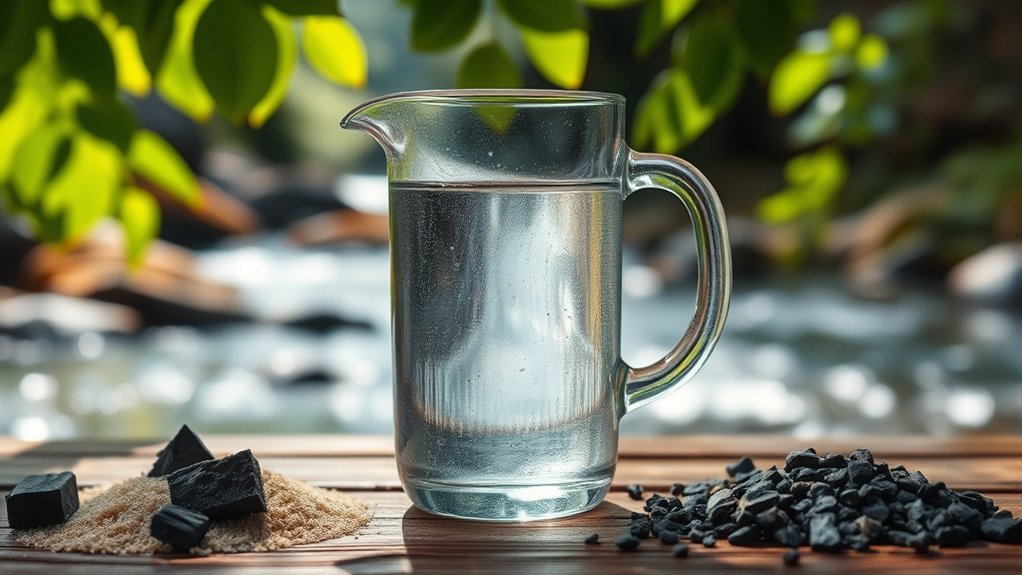
Contaminants in water can range from microscopic pathogens to chemical pollutants, each posing distinct health risks and challenges for filtration. You need to understand contaminant profiles thoroughly to select appropriate filtration methods.
Biological contaminants like bacteria and viruses require different approaches than chemical pollutants such as heavy metals or pesticides. Your filter success metrics should focus on removal efficiency, throughput, and contaminant-specific reduction rates.
By analyzing contaminant profiles, you can predict filtration performance and optimize system design. This approach ensures targeted removal of harmful agents, enhancing water safety.
Paying attention to these metrics helps you evaluate filter efficacy objectively, ensuring that the selected filtration technology meets regulatory standards and user safety requirements efficiently.
How Does Water Filtration Work?
Understanding the types of impurities in your water sets the stage for grasping how filtration systems operate. Filtration works by physically or chemically removing contaminants, but don’t fall for common filtration myths suggesting all filters remove every impurity.
Different methods target specific particles, chemicals, or microorganisms. You’ll find that flow rate plays a critical role; too fast, and water won’t fully contact the filter media, reducing effectiveness.
Controlled flow ensures thorough filtration, balancing purity with practical usage speed. By analyzing your water’s unique composition, you can select a system designed to optimize contaminant removal without sacrificing flow rate.
This approach dispels misconceptions and ensures you apply the right technology for reliable, efficient water purification.
Using Mechanical Filters for Clear Water

You’ll find several types of mechanical filters designed to remove particles from water, including screen, cartridge, and sand filters. Each type targets specific contaminants, improving water clarity by trapping debris and sediment.
Understanding their benefits helps you choose the right filter to achieve efficient and reliable water purification.
Types Of Mechanical Filters
Mechanical filters play a pivotal role in removing suspended particles and sediments from water, ensuring clarity and safety. When evaluating types of mechanical filters, you’ll encounter screen filters and media filters.
Screen filters use a mesh to trap larger debris, ideal for pre-filtration, while media filters deploy layers of granular material like sand or anthracite to capture finer particles. Both types offer distinct advantages depending on your water source and filtration goals.
To optimize filtration, consider particle size and flow rate. This two word discussion ideas approach, “filter selection,” “sediment removal,” guides your decision-making.
Benefits Of Mechanical Filtration
A key advantage of using mechanical filtration lies in its ability to efficiently remove suspended solids and particulate matter from water, directly enhancing clarity and safety. You’ll benefit from consistent noise reduction compared to other filtration methods, making mechanical filters suitable for both residential and industrial settings.
Additionally, cost considerations favor mechanical filtration, as maintenance is straightforward and filter media are often reusable. This ensures long-term operational savings while maintaining performance.
| Benefit | Impact | Practical Application |
|---|---|---|
| Suspended Solids | Improved water clarity | Drinking water systems |
| Noise Reduction | Quieter operation | Residential filtration units |
| Cost Considerations | Lower maintenance costs | Industrial water treatment |
| Efficiency | Rapid contaminant removal | Aquaculture and irrigation |
Mechanical filtration provides a reliable, cost-effective solution for clear, safe water.
How Activated Carbon Filters Improve Taste and Odor
You’ll find that activated carbon filters improve water taste and odor through adsorption, where contaminants stick to the filter’s porous surface. This process effectively removes chlorine, volatile organic compounds, and other impurities that cause unpleasant flavors and smells.
Adsorption Process Explained
How exactly does activated carbon improve the taste and odor of water? It relies on adsorption mechanisms driven by its unique surface chemistry. Activated carbon’s porous structure provides a vast surface area where contaminants adhere.
You’ll find that molecules responsible for unpleasant tastes and odors bind to carbon surfaces through physical and chemical interactions. This process isn’t simple absorption but adsorption, where contaminants stick to the surface rather than dissolving.
The carbon’s surface chemistry, including polarity and functional groups, enhances its affinity for organic compounds and certain gases. By optimizing these adsorption mechanisms, activated carbon filters selectively remove taste- and odor-causing substances, improving water quality.
Understanding this process helps you see why activated carbon remains a highly effective solution for enhancing water’s sensory properties without altering its essential composition.
Removal of Contaminants
Activated carbon’s adsorption capabilities directly target contaminants that degrade water’s taste and odor. When you use activated carbon filters, you effectively reduce chlorine, volatile organic compounds (VOCs), and other molecules responsible for unpleasant flavors and smells.
These filters’ durability ensures consistent performance over extended periods, maintaining contaminant removal efficiency without frequent replacements. Understanding the contaminant scope is crucial; activated carbon excels at adsorbing organic chemicals and chlorine but may require combination with other filter types for inorganic pollutants.
Removing Bacteria and Viruses With Water Filters
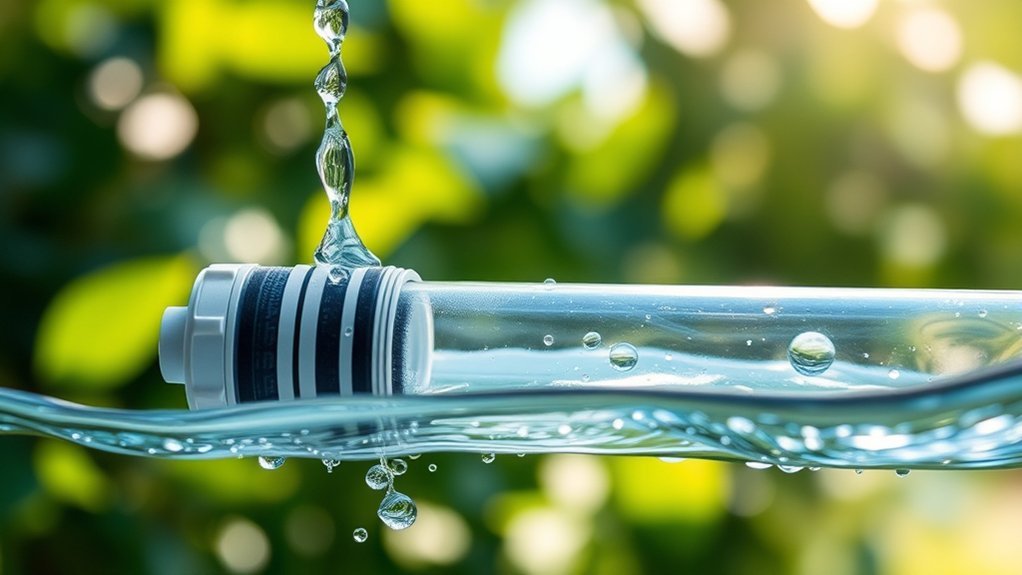
Where do bacteria and viruses hide in your water supply, and how can you effectively remove them? Bacteria survival depends on water temperature, nutrient availability, and biofilm formation, while virus inactivation requires disrupting their protective protein coats.
Water filters with pore sizes under 0.2 microns physically block bacteria; however, viruses can be smaller, necessitating advanced filtration like ultrafiltration or nanofiltration.
| Filter Type | Bacteria Removal | Virus Removal |
|---|---|---|
| Microfiltration | High | Low |
| Ultrafiltration | Very High | Moderate to High |
| Nanofiltration | Very High | High |
Selecting filters based on contaminant size ensures effective removal, reducing health risks linked to microbial contamination.
Purifying Water With Chemical Treatments
While physical filtration effectively removes many microorganisms, some pathogens and chemical contaminants require additional methods to ensure water safety. You can rely on chemical treatments like iodine treatment, which disrupts microbial cell functions and kills bacteria, viruses, and protozoa.
To use iodine treatment effectively, you’ll need to measure the correct dosage and allow sufficient contact time. After treating, consider chemical stabilization to neutralize residual iodine, preventing unpleasant taste and potential health concerns.
Chemical stabilization also helps maintain treated water’s quality over time. Keep in mind that chemical treatments don’t remove chemical pollutants like heavy metals, so you might need complementary methods for comprehensive purification.
When to Use UV Light for Water Disinfection?
How do you determine the right time to use UV light for water disinfection? When you’re learning UV purification, understanding the water’s contamination level and clarity is crucial. UV light is most effective when the water is clear enough to allow UV wavelengths to penetrate and deactivate microorganisms.
Proper UV wavelength selection, typically around 254 nm, ensures maximum microbial inactivation.
Consider using UV light when:
- You need chemical-free disinfection without altering water taste or odor.
- The water source has microbial contamination resistant to chemical treatments.
- Rapid, on-demand sterilization is required in point-of-use systems.
How to Choose the Right Water Filter for You
What factors should you consider when selecting a water filter that meets your specific needs? First, analyze your water quality and contamination types to choose an effective filtration technology: carbon filters for chemical removal, reverse osmosis for heavy metals, or UV for pathogens.
Next, evaluate noise reduction features; quieter systems improve user experience, especially in kitchens or offices. Don’t overlook aesthetic considerations: select a design and size that integrate seamlessly into your space without disrupting your décor.
Also, assess flow rate and filter lifespan to balance performance and maintenance frequency. Finally, consider installation complexity and compatibility with your plumbing setup to ensure smooth integration.
How to Maintain and Clean Your Water Filter
Proper maintenance and cleaning are essential to keep your water filter operating at peak efficiency and extend its lifespan. You need to follow strict maintenance schedules to prevent clogging and bacterial buildup. Begin by regularly inspecting the filter for visible debris and replacing cartridges as recommended.
The filter replacement steps typically involve shutting off the water supply, removing the old filter, installing the new one, and flushing the system.
To maintain your water filter effectively, focus on:
- Preventing contamination by timely replacements
- Ensuring consistent water flow and purity
- Avoiding costly repairs through routine cleaning
Frequently Asked Questions
Can Rainwater Be Safely Filtered for Drinking?
You can safely filter rainwater for drinking by combining rain harvesting with thorough safety testing. Use proper filtration systems and regularly test for contaminants to ensure the water meets health standards before consumption.
What Is the Environmental Impact of Disposable Water Filters?
You’ll love disposable water filters; they create mountains of waste! Environmental tradeoffs are significant, as life cycle analysis reveals energy use and plastic pollution.
Opt for reusable options to minimize impact and improve sustainability effectively.
How Do Water Filters Affect Mineral Content in Water?
Water filters often cause mineral removal, which can alter water’s taste by reducing beneficial elements like calcium and magnesium. You can choose filters designed to preserve minerals, ensuring better taste and essential nutrient retention.
Are Water Filter Pitchers Effective for Well Water?
Think of your pitcher as a sieve catching impurities but missing deep-rooted toxins. While water filter effectiveness is decent for well water safety, you’ll need advanced testing and filtration to guarantee truly safe, contaminant-free well water.
Can Filtered Water Be Used for Cooking and Gardening?
Yes, you can use filtered water for cooking and gardening if your filter effectiveness is high. Just keep up with maintenance frequency to ensure contaminants stay out, preserving taste and plant health efficiently.
Conclusion
You hold the key to turning murky water into a crystal-clear stream flowing with health. By combining mechanical, chemical, and UV technologies, you can build a fortress against contaminants, ensuring each drop is pure and safe.
Balancing filter stages and maintenance is like tuning an instrument—precision keeps your water clean and rejuvenating. Trust this layered approach to transform your water into a lifeline, clear as a mountain spring and free from unseen threats.
By applying these methods thoughtfully, you can effectively filter water, providing a reliable source of purity and health for you and your loved ones.