What Should a Freezer Be Set at
Just as a thermostat governs your home’s comfort, setting your freezer at the right temperature is essential to preserving food safety and quality. Knowing what a freezer should be set at helps you maintain optimal conditions for your stored items.
You might assume colder is always better, but freezing too warm or too cold can lead to spoilage or wasted energy. Understanding why 0°F (-18°C) is the recommended setting will help you avoid these pitfalls and optimize your freezer’s performance.
Key Takeaways
- The ideal freezer temperature is 0°F (-18°C) to ensure food safety and minimize bacterial growth and enzymatic activity.
- Maintaining 0°F (-18°C) optimizes ice crystal formation, preserving food texture and preventing cellular damage.
- Temperatures above 0°F increase spoilage risk, while colder settings cause freezer burn and higher energy use.
- Regularly check and adjust temperature with a calibrated thermometer for consistent freezer performance.
- Proper organization and door seal maintenance support even cooling and energy-efficient operation at the ideal temperature.
Why 0°F (-18°C) Is the Ideal Freezer Temperature
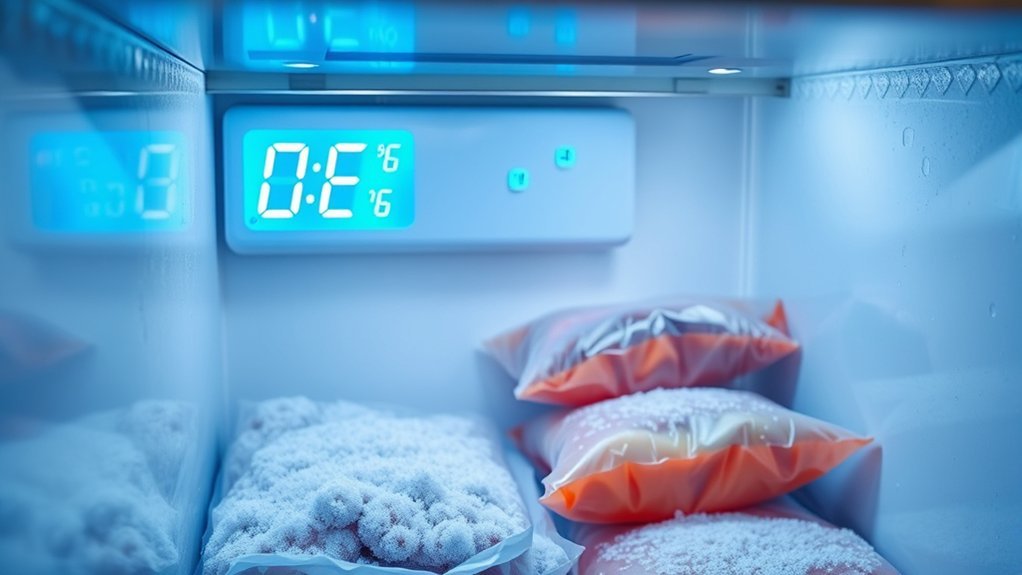
Why is 0°F (-18°C) considered the ideal temperature for your freezer? At this setting, your freezer maintains food safety by effectively halting bacterial growth and enzymatic activity, preserving quality and nutrients.
Scientific studies confirm that -18°C optimizes ice crystal formation, preventing cellular damage in frozen food. From a budget optimization standpoint, this temperature balances energy consumption and preservation efficiency, minimizing electricity costs without compromising food safety.
Operating your freezer at 0°F also contributes to noise reduction; compressors work less frequently compared to lower temperatures, reducing operational noise. Setting your freezer precisely at -18°C ensures optimal performance by aligning with industry standards and energy guidelines, providing a reliable, efficient freezing environment that safeguards your food while controlling costs and minimizing sound disturbances.
What Happens If Your Freezer Is Too Warm or Cold
Maintaining your freezer at the ideal 0°F (-18°C) is key, but deviations from this temperature can substantially impact food safety and appliance performance. If your freezer is too warm, microbial growth accelerates, reducing food shelf life and risking spoilage. Conversely, if it’s too cold, ice crystals can cause freezer burn, degrading texture and flavor.
Both extremes affect freezer reliability by increasing compressor workload, potentially shortening its lifespan.
To optimize performance and storage organization, watch for these signs:
- Frost buildup indicating excessively low temps
- Soft or partially thawed items signaling warm conditions
- Increased energy consumption due to compressor strain
- Difficulty maintaining consistent temperature zones
- Disorganized storage causing uneven cooling and airflow
Adjust settings promptly to maintain optimal freezer function and food safety.
Best Freezer Temperature Settings for Different Foods

How should you adjust your freezer temperature to best preserve different types of food? Understanding food classification is vital; meats, vegetables, and prepared meals each require specific temperatures to maintain quality and safety.
Generally, storing raw meats at -18°C (0°F) prevents bacterial growth while preserving texture. Vegetables often tolerate slightly higher temperatures, around -15°C (5°F), to avoid freezer burn. Prepared meals benefit from consistent temperatures near -18°C for longer shelf life.
When comparing brands, note that some freezers offer precise digital controls and humidity management, allowing tailored settings per food classification. Selecting a unit with adjustable compartments can optimize preservation.
Signs Your Freezer Temperature Is Too High or Low
Adjusting your freezer to the ideal temperature is only effective if you can recognize when it’s off balance. Signs of a temperature too high or low reveal inefficiencies and potential food safety risks, debunking common energy myths like “colder is always better.” You might notice:
- Frost buildup indicating excessive cold or poor airflow
- Ice cream becoming too hard, signaling a temperature too low
- Soft or partially thawed frozen foods, a sign of too high a temperature
- Increased energy consumption, contradicting freezer fashion trends of ultra-cold settings
- Frequent compressor cycling, stressing the appliance unnecessarily
Monitoring these signs helps maintain optimal performance and food preservation, keeping your freezer efficient, safe, and in line with practical, evidence-based temperature guidelines.
How to Check and Adjust Your Freezer Temperature
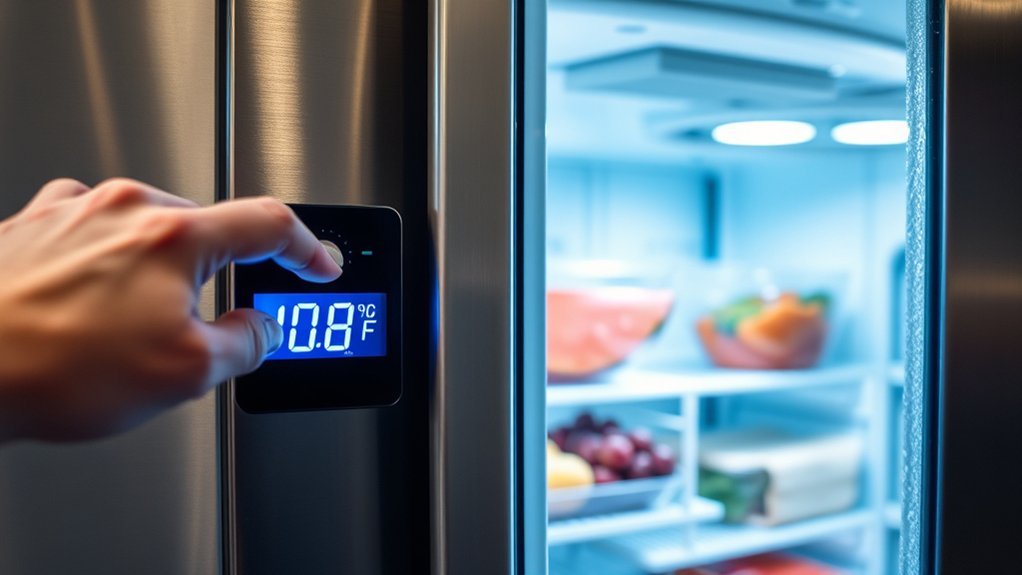
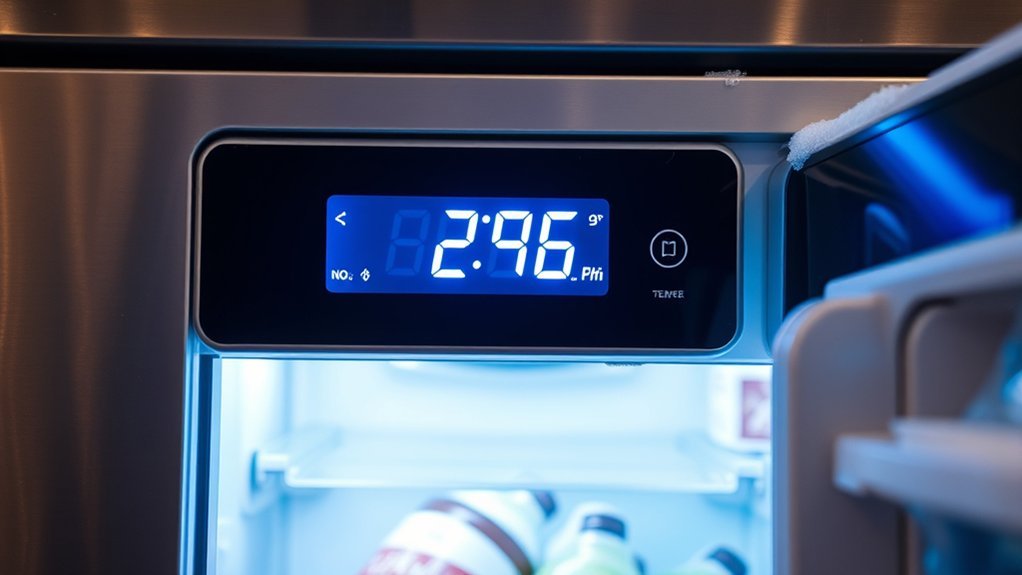
Where should you start when verifying your freezer’s temperature? First, place a calibrated appliance thermometer in the center of the freezer for at least 24 hours to obtain an accurate reading. The ideal temperature is 0°F (-18°C).
If the temperature deviates, consult your freezer’s manual to locate the temperature control dial or digital settings. Adjust incrementally, then monitor the thermometer again after 24 hours to confirm stability.
Avoid frequent, large adjustments to prevent stressing the compressor. If temperature inconsistencies persist despite adjustments, consider professional freezer repairs.
Be mindful of warranty considerations; unauthorized repairs or tampering with sealed components might void your warranty. Always document measurements and adjustments to support any service claims or warranty requests.
This method ensures your freezer operates within optimal parameters, preserving food safety and appliance longevity.
Tips to Keep Your Freezer Temperature Consistent
You should place your freezer away from heat sources to maintain stable internal temperatures. Regularly monitoring the temperature helps detect fluctuations early, ensuring optimal performance.
Also, avoid overloading your freezer, as restricted airflow can cause uneven cooling and temperature inconsistencies.
Ideal Freezer Placement
Proper placement plays a pivotal role in maintaining a consistent freezer temperature. When positioning your freezer, you need to minimize external heat sources and ensure optimal airflow. Poor freezer placement can cause temperature fluctuations, forcing the compressor to work harder and reducing energy efficiency.
Also, inspect door seals regularly, as damaged seals allow cold air to escape, destabilizing the internal temperature.
Consider these tips for ideal freezer placement:
- Place the freezer away from direct sunlight and heat-emitting appliances.
- Maintain at least 2-3 inches of clearance around the freezer for ventilation.
- Avoid placing it in humid areas to prevent frost buildup.
- Position the freezer on a level surface to ensure proper door seal alignment.
- Frequently check and clean door seals to maintain airtight closure.
These steps help keep your freezer temperature steady and energy-efficient.
Regular Temperature Monitoring
Maintaining a steady freezer temperature depends not only on placement but also on consistently monitoring the internal environment. You should use a reliable thermometer to check the temperature daily, guaranteeing it stays at the optimal -18°C (0°F).
Regular monitoring helps detect deviations early, preventing food spoilage and energy inefficiency. Incorporate maintenance scheduling into your routine to inspect seals and coils, which influence temperature stability.
Addressing noise complaints promptly can indicate mechanical issues affecting performance. Documenting temperature readings allows you to identify patterns or malfunctions, supporting timely interventions.
Avoid Overloading Freezer
How does overloading your freezer impact its temperature consistency? Overstuffing restricts air circulation, causing uneven cooling and forcing the compressor to overwork. This disrupts compliance guidelines that mandate maintaining a steady temperature, risking food spoilage.
To ensure optimal performance, avoid unrelated topics like storage aesthetics or convenience when organizing your freezer. Focus on functionality.
Consider these tips:
- Leave space between items for proper airflow.
- Distribute items evenly across shelves.
- Avoid blocking vents with large containers.
- Regularly remove expired or unnecessary items.
- Monitor temperature with a reliable thermometer.
Following these evidence-based practices helps maintain consistent freezer temperatures, prolongs appliance life, and ensures food safety in line with established compliance guidelines.
How Your Freezer Temperature Affects Food Quality and Safety
Why does freezer temperature play such a critical role in food quality and safety? Maintaining your freezer at the optimal temperature, typically 0°F (-18°C), slows enzymatic activity and microbial growth, preserving food safety and texture.
Keeping your freezer at 0°F (-18°C) slows microbial growth and enzymes, preserving food safety and texture.
Improper temperatures can cause ice crystals to enlarge, damaging cell structure and negatively affecting food texture. You should also focus on efficient freezer organization to ensure proper air circulation, which helps maintain a consistent temperature throughout.
Uneven temperatures can lead to partial thawing and refreezing, accelerating spoilage and increasing the risk of foodborne pathogens. By setting your freezer correctly and organizing contents thoughtfully, you preserve nutritional value, prevent freezer burn, and reduce safety risks.
This evidence-based approach ensures your frozen foods stay safe and maintain their intended quality.
How Your Freezer Temperature Affects Energy Bills
You can reduce your energy consumption by setting your freezer to the optimal temperature, which balances efficiency and food preservation. Studies show that keeping your freezer at 0°F (-18°C) minimizes power usage without compromising safety.
Adjusting the thermostat just a few degrees colder can too greatly increase your electricity bills.
Energy Consumption and Freezer Settings
Where you set your freezer temperature directly impacts its energy consumption and, consequently, your electricity bill. Running your freezer colder than necessary forces the compressor to work harder, reducing energy efficiency. Proper appliance maintenance also plays a critical role in optimizing consumption.
To manage energy use effectively, keep these points in mind:
- Setting temperature between -18°C (0°F) and -15°C (5°F) balances preservation and consumption.
- Regularly defrost to avoid excessive ice buildup that strains the compressor.
- Ensure door seals are intact to prevent cold air leaks.
- Avoid frequent door opening to maintain stable internal temperature.
- Position the freezer away from heat sources to reduce compressor workload.
Optimal Temperature for Savings
How much can adjusting your freezer temperature influence your energy bills? Setting your freezer to the optimal temperature of 0°F (-18°C) balances freezing safety and energy efficiency.
Temperatures lower than 0°F increase energy consumption unnecessarily without significant improvements in food preservation. Conversely, setting it warmer risks compromising freezing safety, leading to potential bacterial growth and food spoilage.
Modern freezers maintain temperature within narrow margins, so minor adjustments can yield measurable savings. According to energy studies, raising the temperature by just 5°F can reduce energy use by up to 10%, but you shouldn’t exceed 0°F to ensure safety.
To optimize savings, regularly check seals and avoid storing warm food. This approach ensures efficient energy use while preserving food quality and safety.
How to Know When It’s Time to Upgrade Your Freezer
When should you consider upgrading your freezer? Regular upgrade cycles typically span 10-15 years, but energy audits often reveal inefficiencies sooner. If your freezer struggles to maintain the optimal temperature (0°F or -18°C), it may indicate failing components or insulating degradation.
Consider upgrading your freezer if it can’t maintain 0°F, revealing potential component or insulation issues.
Here are five signs to watch for:
- Increased energy consumption noted in energy audits
- Frequent frost buildup despite defrosting efforts
- Excessive noise or erratic compressor cycles
- Uneven cooling or warm spots inside the freezer
- Visible physical damage or rust compromising insulation
Addressing these issues promptly can reduce energy waste and protect your food quality. Upgrading at the right time ensures your freezer operates at peak performance and aligns with energy-efficient standards.
Frequently Asked Questions
Can Freezer Temperature Affect the Texture of Frozen Fruits?
Yes, freezer temperature directly impacts texture changes and fruit quality. If it’s too warm, ice crystals grow larger, damaging cell structure and causing mushiness.
You should keep it consistently cold to preserve ideal texture and quality.
How Often Should I Defrost My Freezer?
You should defrost your freezer when frost buildup exceeds 0.25 inches to maintain ideal defrost frequency. This prevents energy loss, ensuring energy efficiency and preserving consistent cooling performance, as supported by refrigeration maintenance guidelines.
Does Freezer Placement in the House Impact Its Efficiency?
If you place your freezer in a hot garage, its energy efficiency drops considerably. Proper freezer placement in a cool, shaded area reduces compressor workload, enhancing energy efficiency and lowering electricity bills, as studies on appliance performance consistently show.
Can Freezer Temperature Settings Vary by Freezer Type?
Yes, freezer temperature settings vary by freezer types due to design and insulation differences. Chest freezers often require colder settings than upright models.
Adjust based on manufacturer’s specs to ensure optimal temperature variation and energy efficiency.
What Are Common Freezer Temperature Myths?
You’ll encounter common myths like colder always means better preservation or that freezer temps don’t affect food safety. Temperature myths ignore that ideal settings balance food quality and energy use, supported by scientific refrigeration standards.
Conclusion
Picture your freezer as a silent guardian, holding your food in perfect stasis at 0°F (-18°C). By keeping this calibrated chill, you halt microbial growth and preserve texture, ensuring every bite tastes fresh and safe.
Avoid temperature swings by monitoring regularly, sealing doors tightly, and organizing contents for airflow. This balance not only protects your food but also keeps energy use efficient.
Trust this precise setting to maintain quality and safety, saving you money and worry. Remember, the ideal freezer temperature should be set at 0°F (-18°C) for the best results.