Can You Eat Freezer Burned Food
You might think freezer-burned food is completely ruined and unsafe, but that’s not always the case. Freezer burn occurs when food is exposed to air inside the freezer, causing dehydration and oxidation. While freezer burn affects the texture, flavor, and moisture of your food, it doesn’t automatically mean it’s dangerous to eat.
Understanding the exact impact and how to spot when it’s truly compromised can help you decide whether to salvage or discard. Freezer-burned food may have dry spots or discoloration, but it is often still safe to consume. Let’s examine the nuances behind freezer burn and its effects on your meals.
Key Takeaways
- Freezer burned food is safe to eat as freezer burn affects quality, not food safety or health risks.
- Dry, tough, or flavorless areas indicate freezer burn but do not mean the food is unsafe.
- Discard freezer burned food only if it has off odors, severe discoloration, or poor texture.
- Use visual inspection and storage duration to decide if freezer burned food is still palatable.
- Extended cooking or processing can improve flavor and texture of freezer burned meat, fruits, and vegetables.
What Causes Freezer Burn?
Freezer burn occurs when air reaches the surface of food stored in the freezer, causing dehydration and oxidation. You’ll want to use proper freezer safe storage materials, such as airtight containers or heavy-duty freezer bags, to minimize air exposure.
Even minor punctures or loose seals can allow moisture to escape, accelerating freezer burn. Implementing strict labeling practices helps you track storage duration, so you can rotate stock and consume food before quality deteriorates.
When packaging food, press out as much air as possible and seal items tightly. Avoid overloading your freezer, which can compromise airflow and temperature consistency.
What Freezer Burn Does to Taste and Texture
The impact of freezer burn on food manifests primarily through altered taste and texture, resulting from moisture loss and oxidation at the surface. When you encounter freezer burn, you’ll notice distinct taste changes and textural degradation due to these processes.
Specifically:
- Moisture evaporation causes dehydration in the affected areas, leading to a dry, tough texture that contrasts with the moist interior.
- Oxidation of fats triggers rancid or off-flavors, significantly altering the expected taste profile.
- Surface protein denaturation modifies the structural integrity, resulting in a grainy or leathery mouthfeel.
Is Freezer Burned Food Safe to Eat?
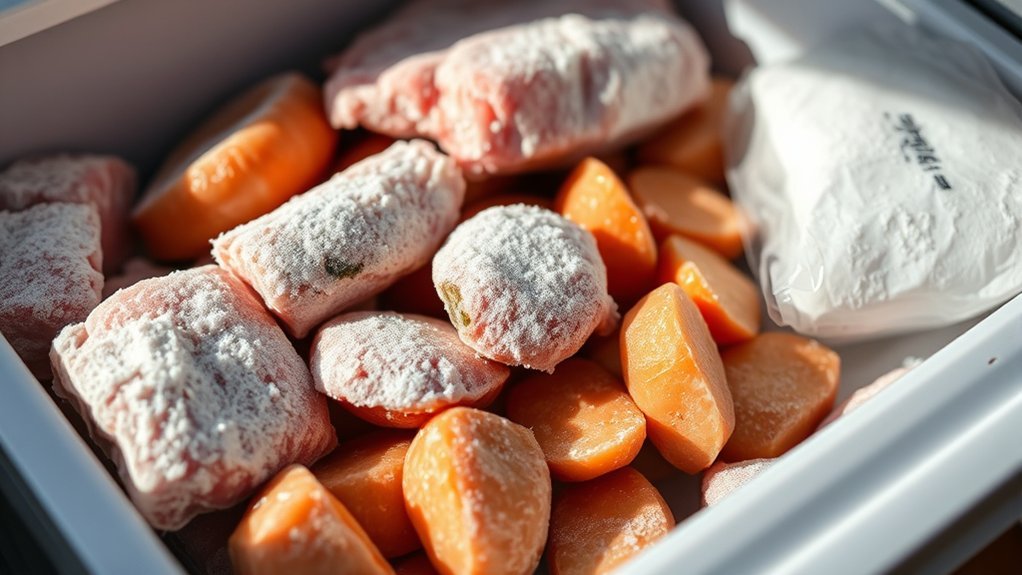
How safe is food affected by freezer burn? According to freezer burn science, the process results from moisture loss and oxidation, which degrade quality but do not inherently cause foodborne illness.
You can safely eat freezer burned food, though its taste impact and texture diminish considerably. The affected areas may be dry, tough, or flavorless.
| Aspect | Effect of Freezer Burn |
|---|---|
| Safety | No direct health risk |
| Taste Impact | Decreased flavor, off-tastes |
| Texture | Dryness, toughness, graininess |
How to Identify Freezer Burn on Different Foods
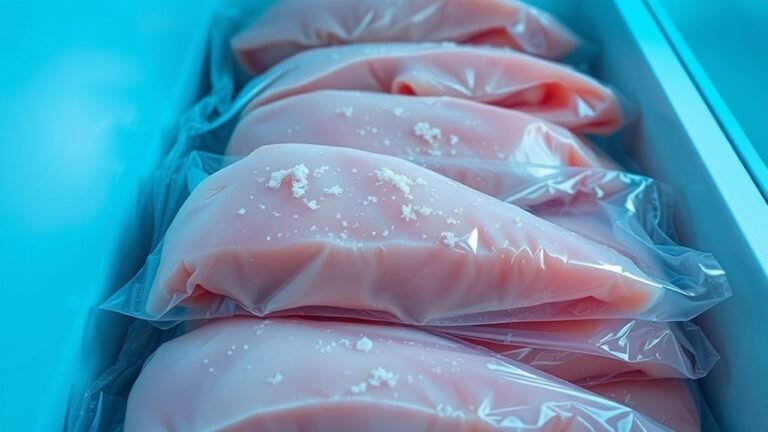
You can identify freezer burn on meat by looking for dry, pale patches and crystalline ice formations.
In produce, focus on texture changes like toughness or shriveling that indicate moisture loss.
For seafood, watch for color shifts such as dullness or white spots that signal surface dehydration.
Visual Signs On Meat
Where should you look to spot freezer burn on meat? Focus on specific visual cues that indicate moisture loss and oxidation affecting meat textures. Identify freezer burn by:
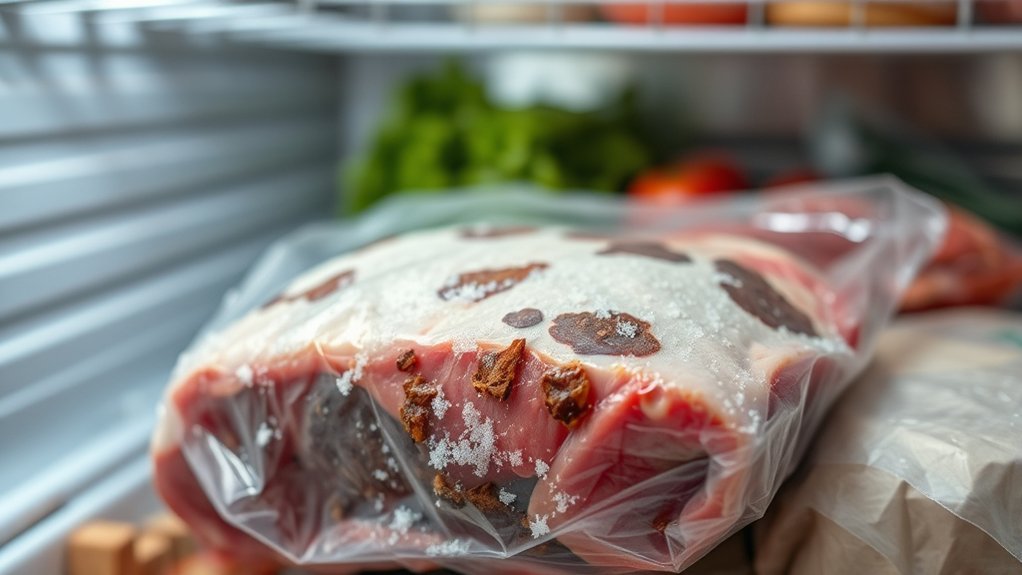
- Discoloration: Look for grayish-brown or white dry patches contrasting with the meat’s natural red or pink color. This signals dehydration and oxidation.
- Surface Dryness: Check for dry, leathery spots that disrupt the meat’s usual smooth and moist texture. These areas reflect freezer burn’s impact on moisture retention.
- Crystallization: Observe for ice crystals on the surface or inside packaging, indicating sublimation has occurred, further altering meat textures.
Texture Changes In Produce
Although freezer burn affects various foods differently, changes in texture often serve as the most telling indicator in produce. When you examine freezer-burned fruits or vegetables, you’ll notice significant alterations in produce texture, such as increased dryness, toughness, or mushiness.
These texture changes result from ice crystal formation puncturing cell walls during freezing, causing cellular dehydration and structural breakdown. For example, leafy greens become limp and fragile, while berries may turn grainy or mealy.
You can identify freezer burn by feeling for areas that lack the original firmness or exhibit unnatural brittleness. Understanding these texture changes helps you assess whether produce is still suitable for consumption or if it’s compromised beyond safe or palatable limits, guiding you in deciding whether to cook, discard, or repurpose the affected items.
Color Shifts In Seafood
How does freezer burn manifest in seafood, and what color changes should you watch for? Freezer burn causes distinct color shifts that alter seafood appearance, signaling moisture loss and oxidation. You should carefully examine these indicators:
- Pale or white patches – Look for dry, discolored spots where ice crystals have sublimated, leaving dehydrated areas.
- Grayish or brownish hues – These suggest protein degradation and lipid oxidation, especially around edges or thinner cuts.
- Dull, faded coloration – A loss of the vibrant natural color indicates prolonged exposure to air and freezer conditions.
What Foods Are Most Susceptible to Freezer Burn?
Which foods are most vulnerable to freezer burn? Foods with high moisture content and uneven packaging are particularly susceptible. For example, fruits, vegetables, and seafood lose moisture rapidly when exposed to air, accelerating freezer burn formation.
Meats with fatty surfaces, like steaks or ground beef, also develop freezer burn due to fat oxidation and dehydration. Frozen bread and baked goods, with porous textures, allow air penetration that promotes ice crystal sublimation.
From a food safety standpoint, freezer burn primarily affects quality rather than safety, but excessive moisture loss can encourage bacterial growth once thawed. Understanding susceptibility helps you prioritize storage methods to minimize freezer burn and maintain food safety.
You should monitor packaging integrity and freeze foods quickly to reduce exposure to cold, dry air that initiates freezer burn.
Tips to Prevent Freezer Burn
To minimize freezer burn, you need to focus on airtight packaging that limits moisture loss and air exposure. Using vacuum-sealed bags or tightly wrapped containers can considerably reduce the risk.
Additionally, maintaining your freezer at a consistent temperature around 0°F (-18°C) prevents ice crystal formation that contributes to freezer burn.
Proper Packaging Techniques
Where you start with packaging can considerably influence the risk of freezer burn. To maximize freezer safety and packaging optimization, you need to focus on minimizing air exposure and moisture loss. Follow these steps:
- Use airtight containers or heavy-duty freezer bags: Remove as much air as possible before sealing to reduce sublimation and ice crystal formation.
- Wrap items tightly with plastic wrap or aluminum foil before bagging: This double layer enhances protection against freezer burn by creating an additional moisture barrier.
- Portion foods into meal-sized amounts: This prevents repeated thawing and refreezing, which compromises packaging integrity and increases freezer burn risk.
Optimal Freezer Temperature
How cold should your freezer be to effectively prevent freezer burn? Maintaining your freezer at 0°F (-18°C) or below is critical. Freezer burn occurs when moisture migrates from food to the cold air, causing dehydration and oxidation.
At this temperature, water molecules remain stable, minimizing ice crystal growth and moisture loss. You need to understand what is freezer burn to prevent it effectively. Besides packaging, controlling temperature is key.
Fluctuations above 0°F accelerate moisture sublimation, increasing freezer burn risk. To store properly, ensure your freezer is not overcrowded, allowing air circulation to keep temperature consistent.
Use a reliable freezer thermometer to monitor conditions regularly. By maintaining a stable, optimal freezer temperature, you reduce the physical and chemical changes that cause freezer burn, preserving food quality longer.
Ways to Use Freezer Burned Food Without Waste
Why let freezer burned food go to waste when you can repurpose it effectively? You can extend usability by applying freezer safe substitutes and creative thawing methods that retain texture and flavor. Consider these approaches:
- Transform freezer burned meat into stews or casseroles where prolonged cooking compensates for dryness and texture loss.
- Use freezer burned fruits in smoothies or baking; blending or baking masks textural degradation effectively.
- Incorporate freezer burned vegetables into soups or purees, where cell breakdown is less noticeable and nutrients remain usable.
When to Throw Out Freezer Burned Food
When should you discard freezer burned food to guarantee safety and quality? First, understand that freezer burn itself is not a safety hazard but a quality issue. You should throw out freezer burned items when they exhibit off odors, discoloration beyond typical dehydration, or an altered texture that affects palatability.
Relying solely on tasting procedures to assess safety can be risky, as some contaminants are undetectable by taste. Avoid common storage myths, such as assuming all freezer burn is harmless or reversible.
If freezer burn is extensive, it compromises nutrient integrity and texture, making the food unappetizing and potentially unsafe to consume. Prioritize visual inspection and knowledge of storage duration over taste tests to decide when to discard freezer burned food, ensuring you maintain both safety and quality.
Frequently Asked Questions
Does Freezer Burn Affect the Nutritional Value of Food?
Freezer burn minimally affects the nutritional impact of food; while texture and flavor degrade, key nutrients like proteins, fats, and vitamins remain largely intact.
You can still consume freezer-burned items without significant nutrient loss.
Can Freezer Burn Occur in Vacuum-Sealed Packages?
Yes, freezer burn can occur in vacuum-sealed packages if the seal is compromised or if empty packaging areas allow oxygen exposure. This presence of oxygen initiates dehydration and oxidation, leading to freezer burn despite vacuum sealing.
How Long Does It Take for Freezer Burn to Develop?
Freezer burn typically develops after extended freeze duration, usually beyond three to six months. Your storage duration directly impacts moisture loss and oxidation rates, accelerating quality degradation as ice crystals form and damage the food’s cellular structure.
Can You Refreeze Food That Has Freezer Burn?
You see frost-dried patches, toughened edges, and dull colors. You shouldn’t refreeze freezer-burned food because refreezing concerns include accelerated texture degradation and moisture loss. These issues compromise quality and safety, making repeated freezing ill-advised from an analytical standpoint.
Does Freezer Burn Affect Food Safety Differently for Cooked vs. Raw Foods?
Freezer burn safety doesn’t differ notably between cooked vs. raw foods; both suffer quality loss, but neither poses added safety risks.
You should still inspect for spoilage to guarantee safe consumption despite freezer burn effects.
Conclusion
Freezer burn is like a frost-kissed veil that dulls your food’s vibrant essence, robbing moisture and flavor. While it doesn’t render your meals unsafe, it’s a warning signal—if off odors or discoloration appear, discard without hesitation.
You can salvage freezer-burned items by trimming affected areas or transforming them into soups and stews, where lost qualities revive. By understanding freezer burn’s impact, you wield control—preserving safety and minimizing waste with precision.
Knowing that you can eat freezer burned food when handled properly helps you make informed decisions in the kitchen.