Which Water Filter Is Best
Choosing the right water filter is a bit like finding the perfect pair of glasses—you need clarity tailored to your unique needs. When deciding which water filter is best, it’s important to remember that no single type can remove every contaminant.
Understanding your water’s composition is essential to making an informed choice. By examining your options carefully and considering certifications and maintenance, you’ll avoid costly mistakes and guarantee safer water.
But what specific factors should guide your choice?
Key Takeaways
- Choose a filter based on your specific water contaminants identified through testing or local water quality reports.
- Activated carbon filters are best for removing chlorine, some VOCs, and improving taste.
- Reverse osmosis filters effectively remove heavy metals, fluoride, and dissolved solids.
- No single filter removes all impurities; combining methods may provide comprehensive filtration.
- Verify filter performance using certified standards like NSF/ANSI for reliability and safety.
What Are the Different Types of Water Filters?
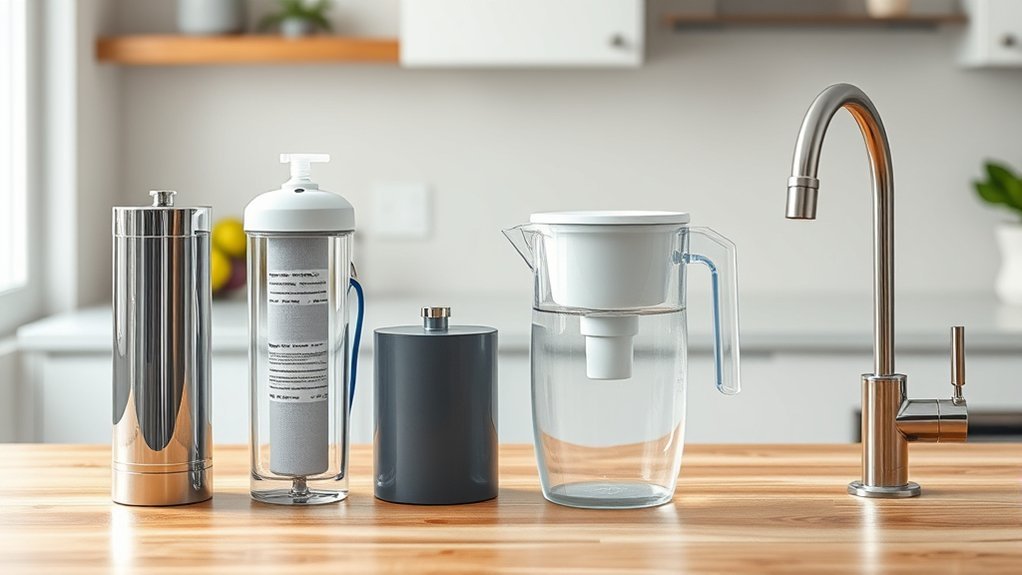
How do water filters differ in their methods and effectiveness? You’ll find various types of filters, each using distinct filter media to target impurities.
Mechanical filters rely on physical barriers like mesh or ceramic to remove particles. Activated carbon filters use porous carbon media to adsorb chemicals and improve taste. Ion exchange filters replace harmful ions with harmless ones, often in resin beads.
Mechanical filters trap particles, activated carbon adsorbs chemicals, and ion exchange swaps harmful ions for safer ones.
Reverse osmosis employs a semi-permeable membrane to separate dissolved solids. Each filter media’s design influences flow rate, contaminant retention, and lifespan.
Understanding these differences helps you select a filter suited to your water quality needs and maintenance preferences. By analyzing the filter media and mechanism, you can objectively assess which type offers optimal performance for your situation.
Which Contaminants Can Water Filters Remove?
Anyone choosing a water filter should consider which contaminants it can effectively remove. Water filter efficacy varies depending on the technology used. Activated carbon filters excel at removing chlorine, volatile organic compounds (VOCs), and some pesticides, while reverse osmosis systems target heavy metals like lead, arsenic, and fluoride.
Ceramic filters can eliminate bacteria and protozoa but may not remove dissolved chemicals. Understanding which contaminants are present in your water source is essential because no single filter removes all impurities. Testing your water helps determine the right filter type based on contaminant profiles.
How Do I Choose the Best Water Filter?

Selecting the best water filter starts with evaluating your specific water quality needs and the contaminants you want to remove. Begin by testing your water or reviewing local water quality reports to identify common impurities.
When choosing filters, consider the filtration method, such as carbon, reverse osmosis, or UV, each targets different contaminants effectively. Avoid water filtration myths that suggest one filter type suits all situations; no single system removes every contaminant.
Also, factor in filter lifespan, maintenance, and certification standards like NSF/ANSI to ensure reliability. By analyzing your water’s unique profile and matching it with a filter’s verified capabilities, you make an informed choice that balances performance, cost, and convenience without falling for unfounded claims.
What Are the Pros and Cons of Top Water Filter Brands?
Why do some water filter brands stand out more than others? You’ll find that brand performance often hinges on filtration technology, certifications, and customer feedback.
For example, Brand A offers high contaminant removal but tends to have higher costs and complex installation. These are clear pros and cons to weigh. Brand B excels in affordability and ease of use but may not filter out as many impurities.
When evaluating top brands, consider how consistently they meet standards like NSF certification, which objectively measures effectiveness. You’ll also want to assess durability and filter lifespan, as these impact long-term value.
How Do I Maintain and Replace My Water Filter?

How often should you maintain and replace your water filter to ensure ideal performance? Following manufacturer replacement schedules is essential, as clogged filters reduce effectiveness and water flow.
Regular maintenance tips include rinsing pre-filters and inspecting seals to prevent leaks. Below is a general guideline for common filter types:
| Filter Type | Replacement Interval |
|---|---|
| Carbon Block | Every 6 months |
| Reverse Osmosis Membrane | Every 2 years |
| Ceramic Filter | Every 12 months |
| Sediment Filter | Every 3 months |
| UV Filter Bulb | Every 12 months |
Adhering to these schedules maintains filtration efficiency and water quality. Monitoring water taste and pressure helps identify when early replacement might be necessary.
Implementing these maintenance tips ensures your water filter operates optimally.
Frequently Asked Questions
Can Water Filters Improve the Taste of All Water Types?
Yes, water filters can improve taste, but taste implications vary by water type. Some filters retain beneficial minerals, enhancing flavor, while others remove them, which might negatively affect taste depending on your water’s mineral content and filter type.
Are Water Filters Safe for Use With Well Water?
If you’ve tested your well water and found contaminants, installing a certified filtration system ensures filtration safety by removing chemicals.
With proper DIY installation and regular maintenance, you can confidently reduce chemical concerns and improve your water quality.
How Long Does It Take for a Water Filter to Purify Water?
The time to purify water depends on the filter’s filtration rate, which varies by type and capacity. Typically, it takes from a few minutes to several hours to process a gallon, ensuring effective contaminant removal.
Do Water Filters Remove Beneficial Minerals From Water?
Sure, your water won’t turn into a barren desert after filtering, but some filters do reduce mineral retention, subtly dulling flavor impact. Choose wisely. Evidence shows balancing purification and minerals preserves taste without sacrificing safety.
Can I Install a Water Filter Myself Without Professional Help?
Yes, you can handle DIY installation of many water filters by following manufacturer instructions carefully. Regular maintenance tips include replacing cartridges timely and checking for leaks, ensuring optimal filter performance and water quality without needing professional help.
Conclusion
You want the best water filter, but ironically, no single filter does it all. That’s why you start by testing your water, then combine sediment, carbon, and maybe reverse osmosis to tackle different contaminants.
Sure, maintenance and cost can be a hassle, but choosing a certified, multi-stage system ensures safer water.
So, embrace the complexity—it’s the only way to truly filter out the unknowns and drink confidently. When it comes to picking which water filter is best, a tailored, multi-stage approach wins every time.