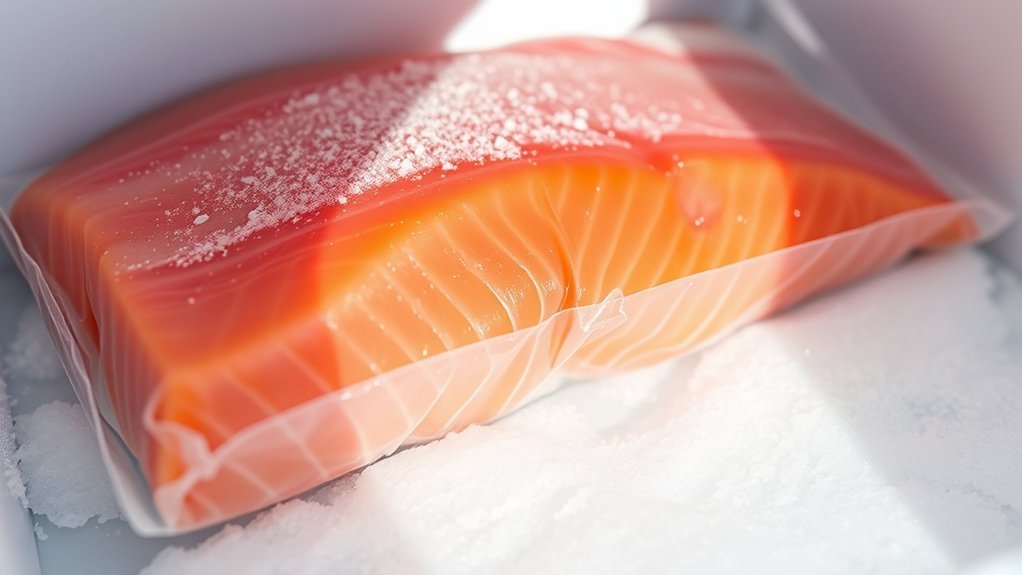
How Long Does Salmon Last in Freezer
Like preserving a rare artifact, freezing salmon requires careful attention to maintain its quality over time. How long does salmon last in the freezer is a common question, but the answer depends on several factors. You might think salmon lasts indefinitely in the freezer, but factors like packaging, temperature consistency, and initial freshness significantly influence its longevity.
Understanding these variables can help you avoid waste and ensure optimal flavor and safety. Before you decide how long to keep your salmon frozen, consider what really determines its shelf life in the freezer.
Key Takeaways
- Raw salmon maintains best quality for up to six months when stored continuously at 0°F (-18°C) or below.
- Cooked salmon’s quality declines after two to three months of freezing but remains safe beyond this if properly frozen.
- Label salmon packages with freezing dates to track storage duration and ensure consumption within recommended timeframes.
- Avoid temperature fluctuations, freezer burn, and repeated thawing to preserve salmon’s texture, flavor, and safety.
- Vacuum-sealing or airtight, moisture-resistant packaging helps minimize oxidation and freezer burn, extending salmon’s freezer life.
How Long Does Salmon Last in the Freezer?
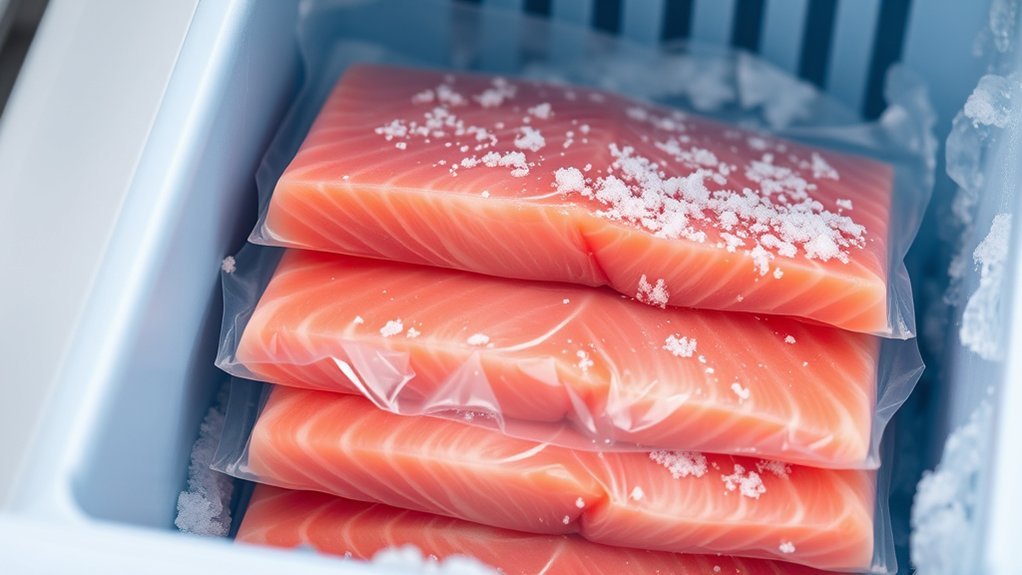
How long can you safely store salmon in your freezer? Proper salmon storage depends on maintaining optimal freezer quality, which means consistently keeping the temperature at 0°F (-18°C) or below. Under these conditions, raw salmon can retain its best quality for up to six months.
Beyond this period, freezer burn and oxidation may degrade texture and flavor, though it remains safe to eat if kept continuously frozen. Cooked salmon, however, generally lasts only two to three months before quality declines noticeably.
To maximize freezer quality, ensure salmon is tightly wrapped in moisture-proof packaging to limit exposure to air and prevent freezer burn. Always label packages with dates to monitor storage times accurately.
Following these guidelines ensures you maintain salmon storage that preserves both safety and sensory qualities effectively.
What Affects How Long Salmon Lasts in the Freezer?
Why does salmon’s freezer lifespan vary? Several factors influence how well the fish maintains quality during freezer storage, directly impacting taste preservation. You should consider these key elements:
1. Freezer temperature consistency
Fluctuations accelerate degradation by promoting ice crystal growth that damages cell structure.
2. Initial freshness
Salmon frozen at peak freshness retains taste and texture longer due to minimal enzymatic and microbial activity.
3. Packaging quality
Vacuum sealing or airtight packaging limits oxygen exposure, reducing freezer burn and oxidation.
4. Storage duration
Even under optimal conditions, prolonged storage gradually diminishes flavor compounds and texture integrity.
How to Freeze Salmon for the Best Quality and Flavor
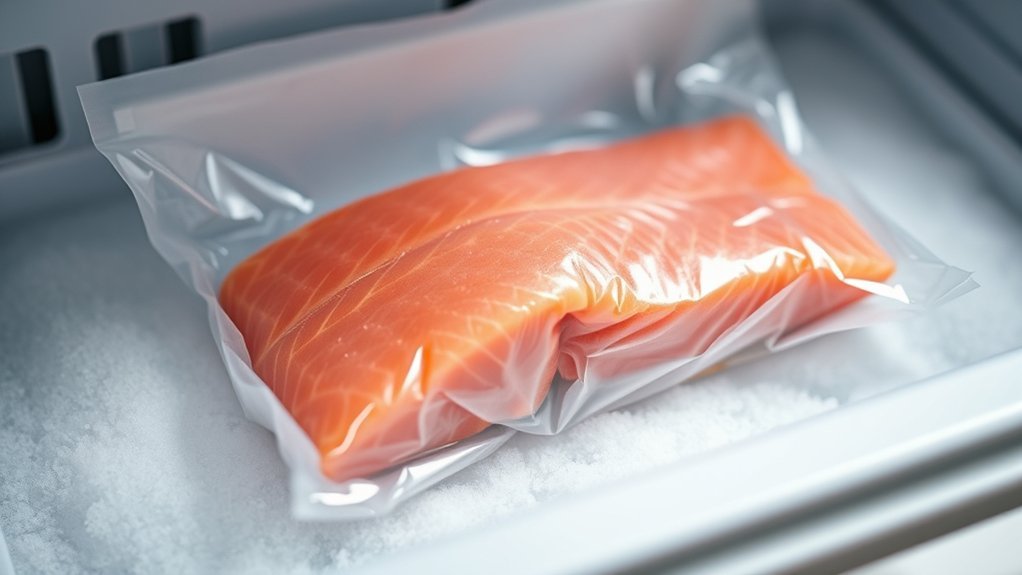
You’ll want to rinse and pat the salmon dry to remove surface moisture before freezing, which helps prevent ice crystals. Use airtight packaging, like vacuum-sealed bags or heavy-duty freezer wrap, to minimize exposure to air and reduce freezer burn.
Proper sealing and portioning maintain the salmon’s texture and flavor during storage.
Preparing Salmon Properly
Where you start with freezing salmon markedly impacts its texture and flavor upon thawing. To preserve quality, consider salmon genetics and fishery economics, which influence flesh composition and optimal freezing methods. Follow these steps:
- Rinse the salmon under cold water to remove surface bacteria, minimizing spoilage.
- Pat dry thoroughly to reduce ice crystal formation, preserving cell structure and texture.
- Portion the salmon into meal-sized pieces, reducing freeze-thaw cycles that degrade quality.
- Pre-freeze on a tray to solidify the flesh quickly, limiting large ice crystals that damage muscle fibers.
This approach maintains the salmon’s natural flavor and texture by controlling biochemical changes influenced by genetics and freezing rates, optimizing both sensory and economic value.
Packaging Techniques
Proper freezing techniques start with preparation, but how you package salmon substantially affects its preservation during storage. To maintain optimal quality and flavor, use airtight salmon packaging methods that minimize exposure to air and moisture.
Vacuum-sealing is the most effective technique; it removes oxygen, which slows oxidation and prevents freezer burn. If vacuum-sealing isn’t available, wrap the salmon tightly in plastic wrap, followed by a layer of aluminum foil or place it in a heavy-duty freezer bag, squeezing out as much air as possible.
Ensure the packaging is labeled with the date to track freezer storage duration accurately. Proper salmon packaging reduces drip loss and texture degradation, preserving the fish’s freshness for up to six months. Adhering to these methods guarantees consistency in flavor and texture after thawing.
How to Thaw Frozen Salmon Safely and Quickly
You should thaw frozen salmon using methods that minimize bacterial growth, such as refrigeration or cold water immersion. For faster thawing, submerge the sealed fish in cold water, changing it every 30 minutes to maintain a safe temperature.
Avoid thawing at room temperature, as it increases the risk of contamination.
Safe Thawing Methods
How can you thaw frozen salmon quickly without compromising safety or quality? Prioritize salmon safety by avoiding temperature abuse that promotes bacterial growth. Follow these proven methods:
- Refrigerator Thawing: Place salmon on a plate, cover, and thaw 12-24 hours per pound at 4°C or below. This maintains consistent cold temperatures, preserving freshness.
- Cold Water Thawing: Seal salmon in an airtight bag, submerge in cold water (not exceeding 21°C), and change water every 30 minutes until thawed, typically within 1-2 hours.
- Microwave Thawing: Use the defrost setting, monitoring carefully to prevent partial cooking.
- Check Freezer Labels: Always adhere to recommended storage durations noted on freezer labels to ensure optimal freshness and minimize spoilage risk.
Avoid thawing at room temperature, as this violates salmon safety protocols and increases contamination risk.
Quick Thawing Tips
While thawing frozen salmon quickly can be challenging, employing specific techniques guarantees both safety and quality are maintained. For effective quick thawing, submerge the salmon, sealed in an airtight bag, in cold water. Change the water every 30 minutes to keep it cold, reducing bacterial growth risk.
This method typically thaws salmon within 1 to 2 hours, offering a significant time-saving advantage compared to refrigerator thawing. Avoid using warm or hot water, which promotes uneven thawing and potential pathogen proliferation.
Alternatively, you can use the microwave’s defrost setting, but monitor closely to prevent partial cooking. Both techniques balance speed with food safety, preserving the salmon’s texture and flavor.
Prioritize immediate cooking after thawing to minimize bacterial exposure.
Can You Refreeze Salmon After Thawing?
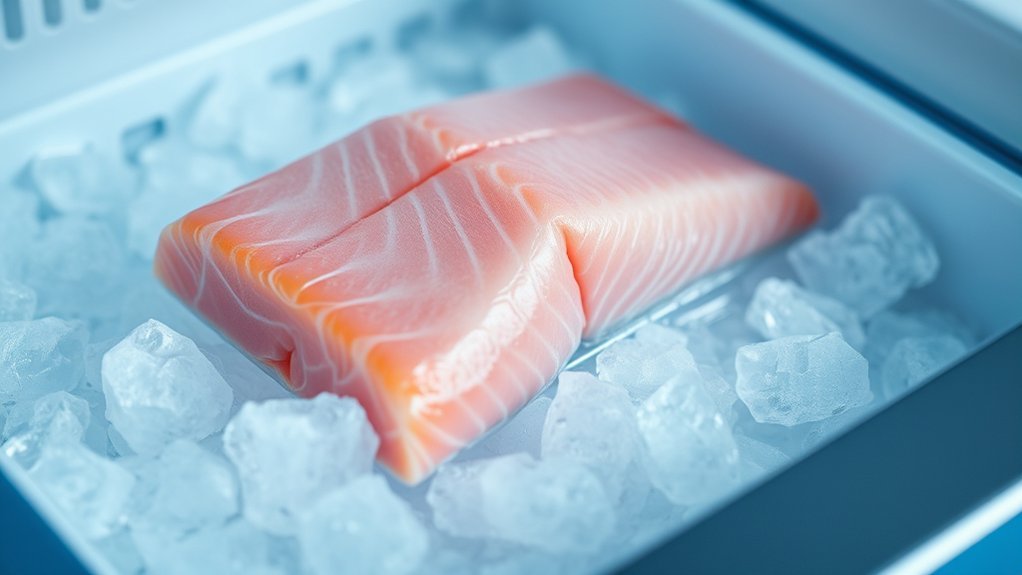
Under what conditions can salmon be safely refrozen after thawing? Refreezing safety depends on how you handled the salmon during thawing and the thawing quality. To ensure safety and maintain quality, follow these guidelines:
- Thaw the salmon in the refrigerator, not at room temperature, to minimize bacterial growth.
- Refreeze only if the salmon has been kept at or below 40°F (4°C) and hasn’t been out longer than 1-2 days.
- Avoid refreezing salmon thawed in the microwave or cold water, as uneven thawing compromises food safety.
- Understand that each freeze-thaw cycle degrades texture and flavor, so refreezing affects thawing quality.
How to Tell If Frozen Salmon Has Gone Bad
When can you confidently determine that frozen salmon has spoiled? You can tell by examining its color, texture, and odor. Spoiled salmon often shows discoloration. Dull gray or brownish hues replace the vibrant pink or orange typical of fresh or properly frozen fish.
Texture changes, such as excessive mushiness or icy crystals embedded in the flesh, indicate freezer burn or degradation. Additionally, a sour or ammonia-like smell signals bacterial growth, which renders the salmon unsafe.
Whether you’re selecting fine dining-grade salmon or budget buys, these signs remain consistent. Avoid consuming salmon exhibiting these indicators, as microbial toxins can cause foodborne illnesses. Always rely on sensory evidence combined with proper storage duration to assess quality accurately. This approach ensures safety while maximizing your salmon’s culinary potential.
Tips to Keep Salmon Fresh Longer in the Freezer
How can you extend the quality and safety of salmon stored in your freezer? Follow these evidence-based tips to maintain optimal freshness and preserve flavor trends:
- Use airtight packaging: Vacuum-seal or wrap salmon tightly in moisture-resistant materials to prevent freezer burn and oxidation.
- Freeze promptly: Store salmon at 0°F (-18°C) or lower within two hours of purchase to inhibit bacterial growth and maintain texture.
- Label with date: Track storage duration to apply pricing tips effectively and consume salmon within recommended 3-6 months.
- Avoid temperature fluctuations: Keep your freezer stable, as repeated thawing and refreezing degrade flavor and increase spoilage risk.
Adhering to these practices ensures your salmon retains its nutritional quality and flavor trends, helping you maximize value and safety.
Frequently Asked Questions
What Are the Nutritional Benefits of Eating Salmon?
You’ll gain essential omega-3 fatty acids, high-quality protein, vitamins D and B12 from salmon’s nutritional benefits, which support heart and brain health. However, you should consider potential health risks like mercury exposure when consuming it regularly.
Which Types of Salmon Are Best for Freezing?
You’d think all salmon freeze perfectly, but king and sockeye excel in freezing texture and flavor retention due to their higher fat content and firmer flesh. This ensures superior quality when thawed, backed by scientific preservation studies.
Can You Freeze Cooked Salmon as Well as Raw?
Yes, you can freeze cooked salmon. Apply freezing foundations by cooling it quickly and sealing airtight.
Use thawing tips like refrigerating overnight to maintain texture and safety, ensuring quality comparable to freezing raw salmon.
How Does Freezing Affect the Taste of Salmon?
Freezing taste changes occur due to lipid oxidation and moisture loss, which can dull salmon’s flavor. Texture changes happen as ice crystals rupture muscle fibers, making it firmer or mushy.
You can minimize this by freezing quickly and storing properly.
Are There Any Health Risks Associated With Frozen Salmon?
Frozen salmon’s health risks are like hidden icebergs, mostly avoidable if you follow safety precautions, monitor storage times, and understand freeze quality. Proper freezing types preserve nutritional benefits, minimizing taste changes whether raw or cooked.
Conclusion
By freezing salmon properly, you can extend its freshness to preserve those treasured flavors and nutrients. Remember, airtight packaging and steady freezing at 0°F (-18°C) are key to maintaining quality for up to six months.
Thaw it gently to honor its delicate texture, and avoid refreezing to prevent compromise. When signs of decline appear, it’s time to say goodbye.
With these steps, you’ll keep your salmon safely delightful, every time. Knowing how long salmon lasts in the freezer helps you enjoy it at its best.