Are Heat Pump Water Heaters Noisy
You might expect heat pump water heaters to be noisy given their mechanical components, but they typically operate at sound levels comparable to a quiet refrigerator, around 40–60 dB.
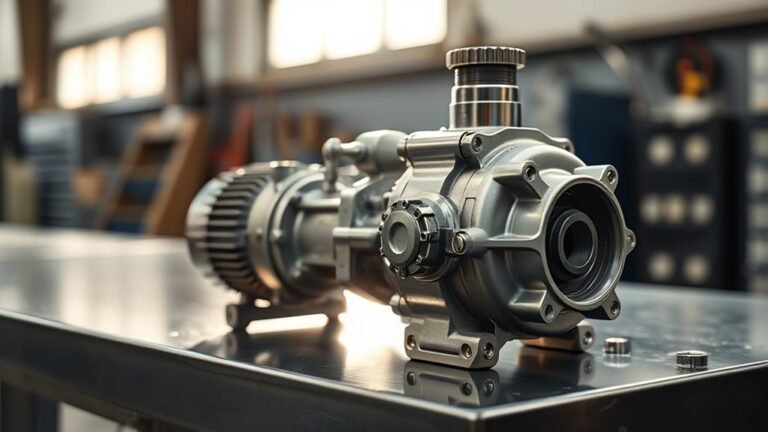
The main sources of noise—compressor hum, fan airflow, and refrigerant movement—are generally steady and unobtrusive.
However, factors like installation and maintenance play a vital role in noise control.
Understanding these details can help you decide if a heat pump water heater fits your space without disruption.
Key Takeaways
- Heat pump water heaters typically operate between 40 to 60 decibels, similar to a quiet refrigerator.
- Main noise sources include the compressor’s hum, fan airflow, and vibrations transmitted to the unit frame.
- They are generally quieter than traditional gas water heaters, which have louder ignition and exhaust sounds.
- Proper installation with vibration isolation and good airflow clearance significantly reduces operational noise.
- Placing units away from living areas and using soundproofing measures can minimize noise disturbance.
Are Heat Pump Water Heaters Noisy?
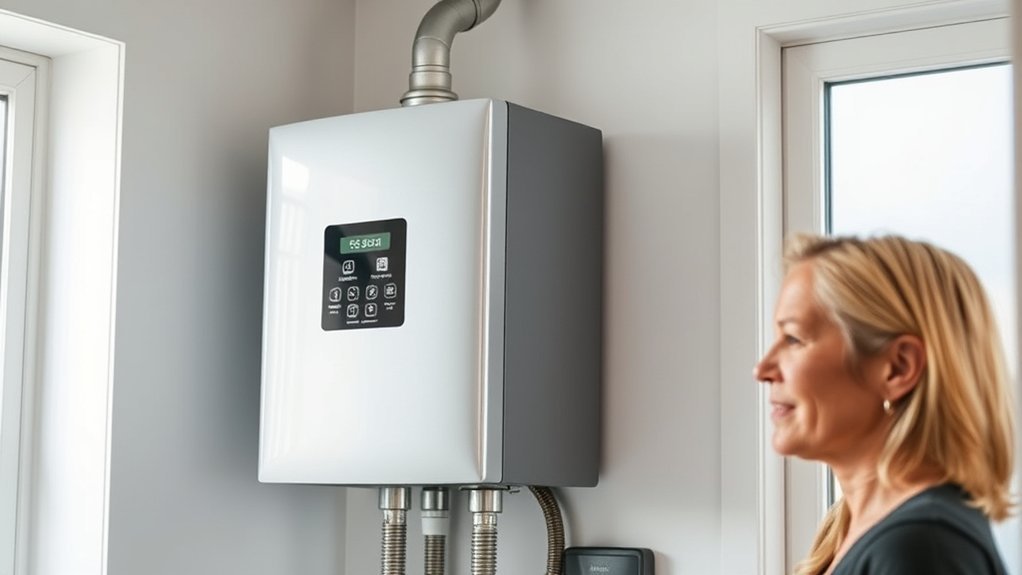
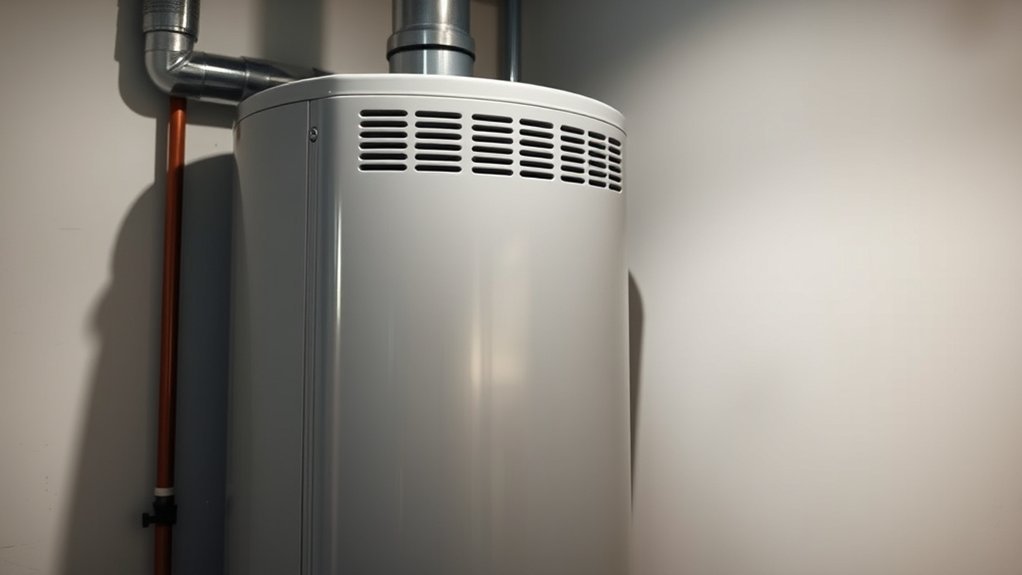
How noisy are heat pump water heaters in typical residential settings? Generally, they operate within a noise range comparable to a quiet refrigerator, approximately 40 to 60 decibels.
Key noise factors include compressor operation, fan speed, and vibration transmitted through mounting surfaces. To minimize sound, you need to consider installation factors carefully: positioning the unit away from living spaces, using vibration isolators, and ensuring solid, stable mounting.
Proper airflow clearance is essential, as restricted airflow can increase fan noise. While some units advertise ultra-quiet operation, actual noise levels vary by model and environment.
What Causes Noise in Heat Pump Water Heaters?
Understanding the typical noise levels of heat pump water heaters sets the stage for identifying the specific sources behind that sound. The primary noise sources include the compressor, fan, and refrigerant flow within the unit.
The compressor generates a humming or buzzing sound as it pressurizes the refrigerant. The fan contributes airflow noise, varying with speed and blade design. Additionally, refrigerant movement through expansion valves and pipes creates faint hissing or clicking sounds.
Vibrations from these components can transfer to the unit’s frame or mounting surface, amplifying noise. Effective vibration mitigation such as isolating mounts, rubber grommets, and sound-dampening insulation reduces transmitted noise substantially.
How Loud Are Heat Pump Water Heaters Compared to Traditional Models?
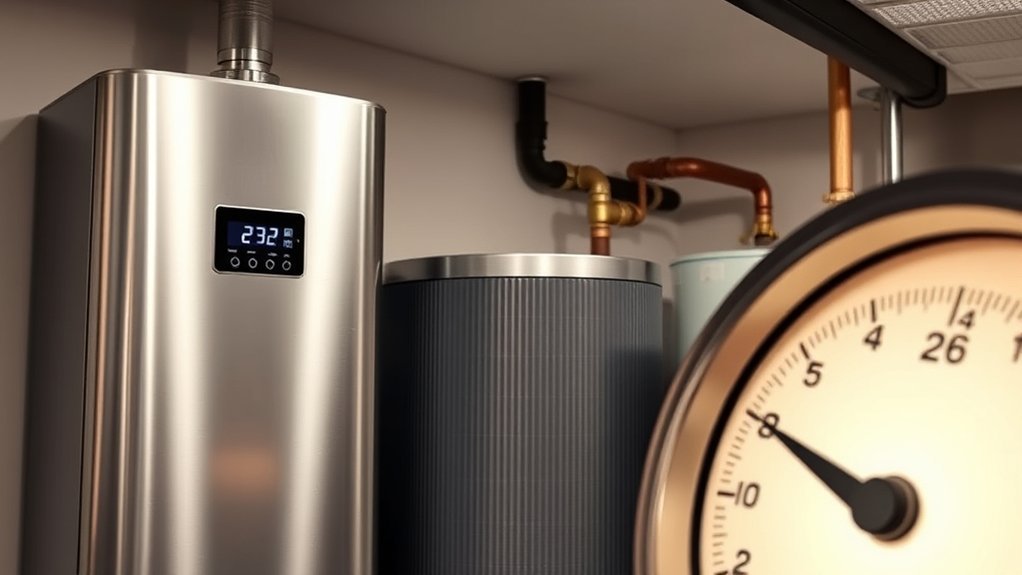
When comparing noise levels, you’ll find that heat pump water heaters generally operate quieter than traditional electric or gas models. Their quiet operation stems from the compressor and fan system, which produce a consistent low hum, typically around 40 to 50 decibels.
In contrast, traditional gas water heaters often generate louder noises, including burner ignition and exhaust vent sounds, ranging from 50 to 60 decibels or higher. Electric resistance models are mostly silent but less energy-efficient.
The sound comparison reveals heat pump units maintain steady noise without abrupt spikes, making them less intrusive in residential settings. Understanding these differences helps you evaluate the trade-offs between efficiency and noise, ensuring you choose a water heater that fits your comfort and performance criteria effectively.
Where Should You Install a Heat Pump Water Heater to Minimize Noise?
Where does noise from a heat pump water heater impact your living space most? Typically, noise transmits through walls and floors, so strategic placement is essential. Placement considerations should prioritize locations that naturally buffer sound and reduce vibration transfer.
Noise from heat pump water heaters travels through walls and floors, making strategic placement key to reducing impact.
You’ll want to focus on areas where vibration isolation can be effectively implemented to minimize structural noise amplification.
Key placement considerations include:
- Installing in a utility room or basement with solid concrete flooring
- Avoiding shared walls with bedrooms or living areas
- Positioning away from frequently occupied spaces
- Utilizing vibration isolation pads or mounts beneath the unit
- Ensuring adequate clearance for airflow without compromising noise barriers
How Can You Reduce Noise From Your Heat Pump Water Heater?
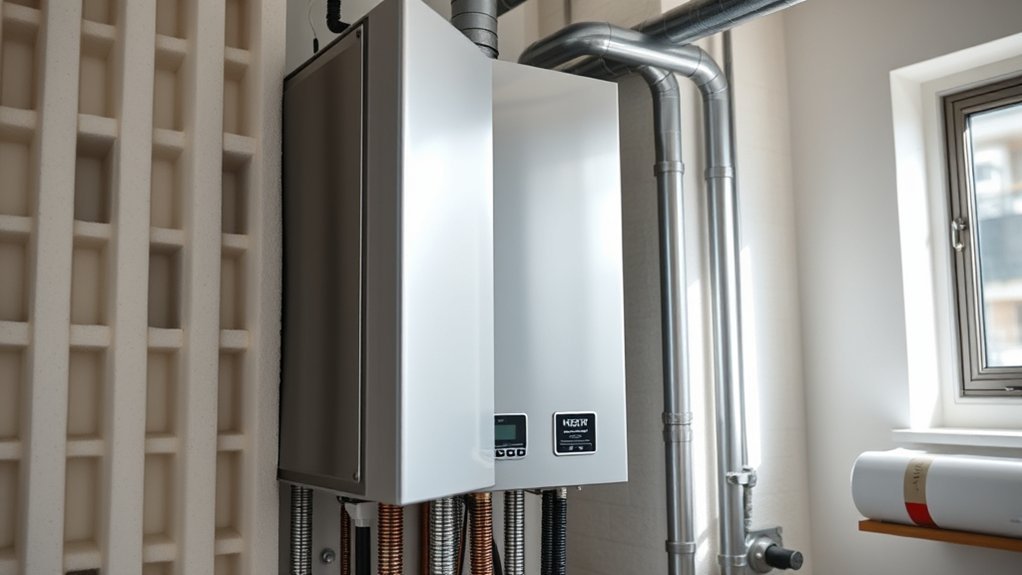
How exactly can you minimize the operational noise of your heat pump water heater? Start by addressing key installation considerations: place the unit on a solid, vibration-absorbing base to prevent resonance. Use anti-vibration pads or mounts to isolate mechanical noise from structural surfaces.
Ensure proper clearance around the unit to promote airflow and reduce compressor strain, which lowers noise output. For noise reduction, consider installing a soundproof enclosure or acoustic panels near the heater, but maintain adequate ventilation.
Regular maintenance, such as cleaning fans and checking for loose components, also prevents excessive noise. Finally, verify that ductwork and piping are securely fastened and insulated to avoid rattling or reverberation.
Frequently Asked Questions
How Energy-Efficient Are Heat Pump Water Heaters?
You’ll find heat pump water heaters highly energy-efficient, often 2-3 times more efficient than traditional models. Their low noise operation complements efficiency comparisons, making them ideal for reducing energy consumption without sacrificing quiet performance in your home.
What Is the Average Lifespan of a Heat Pump Water Heater?
Imagine you own a heat pump water heater lasting 10-15 years; its average lifespan depends heavily on maintenance needs like filter cleaning and refrigerant checks.
Ensuring optimal performance and extending durability comes through consistent care.
Are Heat Pump Water Heaters More Expensive to Install?
Yes, heat pump water heaters usually have higher installation costs due to complex components and noise considerations. You’ll need professional setup to manage these factors effectively, ensuring peak performance and minimal operational noise.
Can Heat Pump Water Heaters Work in Cold Climates?
You’ll find heat pump water heaters operate efficiently even below 40°F, debunking cooling myths. While installation challenges arise in colder climates, proper insulation and backup elements ensure reliable performance, maintaining energy savings and consistent hot water supply.
Do Heat Pump Water Heaters Require Special Maintenance?
You don’t need special maintenance for heat pump water heaters beyond regular filter cleaning and inspections.
Noise considerations often spark maintenance myths, but keeping components clean ensures efficient, quiet operation without requiring extra technical upkeep.
Conclusion
You’ll find heat pump water heaters are generally as quiet as a whispering fan, producing 40–60 dB—much less noise than traditional gas models. The main sounds come from the compressor and fan, but proper installation, vibration isolation, and routine maintenance keep noise minimal.
By placing your unit away from living spaces and ensuring good airflow, you can maintain a steady, low hum that won’t disrupt your home’s comfort or peace.
In conclusion, heat pump water heaters are not noisy and offer a quiet, efficient alternative to conventional water heating systems.