How to Avoid Freezer Burn
You might think that simply freezing food is enough to prevent freezer burn, but without proper packaging and storage, it can quickly degrade the quality of your food.
To avoid freezer burn, you need to use low-permeability materials, remove as much air as possible, and maintain consistent temperatures. Understanding how to prepare and store your food correctly will make a significant difference in preserving taste and texture over time.
Here’s what you need to know.
Key Takeaways
- Use airtight, low-permeability packaging like vacuum-sealed bags or heavy-duty plastic wraps to minimize air exposure and moisture loss.
- Cool food completely before wrapping tightly to prevent condensation and reduce ice crystal formation.
- Maintain consistent freezer temperature at 0°F (-18°C) and avoid frequent door openings to reduce temperature fluctuations.
- Store items away from freezer walls and avoid overcrowding to ensure even freezing and minimize moisture migration.
- Label packages with dates and use a first-in, first-out (FIFO) system to prevent long storage times that increase freezer burn risk.
Why Freezer Burn Happens and How It Harms Your Food
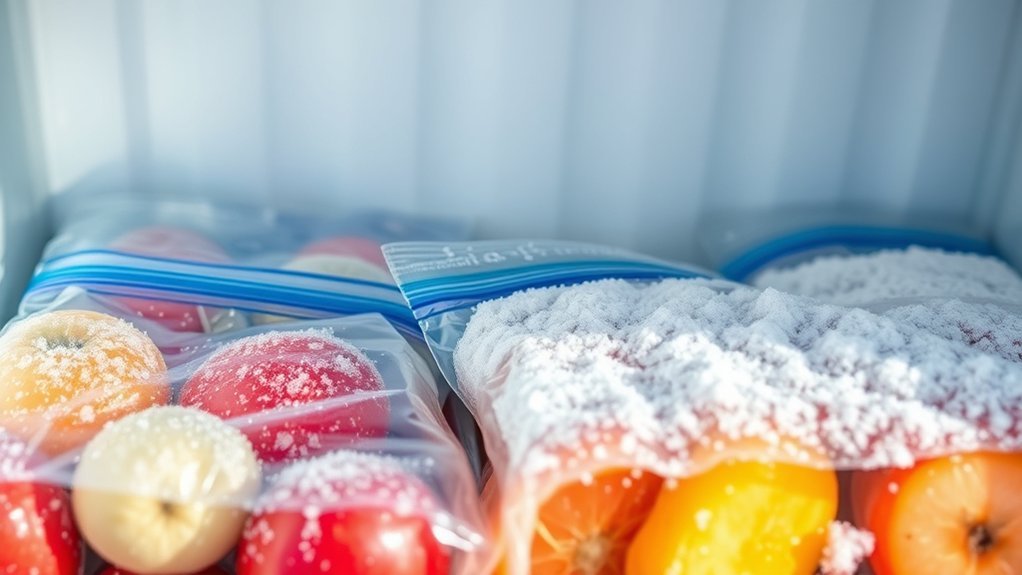
Why does freezer burn occur, and what impact does it have on your food? Freezer burn happens when moisture sublimates from the surface of frozen food, leading to dehydration and oxidation. This process results in dry spots, off-flavors, and textural changes that degrade food quality.
Using proper freezer safe materials minimizes air exposure, reducing moisture loss. Avoid common thawing myths, such as refreezing thawed food repeatedly, which exacerbates freezer burn by increasing moisture migration.
You should also understand that freezer burn doesn’t make food unsafe, but it does affect taste and texture. By recognizing the science behind moisture loss and oxidation, you can better manage your frozen goods’ integrity and ensure your meals retain optimal quality during storage.
How to Choose and Use Packaging to Prevent Freezer Burn
How exactly does the right packaging prevent freezer burn? It acts as a barrier against moisture loss and air exposure, which cause freezer burn. Choose packaging materials with low permeability to air and moisture, such as heavy-duty plastic wraps, vacuum-sealed bags, or foil-lined containers.
These materials minimize the migration of water vapor. Proper sealing methods are equally critical—you need airtight seals to block air infiltration. Vacuum sealing removes air before sealing, providing superior protection.
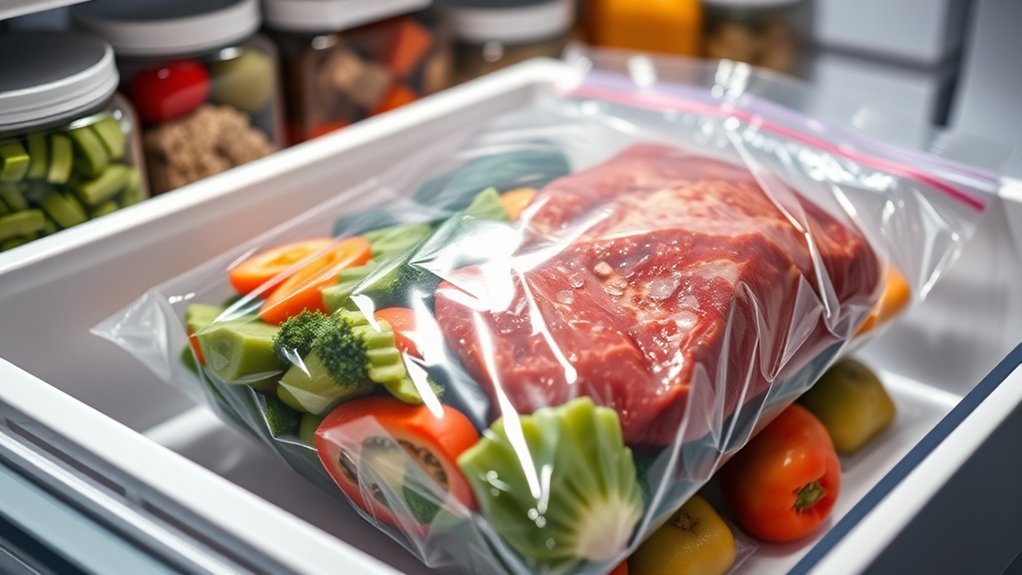
If vacuum sealing isn’t an option, use zip-top freezer bags and press out excess air before sealing tightly. Avoid loosely wrapped packaging, which allows moisture exchange and ice crystal formation. By selecting effective packaging materials and employing precise sealing methods, you’ll significantly reduce the risk of freezer burn and preserve your food’s quality during storage.
How to Prepare and Wrap Food to Avoid Freezer Burn
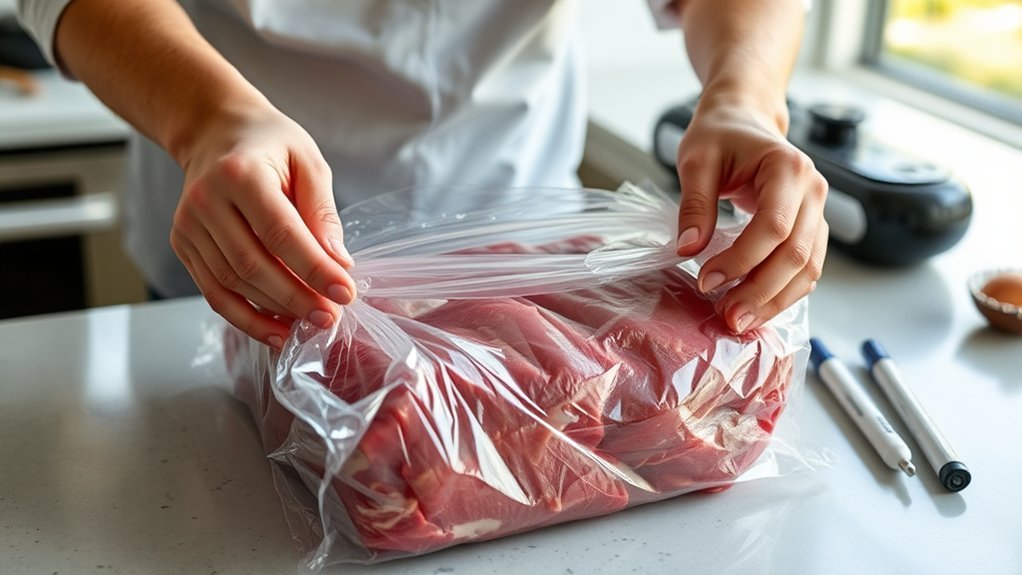
Once you’ve selected the right packaging, the next step is preparing and wrapping your food correctly to maximize protection against freezer burn. Begin with techniques brainstorming to identify optimal wrapping methods that minimize air exposure.
Use airtight materials like vacuum-seal bags or heavy-duty aluminum foil. Ensure the food is cooled completely to avoid condensation, which accelerates freezer burn. Wrap items tightly, removing as much air as possible, and seal securely.
For irregular shapes, double-wrap for added defense. Conduct sensory testing periodically to assess texture and flavor retention, confirming the effectiveness of your wrapping methods. These precise steps will help maintain food quality and reduce freezer burn risk by limiting moisture loss and oxidation during storage.
Freezer Burn Prevention: Best Storage Practices
Where you store your food in the freezer substantially impacts its susceptibility to freezer burn. To prevent this, maintain consistent temperatures by avoiding frequent door openings and placing items away from the freezer walls, where temperature fluctuations are common.
Proper freezer maintenance ensures optimal energy efficiency and steady cold conditions that protect your food. Use airtight containers or vacuum-sealed bags to minimize air exposure. Label packages with dates to rotate stock effectively.
- Store food in the coldest part, usually the back or bottom shelf
- Avoid overcrowding to allow proper air circulation
- Keep the freezer at 0°F (-18°C) for safe, efficient storage
- Defrost your freezer regularly to maintain energy efficiency
- Inspect seals on doors to prevent warm air ingress
Following these practices minimizes freezer burn and preserves food quality efficiently.
How to Organize Your Freezer to Prevent Freezer Burn
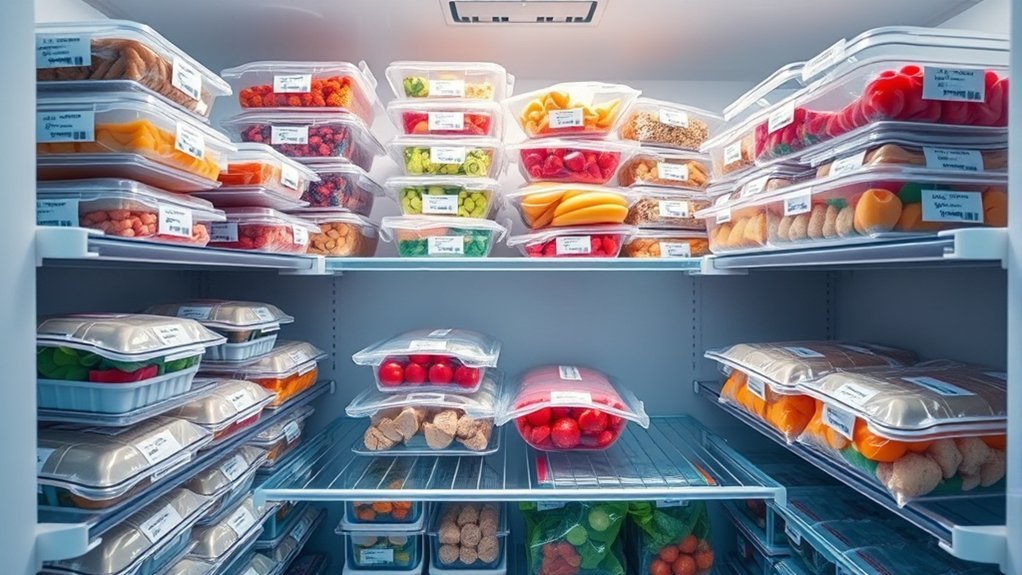
Why does proper freezer organization matter for preventing freezer burn? When you use organizing containers and effective labeling systems, you minimize air exposure and reduce thaw-freeze cycles that cause freezer burn.
You should arrange items systematically to ensure proper airflow and quick access, limiting the time the freezer door stays open.
| Step | Benefit |
|---|---|
| Use airtight containers | Prevents moisture loss |
| Implement labeling systems | Identifies contents & dates |
| Group similar items | Enhances accessibility |
| Avoid overpacking | Maintains consistent temperature |
| Rotate stock (FIFO) | Uses older items first |
How to Spot Freezer Burn and When to Toss Food
You can identify freezer burn by looking for dry, discolored patches and ice crystals on your food’s surface. These signs indicate moisture loss, which compromises texture and flavor, making the food less palatable.
When freezer burn is extensive, it’s best to discard the item following safe disposal guidelines to avoid consuming degraded or unsafe food.
Identifying Freezer Burn Signs
How can you accurately detect freezer burn before it compromises your food’s quality? Identifying freezer burn signs and symptoms early ensures you handle affected items properly.
Look for these key indicators:
- Discoloration: Pale, grayish, or white patches on the surface indicate moisture loss.
- Dry spots: Areas that appear leathery or dehydrated signal freezer burn.
- Ice crystals: Excessive frost buildup inside packaging suggests prolonged exposure to air.
- Texture changes: Freezer-burned food often feels tough or brittle.
- Off odors: A stale or metallic smell can develop due to chemical changes.
Effects on Food Quality
Recognizing freezer burn signs helps you determine the impact on food quality and decide whether an item remains safe to eat. Freezer burn causes dehydration and oxidation, leading to dry, tough textures and off-flavors that degrade the sensory properties of food.
You might notice grayish-brown spots or ice crystals on surfaces; these indicate nutrient loss and compromised texture. While freezer burn doesn’t make food unsafe, it reduces palatability significantly.
Avoid applying unused topic ideas or unrelated concepts like general spoilage, as they confuse the specific effects of freezer burn. Focus on its distinct impact: altered appearance, texture, and flavor.
If the damage is extensive, consider discarding the item to maintain meal quality. Otherwise, trimming affected portions can salvage some foods for safe consumption.
Safe Food Disposal Guidelines
Although freezer burn doesn’t render food unsafe, identifying its presence accurately helps you decide when to discard items to prevent compromised meal quality. To ensure safe disposal, regularly inspect food for ice crystals, discoloration, or dry spots.
When tossing food, consider composting options as an affordable method to reduce waste. Proper labeling tips, including date and content, assist in tracking food freshness and avoiding unnecessary disposal.
- Check for texture changes indicating freezer burn.
- Use airtight packaging to minimize freezer exposure.
- Label packages with freeze dates for inventory control.
- Dispose of severely freezer-burned food via composting when possible.
- Employ affordable methods like resealable bags to protect food.
Following these guidelines promotes safe disposal and sustains optimal food quality.
Frequently Asked Questions
Can Freezer Burn Affect the Nutritional Value of Food?
Yes, freezer burn can reduce the nutrition impact by degrading vitamins and minerals. You’ll also notice texture changes, like dryness and toughness, which affect food quality but don’t make it unsafe to eat.
Is Freezer Burn Harmful if Consumed?
Freezer burn consequences don’t make your food toxic, but they do degrade texture and flavor.
While the nutrient loss impact is minimal, consuming freezer-burned items might leave your meal less enjoyable and slightly diminished in quality.
How Long Can Freezer-Burned Food Be Safely Eaten?
You can safely eat freezer-burned food for several months, but quality declines due to freezer burn causes like moisture loss and oxidation.
Storage duration depends on the food type; always check for off smells or textures before consuming.
Does Thawing Frozen Food Cause Freezer Burn?
Thawing frozen food doesn’t directly cause freezer burn, but the thawing effects can accelerate moisture loss. If refrozen improperly, this moisture loss worsens freezer burn, so manage thawing carefully to maintain food quality and prevent damage.
Can Freezer Burn Be Reversed or Repaired?
Think of freezer burn like a faded photograph; you can’t fully restore it. While you can’t reverse its effects, repair strategies like trimming damaged areas and using marinades can improve texture and flavor, prolonging food usability.
Conclusion
You might think freezer burn is inevitable, but it coincidentally happens only when air meets your food. By choosing low-permeability materials, removing air with vacuum sealing, and cooling food completely before wrapping, you prevent this damage.
Keep your freezer at 0°F (-18°C), limit door openings, and organize with FIFO labeling to maintain quality.
Mastering these steps guarantees your frozen food stays fresh, saving you money and preserving taste every time. Avoiding freezer burn is key to maintaining the best quality in your frozen foods.