How Long Does Beef Last in Freezer
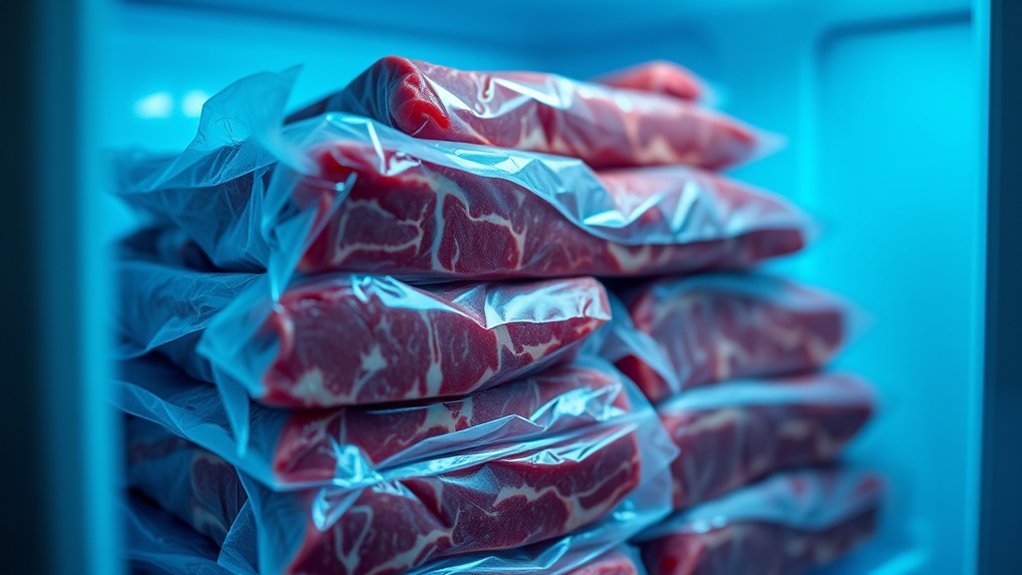
Imagine you froze a top-quality ribeye steak six months ago but now wonder if it’s still good to cook. How long does beef last in the freezer? Generally, beef can last anywhere from six to twelve months when stored properly.
The exact duration depends on the cut and storage conditions. Factors like packaging method, temperature consistency, and labeling play a vital role in preserving its flavor and texture.
Understanding these details can help you avoid waste and enjoy your beef at its best. Proper freezing techniques ensure your meat remains safe and tasty for months to come.
Key Takeaways
- Beef retains best quality for 6 to 12 months when stored at 0°F (-18°C) or below in airtight packaging.
- Steaks and roasts last 6 to 12 months, while ground beef is best used within 3 to 4 months.
- Proper labeling with freezing date and cut type helps manage storage time and prevent waste.
- Avoid freezer burn by maintaining consistent freezing temperatures and using moisture-proof, airtight packaging.
- Refreeze beef only if thawed in the refrigerator and kept below 40°F (4°C) without cooking.
Beef Freezer Shelf Life: How Long Does It Last?
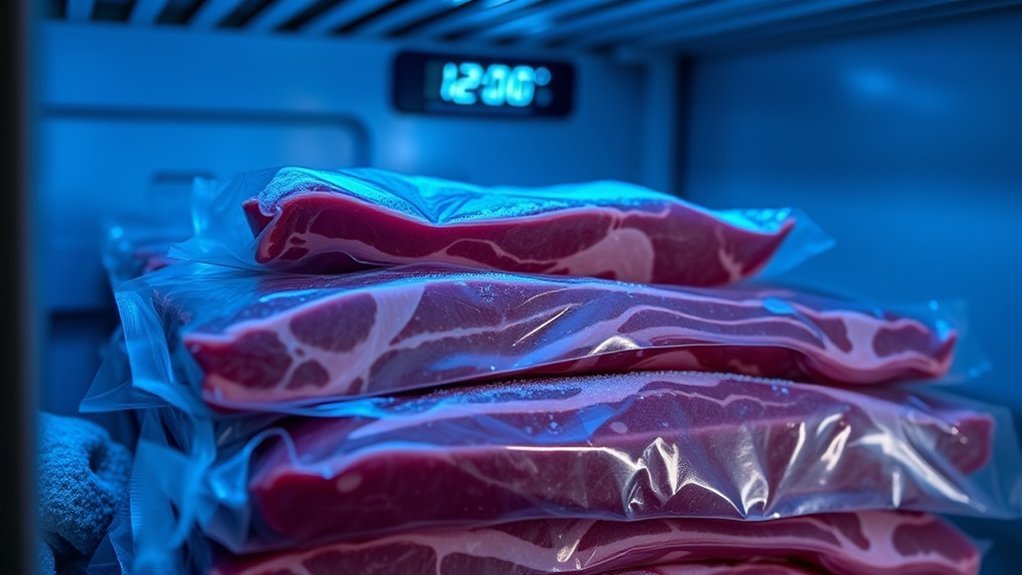
How long can you safely store beef in your freezer without compromising quality? Generally, beef maintains its best quality for up to 6 to 12 months when properly stored at 0°F (-18°C) or below.
To maximize this shelf life, use precise beef labeling. Include the freezing date and cut type on each package. This practice ensures you use older items first, preventing waste.
Efficient freezer organization also plays a vital role. Arrange packages to allow good airflow and avoid overcrowding, which can lead to uneven freezing. Store beef in airtight, moisture-proof packaging to prevent freezer burn that deteriorates texture and flavor.
Freezing Durations for Different Beef Cuts (Including Ground Beef vs Steaks)
Why does the freezing duration vary between different beef cuts? It mainly depends on beef texture and fat content. Steaks and roasts, with their dense muscle fibers, retain quality longer, typically 6 to 12 months. Their beef texture withstands freezing well, preserving flavor and moisture.
Ground beef, however, has more surface area exposed and a finer texture, making it prone to faster quality degradation. Freezing it beyond 3 to 4 months risks freezer burn and texture changes. You should always prioritize thawing safety: thaw beef in the refrigerator to prevent bacterial growth.
Different cuts also freeze at varying rates due to thickness and fat distribution, influencing how long you can store them without compromising taste or safety. Understanding these differences helps you manage your freezer efficiently.
Why Proper Freezing Makes Your Beef Last Longer
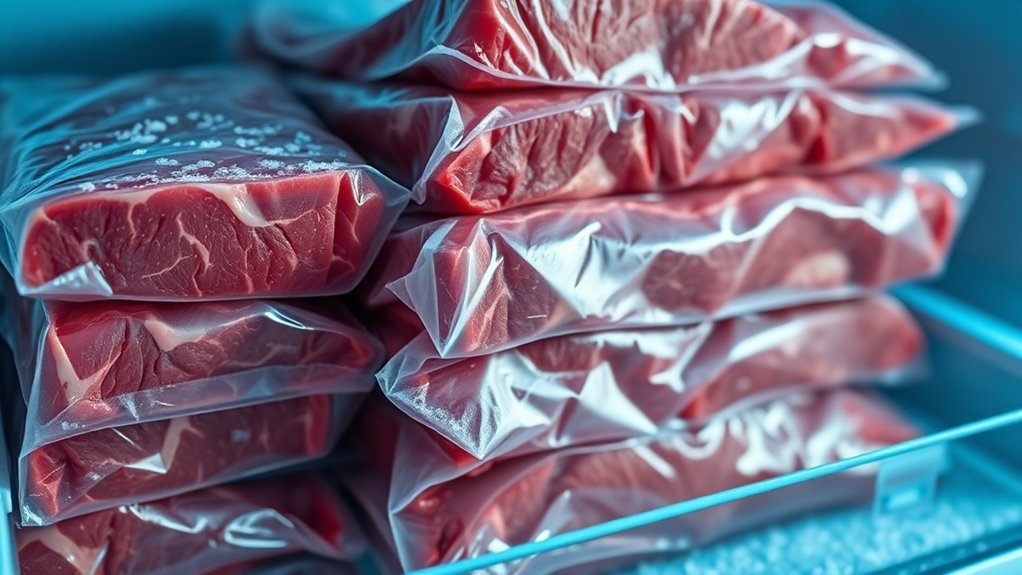
Understanding the varying freezing durations for different beef cuts highlights the importance of proper freezing techniques to maximize their shelf life. When you freeze beef correctly, you slow down enzymatic and microbial activities that cause spoilage, preserving texture and flavor.
Proper freezer organizing also plays a crucial role; by labeling and arranging beef cuts systematically, you avoid repeated thawing and refreezing, which deteriorates quality. Efficient freezer organizing ensures quick access, reducing the time beef spends thawing at unsafe temperatures.
Additionally, controlling freezer temperature consistently below 0°F (-18°C) prevents freezer burn and maintains moisture levels. By mastering these freezing principles, you extend beef’s edible window, minimize waste, and guarantee optimal taste and safety when you proceed to beef thawing and cooking.
Best Packaging Methods to Keep Beef Fresh
Selecting the right packaging method plays a critical role in preserving beef’s freshness during freezing. To minimize freezer burn and maintain quality, use airtight beef packaging like vacuum-sealed bags or heavy-duty freezer wrap.
Vacuum sealing removes air, significantly slowing oxidation and moisture loss. If that’s unavailable, tightly wrap the beef in plastic wrap, then cover it with aluminum foil for an extra moisture barrier. Avoid using regular plastic bags as they allow air penetration.
For optimal freezer organization, package beef in uniform portions and sizes; this ensures efficient stacking and reduces thawing time. Additionally, removing excess air from packaging helps prevent ice crystal formation.
Labeling and Organizing Frozen Beef for Easy Access
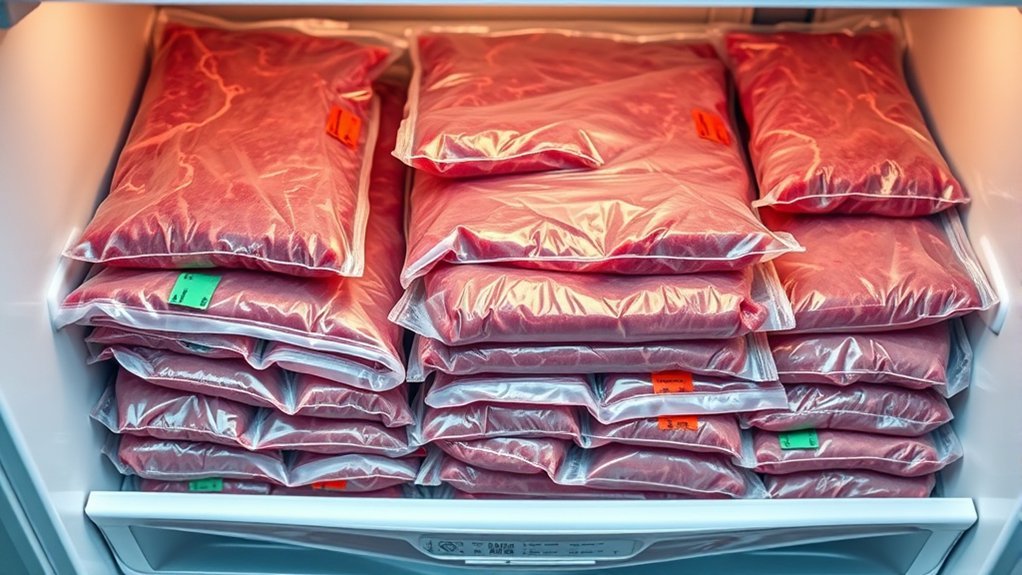
How can you streamline meal prep and reduce waste with frozen beef? Start by implementing a clear system for beef labeling and freezer organization. Label each package with the cut type, weight, and freezing date using waterproof markers or pre-printed labels to maintain legibility over time.
Categorize beef by type, such as ground, steaks, and roasts, and store them in separate, designated freezer sections or bins. This method minimizes search time and prevents forgotten items from spoiling. Arrange packages flat for efficient space use and quicker thawing.
Regularly rotate stock, placing newer packages behind older ones to use beef within optimal timeframes. By combining precise beef labeling with structured freezer organization, you ensure quick access, reduce freezer burn risk, and maintain beef quality, ultimately saving money and enhancing your meal planning efficiency.
How Freezer Temperature Affects Beef Quality and Shelf Life
Because freezer temperature directly impacts the rate of enzymatic activity and ice crystal formation in beef, maintaining the correct temperature is essential for preserving both quality and shelf life. You should keep your freezer consistently at 0°F (-18°C) or lower to minimize enzymatic degradation and limit ice crystal growth, which can rupture muscle fibers and cause texture deterioration.
Precise freezer organization supports rapid access, reducing exposure to temperature fluctuations during door openings. Additionally, labeling accuracy helps you monitor storage duration, preventing prolonged freezing that could degrade flavor and tenderness despite proper temperatures.
Signs Frozen Beef Has Gone Bad
You’ll notice frozen beef has gone bad when its color shifts to dull gray or brown, and the texture feels dry or mushy instead of firm.
Pay attention to any sour or off smells, which indicate spoilage even if the meat looks normal.
Excessive ice crystals or freezer burn also signal that the beef’s quality has deteriorated.
Changes In Color
When examining frozen beef, what color changes indicate spoilage? Fresh frozen beef typically retains a deep red or purplish hue. A noticeable color change, such as dull brown or gray patches, often signals oxidation, which may suggest the beef has started to degrade.
While freezer burn can cause white or grayish dry spots, these aren’t direct signs of spoilage but indicate moisture loss and potential quality reduction. However, when color change accompanies other signs like an unusual texture or odor, it’s safer to discard the beef.
Pay close attention to uneven discoloration and extensive darkening, as these changes can imply microbial activity or enzyme breakdown. By understanding these subtle color shifts, you can accurately assess whether your frozen beef remains safe to consume.
Texture And Smell
Texture and smell serve as critical indicators for determining whether frozen beef has spoiled. You need texture awareness to detect freezer burn or sliminess, which signal spoilage.
Smell concerns arise when beef emits sour, rancid, or ammonia-like odors, showing bacterial growth. Both senses offer quick, reliable assessment before cooking.
| Texture Condition | Smell Description | Interpretation |
|---|---|---|
| Firm, dry | Neutral or fresh | Safe to consume |
| Slimy or sticky | Sour or ammonia-like | Spoiled, discard immediately |
| Hard, freezer-burned | Bland or off | Quality compromised, use soon |
| Soft, mushy | Rancid or unpleasant | Spoiled, do not eat |
Use this table to guide your texture awareness and smell concerns efficiently.
Ice Crystals Formation
Although frozen beef can maintain its quality for extended periods, the formation of ice crystals often signals a decline in freshness. When you notice excessive ice crystals on the surface or inside the packaging, it typically indicates moisture loss and temperature fluctuations.
These crystals form as water migrates to colder spots, disrupting the meat’s cellular structure. This process leads to frost burn, which appears as dry, discolored patches on the beef.
Frost burn compromises texture and flavor, making the meat tougher and less palatable. If you see significant ice crystal buildup combined with frost burn, it’s a strong sign the beef has deteriorated.
To preserve quality, ensure your freezer maintains a consistent temperature below 0°F and use airtight packaging to minimize ice crystal formation.
Tips for Thawing Beef to Preserve Flavor and Texture
How should you thaw beef to maintain its best flavor and texture? The key is selecting the right thawing technique. The safest and most effective method is to thaw beef slowly in the refrigerator. This controlled environment prevents rapid temperature changes that degrade texture and cause moisture loss, crucial for flavor retention.
Avoid thawing at room temperature, as it encourages bacterial growth and uneven thawing, which damages the meat’s structure. If you’re short on time, use the cold water method: seal the beef in a watertight bag and submerge it in cold water, changing the water every 30 minutes to maintain a safe temperature.
Never use hot water or microwave thawing, which can partially cook the beef, compromising both flavor and texture.
Can You Safely Refreeze Frozen Beef?
Once you’ve thawed your beef, you might wonder if it’s safe to refreeze any unused portions. The key factor in beef thawing is ensuring it hasn’t been left at unsafe temperatures, typically above 40°F (4°C) for more than two hours.
If you thaw beef properly in the refrigerator, you can safely refreeze it without significantly compromising quality. However, repeated freezing and thawing cycles can degrade texture and flavor due to moisture loss.
For optimal post freeze storage, refreeze beef only if it remains cold and hasn’t been cooked. If you thaw beef using faster methods like microwave or cold water, cook it before refreezing.
Mistakes That Make Your Frozen Beef Go Bad Sooner
Why does your frozen beef lose quality faster than expected? One common mistake is improper packaging. If air seeps in, freezer burn accelerates spoilage, undermining beef safety.
Another error involves inconsistent freezer temperatures. Fluctuations cause partial thawing, promoting bacterial growth. You might also delay using older packages, ignoring storage turnover principles; newer beef replaces older stock, risking expired meat.
Additionally, repeatedly refreezing thawed beef deteriorates texture and safety, as each cycle encourages moisture loss and microbial activity. Finally, overcrowding your freezer restricts air circulation, leading to uneven freezing.
Frequently Asked Questions
Does Freezing Beef Affect Its Nutritional Value?
Freezing beef causes minimal freezing impact on beef nutrition, preserving most vitamins and proteins. You won’t lose significant nutrients, but slight texture changes may occur.
Can Marinated Beef Be Frozen Safely?
You can freeze marinated beef safely; studies show marinade compatibility affects flavor retention by up to 30%.
Follow strict thawing guidelines. Thaw in the fridge to maintain texture and prevent bacterial growth for optimal results.
How Does Freezing Beef Impact Its Cooking Time?
Freezing beef slows cooking time slightly due to a denser texture after thawing. You’ll notice the impact of thawing on beef texture. Sometimes it becomes firmer or less juicy, so adjust cooking times and methods accordingly for best results.
Is It Safe to Freeze Cooked Beef Leftovers?
You might wonder if freezing cooked beef leftovers is safe. Rest assured, it is. For optimal leftovers safety, freeze within 3-4 days and consume within 2-3 months, respecting recommended freezer storage times to maintain quality.
Can Freezer Burn Be Reversed or Treated?
You can’t reverse freezer burn, but you can treat it by trimming affected areas and using moist cooking methods.
For freezer burn prevention, tightly wrap beef and remove air to help maintain texture restoration during freezing.
Conclusion
Think of your freezer as a time capsule for beef—when you package it airtight, label it clearly, and store it properly, you’re preserving quality and flavor like a skilled archivist.
Ground beef demands quicker use, while steaks and roasts last longer if kept consistently cold. Avoid overcrowding to prevent freezer burn, and always thaw carefully.
By mastering these details, you ensure your beef stays fresh, safe, and delicious whenever you’re ready to cook. Knowing how long beef lasts in the freezer helps you make the most of your stored meat.