What Temperature Should a Freezer Be
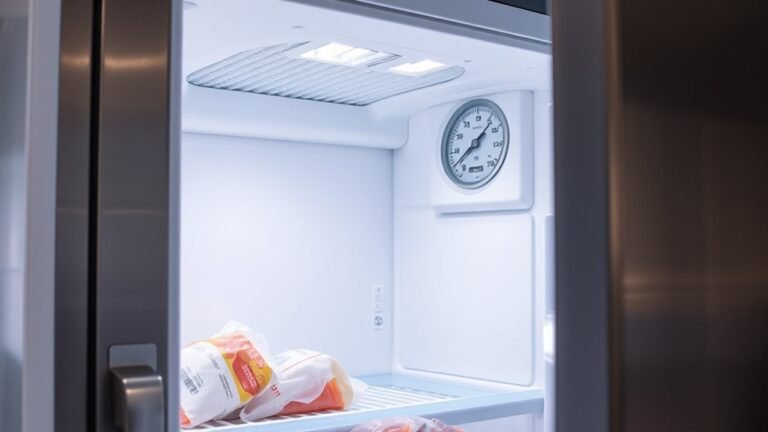
Setting the right temperature in your freezer is crucial for maintaining food safety and quality. Setting your freezer too warm invites spoilage, while going excessively cold wastes energy without real benefit. You should aim for a stable 0°F (-18°C) to effectively slow bacterial growth and preserve food quality.
Yet, many overlook how subtle temperature shifts can impact safety and texture over time. Understanding this balance is essential before you adjust your freezer or question its performance. Proper temperature control ensures your food stays fresh longer and your appliance runs efficiently.
Key Takeaways
- Set freezer temperature at 0°F (-18°C) for optimal food safety and preservation.
- Maintain consistent temperature to prevent bacterial growth and spoilage.
- Avoid temperatures warmer than 0°F to reduce thawing and contamination risks.
- Keep freezer between 0°F and -10°F for best texture and quality preservation.
- Use a thermometer to monitor temperature regularly and adjust thermostat as needed.
What Is the Ideal Freezer Temperature for Food Safety?
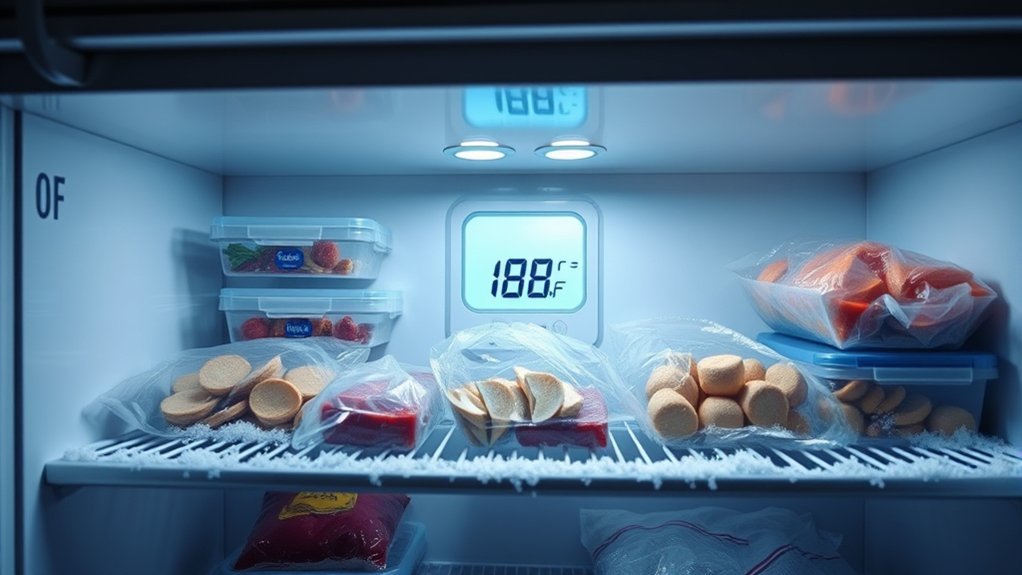
Why does freezer temperature matter for food safety? Because maintaining the ideal temperature prevents bacterial growth that can cause foodborne illnesses. You should set your freezer to 0°F (-18°C) or lower, a standard supported by food safety authorities worldwide.
At this temperature, microbial activity halts, preserving food safely over extended periods. When exploring freezer hacks, consider temperature monitoring tools and consistent door sealing to avoid fluctuations.
Design considerations also play a crucial role; freezers with efficient insulation and reliable thermostats maintain stable temperatures, reducing risks. If your freezer’s temperature rises above 0°F, thawing may begin, increasing contamination chances.
Understanding and controlling these factors ensures your frozen food remains safe to consume, giving you confidence in your storage practices.
How Temperature Affects Food Freshness and Quality
You should keep your freezer between 0°F and -10°F to maintain optimal freshness and quality. Temperatures outside this range can degrade food texture and increase the risk of freezer burn.
Understanding this balance helps you preserve flavor and prevent nutrient loss effectively.
Ideal Freezer Temperature Range
How cold should your freezer be to keep food fresh and maintain its quality? The ideal temperature range is between -18°C (0°F) and -20°C (-4°F). At this range, the formation of tiny ice crystals within food cells is minimized, preserving texture and flavor.
Temperatures warmer than -18°C risk bacterial growth and faster quality degradation, while colder settings don’t significantly improve preservation but increase energy use. Maintaining this range also aids effective frost management, preventing excessive frost buildup that can impair freezer efficiency and compromise food safety.
Regularly monitoring and adjusting your freezer’s thermostat ensures consistent temperatures, protecting your food’s nutritional value and extending shelf life. Stick to this evidence-based range for optimal freshness and quality retention.
Impact on Food Texture
Maintaining the ideal freezer temperature between -18°C and -20°C directly influences the texture of frozen foods. At these temperatures, ice crystal size remains small, which is crucial for texture preservation.
Larger ice crystals form when temperatures fluctuate or are warmer, damaging cell walls and causing a mushy or grainy texture upon thawing. By keeping your freezer consistently within this range, you minimize ice crystal growth and ensure food retains its original structural integrity.
Scientific studies confirm that stable low temperatures slow enzymatic activity and prevent moisture loss, both vital for maintaining freshness and quality. When you control freezer temperature precisely, you protect your food’s texture, making meals more enjoyable and reducing waste due to compromised quality.
Preventing Freezer Burn
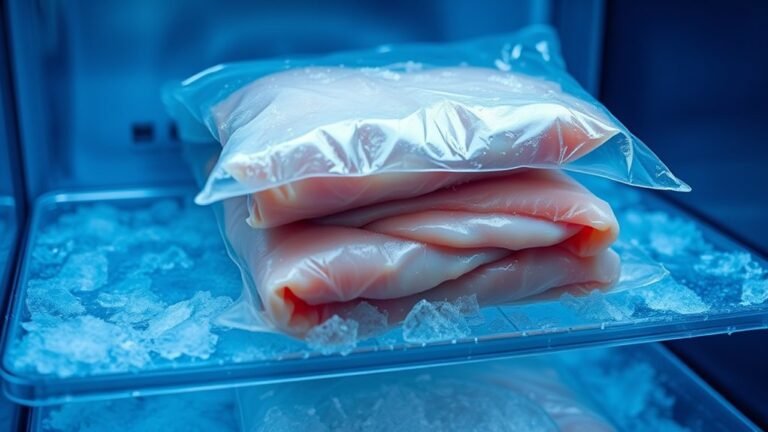
Why does freezer burn occur, and how can controlling temperature help prevent it? Freezer burn happens when moisture evaporates from food’s surface, causing dehydration and oxidation.
Keeping your freezer at a consistent temperature of 0°F (-18°C) slows this process, preserving food freshness and quality. Proper freezer maintenance ensures airtight seals and optimal energy efficiency, reducing temperature fluctuations that contribute to freezer burn.
| Cause | Effect | Prevention |
|---|---|---|
| Temperature shifts | Ice crystals form on food | Maintain 0°F (-18°C) steady |
| Poor sealing | Moisture loss | Regularly check seals |
| Frost buildup | Reduced efficiency | Defrost and clean regularly |
| Inadequate airflow | Uneven cooling | Keep items spaced properly |
Control temperature and upkeep, so your food stays fresh longer.
Why 0°F (-18°C) Is the Best Freezer Temperature
What makes 0°F (-18°C) the ideal temperature for your freezer? Research and food safety standards confirm that this temperature ensures optimal preservation by halting bacterial growth and enzymatic activity.
Maintaining temperature stability at this level prevents fluctuations that can degrade food quality. Additionally, 0°F strikes a balance between preserving food effectively and maximizing your freezer’s energy efficiency.
Freezing below this point demands more power without significantly improving food safety or longevity. By setting your freezer to 0°F, you minimize energy consumption while ensuring food remains safe and retains its nutritional value.
This temperature is widely recommended by health agencies and appliance manufacturers, making it the scientifically supported choice for optimal freezer performance and cost-effective operation.
What Happens When Your Freezer’s Temperature Isn’t Right
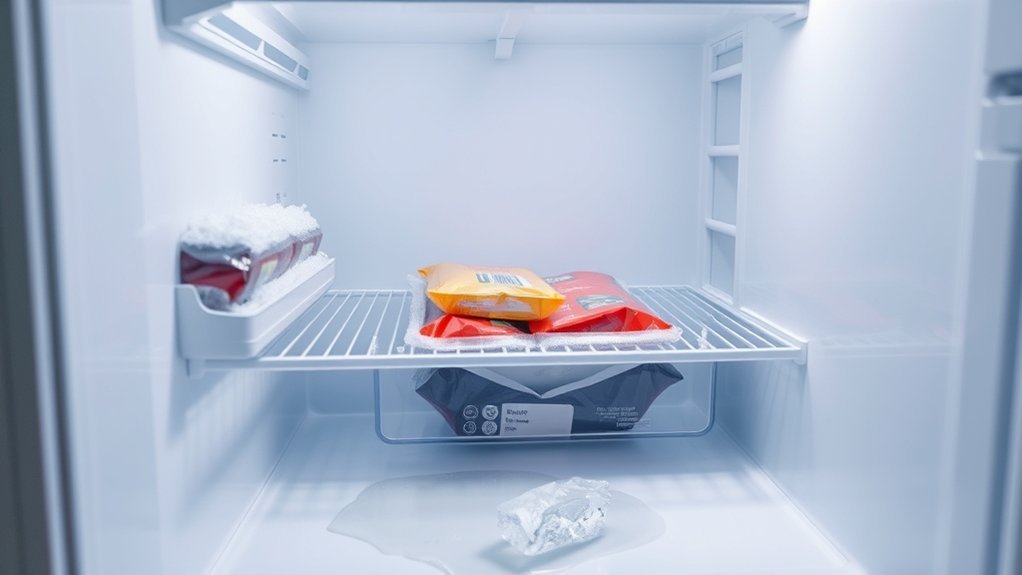
Setting your freezer to 0°F (-18°C) is essential, but when temperatures stray from this mark, food safety and quality can quickly deteriorate. If your freezer runs too warm, bacterial growth accelerates, leading to spoilage and potential foodborne illness.
Maintaining your freezer at 0°F (-18°C) is crucial to prevent spoilage and ensure food safety.
Conversely, excessively low temperatures can cause freezer burn, damaging texture and flavor. You might notice frost buildup resembling an ice sculpture, signaling temperature fluctuations or poor sealing.
Additionally, irregular compressor cycles can produce a rhythmic hum, sometimes called “freezer music,” indicating mechanical stress or inefficiency. Ignoring these signs compromises energy efficiency and shortens appliance lifespan.
Maintaining the correct temperature guarantees your food stays safe, fresh, and preserves nutritional value. Monitoring your freezer’s temperature is essential to prevent these issues and keep your frozen goods in optimal condition.
How to Check and Adjust Your Freezer Temperature
How can you guarantee your freezer maintains the best temperature for food safety? Start by ensuring proper freezer placement. Keep it away from heat sources and in a well-ventilated area to prevent temperature fluctuations.
Next, engage in regular temperature monitoring by checking the built-in thermostat or display panel. If your freezer doesn’t have one, consult the manual to locate the temperature control dial.
To adjust, turn the dial slightly colder if the temperature reads above 0°F (-18°C), or warmer if it’s significantly below. Avoid drastic changes; make adjustments gradually and wait 24 hours before rechecking.
Consistent monitoring and correct placement work together to maintain optimal freezing conditions, safeguarding your food’s quality and safety.
How to Use a Freezer Thermometer for Accurate Readings
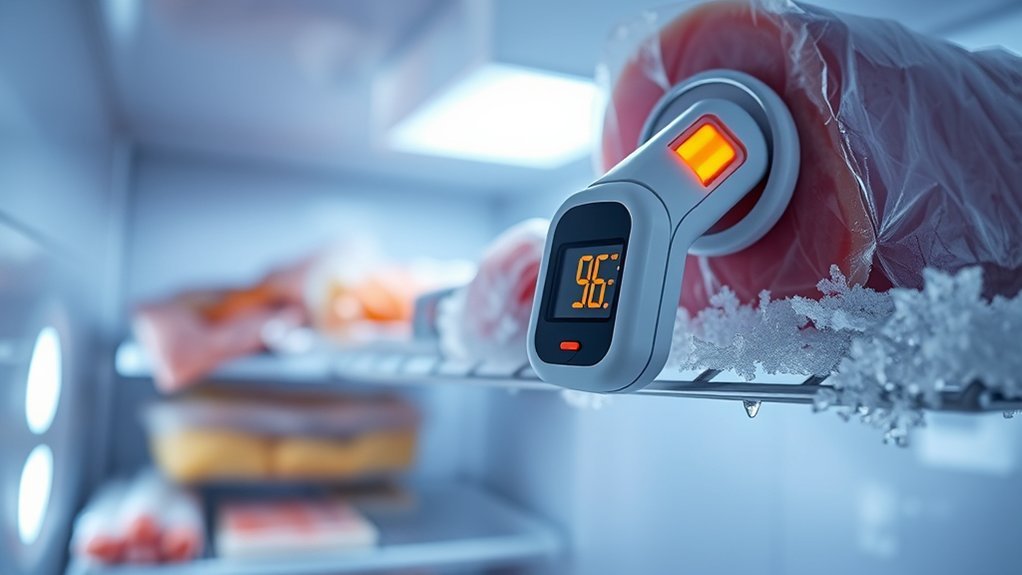
Why rely solely on your freezer’s built-in thermostat when you can achieve more precise temperature readings with a dedicated freezer thermometer? Accurate freezer calibration ensures your food stays safe and maintains optimal quality.
Get precise freezer temps with a dedicated thermometer to keep your food safe and fresh.
To use your freezer thermometer effectively:
- Place the thermometer in the coldest section of the freezer, avoiding walls or vents to ensure accurate temperature stability readings.
- Leave it undisturbed for at least 24 hours to capture temperature fluctuations and get a true reading.
- Regularly check and record the temperature to detect any deviations promptly, allowing timely adjustments.
Best Freezer Temperatures for Different Types of Food
Which freezer temperature best preserves the quality and safety of your food? Generally, keeping your freezer at 0°F (-18°C) is optimal for most items, effectively halting bacterial growth and preserving texture and flavor.
Meat, poultry, and seafood benefit from this temperature, maintaining freshness and preventing spoilage. For fruits and vegetables, 0°F also works well, although slightly higher temperatures (around 5°F or -15°C) can suffice without significant quality loss.
Avoid drifting into unrelated topic or off topic discussion about storage containers or packaging here; focus solely on temperature. Remember, deviating from these recommendations risks food safety and quality.
Sticking to the scientifically supported temperatures ensures your frozen foods remain safe and tasty, maximizing shelf life without unnecessary complexity or confusion.
Tips to Keep Your Freezer Temperature Consistent
You’ll want to place your freezer away from heat sources like ovens or direct sunlight to maintain a stable temperature.
Regularly checking the temperature with a reliable thermometer helps you catch fluctuations before they affect your food. These simple steps assure your freezer stays at the optimal setting for food safety and quality.
Proper Freezer Placement
Where you place your freezer markedly affects its ability to maintain a consistent temperature. Optimal freezer placement ensures component compatibility and prevents overheating or overworking the compressor, which can cause temperature fluctuations. To achieve this, follow these key tips:
- Position your freezer away from heat sources such as ovens, direct sunlight, or heating vents. Excess heat forces the compressor to work harder, destabilizing the internal temperature.
- Ensure adequate clearance around the freezer, at least 2-3 inches of space on all sides, to promote proper airflow and efficient heat dissipation from components.
- Place the freezer on a level, stable surface to prevent compressor strain and maintain consistent internal cooling.
Regular Temperature Monitoring
How often should you check your freezer’s temperature to guarantee it stays within the safe range? Experts recommend monitoring it at least once a week to maintain the ideal balance between cold and energy efficiency.
Regular checks ensure your freezer preserves the “glacier aromas” of your food, preventing spoilage and flavor loss. Use a reliable probe thermometer placed in the center of the compartment to get accurate readings.
Maintaining symmetry balance in temperature distribution is crucial. Avoid overloading or blocking vents. If you notice fluctuations deviating from the optimal -18°C (0°F), adjust the thermostat promptly.
Consistent monitoring not only safeguards food quality but also extends your freezer’s lifespan, ensuring it operates at peak performance without wasting energy or compromising safety.
How Your Freezer Temperature Affects Your Energy Bill
What impact does setting your freezer temperature have on your energy bill? Proper temperature optimization can significantly influence freezer energy consumption. If your freezer is too cold, it wastes energy unnecessarily; too warm, and your food risks spoilage.
Setting the right freezer temperature helps reduce energy waste and protects your food from spoilage.
To balance efficiency and safety, follow these guidelines:
- Set your freezer at 0°F (-18°C) for optimal preservation and energy use.
- Avoid frequent door openings that cause temperature fluctuations, increasing energy demand.
- Regularly defrost manual-defrost freezers to prevent ice buildup, which forces the compressor to work harder.
When to Call a Professional for Freezer Temperature Problems
Why might you need to call a professional for freezer temperature issues? If your freezer consistently fails to maintain the recommended -18°C (0°F), despite adjusting the thermostat, it indicates a technical problem beyond simple troubleshooting.
Persistent temperature fluctuations, ice buildup, or unusual noises suggest malfunctions in components like the compressor or thermostat. Avoid treating these symptoms as an unrelated topic or random pairing with general appliance issues; they require specialized diagnosis.
Attempting DIY fixes without expertise can worsen damage or void warranties. A certified technician uses calibrated tools to accurately assess refrigeration system performance and identify faults.
Calling a professional ensures precise repairs, restoring optimal temperature control, preserving food safety, and improving energy efficiency. Don’t delay professional help if basic checks don’t resolve your freezer’s temperature problems.
Frequently Asked Questions
How Often Should I Defrost My Freezer?
You should defrost your freezer every 6 to 12 months, depending on frost buildup. Regular defrosting optimizes defrost frequency and reduces energy use, ensuring your freezer runs efficiently and lowers your electricity bills.
Can Freezer Temperature Affect Appliance Lifespan?
Like a well-oiled clock, maintaining temperature stability in your freezer directly extends its lifespan. Fluctuations force the compressor to overwork, increasing wear and tear, so keeping consistent cold keeps your appliance running longer and efficiently.
What’s the Best Way to Organize Food in a Freezer?
You should organize zones by food type, placing frequently used items upfront. Labeling inventory with dates ensures you track freshness.
This method reduces waste, improves accessibility, and maintains optimal freezer efficiency through systematic organization.
Does Freezer Temperature Impact Ice Cream Texture?
Yes, freezer temperature directly impacts ice cream texture. If it’s too warm, ice crystals grow, causing graininess.
Keeping your freezer consistently at or below -18°C preserves smooth, creamy texture by preventing crystal size increase effectively.
Are There Any Health Risks From Fluctuating Freezer Temperatures?
Imagine leaving a door cracked, just like fluctuating freezer temps. You risk microbiological risks as bacteria thrive, jeopardizing food safety impacts.
Consistent cold keeps pathogens at bay, ensuring your meals stay safe and healthy.
Conclusion
So, if you want your frozen peas to be more than chilly mush and avoid playing microbial roulette, keep your freezer at a solid 0°F (-18°C). Anything warmer invites bacterial parties, and colder just wastes electricity like it’s going out of style.
Check those seals, don’t block vents, and defrost before your freezer turns into an ice sculpture.
Remember, science says consistent freezing beats random thawing every time—your food and wallet will thank you. For the best results, always maintain the recommended freezer temperature.