What Should My Freezer Be Set at
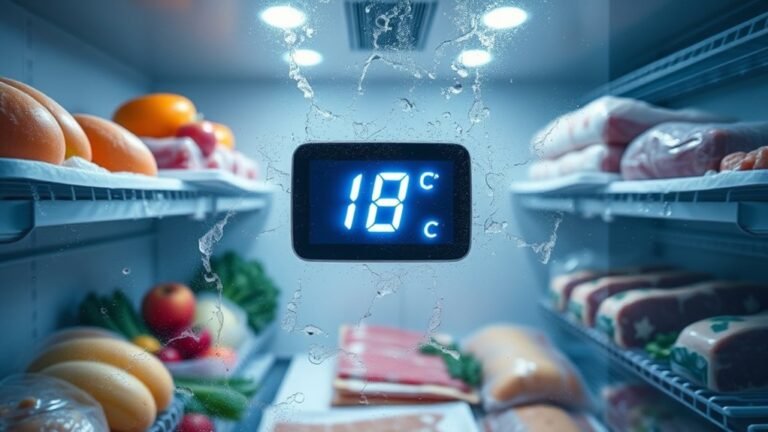
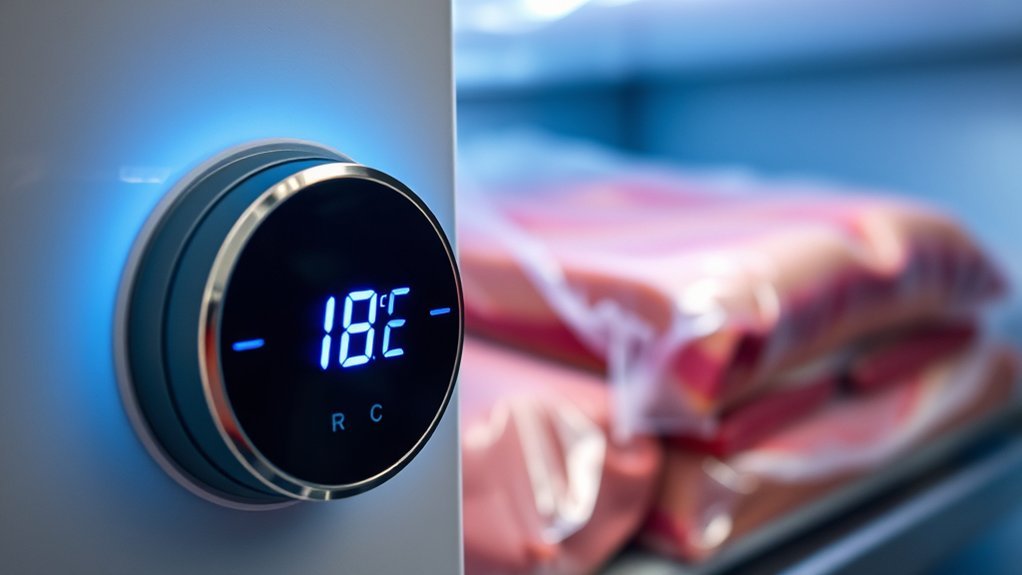
If you notice frost building up quickly or your frozen meals losing flavor, your freezer temperature might be off. Setting your freezer to 0°F (-18°C) is essential for keeping food safe and preserving quality over time.
But simply turning the dial isn’t enough—you need to understand why this specific temperature matters and how to monitor it properly. Avoiding common pitfalls can save you both food and energy.
Keeping your freezer at the right temperature ensures your food stays fresh longer and prevents unnecessary frost buildup that can reduce efficiency. Regularly checking with a reliable freezer thermometer helps maintain the ideal setting consistently.
Key Takeaways
- Set your freezer temperature to 0°F (-18°C) to keep food safely frozen and maintain quality.
- Use a reliable thermometer inside the freezer, placed away from the door and walls, to verify accurate temperature.
- Avoid setting temperatures higher than 0°F to prevent spoilage, nutrient loss, and increased energy consumption.
- Maintain a tight door seal and regularly defrost to prevent frost buildup and ensure consistent cooling.
- Organize freezer contents to allow airflow, supporting stable temperatures and efficient compressor performance.
What Is the Ideal Freezer Temperature for Food Safety?
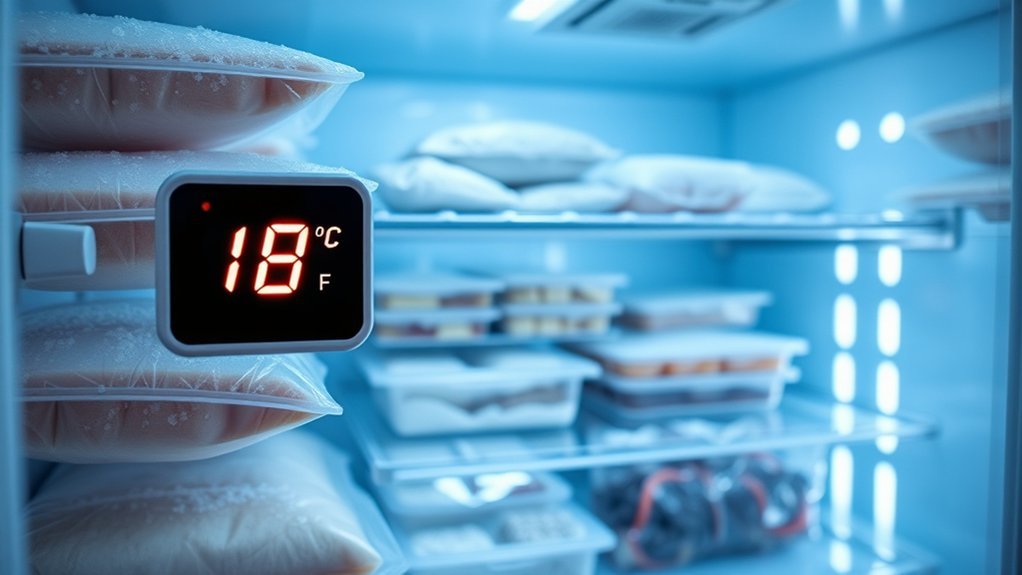
Why does the temperature inside your freezer matter for food safety? Maintaining your freezer at the ideal temperature prevents bacterial growth and keeps food safe to eat.
You should set your freezer to 0°F (-18°C) to ensure food stays frozen solid, preserving quality and reducing spoilage. This setting helps you avoid costly food waste, making it a key cost saving strategy.
Proper appliance placement also impacts efficiency; placing your freezer away from heat sources like ovens or direct sunlight prevents temperature fluctuations that can compromise food safety.
Why Freezer Temperature Below 0°F Matters for Storage
How much difference does lowering your freezer temperature below 0°F make for food storage? Setting your freezer below this point significantly enhances storage conditions by maintaining consistent cold, which helps:
- Minimize freezer frost buildup that can reduce efficiency
- Slow enzymatic activity, preserving food integrity
- Prevent temperature fluctuations that risk spoilage
- Improve energy efficiency by reducing compressor strain
When the temperature stays firmly below 0°F, you reduce the chance of thawing and refreezing cycles that cause freezer frost, which wastes energy and affects performance. Though colder settings might slightly increase energy use, modern freezers balance this well, making sub-zero temperatures optimal for reliable storage.
How Freezer Temperature Impacts Food Quality and Shelf Life
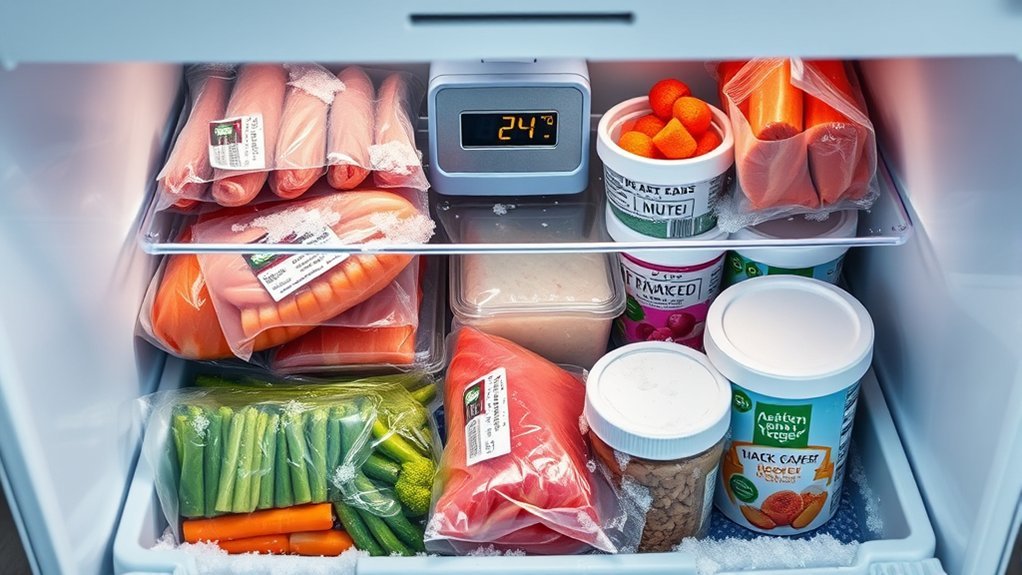
What impact does freezer temperature have on the quality and shelf life of your food? Maintaining the right temperature directly influences freshness dynamics by slowing enzymatic activity and microbial growth, which preserves taste, texture, and nutritional value.
If your freezer is too warm, food quality deteriorates faster, leading to freezer burn and spoilage. Conversely, excessively low temperatures can increase energy consumption unnecessarily, reducing energy efficiency without significant benefits to preservation.
Setting your freezer at 0°F (-18°C) strikes an optimal balance, ensuring your food remains safe and fresh for extended periods while minimizing electricity use. Understanding this balance helps you maximize both the longevity and quality of your frozen goods, preventing waste and saving money over time.
How to Set and Check Your Freezer Temperature
You should set your freezer to the ideal temperature of 0°F (-18°C) to keep food safe and fresh. Use a reliable freezer thermometer to monitor the temperature accurately, placing it away from the door and walls.
Adjust the temperature controls as needed based on the thermometer’s readings to maintain consistent cooling.
Ideal Freezer Temperature
Wondering where to set your freezer temperature for optimal food preservation? The ideal setting is typically 0°F (-18°C). This temperature halts bacterial growth, preserving your food’s safety and quality. Maintaining this level ensures your meals keep their texture contrast and aesthetic appeal, avoiding freezer burn and nutrient loss.
To set and check your freezer temperature:
- Adjust the dial or digital control to 0°F (-18°C).
- Avoid frequent temperature changes to maintain consistency.
- Store food properly to support airflow and even cooling.
- Regularly inspect the freezer’s gasket to ensure a tight seal.
Using Thermometers Effectively
How can you guarantee your freezer stays at the ideal temperature? Using a reliable thermometer is essential. Place it in the middle of your freezer to get an accurate reading, avoiding areas near the door or walls.
Check the temperature regularly, especially during seasonal changes. A digital thermometer with a probe often offers better precision than analog models.
Monitoring helps prevent issues like freezer hydration, which can cause frost buildup and affect food quality. Also, note that your freezer’s noise level can indicate its functioning; compare the usual noise to detect unusual sounds that might signal temperature problems.
Adjusting Temperature Controls
Where should you set your freezer’s temperature for best performance? Aim for 0°F (-18°C) to maximize food preservation and ensure safety. Adjusting temperature controls correctly not only maintains optimal freezing but also promotes energy savings and extends appliance life.
Follow these steps for precise control:
- Locate the temperature dial or digital control panel inside or on the freezer.
- Set the temperature to 0°F (-18°C), adjusting slightly if needed based on thermometer readings.
- Avoid frequent changes; allow 24 hours for temperature stabilization after adjustments.
- Use storage hacks like grouping items together to maintain consistent cold air circulation.
Common Freezer Temperature Mistakes to Avoid
You can’t keep your freezer effective if you set the temperature too high or ignore fluctuations that impact food safety. Overloading the freezer also restricts airflow, causing uneven cooling and potential spoilage.
Let’s review these common mistakes to help you maintain optimal freezer performance.
Setting Temperature Too High
Why does setting your freezer temperature too high pose a problem? When the temperature is set above the recommended level, your food won’t freeze properly, risking spoilage and nutrient loss. You might think it saves energy, but it can actually reduce your freezer’s energy efficiency by forcing it to work harder to maintain coldness.
This also disrupts optimal storage organization because uneven freezing affects how you arrange items for quick access.
Avoid these pitfalls by remembering:
- Food may thaw and refreeze, compromising safety
- Ice buildup can increase, reducing freezer capacity
- Energy consumption can spike despite higher settings
- Uneven temperatures hurt storage organization and food quality
Set your freezer around 0°F (-18°C) for best results.
Ignoring Temperature Fluctuations
How often do you check your freezer’s temperature? Ignoring temperature fluctuations is a common freezer mistake that can compromise food safety. Even if your freezer is set correctly, frequent door openings, power outages, or faulty seals cause temperature swings.
These two word ideas—“temperature fluctuations”—aren’t just technical jargon; they directly affect food quality and safety. You can’t treat this as an unrelated topic to setting the freezer properly.
Use a reliable thermometer to monitor your freezer consistently. If you notice irregular temperature changes, address the cause immediately. Failing to manage fluctuations risks partial thawing and refreezing, which degrade food texture and increase bacterial growth.
Stay vigilant. Maintaining a stable temperature ensures your freezer performs optimally and keeps food safe longer.
Overloading The Freezer
When does your freezer go from well-stocked to overloaded? Overloading considerations are critical because stuffing your freezer too full hinders proper air circulation. This can cause uneven temperatures and increase the risk of food spoilage.
Additionally, an overloaded freezer strains the compressor, reducing energy efficiency and potentially raising your electricity bill.
To avoid these common mistakes, remember:
- Leave space between items for air to flow freely
- Avoid blocking vents inside the freezer
- Don’t exceed the manufacturer’s recommended capacity
- Organize items to minimize frequent door openings
Tips for Maintaining Consistent Freezer Temperature Year-Round
Maintaining a consistent freezer temperature throughout the year requires careful attention to both the appliance and its environment. First, place your freezer away from direct sunlight and heat sources to prevent temperature fluctuations. Use a reliable freezer thermometer to monitor the temperature regularly.
Implement freezer organization ideas like grouping similar items and avoiding overpacking, which improves airflow and cooling efficiency. Defrost your freezer as needed to prevent ice buildup that can hinder performance. Seal the door tightly and check the gasket for damage.
For energy efficiency, minimize door openings and ensure proper insulation around the appliance. By following these tips for energy efficiency and maintaining an organized freezer, you’ll keep your freezer running smoothly and preserve food quality year-round.
Frequently Asked Questions
Can Freezer Temperature Affect My Energy Bill?
Yes, your freezer temperature affects your energy bill. By maintaining optimal freezer efficiency, you reduce energy waste, which leads to significant energy savings.
Avoid setting it too low or too high to keep costs and performance balanced.
How Does Freezer Location in My Home Impact Temperature?
You might not realize it, but your freezer placement directly affects its efficiency. When placed near heat sources or in warm areas with high ambient temperature, it works harder, raising energy use and risking inconsistent cooling.
Is It Safe to Freeze Carbonated Drinks?
You shouldn’t freeze carbonated drinks because cracking carbonation causes pressure buildup, risking explosion. Also, beverage condensation can form when thawed, affecting taste and texture.
Instead, chill them in the fridge for safe consumption.
Can Freezer Temperature Affect Ice Cream Texture?
You’ll notice ice cream texture turns icy or grainy if your freezer’s temperature care slips. Keeping it consistently cold prevents large ice crystals, preserving that smooth, creamy delight you expect every time you scoop a perfect bite.
How Often Should I Defrost My Freezer?
You should defrost your freezer every 6 to 12 months to maintain optimal defrost frequency. Doing this regularly reduces frost buildup, improving energy efficiency and saving on electricity costs, ensuring your freezer runs effectively.
Conclusion
Setting your freezer to 0°F (-18°C) isn’t just a suggestion—it’s your first defense against spoilage and foodborne illness. Think of it as a silent guardian, preserving freshness and flavor while saving energy.
Regularly check with a reliable thermometer, avoid overpacking, and maintain seals to keep that ideal chill steady. By mastering these simple steps, you ensure your freezer works efficiently, protecting both your food and your peace of mind.
Ultimately, knowing what your freezer should be set at helps you keep your food safe and your appliance running smoothly.