How to Filter Water in the Wild
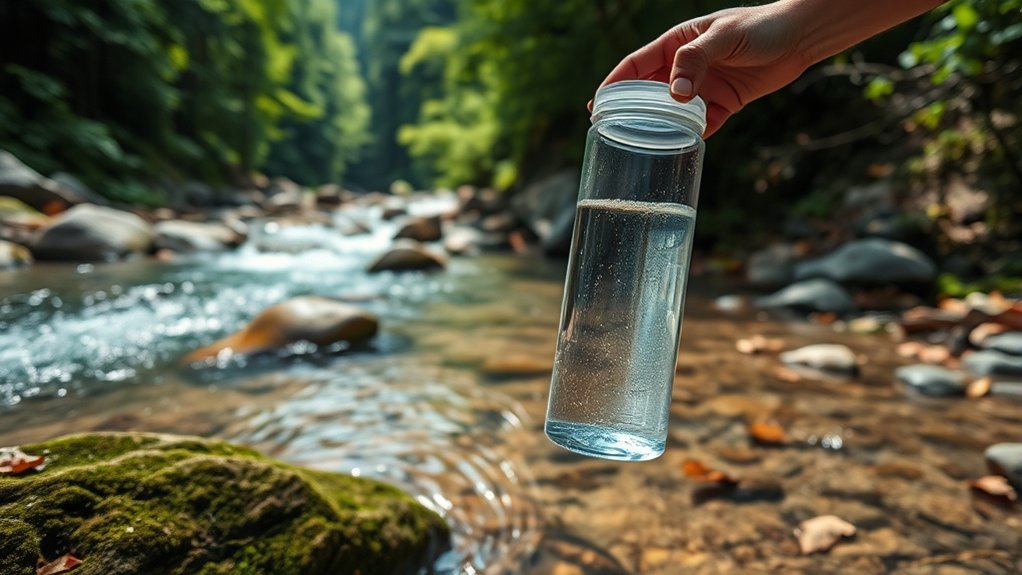
When you’re out in the wild, knowing how to filter water is crucial for staying healthy and avoiding illness. The first step is spotting safe water sources and removing any obvious debris before moving on to deeper purification methods.
While DIY filters can be helpful, it’s important to understand their limitations and the proper techniques to use them effectively. But what’s the most reliable way to guarantee your water is truly safe to drink?
Key Takeaways
- Choose clear, flowing water sources away from animals, humans, and pollution for safer filtration in the wild.
- Pre-filter water using cloth or coffee filters to remove large debris before main filtration.
- Build a layered DIY filter with gravel, sand, charcoal, and plant fibers for effective sediment removal.
- Purify filtered water by boiling for at least one minute or using chemical treatments like iodine.
- Store purified water in clean, sealed, opaque containers to prevent contamination and bacterial growth.
How to Identify Safe Water Sources To Filter
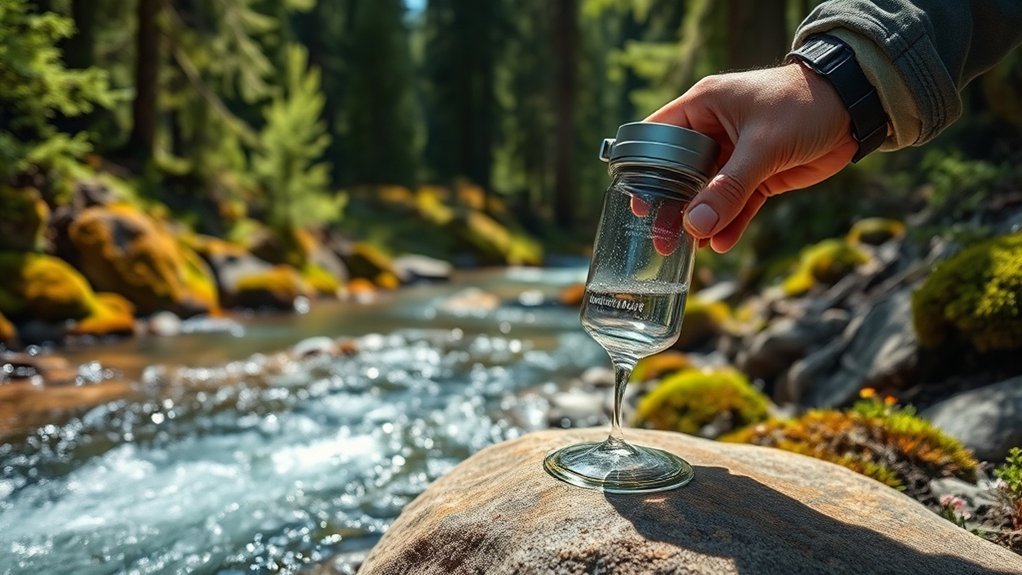
Where can you find water that’s safe enough to filter in the wild? Start by locating sources away from obvious contamination like animal activity, human settlements, or industrial areas.
Seek water sources distant from animal presence, human activity, and industrial zones for safer filtration in the wild.
Look for clear, flowing water such as streams or rivers rather than stagnant ponds. When identifying hazards, avoid water near dead animals, excessive algae, or signs of chemical runoff.
Springs and groundwater sources are typically safer but still require filtration. Always scan upstream for potential pollution sources before collecting water.
By focusing on these practical steps for locating sources and identifying hazards, you reduce your risk of ingesting harmful pathogens or toxins.
How to Pre-Filter Water To Remove Debris
Before you filter water, remove large debris using simple materials like cloth, coffee filters, or fine mesh. You can easily create a DIY pre-filter by layering these items to catch sediment and particles.
Follow clear steps to strain the water effectively, ensuring your main filter works efficiently and lasts longer.
Choosing Effective Filtering Materials
How can you effectively remove debris from water before filtering it? Start by identifying contaminants you’ll encounter like leaves, dirt, and sediment. Choosing effective filtering materials means prioritizing filter material safety to avoid introducing toxins or chemicals into your water.
Natural materials such as clean cloth, sand, or charcoal work well, but make sure they’re free from contaminants themselves. When selecting materials, consider their ability to trap larger particles without clogging quickly.
Avoid anything treated with chemicals or synthetic fibers that might leach harmful substances. Layering materials by size can enhance debris removal and prolong your main filter’s lifespan.
Simple DIY Pre-Filters
Once you’ve chosen safe and effective materials for removing debris, you can create simple DIY pre-filters to improve water clarity. Start by layering coarse materials like gravel or sand inside a container or cloth to trap larger particles. This reduces clogging in finer filters downstream.
When learning how to compare filtration methods, consider flow rate, ease of construction, and debris removal efficiency. Test your pre-filter by observing if the water appears clearer and by conducting basic water quality tests if possible.
Pre-filters don’t remove pathogens but significantly enhance overall filtration performance. By incorporating these straightforward setups, you’ll make subsequent filtration steps more effective and extend your filter’s lifespan.
Mastering simple DIY pre-filters is a key skill in ensuring safer water when you’re in the wild.
Steps To Remove Debris
Where do you start when removing debris from wild water sources? Begin by identifying contaminants like leaves, dirt, and sediment that can clog your filter and reduce its effectiveness.
To pre-filter properly, follow these steps:
- Use a cloth or bandana: Secure a clean cloth over your container’s opening to catch large particles.
- Pour water slowly: This prevents disturbing sediments at the bottom and keeps debris trapped in the cloth.
- Inspect filtered water: Always check filtration efficiency by observing water clarity before proceeding to finer filtration methods.
How to Make a DIY Water Filter With Natural Materials
You’ll need to choose natural materials like sand, charcoal, and gravel that effectively trap impurities. Arrange these layers carefully to maximize filtration and avoid clogging.
Keep your filter clean and replace materials regularly to maintain its efficiency.
Selecting Suitable Natural Materials
How do you choose the best natural materials for filtering water in the wild? Focus on safe sourcing and mineral preservation to ensure your filter works effectively without stripping beneficial elements. Select materials that trap sediment, impurities, and pathogens while maintaining water quality.
- Sand and fine gravel: They effectively filter out particles and help preserve essential minerals.
- Charcoal: Use natural hardwood charcoal, which adsorbs toxins and improves taste without removing nutrients.
- Plant fibers or moss: These act as a preliminary filter, catching larger debris and aiding clarity.
Avoid materials from contaminated areas. Always gather materials from clean, natural environments to protect your health and maintain the water’s natural mineral balance.
Layering Your Water Filter
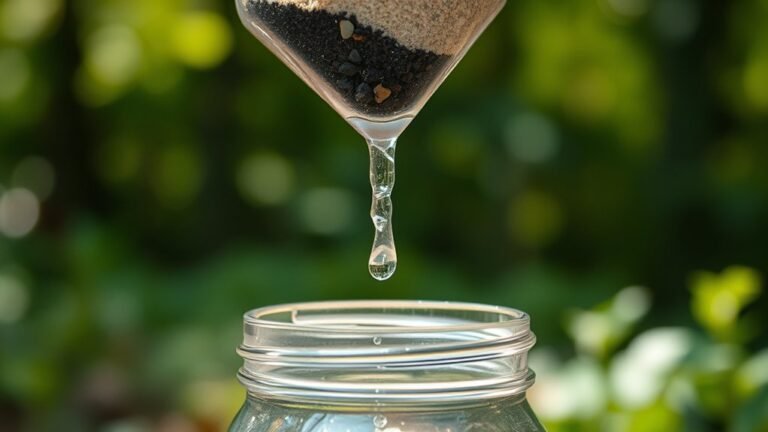
When constructing your DIY water filter, layering natural materials in the right order makes all the difference in effectiveness. Start with a layer of coarse material like small stones or gravel at the bottom to support the filter and allow water flow.
Above that, add sand to trap finer particles. Next, use activated charcoal or charcoal from a fire to improve filtration and reduce odors. On top, place a layer of grass, moss, or leaves to catch larger debris from your water sources.
This sequence ensures efficient debris removal and clearer water output. Each layer targets different contaminants, so don’t skip any. Proper layering maximizes your filter’s ability to handle water from various natural sources, making your DIY filter reliable in the wild.
Maintaining Filter Efficiency
Although building an effective water filter is essential, maintaining its efficiency guarantees you consistently get clean water in the wild. You need to perform regular filter maintenance to avoid clogging and unpleasant water taste.
Follow these steps to keep your DIY natural filter working optimally:
- Rinse the filter layers with clean water daily to remove trapped debris and sediment.
- Replace or refresh natural materials like charcoal and sand when water flow slows or water taste changes.
- Store your filter in a clean, dry place to prevent mold growth and contamination.
Best Portable Water Filters for Outdoors
Why settle for unsafe water when you can carry a reliable portable filter? The right device ensures outdoor flavoring remains natural and provides aesthetic filtration to keep your water clear and tasty.
You’ll want a filter that’s lightweight, easy to use, and efficient in removing contaminants.
| Filter Model | Weight | Filtration Type |
|---|---|---|
| Sawyer Mini | 2 oz | Hollow fiber |
| LifeStraw Personal | 2 oz | Hollow fiber |
| Katadyn BeFree | 10 oz | Membrane |
| MSR TrailShot | 4 oz | Hollow fiber |
| Grayl Geopress | 14 oz | Press filtration |
Choose a filter that matches your outdoor activity and water sources to maintain safety without sacrificing flavor or convenience.
How to Purify Filtered Water for Safety
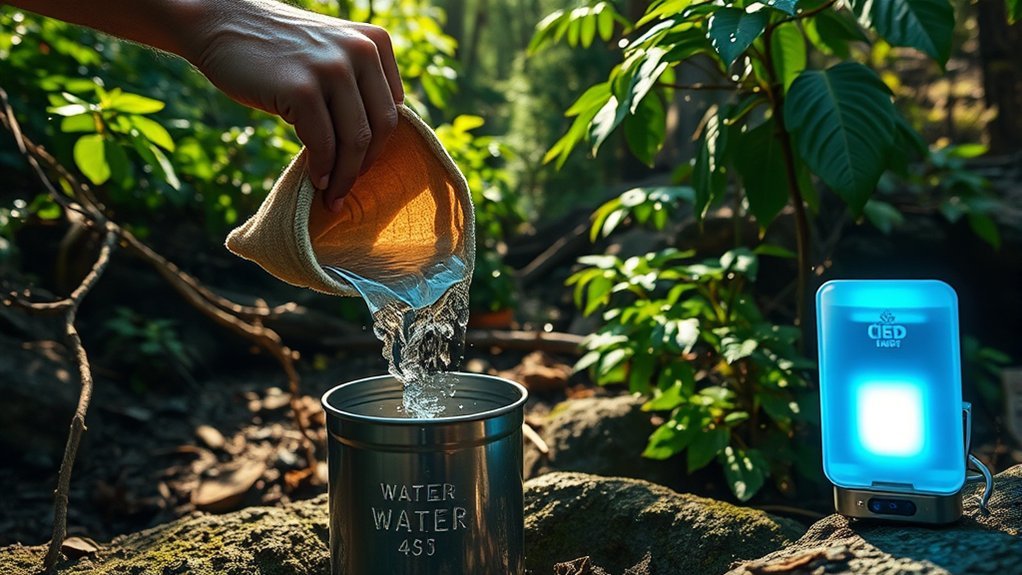
How can you guarantee your filtered water is truly safe to drink in the wild? Filtering removes many contaminants, but purification adds an essential safety layer. To ensure safety, follow these steps:
- Boil the filtered water for at least one minute to kill viruses and bacteria often missed by filters.
- Use chemical treatments like iodine or chlorine dioxide tablets as a backup or when boiling isn’t possible.
- Maintain your filter regularly by cleaning it according to manufacturer instructions to prevent clogging and contamination.
After purification, practice safe storage by keeping water in a clean, sealed container to avoid recontamination. Following these steps, combined with proper filter maintenance, ensures your water stays safe and drinkable throughout your outdoor adventure.
How to Store and Carry Filtered Water Safely
Properly storing and carrying filtered water is essential to maintaining its safety and freshness while you’re outdoors. Choose clean, BPA-free containers with secure lids to prevent contamination and leaks.
When thinking about how to store filtered water, opt for opaque or insulated bottles to shield water from sunlight, which can promote bacterial growth. Always clean your containers thoroughly before use and avoid touching the inside of caps or openings.
For carrying water, use a hydration pack or a sturdy water bottle that fits comfortably in your backpack. Keep water containers separate from items like food or dirty gear to minimize contamination risk.
Remember to refill your containers only from clean sources or your filtration system. By managing how to store and carry filtered water properly, you ensure your supply stays safe and ready to hydrate you throughout your adventure.
Common Water Filtering Mistakes To Avoid
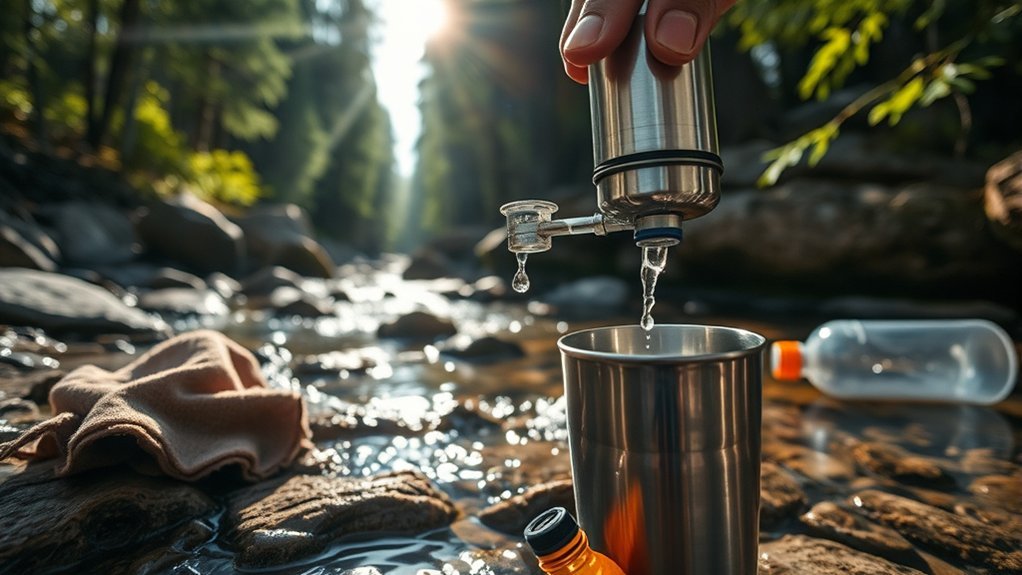
What common pitfalls could compromise your water filtering efforts in the wild? Avoiding contamination and misinterpreting filtration results are critical. Here are three common mistakes to steer clear of:
- Touching the Filter Outlet: You risk introducing bacteria by touching the clean water outlet. Always keep it sterile to avoid contamination.
- Ignoring Filter Maintenance: Neglecting to clean or replace filter elements reduces effectiveness. Follow manufacturer guidelines to ensure reliable filtration.
- Assuming Clear Water Means Safe Water: Visual clarity doesn’t guarantee purity. Don’t misinterpret filtration results; always treat water properly regardless of appearance.
Frequently Asked Questions
Can Filtered Water Remove Viruses Completely?
You can’t rely on filtered water to remove viruses completely due to virus removal limitations and equipment reliability concerns. Always use additional disinfection methods like boiling or chemical treatments to ensure safe drinking water.
How Long Does Filtered Water Stay Safe to Drink?
Your filtered water stays safe to drink for up to 24 hours if stored properly to avoid contaminants. Use a clean, sealed container to maintain taste retention and prevent recontamination, ensuring freshness and safety.
Are Chemical Purification Tablets Necessary After Filtering?
Think of chemical purification as a final lock on your filtered water’s fortress. You don’t always need tablet usage, but it’s essential if contamination risks remain, ensuring your water’s safety beyond physical filtration methods.
What Are Signs of Waterborne Illness After Drinking Filtered Water?
You’ll notice waterborne symptoms like diarrhea, nausea, cramps, or fever if you get post filtration illness.
Don’t ignore persistent vomiting or dehydration. Seek medical help immediately to prevent complications from contaminated water.
Can You Filter Saltwater for Drinking in the Wild?
You can’t rely on typical portable filtration to make saltwater drinkable. Saltwater desalination requires specialized methods like distillation or reverse osmosis, which aren’t practical in the wild without proper equipment.
Conclusion
Filtering water in the wild isn’t just a task—it’s your lifeline. Treat every step like building a fortress: choose safe sources, pre-filter debris, craft your natural filter carefully, and always purify before drinking.
Don’t cut corners; even clear water can hide dangers. Store your filtered water properly to keep it safe.
With these reliable habits, you’ll turn unpredictable water into a steady, clean resource—your survival shield in the wild. Filtering water in the wild ensures you stay healthy and hydrated when it matters most.