Are Pump Water Bottles Recyclable
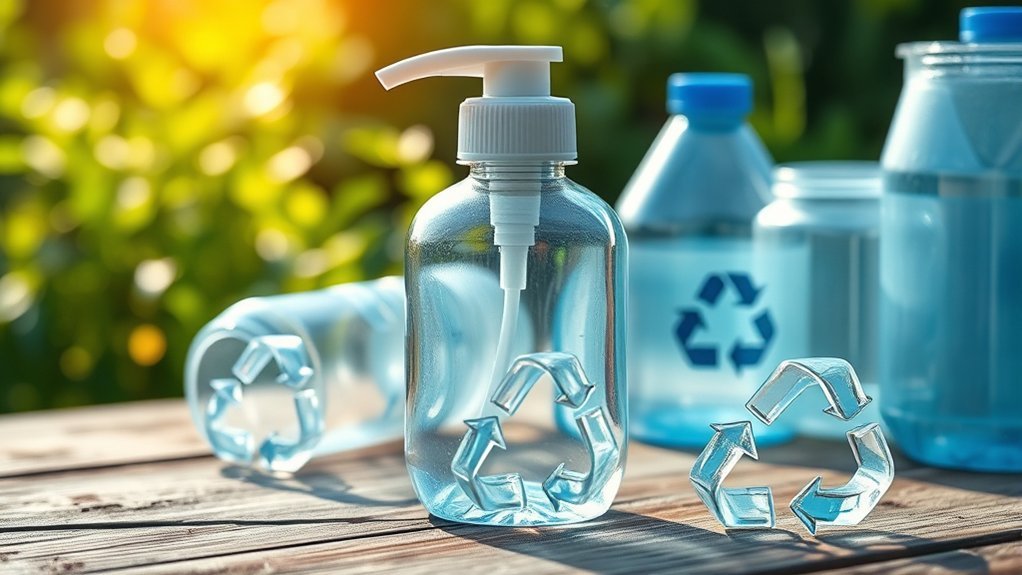
You might assume pump water bottles are easily recyclable, but the reality is more complex. While the main bottle often uses common plastics like PET or HDPE, the pump contains mixed materials such as polypropylene, metal springs, and silicone, complicating the process.
Understanding how these components affect recyclability—and what steps you need to take before disposal—can help you manage waste more effectively. This raises important questions about local recycling capabilities and guidelines.
Key Takeaways
- Pump water bottles are recyclable if the pump mechanism is removed before recycling.
- Bottle bodies are typically made from PET or HDPE, which are widely accepted in recycling streams.
- Pump components often contain mixed plastics and metal springs, complicating recycling and requiring separate disposal.
- Proper cleaning and rinsing of bottles prevent contamination and improve recycling efficiency.
- Local recycling guidelines dictate how to handle pump parts and whether they are accepted for recycling.
Are Pump Water Bottles Recyclable?
How recyclable are pump water bottles? You should know that these bottles present significant reusability challenges due to their complex design. The pump mechanism often combines multiple materials, making it difficult for standard recycling facilities to process them effectively.
Consumer habits also impact recyclability; many users discard pumps separately or fail to clean bottles properly before recycling, which contaminates the recycling stream. While the main bottle body is usually recyclable plastic, pumps typically require manual disassembly to separate components.
Recycling programs vary widely in their capacity to handle such items, so it’s crucial you check local guidelines. Overall, although parts of pump water bottles are recyclable, overcoming reusability challenges depends heavily on both technological capabilities and informed consumer habits.
What Materials Are Pump Water Bottles Made From?
You’ll find pump water bottles are typically made from plastics like polyethylene terephthalate (PET) or high-density polyethylene (HDPE). The pump mechanism itself often contains multiple components, including metal springs and polypropylene parts.
Understanding these materials helps clarify the challenges in recycling these bottles effectively.
Common Bottle Materials
What materials make up pump water bottles, and how do they affect recyclability? Typically, these bottles consist of polyethylene terephthalate (PET), high-density polyethylene (HDPE), or polypropylene (PP).
PET is widely recycled and scores well on sustainability metrics due to its recyclability and lower environmental impact. HDPE also ranks favorably, thanks to its durability and ease of processing.
However, recycling myths often mislead consumers into thinking all plastics are equally recyclable, which isn’t true. The presence of mixed materials or additives can reduce recycling efficiency.
For example, multilayered plastics or certain dyes complicate sorting and processing. Understanding these materials helps you assess a pump bottle’s recyclability accurately, promoting better waste management and supporting circular economy goals in plastic use.
Components Of Pump Mechanism
Why do pump water bottles require multiple materials in their mechanisms? The pump mechanism involves components such as springs, pistons, and seals that demand specific material properties. Typically, the outer bottle is made of polyethylene terephthalate (PET) or high-density polyethylene (HDPE), while the pump includes polypropylene (PP) and metal springs.
Material compatibility plays a crucial role to ensure chemical resistance, durability, and proper function without degradation. For example, the spring must resist corrosion, often requiring stainless steel, whereas the piston and seals need flexible, inert plastics to maintain airtightness.
These diverse materials complicate recycling because separation is challenging, and mixed materials can contaminate recycling streams. Understanding these components and their material compatibility helps you assess the recyclability of pump water bottles accurately.
Why Recycling Pump Water Bottles Is Tricky
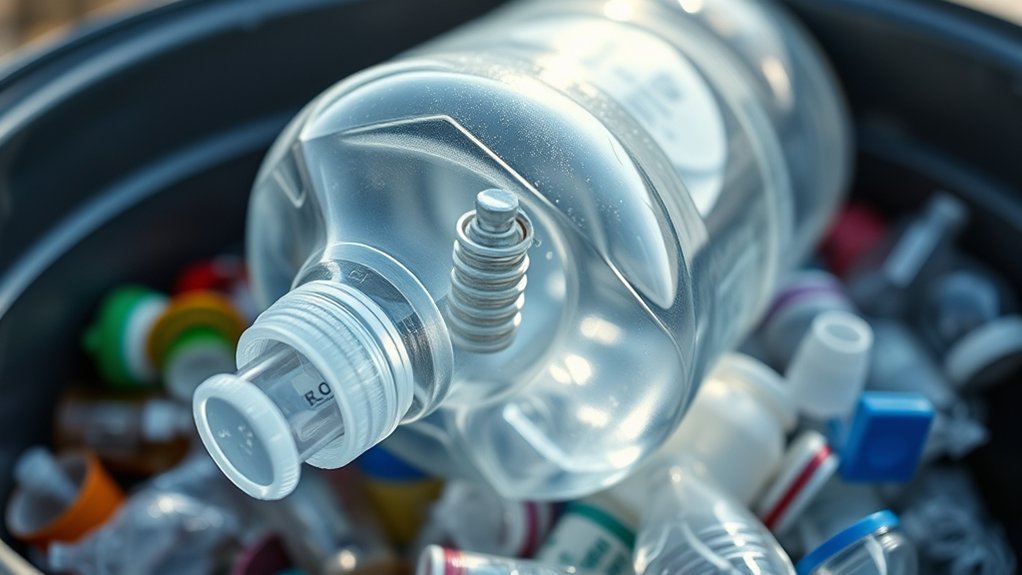
How does the design of pump water bottles complicate their recycling process? The pump mechanism combines multiple materials: plastic types, metal springs, and sometimes silicone, making separation difficult. This composite structure challenges standard recycling streams, which rely on uniform material input.
Additionally, marketing incentives encourage visually appealing pump bottles to boost resale value, often prioritizing aesthetics over recyclability. These design choices complicate recycling discussions, as consumers may not realize the pumps require disassembly before disposal.
The presence of mixed materials contaminates recycling batches, reducing efficiency and increasing processing costs. Understanding these factors helps explain why recycling pump water bottles isn’t straightforward, even though the bottles themselves are typically recyclable.
As a result, you must separate components properly to ensure materials re-enter the recycling system effectively.
How Recycling Centers Process Pump Water Bottles
Recycling centers address the complexity of pump water bottles by first requiring manual or mechanical separation of the pump from the bottle. This pump bottle disassembly is essential due to the different materials involved.
Recycling center procedures typically include:
- Sorting the bottles by plastic type, usually PET or HDPE.
- Removing the pumps, which often contain metal springs and mixed plastics.
- Cleaning and shredding the plastic bottles into flakes.
- Processing the separated materials through melting or chemical recycling methods.
How to Separate and Prepare Pump Water Bottles for Recycling
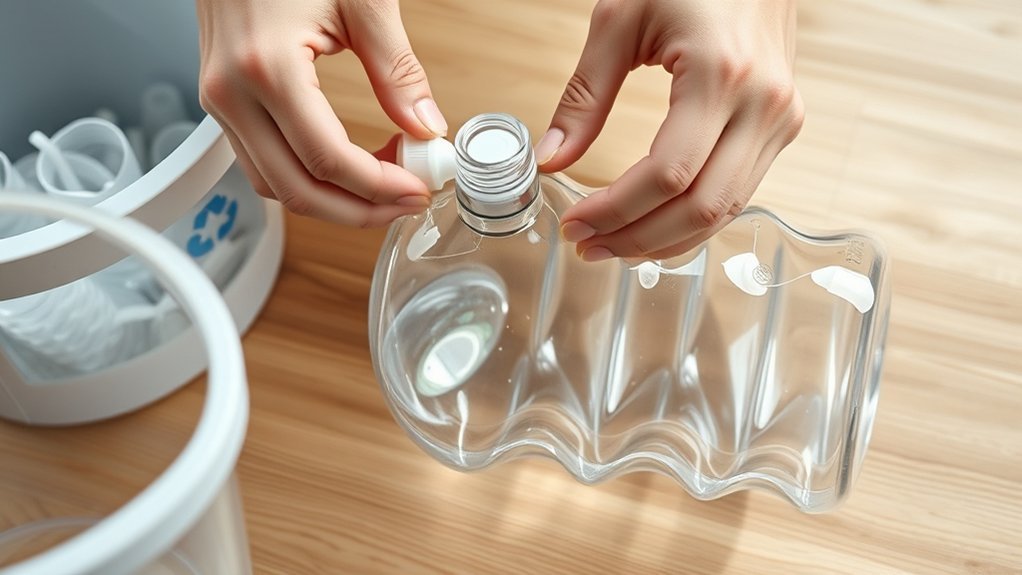
You’ll need to remove the pump components from the bottle since they’re often made from different materials. Make sure to clean the bottle thoroughly to eliminate any residue that can contaminate the recycling process.
Finally, sort the parts according to your local recycling guidelines to ensure proper processing.
Removing Pump Components
Why is removing pump components essential before recycling pump water bottles? Pump components often consist of mixed materials like metal springs and various plastics that don’t share the same recycling codes as the bottle itself. This mixture complicates sorting processes and can contaminate recyclable streams.
To prepare your pump water bottle correctly:
- Identify and detach the pump head from the bottle body.
- Separate the spring or metal parts from the plastic components.
- Check the recycling codes on each part; the bottle usually has a clear code (e.g., #1 or #2), while pump components may lack a code or show a different one.
- Dispose of pump components according to local recycling guidelines, often in general waste if they’re not recyclable.
Following these steps ensures efficient recycling and reduces contamination.
Cleaning Bottle Thoroughly
How thoroughly should you clean your pump water bottle before recycling? Proper cleaning guidance is essential for effective bottle maintenance and recycling. Residual liquids and debris can contaminate recycling streams, reducing material quality.
You should rinse the bottle with warm water, removing any remaining product. Avoid using harsh chemicals that might degrade the plastic. After rinsing, let the bottle air dry completely to prevent mold growth during storage and transport.
| Step | Action |
|---|---|
| 1 | Remove pump components |
| 2 | Rinse bottle with warm water |
| 3 | Avoid harsh chemicals |
| 4 | Air dry thoroughly |
Following this protocol ensures the bottle is clean and ready for recycling facilities, optimizing material recovery.
Sorting Materials Correctly
When preparing pump water bottles for recycling, what’s essential is correctly separating the various materials involved. Pumps often combine plastics, metals, and springs, which complicates recycling due to materials compatibility issues.
To optimize recycling efficiency, consider these discussion ideas:
- Detach the pump mechanism from the bottle to isolate plastic components.
- Separate metal springs or parts from plastic elements, as mixed materials can hinder recycling.
- Identify the plastic types using recycling codes to ensure they align with local recycling capabilities.
- Rinse all parts to remove residues, preventing contamination.
Following these steps aligns with evidence-based recycling protocols, reducing cross-material contamination and enhancing the recyclability of pump water bottles. Proper sorting respects materials compatibility, facilitating more efficient processing in recycling streams.
Recycling Codes for Pump Water Bottles
Which recycling codes apply to pump water bottles can markedly impact their recyclability. Typically, these bottles are made from high-density polyethylene (HDPE, recycling code 2) or polyethylene terephthalate (PET, recycling code 1).
However, the pump materials often consist of mixed plastics, including polypropylene (PP, code 5) and sometimes metal springs, complicating sorting. The bottle design influences how easily you can separate the pump from the main container, which is crucial because recycling facilities usually require components to be sorted by code.
If you fail to detach the pump, the mixed materials may contaminate the recycling stream, reducing the bottle’s likelihood of being recycled properly. Understanding the specific codes marked on each part helps you sort them correctly and supports effective recycling practices.
Finding Local Recycling Rules for Pump Water Bottles
Where you live considerably affects the rules for recycling pump water bottles. Due to pump bottle challenges, such as mixed materials and residual liquids, local recycling rules vary widely. To find accurate information, follow these steps:
- Check your municipality’s official website for recycling guidelines specific to pump bottles.
- Contact your local waste management facility to confirm if they accept pump bottles and any preparation required.
- Review regional recycling codes and symbols, as some areas only accept certain plastics.
- Use online databases or apps dedicated to recycling rules, which often include pump bottle specifics.
Easier-to-Recycle Alternatives to Pump Water Bottles
Why should you consider alternatives to pump water bottles for easier recycling? Pump mechanisms often combine multiple materials, complicating the recycling process and leading to frequent contamination. This challenges common recycling myths that all plastic bottles are equally recyclable.
By prioritizing single-material containers or bottles with simpler caps, you align with evolving consumer priorities that emphasize sustainability and circularity. For example, bottles made from PET plastic with screw-on caps are widely accepted in municipal recycling programs and offer a clearer recycling pathway.
Additionally, some brands now offer refillable or concentrate-based systems, reducing plastic waste and simplifying material recovery. Choosing these alternatives not only streamlines recycling efforts but also supports evidence-based waste management strategies, enhancing overall environmental outcomes.
What to Do If Your Pump Water Bottle Isn’t Accepted
How should you handle a pump water bottle that your local recycling program doesn’t accept? First, assess pump compatibility and bottle sizing, as these factors influence recycling options. Then, consider these steps:
- Separate the pump from the bottle, as pumps often contain mixed materials that hinder recycling.
- Check if specialized facilities accept the pump component for recycling.
- Repurpose the pump for other compatible bottles to extend its lifecycle.
- Dispose of non-recyclable parts in accordance with local waste management guidelines.
Frequently Asked Questions
Can Pump Water Bottles Be Reused for Other Purposes?
You can reuse pump water bottles for various purposes, like dispensing soaps or lotions, enhancing their reuse potential.
Proper recycling methods should follow once they’re no longer functional to ensure environmental safety and material recovery.
How Long Does It Take for Pump Water Bottles to Decompose?
Pump water bottles can take up to 450 years to decompose, substantially contributing to landfill impact.
If you decline recycling, these plastics persist longer, increasing environmental harm and delaying material recovery processes essential for sustainability efforts.
Are Pump Water Bottles Safe for Storing Food or Drinks?
You’ll find 60% of pump water bottles contain BPA, raising safety considerations for storing drinks. Recycling challenges arise from mixed materials, so avoid prolonged food storage and opt for BPA-free options to minimize health risks effectively.
Do Pump Water Bottles Contain Harmful Chemicals?
You won’t usually encounter harmful chemicals in pump water bottles if you check their plastic composition. Reputable brands ensure pump safety by using BPA-free, food-grade plastics, minimizing risks associated with chemical leaching during typical use.
Can Pump Water Bottles Be Refilled With Different Liquids?
You can refill pump water bottles with different liquids if you consider material safety and thoroughly clean them. However, recycling options may vary, so guarantee the original contents don’t compromise the bottle’s integrity or cause contamination.
Conclusion
Recycling pump water bottles can feel like untangling a knot—complex but doable with the right steps. You’ll need to separate the bottle from the pump, sort plastics by code, and follow local guidelines to prevent contamination. While the bottle itself is usually recyclable, the pump’s mixed materials complicate processing.
By preparing your bottles properly, you help streamline recycling efforts and reduce waste. This careful approach makes a meaningful impact in the circular economy. Understanding how to recycle pump water bottles correctly is key to supporting sustainable practices.