Are Heat Pump Water Heaters Reliable
When it comes to heat pump water heaters, reliability can vary based on factors like climate and installation quality. These systems are generally durable, especially in warmer regions where they operate more efficiently.
However, their performance and lifespan depend heavily on proper maintenance and good airflow management. You can often expect consistent energy savings and fewer breakdowns compared to traditional water heaters.
That said, certain conditions, such as colder climates or poor installation, may affect their reliability. Understanding these nuances is essential before deciding if a heat pump water heater is the right choice for your home.
Key Takeaways
- Heat pump water heaters are generally reliable, especially in warmer climates with failure rates under 5% over ten years.
- Proper installation and regular maintenance significantly reduce reliability issues and extend unit lifespan.
- Heat pumps typically last 10-15 years, surpassing traditional electric or gas water heaters in durability.
- Reliability depends on ambient conditions, with colder regions requiring more maintenance due to frost and efficiency challenges.
- Certified installers and adherence to manufacturer guidelines minimize installation-related failures and improve long-term performance.
Are Heat Pump Water Heaters Reliable for Your Home?
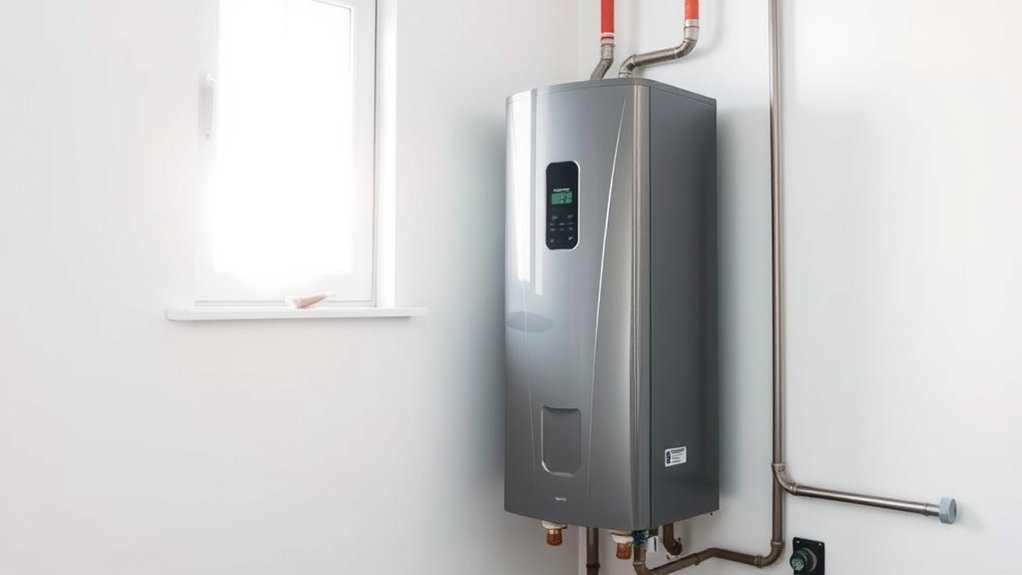
How reliable are heat pump water heaters when installed in your home? Data from multiple studies show that reliability perceptions often depend on regional applicability.
In warmer climates, these units maintain consistent performance, with failure rates under 5% over ten years, comparable to traditional electric heaters. However, in colder regions, you might see more frequent maintenance due to reduced efficiency and frost-related issues.
Manufacturers have improved components to address these challenges, enhancing unit durability and serviceability. To ensure reliability, you should evaluate your local climate, installation quality, and unit specifications.
Proper installation by certified technicians and regular maintenance can mitigate most reliability concerns, aligning heat pump water heaters’ performance with your home’s needs and regional conditions efficiently.
How Heat Pump Water Heaters Work
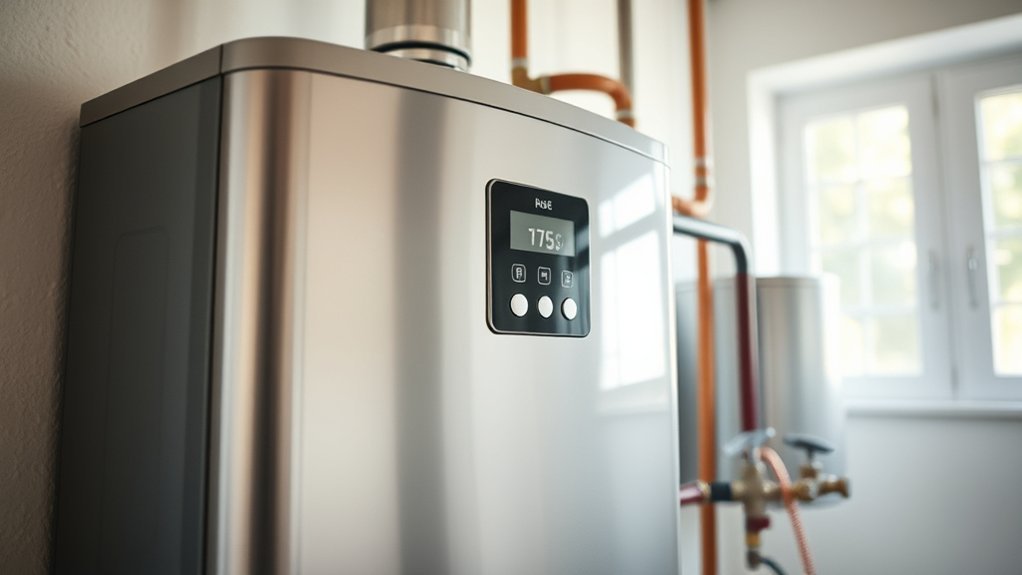
What makes heat pump water heaters an energy-efficient alternative lies in their ability to transfer heat rather than generate it directly. You’ll find that these systems use a refrigerant cycle to extract heat from the surrounding air and transfer it to your water tank.
The refrigerant absorbs heat as it evaporates at low pressure, then compresses to increase temperature. This heat transfer process moves thermal energy efficiently, requiring considerably less electricity than conventional resistance heaters.
Heat Pump vs. Traditional Water Heater Reliability
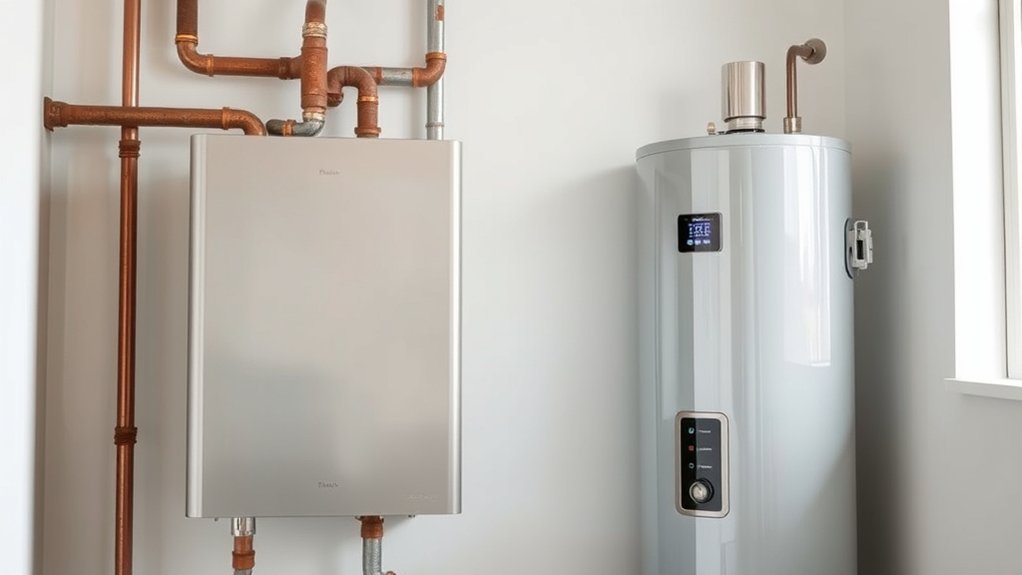
You’ll find that heat pump water heaters generally offer comparable durability to traditional models but require more regular maintenance to maintain efficiency.
Performance consistency depends on factors like ambient temperature and system upkeep, which differ from the simpler mechanics of traditional heaters. Understanding these differences helps you choose the most reliable option for your specific needs.
Durability Comparison Overview
When evaluating the durability of heat pump water heaters compared to traditional models, it’s essential to contemplate their operational lifespans and maintenance requirements. Durability benchmarks indicate that heat pumps generally last 10-15 years, while traditional electric or gas tanks average around 8-12 years.
Material degradation varies: traditional units face corrosion in steel tanks, whereas heat pumps incorporate more complex components prone to wear but often use corrosion-resistant materials.
| Feature | Heat Pump Water Heater | Traditional Water Heater |
|---|---|---|
| Average Lifespan (years) | 10-15 | 8-12 |
| Primary Material Issue | Component wear | Tank corrosion |
| Durability Benchmark | Higher due to materials | Lower due to steel tank |
You’ll find heat pumps offer improved durability with proper care and modern materials.
Maintenance Requirements Differences
Maintenance requirements differ considerably between heat pump water heaters and traditional models, impacting their overall reliability. You might encounter maintenance misconceptions, such as the belief that heat pumps need frequent servicing; however, data shows routine checks every 1-2 years suffice.
Unlike traditional heaters, heat pumps require attention to components like evaporator coils and condensate drains, which can affect efficiency if neglected. Installation challenges also influence maintenance demands. Improper placement can lead to airflow restrictions, increasing wear and tear.
By ensuring professional installation and adhering to manufacturer guidelines, you reduce unexpected repairs. In contrast, traditional units mainly require regular flushing to prevent sediment buildup.
Understanding these differences helps you plan maintenance proactively, enhancing reliability and extending your system’s lifespan while avoiding common pitfalls linked to heat pump technology.
Performance Consistency Factors
Proper upkeep sets the foundation, but consistent performance hinges on factors like ambient temperature, system design, and usage patterns. Heat pump water heaters rely on extracting heat from the surrounding air, so if your environment drops below 40°F, efficiency and output can decline sharply.
Traditional water heaters use electric resistance or gas combustion, maintaining steady output regardless of ambient conditions, making reliability less sensitive to external variables.
When you analyze reliability, avoid making a random comparison to an unrelated topic, such as appliance lifespan in unrelated systems. Instead, focus on measurable metrics like recovery rate, energy consumption, and failure frequency under typical use.
Common Problems That Affect Heat Pump Water Heaters
You’ll want to watch for frequent maintenance issues like clogged filters and refrigerant leaks that can reduce system lifespan.
Performance often drops in colder environments, impacting efficiency and water heating speed. Addressing these challenges promptly ensures your heat pump water heater operates reliably and cost-effectively.
Frequent Maintenance Issues
How often do heat pump water heaters encounter issues that require your attention? Maintenance frequency varies, but common problems include clogged filters, refrigerant leaks, and fan motor wear.
If you opt for outdoor installation, debris accumulation and weather exposure increase maintenance demands. Regularly inspecting and cleaning air filters prevents airflow restrictions, which can reduce efficiency and cause overheating.
Noise considerations also arise from worn fan components or loose mounting; addressing these promptly minimizes operational disruptions. Additionally, condensate drain lines can clog, leading to water damage or system shutdowns.
Performance and Efficiency Challenges
Why do some heat pump water heaters struggle to maintain peak performance and efficiency? Key issues include ambient temperature sensitivity and airflow restrictions. These units rely on extracting heat from surrounding air, so in tiny house or off grid setups where space is limited or ventilation is poor, efficiency drops significantly.
Low ambient temperatures force the system to work harder, increasing energy consumption and reducing lifespan. Additionally, dust buildup on coils and blocked fans impair heat transfer, causing performance dips.
To optimize efficiency, ensure proper installation with adequate airflow, ideally 1,000 cubic feet per minute, and maintain coil cleanliness. For off grid or tiny house applications, consider models designed for low-temperature operation and integrate supplemental heating elements to stabilize output.
Monitoring system performance with sensors can also help you identify issues early and maintain reliable operation.
Maintenance Tips for Heat Pump Water Heaters
When was the last time you inspected your heat pump water heater? Regular maintenance is critical to ensure optimal performance and longevity. Start by cleaning or replacing air filters every 3 to 6 months, as clogged filters reduce efficiency by up to 15%.
Check the condensate drain monthly to prevent mold and blockages. Inspect heat exchanger fins for dirt buildup; a clean surface improves heat transfer by 10-12%.
Don’t overlook your system’s battery backups. Test and replace batteries annually to maintain control functions during power outages. Flushing the tank yearly removes sediment that lowers heating efficiency by 5-10%.
These maintenance tips help prevent costly repairs and maintain reliable operation. Following this data-driven routine ensures your heat pump water heater runs efficiently and consistently over time.
Energy Savings and Costs of Heat Pump Water Heaters
Wondering how much you can save with a heat pump water heater? These systems typically reduce water heating energy use by 50-60% compared to conventional electric models, translating to annual savings of $300 to $500 depending on your local energy rates and usage.
Your energy policy incentives can further offset upfront costs, as many regions offer rebates and tax credits for installing energy-efficient appliances. However, it’s critical to monitor for refrigerant leaks, which can degrade performance and increase operational costs if left unaddressed.
Regular inspections help maintain efficiency and compliance with environmental standards. By investing in a heat pump water heater, you not only cut energy expenses but also contribute to sustainable energy goals, making it a cost-effective, eco-friendly solution for long-term water heating needs.
Warranty, Lifespan, and Choosing the Right Heat Pump Water Heater
How do you ensure your investment in a heat pump water heater pays off over time? Start by selecting a unit with a robust warranty longevity, typically 10 years or more on the compressor and tank. This coverage safeguards against premature failures and offers peace of mind.
Next, consider the expected lifespan; quality heat pump water heaters average 12-15 years when properly maintained. To maximize durability, avoid common installation pitfalls such as improper placement, inadequate ventilation, or incorrect electrical connections, which can reduce efficiency and trigger early breakdowns.
Choose models with proven reliability records and certified installation professionals to minimize risks. By prioritizing warranty longevity and addressing installation pitfalls, you’ll optimize performance and extend your system’s operational life, ensuring your heat pump water heater delivers consistent, cost-effective hot water.
Frequently Asked Questions
Can Heat Pump Water Heaters Be Used in Off-Grid Homes?
Yes, heat pump water heaters can work in off-grid homes. You’ll need battery-powered support for consistent energy, ensuring off-grid viability by managing power fluctuations and optimizing efficiency through smart controls and energy storage solutions.
Do Heat Pump Water Heaters Require Special Electrical Wiring?
Long before Tesla’s time, you’ll want to check if your home can handle special electrical installation requirements. Heat pump water heaters often need a dedicated 240V circuit for optimal efficiency and safe operation, avoiding overloads.
Are Heat Pump Water Heaters Noisy During Operation?
You won’t find significant noise level issues with heat pump water heaters; modern models minimize vibration concerns using advanced compressors and insulation, ensuring quiet operation. Proper installation further reduces noise, addressing most noise level discussions effectively.
Can Heat Pump Water Heaters Be Installed Outdoors?
You’ve heard, “Measure twice, cut once.” For outdoor installation, ensure proper insulation and weatherproofing.
Heat pump water heaters handle noise considerations well outside, but placement affects sound levels and efficiency. Choose a sheltered, ventilated spot for best performance.
How Do Heat Pump Water Heaters Perform in Cold Climates?
You’ll find heat pump water heaters’ cold climate performance decreases as temperatures drop, causing energy efficiency impacts up to 30%.
To optimize, install models with supplemental electric resistance or cold climate-specific technology for consistent hot water delivery.
Conclusion
If you want a reliable water heater, heat pump models are worth considering, especially in warmer climates where they shine. These systems use energy-efficient technology to provide consistent hot water while reducing utility bills.
With proper installation, regular maintenance, and attention to airflow, you can avoid common pitfalls and extend the lifespan beyond 10 years. It’s important to follow manufacturer guidelines and schedule routine check-ups to keep the unit running smoothly.
While no system is completely foolproof, following these steps puts you ahead of the curve—turning potential challenges into smooth sailing for your home’s hot water needs. Overall, heat pump water heaters are reliable options that combine efficiency with longevity.