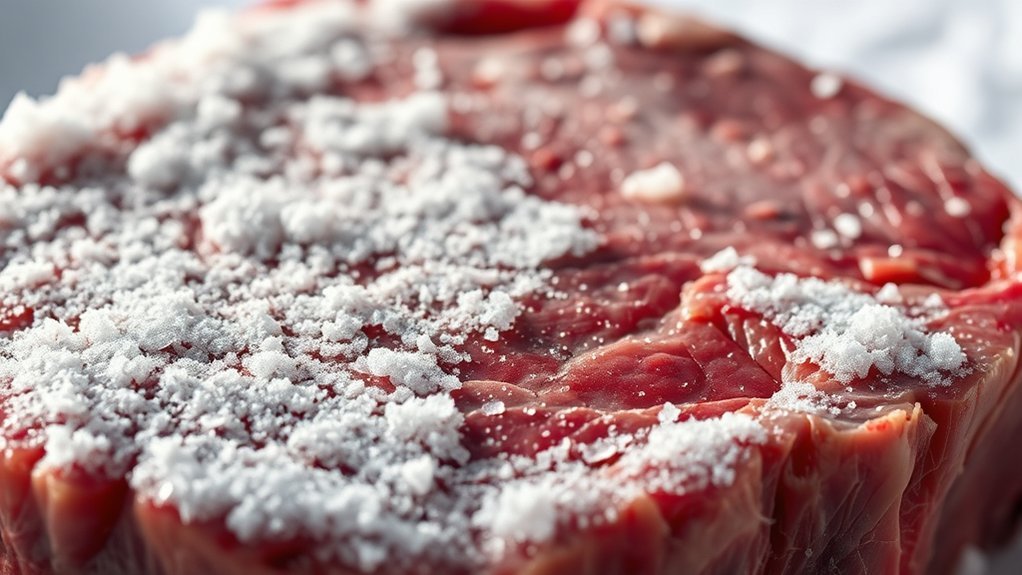
What Causes Freezer Burn
You might not realize it, but freezer burn occurs when moisture escapes from your food due to exposure to air in the freezer.
This process causes water inside the food to migrate to the surface, where it sublimates and forms damaging ice crystals.
These changes affect texture, color, and flavor, even though the food remains safe.
Understanding exactly how air and moisture interact is key to preventing this quality loss.
Key Takeaways
- Freezer burn is caused by moisture loss from food exposed to air in the freezer.
- Air exposure leads to water molecules migrating to the surface and sublimating.
- Improper sealing or damaged packaging allows air infiltration, accelerating freezer burn.
- Temperature fluctuations and long storage times increase moisture migration and ice crystal formation.
- Air pockets around food intensify dehydration, causing texture and flavor deterioration.
What Is Freezer Burn and How Does It Happen?
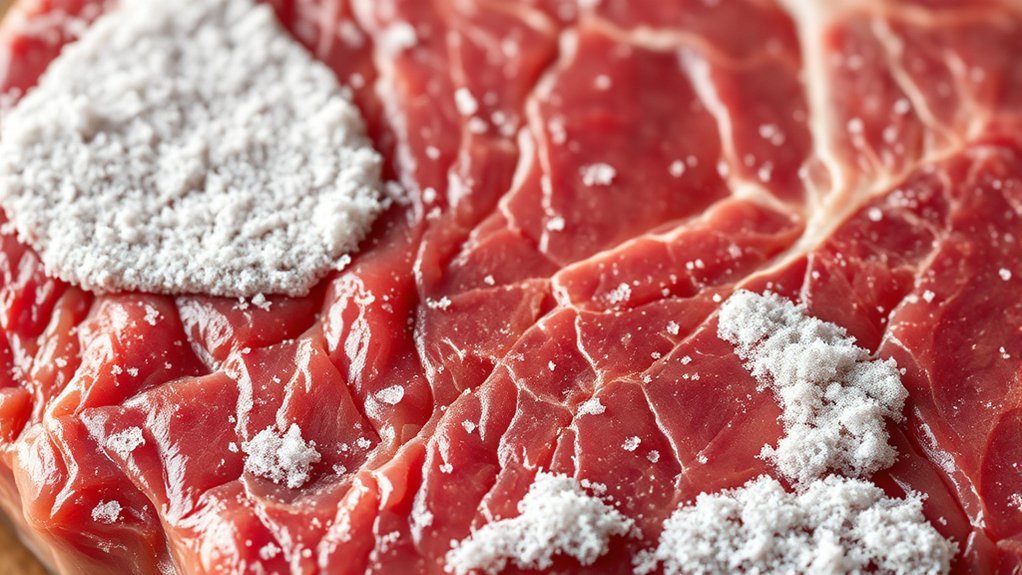
Freezer burn results from moisture loss when food is exposed to air in the freezer. When you leave food inadequately sealed, air exposure causes water molecules inside the food to migrate to the surface and sublimate.
This process dehydrates the food’s surface, leading to ice crystals and dry, tough spots commonly recognized as freezer burn. You’ll notice discoloration and texture changes where freezer burn occurs, indicating that the food’s quality has deteriorated.
Although freezer burn doesn’t make food unsafe, it negatively affects taste and texture. To prevent freezer burn, you need to minimize air exposure by using airtight packaging or vacuum sealing.
Understanding what freezer burn is and how it happens helps you take proper measures to maintain your food’s quality during freezing.
How Air and Moisture Loss Cause Freezer Burn
The interaction between air and moisture within your frozen food plays a crucial role in causing freezer burn. When food undergoes freezer exposure, air comes into contact with its surface, promoting moisture migration from inside the food to the surrounding environment.
This moisture loss leads to dehydration of the food’s outer layers, forming ice crystals that damage cellular structures. Simultaneously, air moisture exchange accelerates oxidation, altering texture and flavor.
The presence of air pockets around the food intensifies this effect, as the continuous removal of moisture dries the surface unevenly. Understanding this process highlights why controlling air exposure and moisture retention is crucial to prevent freezer burn.
Minimizing air contact slows moisture evaporation and preserves food quality during freezing.
Packaging Mistakes That Lead to Freezer Burn
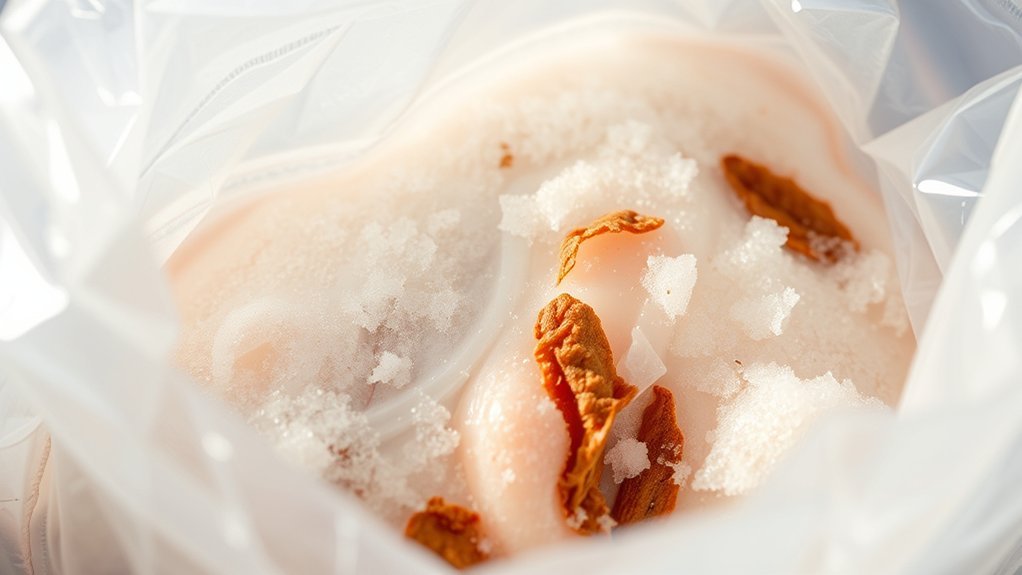
How do packaging errors contribute to freezer burn? Packaging mistakes, especially improper sealing, allow air and moisture to penetrate your frozen food. This exposure accelerates dehydration and oxidation, causing freezer burn.
You must avoid common errors like using damaged bags, not removing excess air, or employing low-quality materials.
| Packaging Mistake | Cause | Effect on Freezer Burn |
|---|---|---|
| Improper sealing | Air infiltration | Moisture loss & oxidation |
| Using damaged bags | Tears or holes | Increased exposure to freezer air |
| Excess air left inside | Poor vacuuming | Speeds up moisture evaporation |
| Low-quality materials | Non-barrier packaging | Allows gas exchange |
| Reusing packaging | Weakens seals | Compromises airtightness |
How Temperature and Storage Time Affect Freezer Burn
Why does temperature play such a critical role in preserving your frozen food’s quality? Because even slight temperature changes accelerate moisture migration, increasing the risk of freezer burn. When the temperature fluctuates above and below freezing, ice crystals inside the food sublimate, causing dehydration.
This effect intensifies with longer storage duration, as extended time allows more water molecules to escape and form frost. Consistent, low temperatures slow down these sublimation processes, minimizing moisture loss. Conversely, frequent door openings or unstable freezer conditions cause repeated temperature changes, worsening freezer burn.
Additionally, the storage duration directly influences the severity of damage; the longer you keep food frozen, the more pronounced the freezer burn becomes. Managing both temperature stability and limiting storage duration are crucial in controlling freezer burn development.
How to Prevent Freezer Burn and Keep Food Fresh
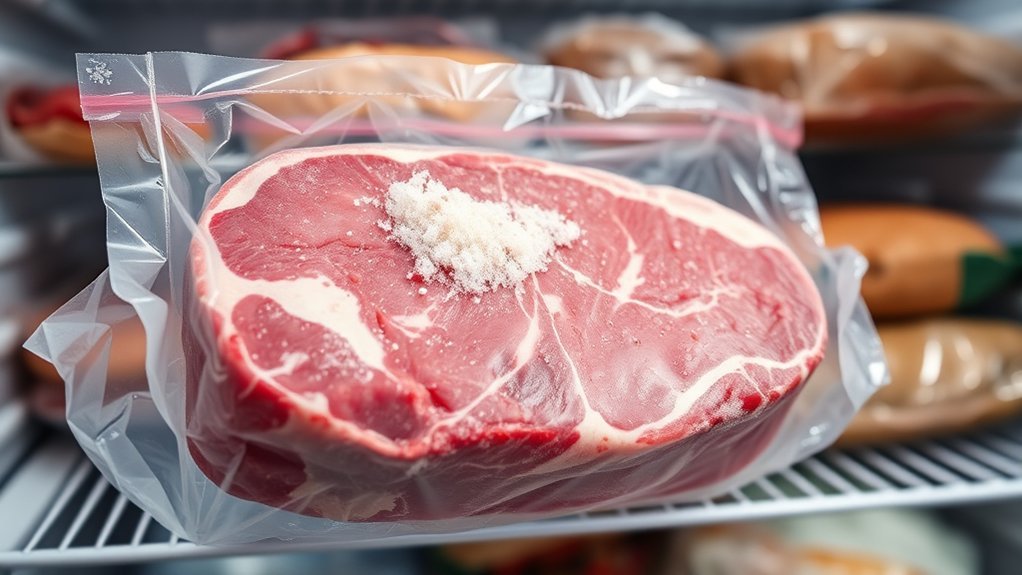
What steps can you take to effectively prevent freezer burn and maintain your food’s freshness? First, control the air quality inside your freezer by minimizing exposure to oxygen, which accelerates moisture loss and ice crystal formation. Use airtight containers or vacuum-seal packaging to create a barrier against air infiltration.
Second, reduce moisture loss by wrapping food tightly with materials designed to retain moisture, such as heavy-duty aluminum foil or plastic wrap. Third, avoid fluctuating temperatures, which can worsen moisture migration; keep your freezer at a consistent 0°F (-18°C).
Finally, label and organize your food to limit storage time, as prolonged exposure increases freezer burn risk. By managing air quality, moisture loss, and storage conditions, you can significantly extend your food’s shelf life and preserve its quality.
Frequently Asked Questions
Can Freezer Burn Affect the Nutritional Value of Food?
Yes, freezer burn can reduce your food’s nutritional value by causing moisture loss and oxidation. You can minimize freezer impact by optimizing packaging, ensuring airtight sealing to preserve nutrients and maintain food quality during storage.
Is Freezer Burn Harmful if Consumed?
You won’t face freezer burn health risks if consumed, but it degrades taste and texture. To avoid this, follow storage best practices like airtight wrapping and maintaining consistent freezer temperatures, ensuring food quality and safety.
Does Freezer Burn Change the Taste of Cooked Meals?
Yes, freezer burn changes the taste of cooked meals by causing dryness and off-flavors. Using packaging science and freezer math, you can optimize storage to minimize these effects.
Two word discussion ideas include moisture loss and oxidation impact.
Can Freezer Burn Be Reversed or Repaired?
You can’t reverse freezer burn symptoms once they appear, but improving storage practices, like using airtight containers and removing excess air, helps prevent it. Properly managing moisture and temperature slows quality degradation in frozen foods.
Are Some Foods More Resistant to Freezer Burn Than Others?
Yes, foods with lower moisture resist ice crystal formation better. You’ll find that dense, fatty items endure freezer burn more effectively, especially when you use high-quality packaging materials that minimize air exposure and moisture loss.
Conclusion
Now that you understand freezer burn’s cause—moisture loss from air exposure—you might think avoiding it’s simple. But here’s the catch: even slight packaging flaws or temperature fluctuations can trigger it, silently degrading your food’s quality.
If you overlook these details, your meals could suffer unexpected texture and flavor changes. So, don’t underestimate careful wrapping and consistent freezing—they’re your best defense against freezer burn’s unseen damage.
Proper storage techniques and attention to detail are essential to prevent freezer burn and keep your food tasting fresh.