Is Freezer Burn Safe to Eat
You want to know if freezer burn is safe to eat, if it affects taste, and whether you should toss or keep your frozen food.
While freezer burn itself isn’t harmful, it does impact the quality and texture of your food.
Sometimes, it can make food dry or tough.
Knowing how to spot freezer burn and handle it properly can save you from wasting food or risking unpleasant meals.
Let’s explore what freezer burn really means for your frozen goods.
Key Takeaways
- Freezer burn itself does not pose significant health risks and is generally safe to eat after trimming affected areas.
- Bacteria or mold growth can occur if food was improperly stored or kept too long, making it unsafe to consume.
- Off smells, unusual colors, or large dry patches indicate spoilage and the food should be discarded.
- Thorough cooking of freezer-burned food helps ensure safety when storage conditions are uncertain.
- Proper sealing, labeling, and storage duration tracking prevent unsafe consumption of freezer-burned foods.
What Is Freezer Burn and How Does It Happen?
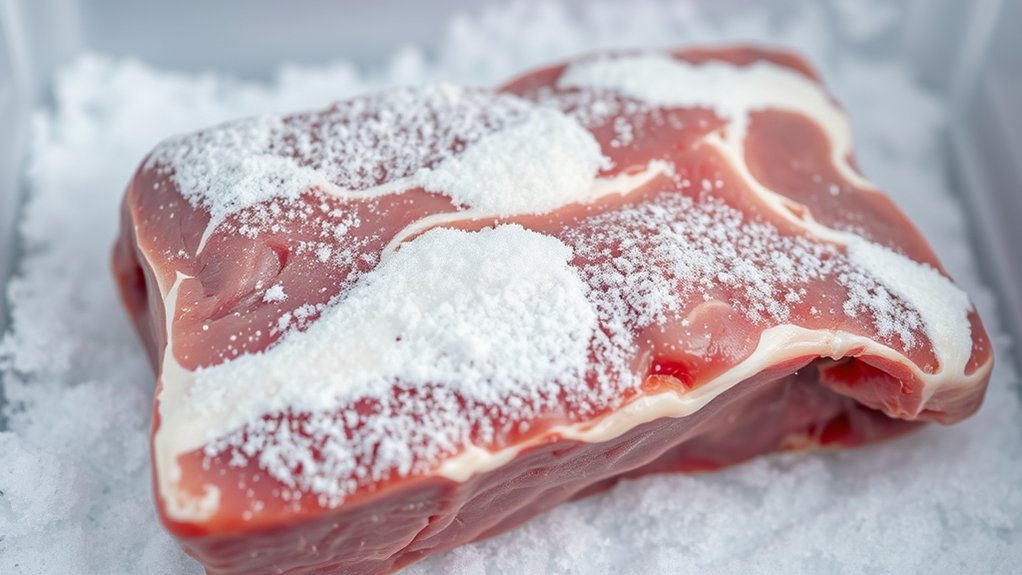
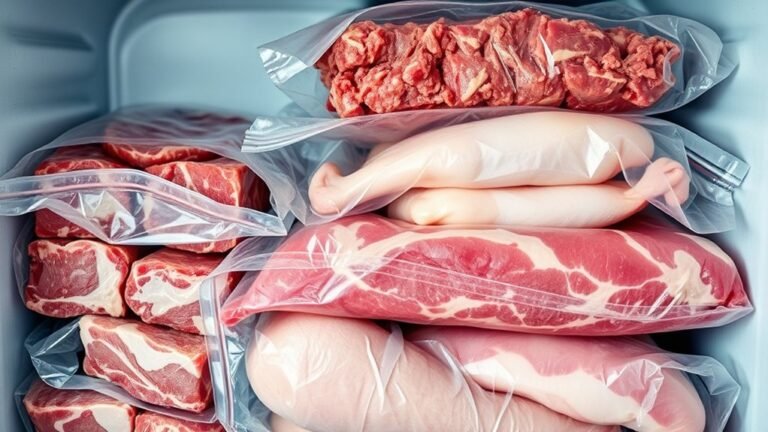
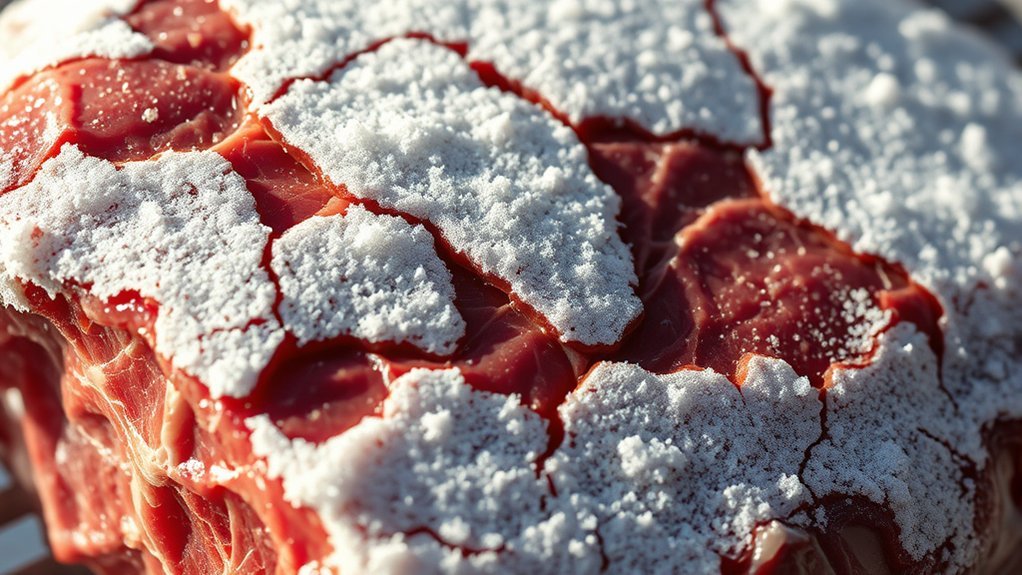
What exactly causes freezer burn? It happens when moisture escapes from your food and forms ice crystals on its surface due to exposure to air. This dehydration leads to dry spots, discoloration, and tough texture.
To maintain freezer safety, you need to follow proper storage best practices. Make sure to wrap your food tightly in airtight packaging to minimize air contact. Avoid leaving food uncovered or loosely wrapped, as this accelerates freezer burn.
Also, keep your freezer at a consistent temperature of 0°F (-18°C) or lower to slow down moisture loss. By understanding how freezer burn occurs and applying safe storage techniques, you can better preserve your food’s quality and reduce waste.
Is It Safe to Eat Food With Freezer Burn?
You can safely eat food with freezer burn, but it may not taste as good or have the same texture. While freezer burn doesn’t cause harmful bacteria, the affected areas might be dry or tough.
To enjoy your food safely, trim off freezer-burned spots before cooking or eating.
Health Risks Overview
How safe is it to eat food affected by freezer burn? Generally, freezer burn itself doesn’t pose significant health risks because it’s caused by dehydration and oxidation, not bacterial growth.
However, poor freezer storage and inconsistent labeling practices increase the chance of consuming spoiled food unknowingly. If the food wasn’t stored properly or has been frozen for too long, harmful bacteria or mold can develop despite the freezer burn.
To minimize health risks, always follow good freezer storage guidelines, such as sealing food tightly and labeling packages with dates. This helps you track how long items have been frozen and avoid eating food that might be unsafe.
While freezer burn mainly affects quality, you should remain cautious about potential contamination from improper storage.
Quality and Texture Changes
Why does freezer burn affect the quality and texture of food so noticeably? It happens because freezer burn causes moisture loss, leading to dry, tough, and grainy textures. When ice crystals form on food surfaces, they damage cells, altering texture and flavor.
While freezer burn doesn’t make food unsafe, it does reduce its appeal substantially. You can minimize these changes by following packaging best practices. Use airtight, moisture-proof materials designed for freezer safe storage.
Proper sealing prevents air exposure, which is the main cause of freezer burn. By wrapping food tightly and removing excess air, you preserve moisture and maintain texture better. Although freezer burn won’t harm you, its impact on food quality means you’ll likely notice less enjoyable taste and texture in affected items.
Safe Consumption Tips
Although freezer burn doesn’t pose a health risk, it’s important to know how to handle affected food safely. First, inspect the food for any signs of spoilage beyond freezer burn, like off smells or discoloration, before deciding to eat it.
To maintain freezer safety, always store food in airtight packaging to minimize moisture loss and prevent freezer burn from developing. Practicing good labeling practices helps you track how long items have been frozen, reducing the chance of keeping food too long.
When consuming freezer-burned food, trim away the affected areas to improve taste and texture. Cooking food thoroughly also helps maintain safety and quality.
How Does Freezer Burn Change Food Quality and Taste?
What happens to your food when it develops freezer burn? In this freezer burn discussion, you should know that moisture loss causes ice crystals to form on the surface, damaging cell structure. This leads to noticeable changes in texture, often making food dry or tough.
The taste alteration discussion reveals that freezer burn causes oxidation, which dulls flavors and can introduce off-putting, stale notes. While freezer burn doesn’t make food unsafe, it definitely lowers quality, so you might find your meals less enjoyable.
You’ll notice these changes most in meats, fruits, and vegetables, where the flavor and texture impact is stronger. Understanding these effects helps you decide whether to use or discard freezer-burned food based on your preferences for taste and texture.
How Can You Identify and Safely Handle Freezer-Burned Foods?
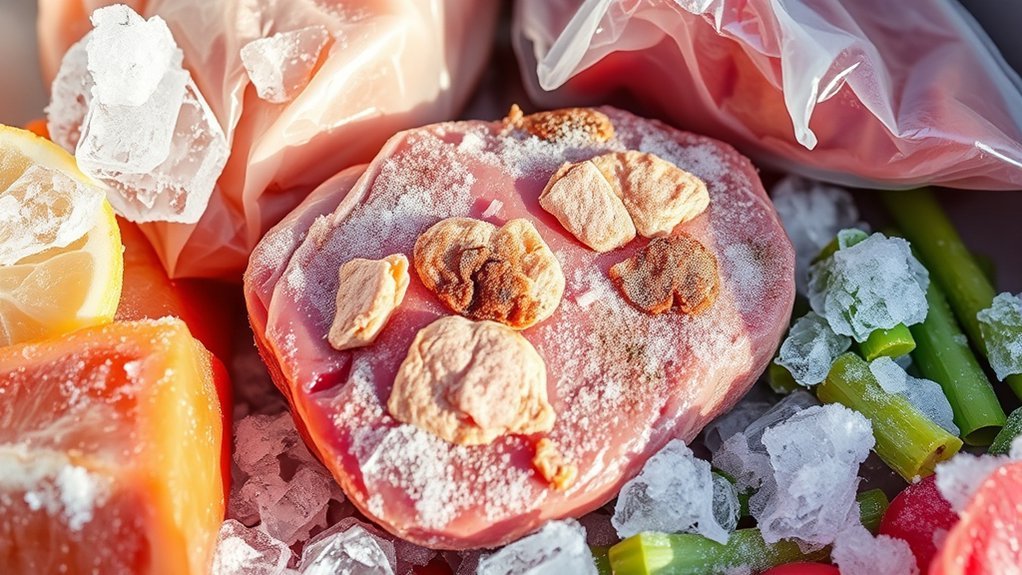
You can spot freezer burn by looking for dry, discolored patches or ice crystals on your food. Pay attention to changes in texture, like toughness or dryness, which affect quality.
To handle freezer-burned items safely, trim affected areas and cook food thoroughly before eating.
Recognizing Freezer Burn Signs
How can you tell if your food has freezer burn? Look closely for specific signs that indicate freezer burn has affected your food. Recognizing these helps you decide if it’s still safe to eat or if you should discard it. Follow freezer safe guidelines and practice storage optimization to minimize risks.
Watch for these common freezer burn indicators:
- White or grayish spots on the surface, often dry or leathery
- Ice crystals inside packaging or on the food itself
- Discoloration or dull patches where moisture has escaped
- Off or stale smell when thawed
If your food shows these signs, handle it cautiously. Freezer burn doesn’t make food unsafe but can affect taste and texture, so proper storage is key to preventing it.
Assessing Food Texture Changes
Noticing changes in your food’s texture can provide clear clues about the extent of freezer burn damage. When freezer storage isn’t airtight, packaging gaps allow moisture to escape, causing ice crystals to form on the surface.
This leads to dry, tough, or grainy textures, especially in meats and vegetables. You might feel that the food is less tender or crumbly, signaling substantial moisture loss.
While freezer-burned food is safe to eat, these texture changes can affect your enjoyment and the food’s quality. To identify freezer burn, look for rough, dehydrated spots and avoid foods with severe texture degradation.
Handling these foods carefully means trimming affected areas before cooking or using them in dishes where texture is less critical, ensuring you don’t waste edible portions unnecessarily.
Safe Preparation Tips
Where should you start when identifying freezer-burned foods? Look for dry, grayish-white patches or tough spots on the surface. These signs help you decide if the food is still safe to consume.
To handle freezer-burned items safely, follow these ideas01:
- Trim off freezer-burned areas before cooking to improve taste and texture.
- Cook freezer-burned meat thoroughly to kill any bacteria.
- Use freezer-burned vegetables in soups or stews where texture changes are less noticeable.
- Store food properly in airtight containers or vacuum-sealed bags to prevent freezer burn.
Which Foods Are Okay to Eat Even With Freezer Burn?
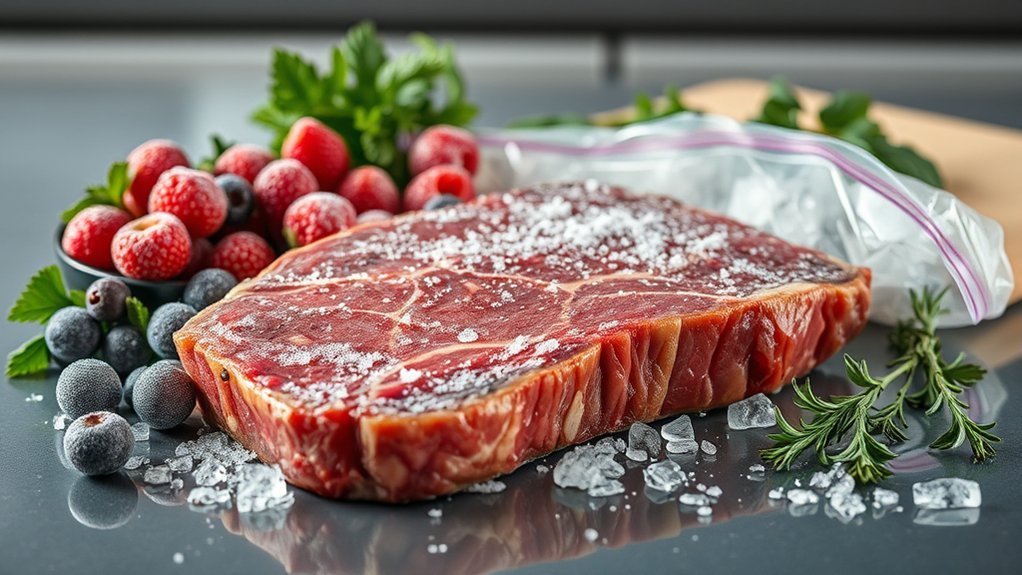
Which foods can you still safely enjoy even if they’ve developed freezer burn? Generally, foods like fruits, vegetables, and cooked dishes remain safe to eat despite freezer burn, as it primarily affects texture and flavor rather than food safety.
You can cut away the freezer-burned portions and use the rest in smoothies, soups, or stews without worry. Meat and fish with freezer burn are safe to eat if they’ve been stored properly and cooked thoroughly, but the affected areas may be dry or tough, so trimming these parts is advisable.
Avoid eating freezer-burned food if it shows signs of spoilage beyond freezer burn, such as off odors or discoloration. Always prioritize food safety by inspecting frozen items carefully before consumption.
How Can You Prevent Freezer Burn in Frozen Foods?
While some freezer-burned foods can still be used safely, preventing freezer burn in the first place helps maintain the best quality and taste of your frozen items. To avoid freezer burn, you need effective prevention strategies that limit exposure to air and moisture loss.
Here are key steps you can take:
Use airtight, moisture-resistant packaging like vacuum-sealed bags or heavy-duty freezer wraps. Remove as much air as possible from packaging before sealing to reduce ice crystal formation.
Label and date your frozen foods to use older items first and avoid long storage times. Keep your freezer at a consistent temperature of 0°F (-18°C) or lower to slow moisture evaporation.
When Should You Toss Freezer-Burned Food?
How do you know when freezer-burned food has gone beyond saving? When freezer burn affects texture, flavor, or safety, it’s time to toss it. Proper freezer storage and labeling practices help you track how long items stay frozen, preserving the cold chain.
If you notice extensive ice crystals, discoloration, or off smells, these are signs the food has deteriorated.
| Condition | Action |
|---|---|
| Minor surface burn | Trim and cook immediately |
| Large dry patches | Consider discarding |
| Off smell or color | Discard to avoid risk |
| Unlabeled >6 months | Discard due to unknown age |
| Poor freezer organization | Reorganize and check often |
Maintaining good freezer organization and clear labels helps you avoid wasting food and keeps your frozen goods safe.
Frequently Asked Questions
Can Freezer Burn Affect the Nutritional Value of Food?
Yes, freezer burn can reduce your food’s nutrition by damaging texture and flavor. You’ll want to store food properly to minimize freezer burn’s impact on nutrition and maintain quality during food storage.
Does Freezer Burn Occur More Quickly in Certain Freezer Types?
You might be surprised, but yes, freezer burn happens faster in less efficient freezers. Poor freezer efficiency and excessive frost formation let air reach your food, causing freezer burn to develop more quickly than in well-maintained models.
Can Freezer Burn Be Reversed or Repaired Somehow?
You can’t fully reverse freezer burn causes, but you can minimize its effects. Using removal techniques like trimming affected areas or soaking in brine helps improve texture and flavor, though some quality loss is inevitable.
Is Freezer Burn Harmful to Pets if They Eat It?
Freezer burn isn’t harmful to pets but can reduce nutritional impact and taste. If your pet eats freezer-burned food occasionally, it’s generally safe.
Avoid frequent feeding to assure they get proper nutrition and avoid digestive upset.
How Long Does Freezer Burn Take to Develop in Frozen Foods?
Like a slow thief in the night, freezer burn can develop in frozen foods within 2 to 6 months, causing flavor loss and texture changes.
You should check your food regularly to prevent this gradual spoilage.
Conclusion
Freezer burn may not make your food unsafe, but it definitely changes how it tastes and feels. While minor freezer burn can be trimmed and cooked safely, extensive damage signals poor quality and potential waste. You don’t want to risk unpleasant texture or off-flavors, so always check carefully.
Proper storage and labeling prevent this dilemma, turning freezer burn from a frustrating problem into a manageable inconvenience. It is important to remember that freezer burn is never a hidden health hazard. In conclusion, while freezer burn is safe to eat, it can affect the quality of your food significantly.