Is Freezer Burn Bad
Imagine opening your freezer to find a piece of meat with freezer burn, showing dull, dry patches and a slightly off color. You might wonder if it’s still safe to eat or if the quality has been compromised beyond repair.
Understanding the nuances of freezer burn helps you assess whether it’s merely a cosmetic issue or a sign of deeper food degradation. This can affect taste, texture, and safety.
By knowing what freezer burn means for your food, you can make better decisions about whether to cook it or discard it.
Key Takeaways
- Freezer burn causes dry, discolored patches and ice crystals due to moisture loss from air exposure in the freezer.
- It primarily degrades texture and flavor but does not make food unsafe to eat.
- Proper packaging and airtight sealing minimize freezer burn by reducing moisture loss and oxidation.
- Freezer burn signals quality loss, not microbial spoilage or a direct health hazard.
- Trimming affected areas and using flavor enhancers can salvage freezer-burned food for cooking.
What Is Freezer Burn and How Does It Happen?
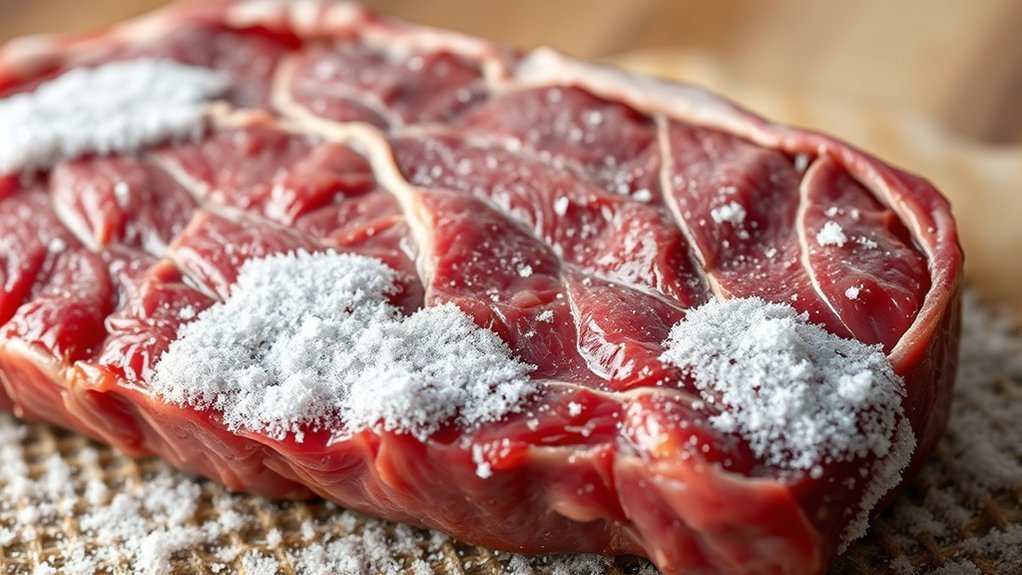
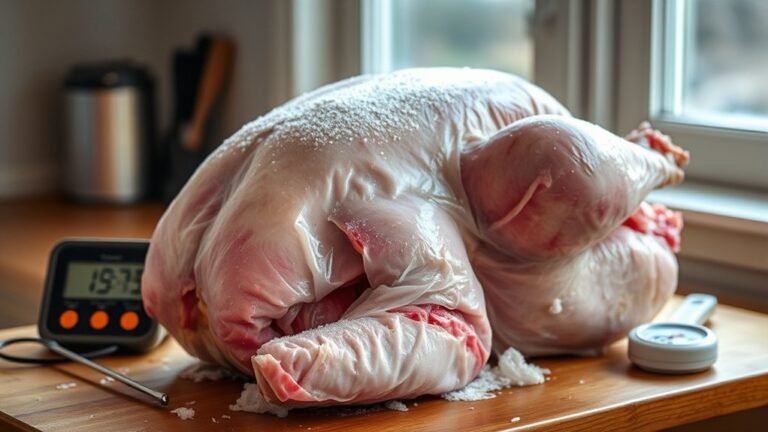
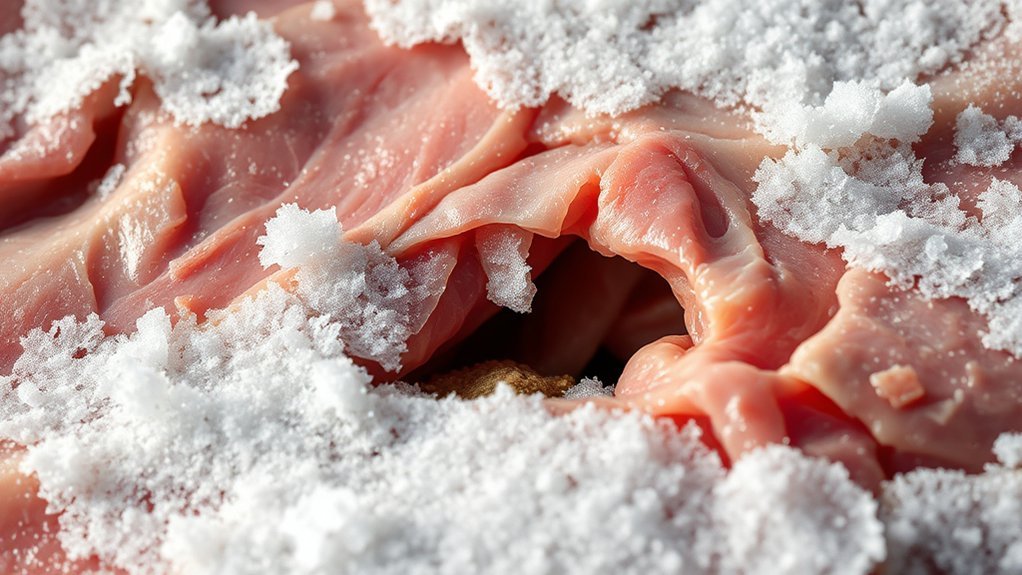
How does freezer burn develop on your frozen food? Freezer burn occurs when moisture sublimates from the food’s surface due to exposure to air within the freezer environment. This dehydration leads to dry, discolored patches on the food, caused by ice crystals evaporating directly into water vapor.
Freezer burn primarily affects texture and flavor, resulting in tough, leathery areas. From a food safety perspective, freezer burn does not make food unsafe to eat, but it can degrade quality significantly.
The key to preventing freezer burn lies in minimizing air contact. Using airtight packaging or vacuum sealing reduces moisture loss and preserves the food’s integrity. Understanding this process helps you maintain both the safety and the sensory attributes of your frozen items.
How Can You Identify Freezer Burn on Foods?
Recognizing freezer burn on your frozen foods involves closely examining changes in texture, color, and surface appearance. You’ll notice physical indicators that signal moisture loss and air exposure, key contributors to freezer burn. Proper batch labeling helps track how long items have been stored, reducing chances of unnoticed degradation.
Recognizing freezer burn means noticing texture, color, and surface changes caused by moisture loss and air exposure.
To identify freezer burn, look for:
- Frost or ice crystals forming on the food surface, beyond typical freezing condensation.
- Discoloration, such as grayish-brown or white patches differing from the food’s original color.
- Dry, leathery, or tough texture areas, indicating moisture evaporation.
- Packaging damage or air pockets resulting from improper sealing or a need for freezer repair.
How Does Freezer Burn Affect Food Safety?
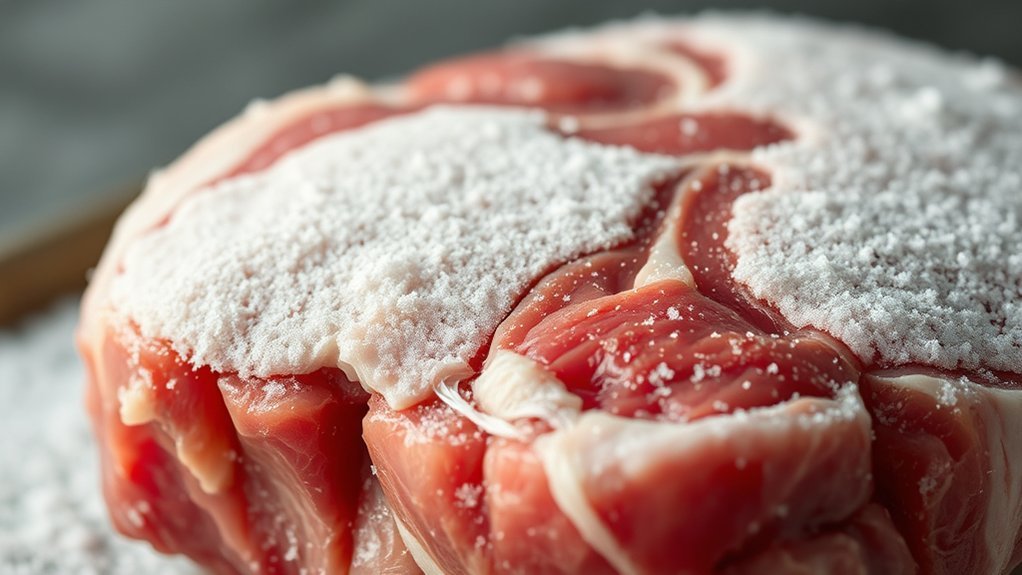
Does freezer burn pose a risk to your health? Technically, freezer burn results from dehydration and oxidation on food surfaces due to inadequate freezer resilience and suboptimal packaging. While it degrades texture and flavor, it doesn’t inherently cause microbial growth or foodborne illness.
However, compromised packaging optimization can expose food to air and moisture fluctuations, potentially allowing contamination if storage conditions deteriorate. Freezer burn reflects a physical quality decline, not a microbiological hazard.
To maintain food safety, you must enhance freezer resilience through consistent temperature control and employ packaging optimization strategies, such as vacuum sealing or moisture barrier materials. These measures minimize ice crystal formation and oxidative damage, preserving both safety and quality.
Therefore, freezer burn signals quality loss but doesn’t directly equate to a health risk.
Can You Still Safely Eat Food With Freezer Burn?
When evaluating whether you can safely consume food with freezer burn, it’s important to distinguish between quality degradation and safety concerns. Freezer burn occurs due to moisture loss and oxidation but does not inherently make food unsafe.
You can still eat freezer-burned food if you consider these factors:
- Inspect the food for off odors or unusual colors indicating spoilage.
- Trim freezer-burned sections, as they affect texture and flavor, not safety.
- Maintain proper freezer maintenance, including temperature control below 0°F (-18°C).
- Practice good refrigerator organization to minimize exposure to air and prevent freezer burn recurrence.
How Does Freezer Burn Change Food Texture?
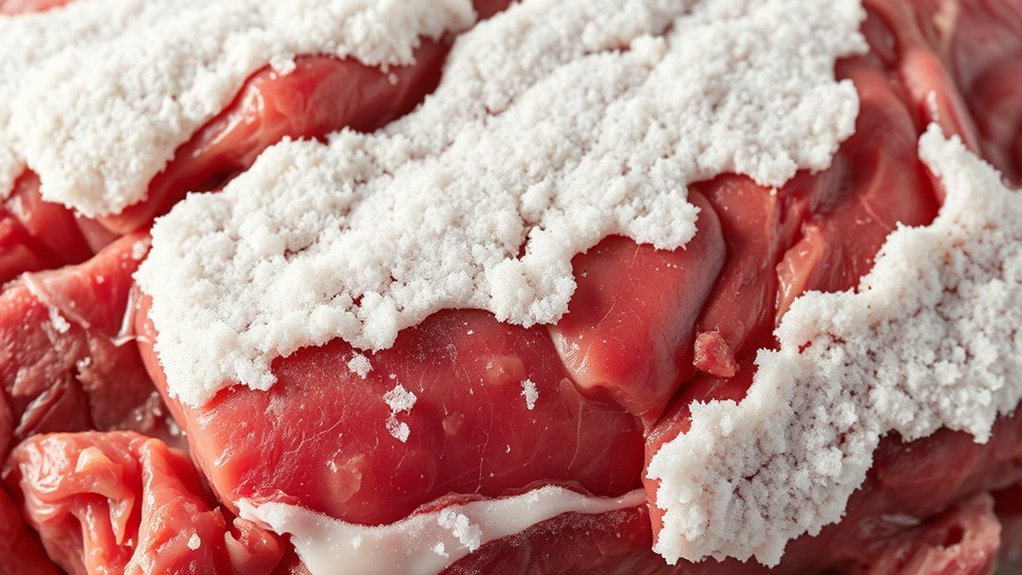
While freezer burn doesn’t usually pose a safety risk, it markedly impacts the texture of food by causing dehydration and ice crystal formation within the cellular structure. As water sublimates from the food surface, ice crystals grow and alter freezer morphology, disrupting cell membranes.
This process induces texture degradation, manifesting as dryness, toughness, or graininess. You’ll notice that proteins and plant tissues lose their original firmness because ice crystals puncture and collapse cellular walls. Additionally, moisture loss exacerbates textural decline by reducing juiciness and elasticity.
Understanding how freezer morphology changes during storage helps explain why freezer burn compromises structural integrity. Ultimately, these microscopic physical changes impair the mouthfeel and overall quality, making food less palatable despite remaining safe to consume.
What Does Freezer Burn Do to Flavor and Smell?
You’ll notice freezer burn considerably diminishes flavor quality by causing oxidation and moisture loss. This process alters the food’s natural aroma, often resulting in off-putting or bland smells.
Understanding these chemical changes helps explain why freezer-burned items lose their original taste and scent.
Impact On Flavor Quality
How exactly does freezer burn affect the flavor and aroma of your food? Freezer burn causes moisture loss and oxidation, leading to noticeable flavor tradeoffs and texture limitations. When ice crystals sublimate, the surface dehydrates, concentrating salts and altering taste profiles.
This process diminishes the natural freshness, resulting in stale or off-flavors. You’ll notice:
- Reduced flavor intensity due to lipid oxidation
- Dry, leathery texture from cellular damage
- Bitter or metallic aftertastes from altered compounds
- Uneven seasoning absorption caused by moisture imbalance
These changes impact your food’s overall palatability, making it less appealing. While freezer burn doesn’t make food unsafe, it compromises the sensory experience by degrading flavor quality and imposing textural constraints that are difficult to reverse.
Changes In Food Aroma
Beyond flavor and texture, freezer burn considerably alters the aroma profile of your food. The aroma impact results from sublimation and oxidative reactions occurring on the food surface during extended storage duration. These processes degrade volatile compounds responsible for characteristic scents, leading to a diminished or off-putting smell.
As the storage duration increases, the loss of these aromatic molecules intensifies, further compromising sensory appeal. You’ll notice that freezer-burned items emit muted or stale odors, reflecting chemical changes rather than microbial spoilage. This alteration in aroma can significantly reduce your food’s overall palatability, as smell strongly influences flavor perception.
Understanding this aroma impact helps you recognize why freezer burn affects not just taste and texture, but also the sensory experience tied to food’s smell during long-term freezing.
Causes Of Flavor Loss
Why does freezer burn cause such a pronounced loss in flavor and smell? When you store food improperly in freezer storage, ice crystals form on the surface, damaging cellular structures. This physical disruption accelerates moisture loss and volatilizes aromatic compounds, crucial for flavor preservation.
Additionally, sublimation, the direct transition of ice to vapor, leads to dryness and flavor concentration loss. Oxidation further degrades lipids, altering taste and aroma molecules.
Key factors causing flavor loss include:
- Ice crystal formation rupturing cell walls
- Sublimation drying out food surfaces
- Oxidative reactions breaking down flavor compounds
- Loss of volatile aromatic molecules to freezer air
Understanding these mechanisms helps you optimize freezer storage techniques to maintain flavor integrity and aroma retention.
Which Foods Are Most Susceptible to Freezer Burn?
You’ll find that fruits and vegetables, meats and poultry, and baked goods and bread each exhibit different vulnerabilities to freezer burn. Their varying moisture content and surface textures influence how quickly ice crystals form and cause damage.
Understanding these factors helps you identify which foods require more careful storage to minimize quality loss.
Fruits And Vegetables
Which fruits and vegetables suffer most from freezer burn? You’ll find that items with high water content and delicate cell structures are particularly vulnerable.
During fruit storage, ice crystal formation disrupts cellular integrity, leading to texture degradation and nutrient loss. You should pay close attention to:
- Leafy greens (spinach, lettuce) due to fragile leaves and moisture.
- Berries (strawberries, blueberries) because of their high water content.
- Cucumbers and zucchinis, which have thin skins and watery flesh.
- Tomatoes, where ice crystals rupture soft, fleshy tissues.
These foods experience accelerated moisture loss and enzymatic changes when freezer burn occurs. To minimize damage, ensure airtight packaging to reduce exposure to cold, dry air, which exacerbates ice crystal growth and surface dehydration.
Meats And Poultry
Just as fruits and vegetables with high moisture content are prone to freezer burn, certain meats and poultry also exhibit varying levels of susceptibility based on their fat content, muscle structure, and surface exposure. Lean meats, like chicken breast and turkey, are more vulnerable due to lower fat levels and higher water content, which promote ice crystal formation on surfaces during freezer storage.
Conversely, fattier cuts like pork shoulder or ribeye resist freezer burn better because fat inhibits moisture loss. Additionally, irregular muscle structures with exposed fibers increase susceptibility. You can minimize freezer burn by using airtight packaging and controlling thawing practices. Slow thawing in the refrigerator reduces surface moisture loss and preserves texture.
Proper packaging and thawing are critical to maintaining meat quality and reducing freezer burn’s negative impact.
Baked Goods And Bread
How do baked goods and bread respond to freezer burn? These foods are particularly vulnerable due to their porous structure and moisture content. Freezer burn causes dehydration and oxidation, leading to texture degradation and off-flavors.
You’ll notice freezer burn manifests as dry patches and color changes, compromising quality.
Baked goods most susceptible to freezer burn include:
- Bread with low fat content, which dries out rapidly
- Pastries with delicate fillings that lose moisture
- Cakes lacking protective frostings or wraps
- Cookies exposed to air, becoming stale and crumbly
To minimize freezer burn, tightly wrap baked goods in moisture-proof packaging and avoid temperature fluctuations. Understanding these susceptibilities helps you maintain the quality and safety of your frozen baked goods effectively.
How to Minimize Freezer Burn When Storing Food
When storing food in the freezer, preventing freezer burn requires controlling moisture loss and exposure to air. Start by selecting appropriate packaging materials. Vacuum-sealed bags and airtight containers minimize air contact effectively.
When discussing packaging, prioritize materials with low permeability and thickness to reduce sublimation rates. Remove as much air as possible before sealing to limit dehydration. Additionally, use portion-sized packaging to avoid repeated thawing and refreezing, which accelerates freezer burn.
Budgeting tips include buying quality resealable bags in bulk, balancing cost and protection. Label packages with dates to maintain a first-in, first-out rotation, reducing prolonged storage. Also, avoid overpacking the freezer; proper air circulation maintains consistent temperatures, further inhibiting freezer burn development.
Tips for Using or Salvaging Freezer-Burned Food
You should first assess the texture and flavor of the freezer-burned food to determine its usability. Trim away any dry or discolored sections to improve overall quality.
Incorporate the salvaged portions into cooked dishes where changes in texture and taste are less noticeable.
Assess Texture And Flavor
Why does freezer burn alter the texture and flavor of food so noticeably? It results from moisture loss and oxidation, causing a significant texture impact and flavor deterioration. When ice crystals form on the food’s surface, they disrupt cell walls, leading to dryness and a crumbly texture.
Simultaneously, exposure to air causes oxidative reactions, degrading flavor compounds.
To accurately assess texture and flavor, you should:
- Examine for dryness or leathery firmness indicating texture impact
- Smell for off or stale odors reflecting flavor deterioration
- Taste a small portion to detect any blandness or metallic notes
- Note any textural inconsistencies, such as sogginess or toughness
This analytical approach helps you decide if the freezer-burned food remains usable or if further salvage methods are necessary.
Trim Affected Areas
Noticing texture or flavor deterioration signals the need to isolate and remove freezer-burned sections before consumption or cooking. Freezer burn impact primarily manifests as dehydrated, discolored areas that compromise food quality.
To salvage affected food, carefully trim these sections, focusing on visibly dry or tough spots. This targeted removal limits flavor loss and improves palatability. When trimming, use a sharp knife to excise freezer-burned portions cleanly, avoiding excessive waste.
Implementing proper storage techniques, such as airtight packaging and rapid freezing, minimizes freezer burn occurrence. By trimming impacted areas, you effectively mitigate freezer burn impact, preserving the remaining food’s texture and flavor integrity.
This approach extends usability without compromising safety or sensory attributes, making it a practical step in managing freezer-burned food.
Use In Cooked Dishes
How can freezer-burned food be effectively utilized in cooked dishes? When freezer storage results in flavor loss and textural changes, you can still incorporate affected items to minimize waste. Focus on cooking methods that mask dryness and boost flavor intensity.
Incorporate freezer-burned meat or vegetables into soups, stews, or casseroles where moisture and seasoning compensate for texture degradation.
Use sauces, marinades, or spices that enhance or restore flavor profiles diminished by freezer burn.
Puree freezer-burned produce for smoothies or sauces to bypass unpleasant texture.
Combine freezer-burned ingredients with fresh components to balance taste and mouthfeel.
When Should You Throw Away Freezer-Burned Food?
When does freezer burn render food unsafe or unsuitable for consumption? Freezer burn itself results from moisture loss and oxidation, which deteriorate food quality but don’t inherently make food unsafe.
You should throw away freezer-burned food only if it shows signs of spoilage, such as off odors, discoloration beyond surface frost, or texture degradation compromising safety.
If freezer burn extensively affects the food’s sensory attributes or leads to freezer-burned patches that can’t be trimmed, the risk of food waste increases, but safety concerns remain minimal. To minimize food waste, inspect freezer-burned items carefully: discard those with microbial growth or spoilage indicators.
Otherwise, freezer burn primarily impairs taste and texture, not safety, so use your judgment to avoid unnecessary disposal while maintaining food safety.
Frequently Asked Questions
Can Freezer Burn Affect the Nutritional Value of Food?
Freezer burn can slightly reduce the nutritional impact of food by degrading vitamins and proteins due to dehydration and oxidation. You’ll notice diminished quality, but the overall nutrient loss is typically minimal unless exposure is prolonged.
Does Freezer Burn Occur in Commercial Frozen Foods?
You’ll find freezer burn in about 20% of commercial frozen foods, especially with extended storage duration. It occurs due to moisture loss and improper sealing, impacting texture and flavor despite being safe to consume.
Are Certain Packaging Materials Better to Prevent Freezer Burn?
Yes, certain packaging materials better prevent freezer burn by minimizing moisture loss. Materials with high barrier properties, like vacuum-sealed bags or heavy-duty aluminum foil, effectively reduce air exposure.
This helps preserve food quality and prevents texture and flavor degradation.
How Long Can Freezer-Burned Food Be Stored Safely?
You can extend your freezer burn’s stay up to 12 months, though quality gently declines. Proper packaging optimizes storage duration, ensuring safety while texture and flavor subtly shift.
Always check for off odors before use.
Can Freezer Burn Occur in Non-Food Items Like Herbs or Flowers?
Yes, freezer burn basics apply to non-food items like herbs or flowers, as non-food moisture loss causes cellular dehydration and surface damage. You’ll notice texture and color changes due to this moisture migration in frozen storage.
Conclusion
Think of freezer burn as a frostbitten patch on your food’s surface—it’s a quality setback, not a safety hazard. While it dries out and alters texture, freezer burn doesn’t inherently spoil your food. You can trim or repurpose affected portions, ensuring minimal waste.
By sealing airtight and maintaining consistent freezing, you’ll prevent this issue. Ultimately, freezer burn challenges flavor and texture, but with proper handling, you can still safely enjoy your frozen goods. Understanding that freezer burn is bad for quality but not for safety helps you make the best use of your frozen food.