How to Filter Water Naturally
If you need to filter water naturally, you can create an effective system using common materials like gravel, charcoal, and sand. Filtering water naturally involves layering these materials to remove particles and impurities, which improves both clarity and taste.
Each layer plays a specific role in the filtration process. However, understanding the correct order, maintenance, and testing methods is essential to guarantee the water’s safety.
Before you start, consider how these components work together and what precautions are necessary to prevent contamination.
Key Takeaways
- Construct a layered filter using gravel, charcoal, and fine sand to physically and chemically remove impurities.
- Use natural hardwood charcoal for effective adsorption of organic compounds and some heavy metals.
- Maintain continuous water flow through filter layers and pre-filter with cloth to prevent clogging and stagnation.
- Regularly clean and replace charcoal to sustain filtration efficiency and reduce contaminant buildup.
- Test filtered water for sediment and microbial presence, and boil when possible for added safety.
How to Build a Simple Natural Water Filter at Home
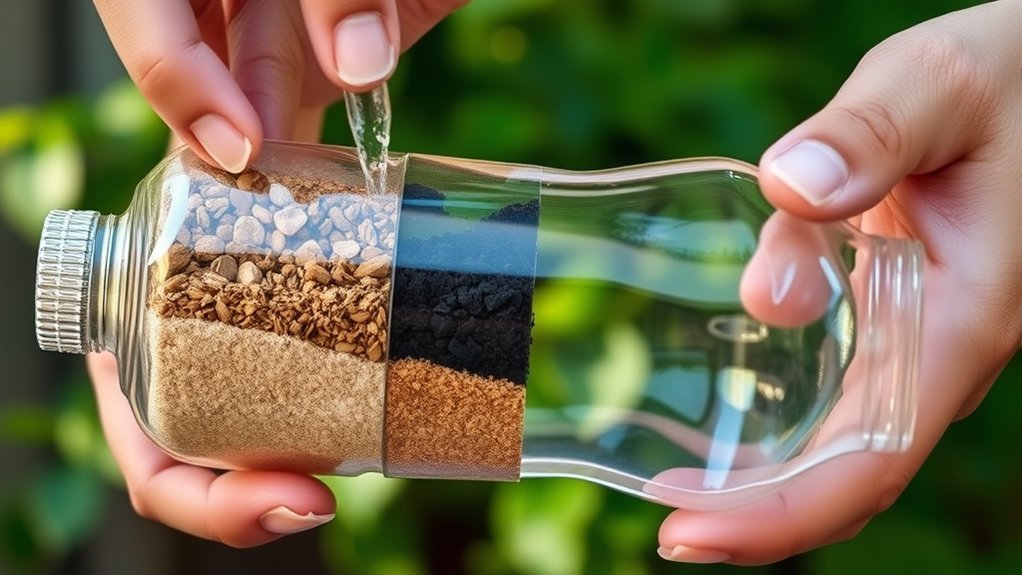
How can you effectively filter water using natural materials found at home? Start by constructing a layered filter with simple gravel, sand, and charcoal layering. Place a container with a small drainage hole at the bottom, adding a layer of simple gravel first to trap larger particles.
Next, add a charcoal layer, which adsorbs impurities and improves water taste by removing organic compounds. Above the charcoal, add fine sand to capture smaller particulates.
To optimize filtration, maintain a continuous flow of water through these layers, preventing stagnation and promoting thorough filtering. This method leverages physical straining and chemical adsorption effectively.
Ensure each layer is clean and replace charcoal regularly, as its adsorption capacity diminishes over time, maintaining filter performance and water safety.
What Natural Materials Are Best for Filtering Water
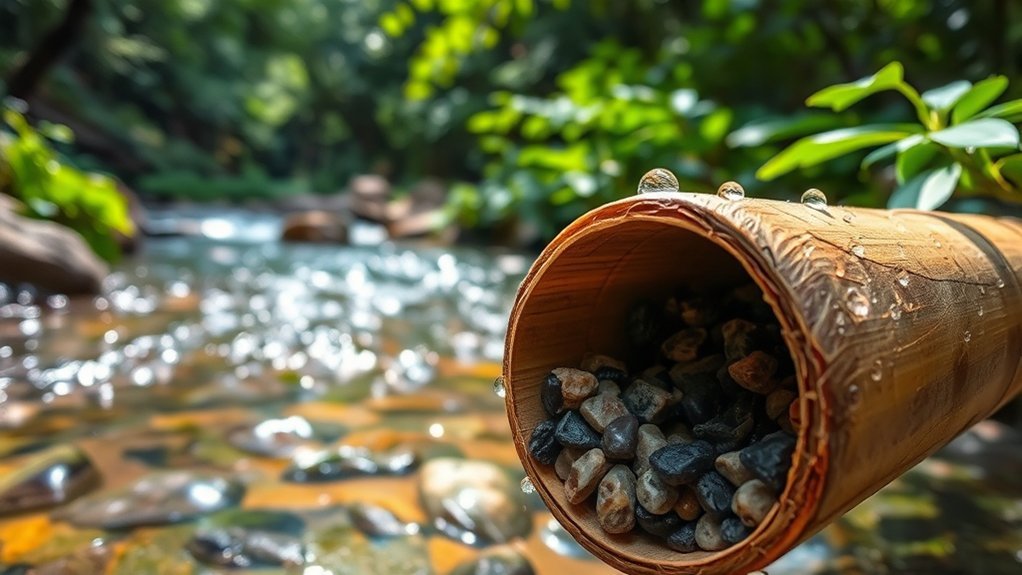
Which natural materials provide the most effective filtration depends on their physical and chemical properties. Natural charcoal, for instance, offers high adsorption capacity due to its porous structure, efficiently removing organic compounds and some heavy metals from water.
Effective natural filtration depends on material properties; charcoal’s porous structure excels at adsorbing organics and heavy metals.
Clay filtration relies on fine particles that physically block contaminants and can adsorb certain dissolved substances through ion exchange. When you select materials, consider that natural charcoal excels at chemical adsorption, while clay filtration primarily provides mechanical filtration and limited chemical removal.
Combining these materials can enhance overall water purification. Both must be sourced and prepared properly to avoid introducing contaminants.
Using natural charcoal and clay filtration together creates a robust, evidence-based approach to filtering water naturally, ensuring removal of suspended solids and some dissolved pollutants without relying on synthetic chemicals or complex equipment.
How to Filter Water When Camping or Hiking
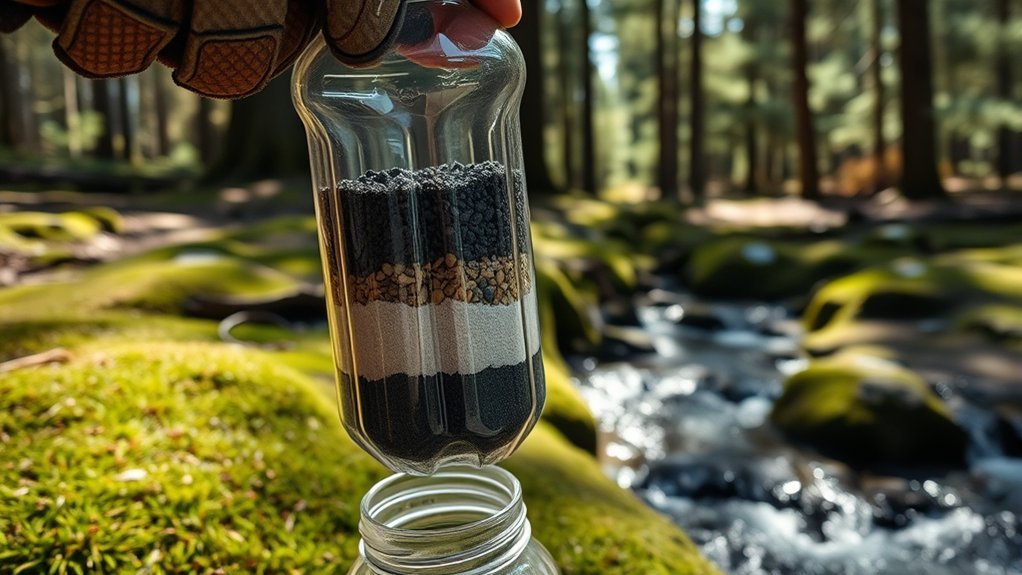
Combining natural charcoal and clay filtration offers effective water purification methods you can apply in outdoor settings. When camping or hiking, these methods enhance camping safety by reducing exposure to pathogens.
For hiking preparation, ensure you collect water from flowing sources when possible. Assemble a filter by layering cloth, charcoal, sand, and clay in a container to trap contaminants.
Remember:
- Use charcoal made from hardwood for better adsorption.
- Crush clay finely to improve sediment capture.
- Pre-filter water through a cloth to remove large debris.
- Avoid stagnant water to reduce microbial risk.
- Boil filtered water when possible for added safety.
These steps provide a reliable, portable solution to maintain hydration and health during your outdoor activities.
How to Test and Improve Your Natural Water Filter
Why test your natural water filter regularly? Regular testing methods help you verify the filter’s efficiency in removing contaminants like sediment, bacteria, and chemicals. You can use simple turbidity tests or field test kits that measure microbial presence and pH levels.
These tests provide objective data to ensure water safety. If results show inadequate filtration, focus on filtration improvements such as layering activated charcoal, sand, and gravel more effectively or increasing contact time between water and filter media.
You might also consider adding a fine mesh or biofilm layer to enhance microbial reduction. Consistent testing and targeted improvements help maintain the filter’s integrity and ensure it meets safety standards, enabling you to rely confidently on your natural filtration system for clean water.
Why Natural Water Filtration Is Important for Safe Drinking
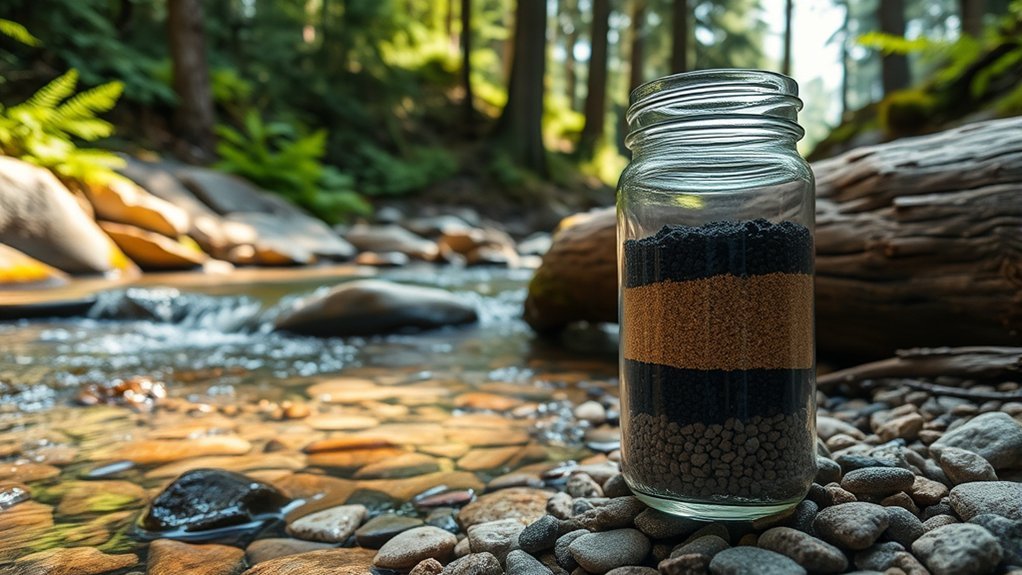
How do natural water filtration methods contribute to safe drinking water? They play a crucial role in enhancing water safety by reducing contaminants through physical, chemical, and biological processes.
Natural filters like sand, gravel, and charcoal trap particles and adsorb harmful substances, decreasing microbial and chemical risks. This contamination prevention is vital for maintaining potable water quality without relying on chemical treatments.
You should recognize these key benefits of natural water filtration:
- Removes suspended solids and turbidity
- Adsorbs organic compounds and heavy metals
- Reduces pathogenic microorganisms
- Maintains essential mineral balance
- Supports sustainable, low-energy water purification
How to Prevent Recontamination of Filtered Water
Where you store and handle filtered water considerably impacts its safety. To prevent recontamination, use clean, covered containers made of non-porous materials like glass or food-grade plastic. Avoid open vessels that expose water to airborne contaminants and insects.
Practice strict storage hygiene by regularly washing containers with soap and hot water, then rinsing thoroughly. Always use clean utensils or hands when accessing stored water to reduce microbial transfer.
Store water in a cool, shaded area to limit microbial growth accelerated by heat and sunlight. Seal containers promptly after use to minimize exposure.
Monitoring storage conditions and maintaining hygiene are critical steps supported by microbiological studies to preserve water quality post-filtration. By following these evidence-based practices, you effectively prevent recontamination and ensure safe, potable water.
Frequently Asked Questions
Can Natural Water Filters Remove All Types of Bacteria and Viruses?
You can’t rely on natural purification to remove all bacteria and viruses, as it often lacks microbial safety against viruses.
Combining methods like boiling or chemical treatment ensures comprehensive pathogen removal and safer drinking water.
How Long Does a Natural Water Filter Last Before Needing Replacement?
You should replace natural filters like tea forest filtration every 2-4 weeks, depending on usage. Drying filters thoroughly between uses extends lifespan, but microbial buildup reduces effectiveness. Timely replacement ensures optimal filtration performance and safety.
Are There Any Health Risks Associated With Using Natural Water Filters?
Using natural water filters isn’t without health risks; bacteria and contaminants can sneak in like wolves in sheep’s clothing. You’ll face maintenance challenges, so regular cleaning and monitoring are essential to guarantee safe, effective filtration.
Can Natural Water Filtration Remove Chemical Pollutants Effectively?
No, natural filtration can’t effectively remove all chemical pollutants due to filtration limitations. While it reduces some natural contaminants, many synthetic chemicals require advanced treatments like activated carbon or reverse osmosis to ensure safe water quality.
What Are the Environmental Benefits of Using Natural Water Filters?
You’ll reduce environmental impact by using natural water filters, as they require less energy and chemicals. This improves resource efficiency, minimizes waste, and supports ecosystem health through sustainable, low-impact filtration processes backed by scientific studies.
Conclusion
By building your layered water filter with gravel, charcoal, and sand, you’ll trap debris, adsorb impurities, and catch fine particles effectively. Pre-filtering with cloth helps remove larger particles before the water passes through the layers. Replacing charcoal regularly and testing water clarity will maintain ideal filtration performance.
Boiling filtered water before drinking ensures microbial safety by killing harmful pathogens. Preventing recontamination through clean storage preserves water quality and keeps your filtered water safe to consume.
Following these steps consistently helps you create reliable, natural, and safe drinking water wherever you are. Natural water filtration is an effective method to improve water quality using simple, accessible materials.