How Long Can Chicken Last in Freezer
Freezing chicken is like pressing pause on time, but how long chicken can last in the freezer without sacrificing quality depends on several key factors. You’ll want to contemplate storage temperature, packaging methods, and whether the chicken is raw or cooked.
Understanding these elements can help you maximize both safety and taste. However, there’s more to know before you decide when it’s time to toss or thaw.
Key Takeaways
- Raw chicken maintains optimal quality for 9 to 12 months at 0°F (-18°C) or below in the freezer.
- Cooked chicken should be consumed within 2 to 6 months to preserve quality and texture.
- Proper airtight packaging and labeling with dates extend freezer storage life and prevent freezer burn.
- Temperature stability and avoiding overcrowding ensure consistent freezing and reduce quality degradation.
- Chicken remains safe beyond recommended times if continuously frozen, but quality and texture decline.
How Long Can Chicken Stay Frozen Safely?
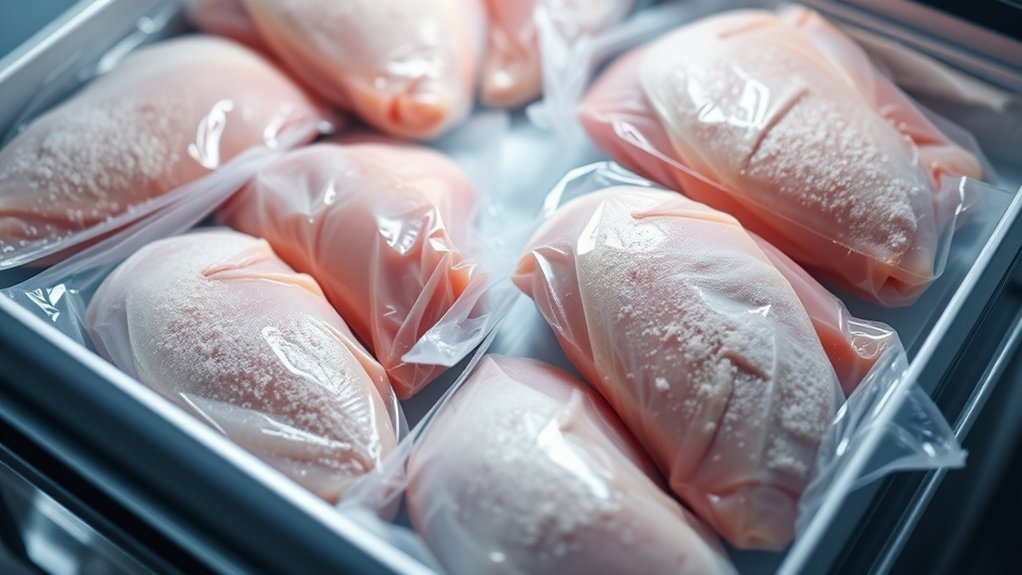
How long can chicken stay frozen safely? According to food safety guidelines, raw chicken can maintain optimal quality in freezer storage for up to 9 to 12 months. Beyond this period, while the chicken remains safe to eat if continuously frozen at 0°F (-18°C) or below, its texture and flavor may degrade.
Cooked chicken stored in the freezer has a shorter recommended storage time of 2 to 6 months to preserve quality. It’s important you use airtight, moisture-resistant packaging to prevent freezer burn, which negatively impacts texture.
Freezer storage slows microbial growth and enzymatic activity, halting spoilage but not indefinitely preserving freshness. For safety and best results, label packages with freezing dates and consume chicken within these evidence-based timeframes.
What Affects How Long Chicken Lasts in Your Freezer?
Why does chicken last longer in some freezers than others? Several factors influence its longevity, including temperature stability, packaging quality, and freezer organization. Ignoring these can lead to irrational fears about spoilage.
Proper kitchen fengshui, arranging your freezer to avoid overcrowding, ensures efficient cold air circulation and maintains consistent temperatures.
| Factor | Impact on Chicken Longevity |
|---|---|
| Temperature Stability | Prevents partial thawing, slows bacterial growth |
| Packaging Integrity | Minimizes freezer burn, preserves moisture |
| Freezer Organization | Enhances air flow, avoids temperature fluctuations |
How to Package Chicken for Freezing
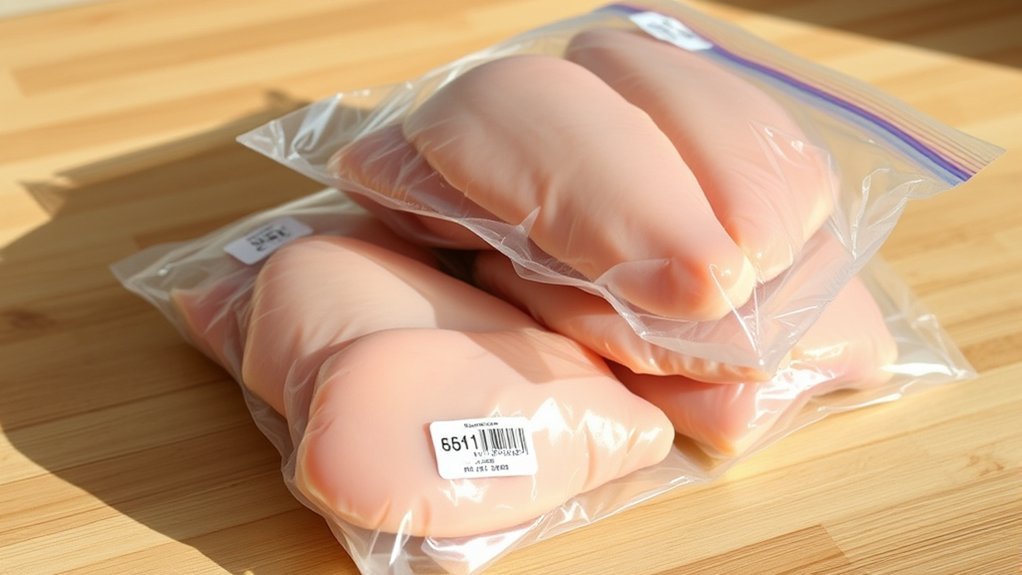
Maintaining temperature stability and proper freezer organization sets the stage for effective chicken preservation, but packaging plays a direct role in protecting the meat from freezer burn and moisture loss. Use airtight, moisture-resistant materials like vacuum-sealed bags or heavy-duty freezer paper to minimize air exposure.
When vacuum sealing isn’t available, double-wrap chicken in plastic wrap followed by aluminum foil to create a robust barrier. Flatten the chicken to reduce air pockets and promote even freezing. Incorporate packing tips such as removing as much air as possible before sealing.
For labeling ideas, write the packaging date and chicken type with a permanent marker directly on the package or use adhesive freezer labels. This practice helps you track storage duration accurately and maintain food safety.
Signs Your Frozen Chicken Has Gone Bad
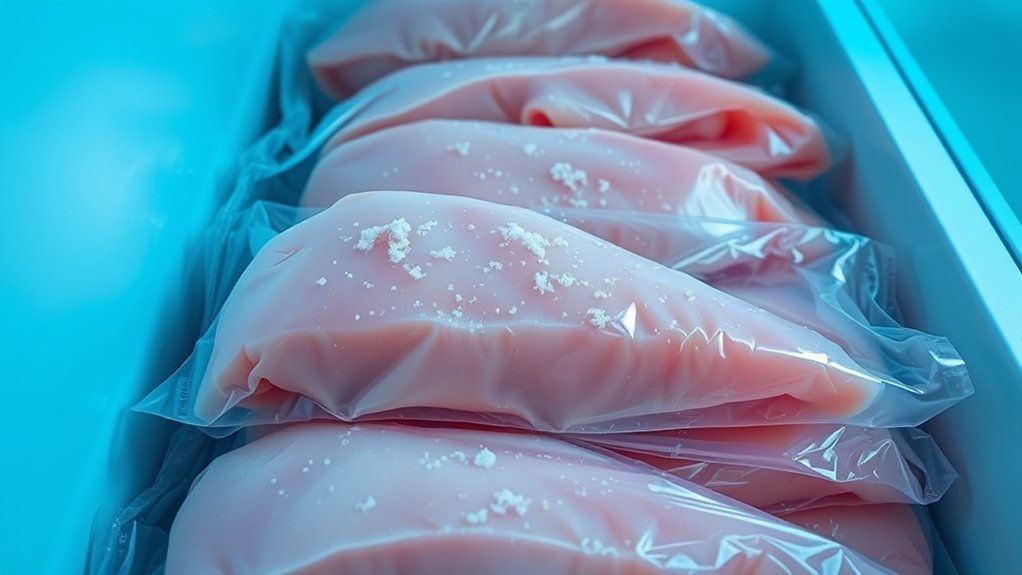
When should you discard frozen chicken to avoid health risks? You should do so when you notice clear signs of spoilage. Look for freezer burn, white or grayish dry patches indicating moisture loss, which affects texture and taste but isn’t a direct safety hazard.
However, if the chicken exhibits an off odor, slimy texture, or discoloration (green or gray hues), discard it immediately. These signs reflect bacterial degradation or oxidation, increasing health risks.
Avoid unrelated topics like cooking methods or storage times here; focus strictly on spoilage indicators. For clarity, think of this as a two word discussion: “spoilage detection.” Monitoring these signs ensures you prevent foodborne illness effectively, maintaining safety without confusion from unrelated topics or redundant information.
Freezing Raw vs. Cooked Chicken: What’s Different?
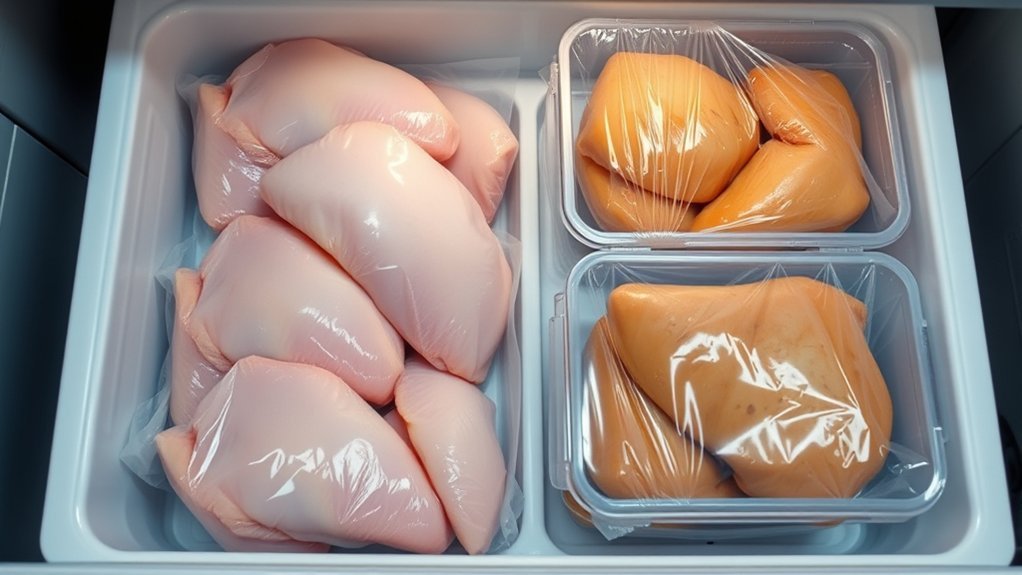
You’ll notice raw chicken generally maintains quality longer in the freezer, lasting up to 12 months, while cooked chicken is best used within 4 months.
Freezing affects texture differently; raw chicken tends to retain moisture better, whereas cooked chicken can become dry or rubbery after thawing. Understanding these differences helps you optimize storage time and maintain flavor integrity.
Storage Duration Differences
How does freezing affect raw and cooked chicken differently in terms of storage duration? Understanding these differences helps you optimize freezer organization and maintain food safety.
- Raw Chicken: You can store raw chicken up to 9-12 months at 0°F (-18°C) without significant loss of quality, due to minimal prior exposure to heat or contaminants.
- Cooked Chicken: The safe storage duration shortens to 2-6 months because cooking alters protein structure and moisture content, accelerating quality degradation even at freezing temperatures.
- Packaging and Freezer Organization: Proper sealing and labeling reduce freezer burn and cross-contamination, extending practical storage duration regardless of whether chicken is raw or cooked.
Texture and Flavor Changes
Why do raw and cooked chicken respond differently to freezing regarding texture and flavor? When you freeze raw chicken, ice crystals form within muscle fibers, causing minimal texture degradation if frozen quickly. However, slow freezing leads to larger crystals, rupturing cells and resulting in noticeable texture degradation upon thawing.
Cooked chicken, on the other hand, has already undergone protein denaturation and moisture loss, making it more susceptible to further texture degradation during freezing. Regarding flavor loss, raw chicken retains most of its natural flavor compounds, but enzymatic activity may continue at subzero temperatures, slightly diminishing flavor over time.
Cooked chicken experiences greater flavor loss since volatile flavor compounds evaporate during cooking, and freezing accelerates the breakdown of these compounds. So, you’ll notice raw chicken maintains better texture and flavor integrity in the freezer compared to cooked chicken.
How to Thaw Frozen Chicken Safely
You should thaw frozen chicken using safe methods like refrigeration, cold water, or microwave to prevent bacterial growth. Thawing at room temperature allows harmful bacteria to multiply rapidly, increasing the risk of foodborne illness.
Always cook chicken immediately after thawing in cold water or microwave to maintain safety.
Safe Thawing Methods
When thawing frozen chicken, which method you choose directly impacts food safety and quality. Selecting the right approach balances convenience factors and budget considerations while minimizing microbial risk. Here are three safe thawing methods:
- Refrigerator thawing: Place chicken in a leak-proof container. This slow method keeps it below 40°F, ensuring safety and preserving texture. It requires planning but is cost-effective.
- Cold water thawing: Submerge sealed chicken in cold water, changing water every 30 minutes. It’s faster than refrigeration but demands attention to maintain safe temperatures.
- Microwave thawing: Use the defrost setting for rapid thawing. It’s convenient but may cause uneven thawing, requiring immediate cooking to prevent bacterial growth.
Each method adheres to USDA guidelines, ensuring your chicken remains safe and of high quality.
Avoiding Bacterial Growth
How can you prevent harmful bacteria from multiplying while thawing frozen chicken? The key is controlling temperature because bacterial growth accelerates between 40°F (4°C) and 140°F (60°C), known as the danger zone. What affects safe thawing is how you manage this temperature range.
Avoid thawing chicken at room temperature, as freezing raw chicken only halts bacterial activity temporarily; once thawed improperly, bacteria can multiply rapidly. Instead, thaw frozen chicken in the refrigerator, where temperatures remain below 40°F, slowing bacterial growth.
Alternatively, use the cold water method. Submerge the sealed chicken in cold water, changing it every 30 minutes to maintain temperature. Microwave thawing is also effective but requires immediate cooking. These methods minimize bacterial risk and maintain chicken safety during thawing.
Can You Refreeze Thawed Chicken?
Anyone handling thawed chicken should understand the risks and guidelines around refreezing it. You can refreeze thawed chicken only if it has been thawed safely in the refrigerator and not left at room temperature over two hours. Improper refreezing increases bacterial growth risk and degrades meat quality.
To manage this effectively, consider these points:
- Verify the chicken’s temperature remained below 40°F during thawing to ensure safety.
- Refreeze thawed chicken promptly after cooking or if it’s still cold and raw, to minimize bacteria proliferation.
- Maintain proper freezer organization by labeling refrozen chicken clearly with dates to avoid confusion and ensure safe consumption windows.
Following these evidence-based steps helps preserve safety and quality when you refreeze thawed chicken.
Tips to Keep Chicken Fresh in the Freezer
Proper handling during thawing and refreezing sets the foundation for maintaining chicken quality in the freezer. To maximize freeze duration, use airtight packaging materials such as vacuum-sealed bags or heavy-duty freezer wraps to prevent moisture loss and freezer burn.
Ensure you remove excess air before sealing to reduce oxidation and microbial growth. Label packages with freeze dates to monitor storage time, as chicken is best consumed within 9-12 months for optimal quality.
Avoid thawing chicken at room temperature; instead, thaw it in the refrigerator to maintain a safe temperature below 40°F (4°C). Once thawed, cook or refreeze promptly to minimize bacterial proliferation.
Best Practices for Freezer Storage and Organization
Where you place your chicken in the freezer can noticeably impact its quality and longevity. Effective freezer organization minimizes temperature fluctuations and prevents freezer burn. To optimize storage, follow these evidence-based practices:
- Store chicken in the coldest part of the freezer, usually near the back, to maintain consistent freezing temperatures.
- Implement a clear labeling system with dates and contents on airtight packaging, reducing exposure time and enabling first-in, first-out use.
- Avoid overcrowding; allow airflow between packages to ensure even freezing and prevent partial thawing.
Frequently Asked Questions
Does Freezing Chicken Affect Its Nutritional Value?
Freezing chicken doesn’t considerably affect its nutritional value, preserving proteins and minerals well. You’ll maintain freezing safety and experience minimal nutritional changes, as freezing only slows down spoilage without degrading essential nutrients.
Can Marinated Chicken Be Frozen Safely?
When it comes to marinated chicken, you can freeze it safely if you mind marination safety and packaging influence. Airtight packaging prevents contamination and freezer burn, preserving flavor and texture. Proper handling keeps quality intact, no ifs, ands, or buts.
How Does Freezer Temperature Influence Chicken Quality?
You’ll find that lower freezer temperatures slow moisture migration, preserving chicken’s texture and quality longer. Maintaining consistent low temperature effects minimizes ice crystal growth, reducing cellular damage and preventing freezer burn, ultimately ensuring optimal flavor and safety.
Is It Safe to Freeze Chicken After Expiration?
Imagine freezing leftovers without labeling. Chaos. You shouldn’t freeze chicken past expiration; bacteria might’ve grown.
Effective freezer management and strict labeling practices ensure safety, preventing foodborne risks by tracking freshness accurately and avoiding freezing compromised poultry.
Can Frozen Chicken Cause Freezer Burn?
Yes, frozen chicken can cause freezer burn, which affects frozen chicken safety by degrading texture and flavor. To prevent it, you should use airtight packaging and follow precise freezer storage tips, like minimizing air exposure and maintaining constant temperatures.
Conclusion
You can keep raw chicken frozen for up to 9–12 months at 0°F (-18°C) or below without losing quality, but cooked chicken only lasts 2–6 months. Proper airtight packaging and stable temperatures are crucial to prevent freezer burn and moisture loss.
Remember to thaw chicken safely below 40°F and avoid refreezing unless it’s still cold or just cooked. Following these guidelines helps maintain texture, safety, and flavor.
By understanding how long chicken can last in the freezer, you can maximize your freezer’s efficiency and ensure your chicken stays fresh and safe to eat.