How Long Does Steak Last in Freezer
Freezing steak might seem like pressing pause on freshness, but how long steak lasts in the freezer depends on more than just tossing it in there. You’ve got to consider temperature consistency, packaging methods, and even the cut of steak you’re storing.
If you don’t get these factors right, your steak’s flavor and texture can suffer sooner than you expect. Understanding these details becomes essential to maintaining quality over time.
Key Takeaways
- Steak lasts 6 to 12 months in the freezer at 0°F (-18°C) or lower for optimal quality and safety.
- Higher freezer temperatures reduce steak’s storage duration and accelerate quality decline.
- Proper packaging, like vacuum sealing or wrapping tightly, prevents freezer burn and extends shelf life.
- Initial steak freshness, cut type, and freezing speed affect how long it stays good in the freezer.
- Thawed steak can be refrozen only if thawed in the refrigerator and used within 1–2 days.
How Long Does Steak Last in the Freezer?
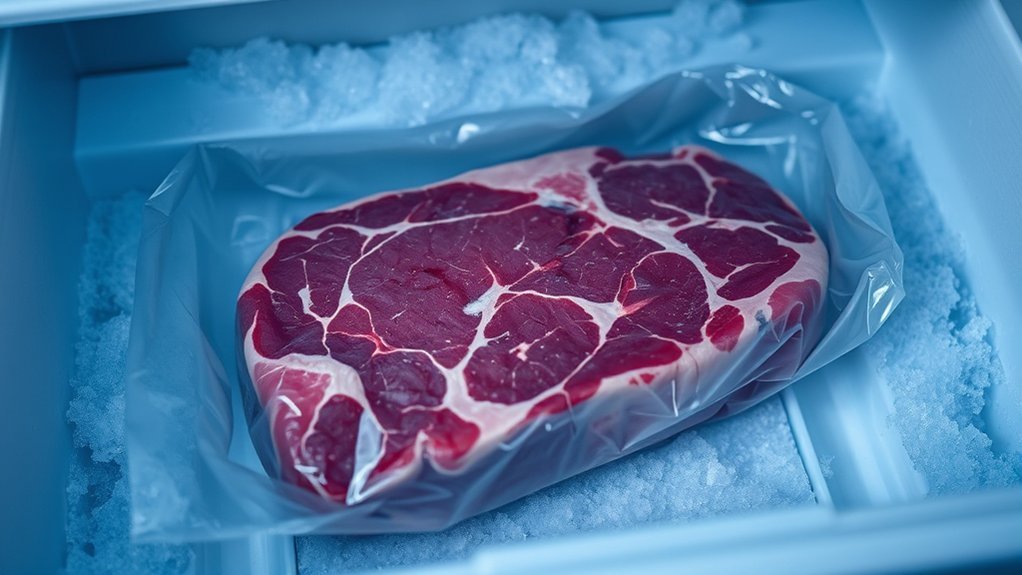
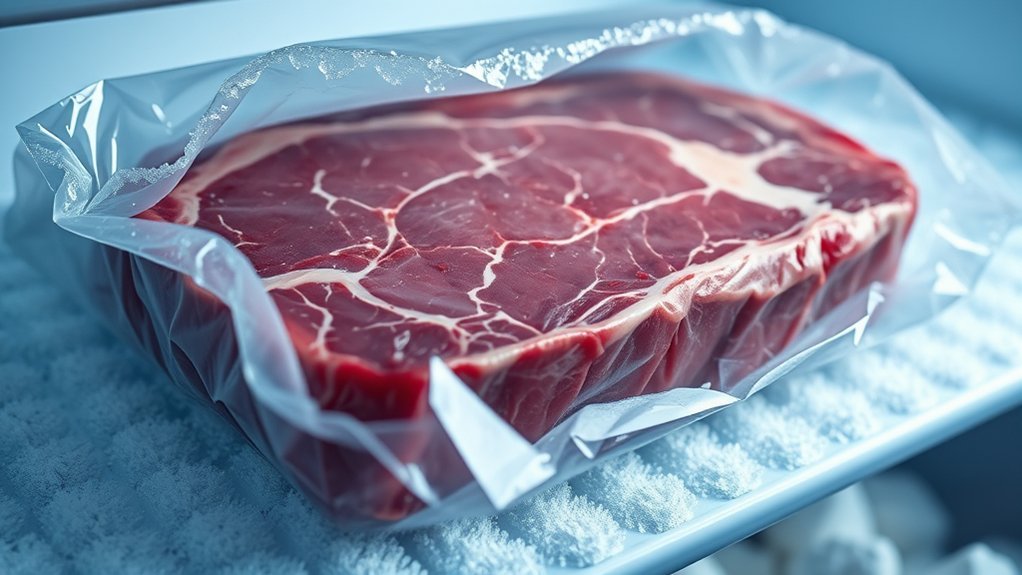
Anyone who freezes steak wants to know how long it will stay good. Typically, steak can last in the freezer for six to twelve months if stored properly.
The key factors you need to manage are time and temperature: keep your freezer at 0°F (-18°C) or lower to maintain quality and safety. Using effective packaging techniques is crucial. Wrap the steak tightly in plastic wrap, followed by aluminum foil or place it in vacuum-sealed bags to prevent freezer burn and moisture loss.
Proper packaging slows down oxidation and preserves the steak’s texture and flavor longer. Remember, while steak may remain safe beyond this period, its taste and tenderness will decline. So, for the best experience, plan to use your frozen steak within a year.
What Affects Steak’s Freezer Shelf Life?
Knowing that steak can last six to twelve months in the freezer is helpful, but several factors influence how well it keeps during that time. The steak’s initial freshness, packaging quality, and freezer temperature play key roles.
If the freezer temperature fluctuates or rises above 0°F (-18°C), the steak’s quality deteriorates faster. Proper packaging prevents freezer burn, which affects taste and texture. Also, how quickly you freeze the steak matters; faster freezing preserves quality better.
Keeping your freezer organized helps you avoid leaving steak too long, supporting saving energy by reducing unnecessary door openings. Efficient freezer use minimizes environmental impact by lowering electricity consumption.
How to Freeze Steak to Keep It Fresh Longer
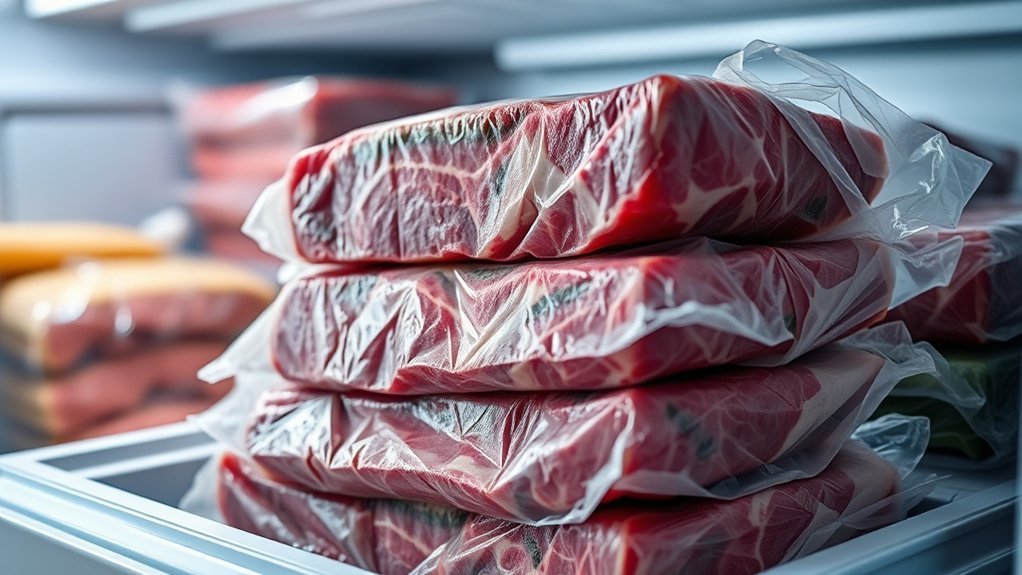
To keep your steak fresh longer, you need to wrap it tightly using plastic wrap or freezer paper to prevent air exposure. Then, place the wrapped steak in an airtight freezer bag to add extra protection against freezer burn.
Finally, set your freezer to 0°F (-18°C) or lower to maintain ideal freezing conditions.
Proper Wrapping Techniques
How should you wrap steak to preserve its quality in the freezer? Start with proper wrapping by tightly covering the steak to minimize air exposure, which can cause freezer burn.
First, wrap each steak individually in plastic wrap or aluminum foil, ensuring there are no gaps or loose edges. Then, place the wrapped steak into freezer safe packaging, like heavy-duty freezer bags or vacuum-sealed bags, to provide an extra barrier against moisture loss and odors.
If using freezer bags, squeeze out as much air as possible before sealing. Label the package with the date so you can track its storage time.
Following these proper wrapping techniques helps maintain the steak’s texture and flavor, allowing you to enjoy it fresh even after prolonged freezing.
Ideal Freezing Temperatures
Where should you set your freezer to keep steak fresh for as long as possible? The ideal freezing temperature is 0°F (-18°C) or lower. At this temperature, you slow down enzymatic activity and bacterial growth, effectively extending the storage duration without compromising quality.
Avoid fluctuating temperatures, as they can cause freezer burn and degrade the steak’s texture and flavor.
Here’s a quick guide to ideal freezing temperatures and their impact:
| Freezing Temperature | Expected Storage Duration |
|---|---|
| 0°F (-18°C) | 6-12 months |
| 10°F (-12°C) | 3-6 months |
| 20°F (-6°C) | 1-3 months |
Maintaining the ideal freezing temperature ensures your steak stays fresh, safe, and flavorful for longer periods.
Freezer Storage Tips for Different Steak Cuts
Why does the type of steak cut matter when freezing it? Different cuts vary in thickness and fat content, affecting how well they hold up in frozen storage.
Steak cut type matters because thickness and fat content influence how well it freezes and stays fresh.
For lean cuts like sirloin or tenderloin, wrap them tightly in plastic wrap and then foil to prevent freezer burn. Thicker, fattier cuts like ribeye benefit from vacuum sealing to lock in moisture.
To save money, consider buying larger cuts in bulk and portioning them yourself. This is a smart budget tip that helps avoid waste. Label each package with the cut and date, so you use older steaks first.
Proper packaging and organization not only preserve quality but also make your freezer more efficient, ensuring your steaks stay fresh and flavorful longer.
How to Thaw Frozen Steak Without Losing Quality
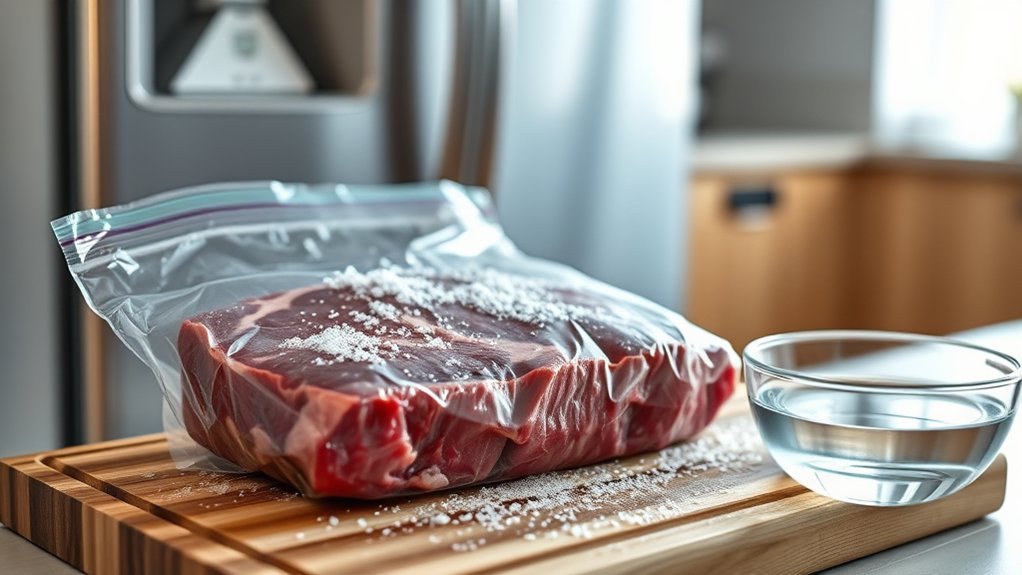
Thawing frozen steak carefully guarantees you retain its texture and flavor. To avoid compromising quality, follow these steps for the best results:
Plan your budget by thawing steak in the refrigerator for 24 hours per inch of thickness, ensuring even defrosting without bacterial growth. Use cold water thawing for faster results; seal the steak in a leak-proof bag and submerge it in cold water, changing water every 30 minutes.
Avoid using a microwave, as it unevenly heats and affects taste testing outcomes. After thawing, cook the steak promptly to preserve its moisture and flavor.
Can You Safely Refreeze Steak After Thawing?
You can safely refreeze steak if you thawed it in the refrigerator and haven’t left it out at room temperature.
Keep in mind that each freeze-thaw cycle can reduce the meat’s quality, making it less tender and flavorful. Following proper safety guidelines helps prevent bacterial growth and ensures your steak stays safe to eat.
Safety Guidelines For Refreezing
How safe is it to refreeze steak after it’s been thawed? You can safely refreeze steak as long as you follow strict safety guidelines. The main concern is bacterial growth during thawing. If handled properly, refreezing won’t pose health risks, but ignoring safety can lead to foodborne illness.
Avoid confusing this with quality impact, which is a separate subtopic irrelevant to safety.
Keep these key points in mind:
- Only refreeze steak thawed in the refrigerator, never at room temperature
- Refreeze within 1-2 days of thawing to minimize bacterial growth
- Avoid refreezing steak that’s been left out over two hours
- Use airtight packaging to prevent freezer burn and contamination
Quality Impact After Refreeze
What happens to the quality of steak once it’s been refrozen? When you refreeze steak after thawing, the refreeze quality typically declines. Thawing impacts the meat’s texture and moisture content, causing ice crystals to break down muscle fibers. This results in a less juicy and tougher steak after cooking. While safe if done properly, repeated freeze-thaw cycles amplify these effects.
| Factor | Impact on Refreeze Quality |
|---|---|
| Moisture Loss | Increased dryness |
| Texture | Becomes tougher and less tender |
| Flavor | Slightly diminished |
| Cooking Result | Less juicy, uneven cooking |
To preserve quality, only refreeze steak if it’s fully thawed in the fridge and hasn’t been left out too long.
Signs Frozen Steak Has Gone Bad
When can you tell if frozen steak has gone bad? You’ll notice clear signs if your steak isn’t safe to eat anymore. Pay attention to changes in smell, texture, and appearance. A bad odor is one of the strongest indicators. If the steak smells sour or off, don’t risk eating it. Also, a dry texture or freezer burn spots suggest the steak’s quality has deteriorated.
Look out for these signs:
- Off or sour smell indicating spoilage
- Dry, tough texture from freezer burn
- Discoloration such as gray or brown patches
- Slimy or sticky surface signaling bacterial growth
If you notice any of these, it’s best to discard the steak to avoid foodborne illness.
How to Cook Steak After Freezing for Best Results
Wondering how to bring out the best flavor and texture in steak after it’s been frozen? Start by thawing it slowly in the refrigerator for 24 hours to preserve juiciness. Pat the steak dry to ensure a better sear, locking in flavor.
Thaw steak slowly in the fridge and pat dry for a juicy, flavorful sear.
Use a hot pan or grill to create a caramelized crust without overcooking the interior. For taste pairing, consider herbs like rosemary or thyme and a splash of balsamic vinegar to enhance the meat’s natural richness.
Budget tips include using marinades with affordable ingredients like soy sauce and garlic to tenderize and add flavor. Rest the steak for a few minutes after cooking to let juices redistribute, ensuring every bite remains tender and delicious.
This approach maximizes both taste and value after freezing.
Frequently Asked Questions
What Is the Best Marinade for Frozen Steak?
The best marinade for frozen steak includes soy sauce, garlic, olive oil, and a splash of vinegar. It tenderizes and adds flavor, so you’ll get juicy, delicious results even from a frozen steak.
Can Frozen Steak Be Used in Slow Cookers?
You can use frozen steak in slow cookers, but ensure it’s properly packaged to prevent leaks. Keep in mind freezing affects texture, so slow cooker viability may vary.
Thawing first often yields better, more even cooking results.
How Does Freezing Affect Steak’s Nutritional Value?
Freezing acts like a time capsule for your steak, locking in its nutritional value preservation with minimal freezing effects. You won’t lose much protein or minerals, so your steak stays nutritious and tasty when properly frozen.
Are There Specific Packaging Materials for Freezing Steak?
You should use airtight packaging materials like vacuum-sealed bags or heavy-duty freezer wrap. These prevent freezer burn, locking in moisture and flavor, so you get the full freezing steak benefits without compromising quality or taste.
Can You Freeze Cooked Steak Leftovers Again?
You shouldn’t refreeze cooked steak leftovers after reheating because 再freezing leftovers can reduce quality and increase bacterial risk.
Instead, freeze only once, then reheat leftovers thoroughly for safe, tasty meals every time.
Conclusion
You might wonder if steak truly lasts up to a year frozen—well, it does, but only if you store it right. Keep your freezer at 0°F (-18°C) or below and wrap your steak airtight to avoid freezer burn.
Thaw it slowly in the fridge and only refreeze if you’ve kept it cold. By following these steps, you’ll preserve flavor and texture, ensuring your steak tastes just as good as fresh when you’re ready to cook.
Proper storage is key to making sure your steak lasts in the freezer for up to a year without losing quality.