Are Heat Pump Water Heaters Good
If you’re considering upgrading your water heating system, heat pump water heaters are a highly efficient option. They offer about 60% higher efficiency than traditional electric models by extracting heat from the surrounding air. This translates into significant energy savings and lower operating costs.
However, their performance depends heavily on climate and installation conditions. There can also be potential noise and upfront cost concerns. Understanding these factors is essential before deciding if this technology aligns with your home’s needs.
Key Takeaways
- Heat pump water heaters use up to 60% less electricity than conventional models, making them highly energy-efficient and cost-effective long-term.
- They reduce environmental impact and often qualify for energy rebates, supporting sustainable and economical water heating solutions.
- Efficiency declines in cold climates, and compressor noise may be a concern, especially in spaces under 1,000 cubic feet.
- Higher upfront costs and installation complexity require careful assessment of space, climate, and hot water usage patterns.
- Proper placement and regular maintenance, including airflow management and annual flushing, ensure optimal performance and longevity.
How Heat Pump Water Heaters Work
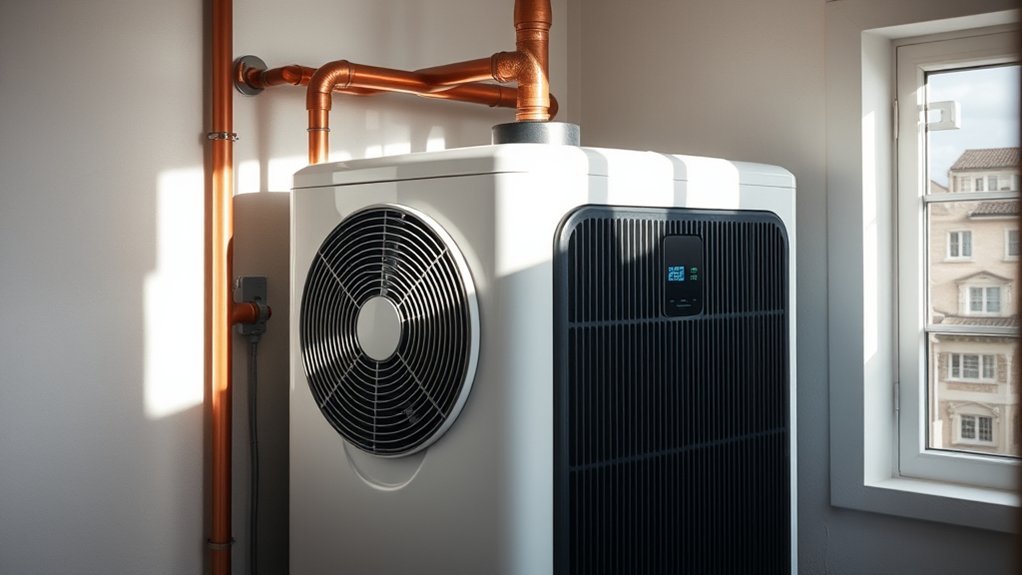
How exactly do heat pump water heaters operate to deliver energy-efficient hot water? You’ll find that a heat pump water heater moves heat rather than generating it directly. It extracts heat from the surrounding air using a refrigerant cycle, compresses this heat, and transfers it to the water tank.
This process typically uses 60% less electricity compared to conventional electric water heaters. The key components include an evaporator coil that absorbs heat, a compressor that raises the temperature, and a condenser coil inside the tank to transfer heat to the water.
Benefits of Heat Pump Water Heaters You Should Know
Why should you consider a heat pump water heater for your home? The primary benefit lies in its high energy efficiency. Heat pump models typically use 60% less electricity than conventional electric water heaters. This translates into substantial cost vs savings benefits over time, despite a higher upfront price.
From a technical standpoint, the heat pump extracts ambient heat and transfers it to water, requiring less electrical input. When evaluating pros & cons, the pros include lower operating costs, reduced environmental impact, and eligibility for energy rebates.
You’ll also appreciate longer equipment lifespan in many cases. These advantages make heat pump water heaters a compelling investment if you prioritize efficiency and long-term savings while understanding the initial cost implications.
Key Drawbacks of Heat Pump Water Heaters
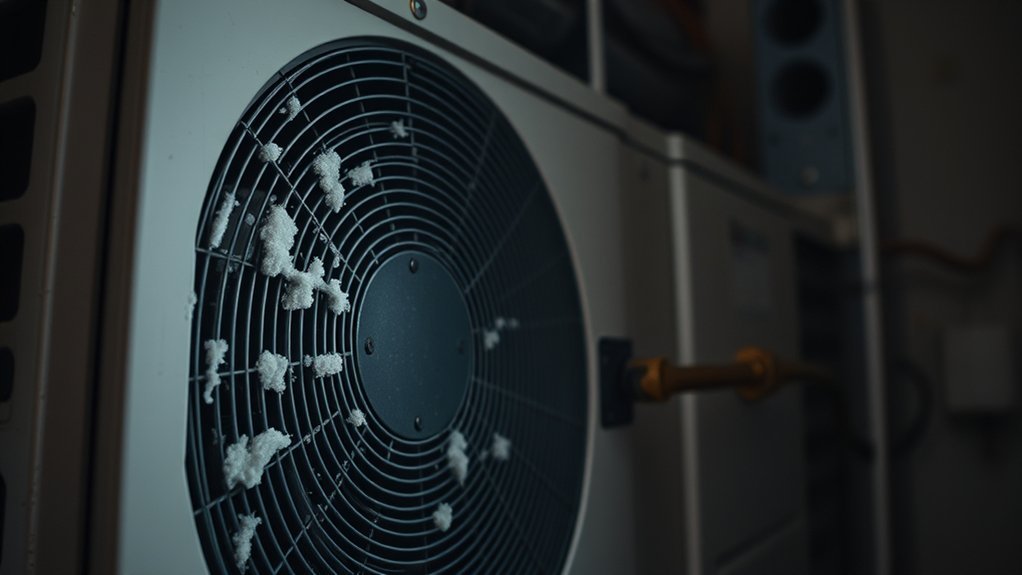
What limitations should you consider before choosing a heat pump water heater? First, despite their efficiency, these units may incur high energy costs in colder climates due to increased compressor workload. Their coefficient of performance (COP) can drop markedly below 3.0 when ambient temperatures fall under 40°F, reducing overall savings.
Additionally, noise concerns arise because the compressor and fan generate operational sounds averaging 50-60 decibels, which might be intrusive in quiet spaces. You’ll also need sufficient installation space since heat pump water heaters require at least 1,000 cubic feet of surrounding air for optimum function.
Finally, initial purchase and installation costs are generally 20-50% higher than conventional models, which could affect your upfront investment despite long-term energy benefits.
How to Decide If a Heat Pump Water Heater Fits Your Home
Determining whether a heat pump water heater suits your home depends on several critical factors including climate, space availability, and energy consumption patterns. Use a clear decision framework to evaluate its fit by conducting a thorough energy comparison against traditional water heaters.
Focus on these key elements:
- Climate Suitability: Heat pumps perform optimally in moderate to warm climates, with efficiency dropping in colder regions.
- Space Requirements: These units need adequate ambient air volume and clearance for efficient operation.
- Energy Use Patterns: Analyze your household’s hot water demand and electricity rates to forecast cost-effectiveness.
Installation and Maintenance for Heat Pump Water Heaters
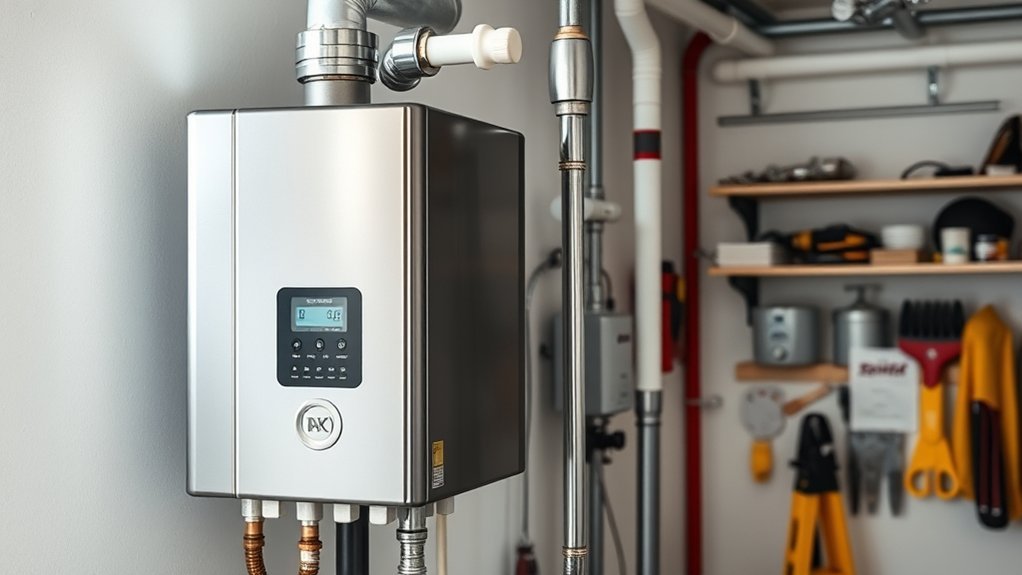
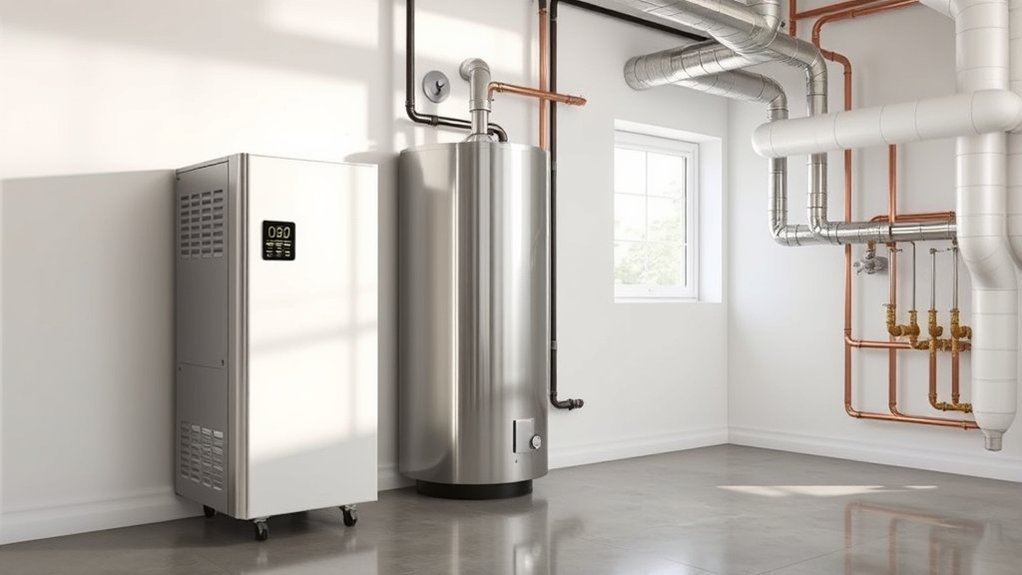
How you install and maintain a heat pump water heater directly impacts its efficiency and lifespan. Contrary to common installation myths, proper placement is critical: you need a well-ventilated space with at least 1,000 cubic feet of air volume to ensure optimal heat exchange. Avoid cramped or uninsulated areas to prevent efficiency loss.
Proper placement in a well-ventilated space with ample air volume ensures maximum heat pump water heater efficiency.
During installation, precise electrical wiring and drain line setup are essential to avoid system failures.
Skipping routine maintenance shortcuts can degrade performance. You should clean or replace the air filter every six months to maintain airflow and inspect the condensate drain for blockages.
Flushing the tank annually removes sediment buildup, preserving heat transfer efficiency. By following these technical guidelines, you maximize energy savings and extend your heat pump water heater’s operational life.
Frequently Asked Questions
Are Heat Pump Water Heaters Eligible for Energy Rebates or Tax Credits?
You’re often eligible for rebate eligibility and tax credits applicability with heat pump water heaters, as they meet energy-efficiency standards.
Check specific local programs and federal guidelines to maximize savings and ensure compliance with requirements.
How Noisy Are Heat Pump Water Heaters During Operation?
Heat pump water heaters produce noise levels around 45-60 decibels, comparable to a quiet conversation.
You’ll need installation considerations like placing them in utility areas to minimize sound impact during operation.
Can Heat Pump Water Heaters Be Used in Extremely Cold Climates?
You can use heat pump water heaters in extreme cold, but expect installation challenges like reduced efficiency and additional insulation needs.
Supplemental heating or specialized models often guarantee reliable performance below freezing temperatures.
What Is the Average Lifespan of a Heat Pump Water Heater?
You’d think old-fashioned water heaters last forever, but modern heat pump water heaters average 10-15 years. Unlike traditional sizing, their lifespan depends on usage, maintenance, and environment, so precise planning matters for optimal performance.
Do Heat Pump Water Heaters Require Specific Electrical Requirements?
Yes, heat pump water heaters require specific voltage, typically 240 volts, and adequate electrical clearance for safe operation.
You’ll need to ensure your electrical system meets these precise requirements to install and run the unit efficiently.
Conclusion
If you’re looking to cut energy costs by about 60%, a heat pump water heater fits well—provided your climate stays moderate and you have space for airflow. Coincidentally, the same conditions that boost efficiency also minimize noise and maintenance challenges.
While upfront costs are higher, the long-term savings and environmental benefits often outweigh them. So, if your home meets these criteria, investing now aligns with both your budget and sustainability goals.
In conclusion, heat pump water heaters are a good choice for those seeking energy efficiency and eco-friendly solutions.