Can You Put Glass in the Freezer
You might assume putting glass in the freezer is risky, but it’s not that simple. Certain types of glass handle freezing well, while others crack under stress. Understanding which glass containers are safe, how temperature changes affect the material, and proper preparation can prevent damage.
Before you store your leftovers, consider these factors carefully. You’ll want to avoid costly breakage and keep your food secure. Knowing the right way to use glass in the freezer is key to protecting both your containers and your meals.
Key Takeaways
- Glass can be put in the freezer if it is tempered or borosilicate, designed to withstand thermal stress and temperature changes.
- Always allow glass containers and their contents to cool to room temperature before freezing to prevent thermal shock and cracking.
- Avoid overfilling glass containers, leaving 1 to 2 inches of headspace to accommodate liquid expansion during freezing.
- Use tightly sealing, freezer-safe lids to reduce moisture loss, freezer burn, and maintain container integrity.
- Thaw frozen glass containers gradually in the refrigerator or with a cold water bath to minimize temperature stress.
Can You Put Glass in the Freezer Safely?
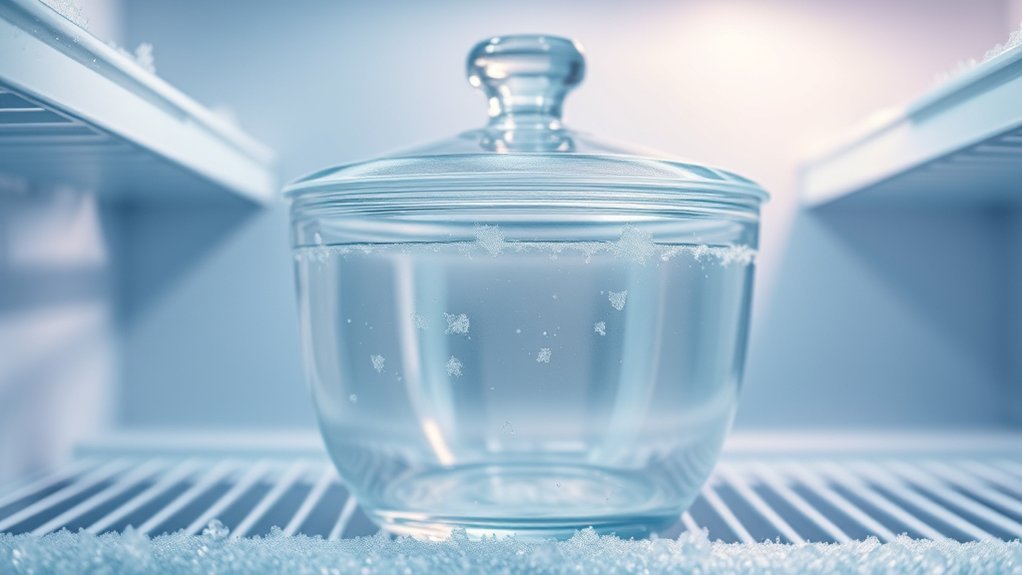
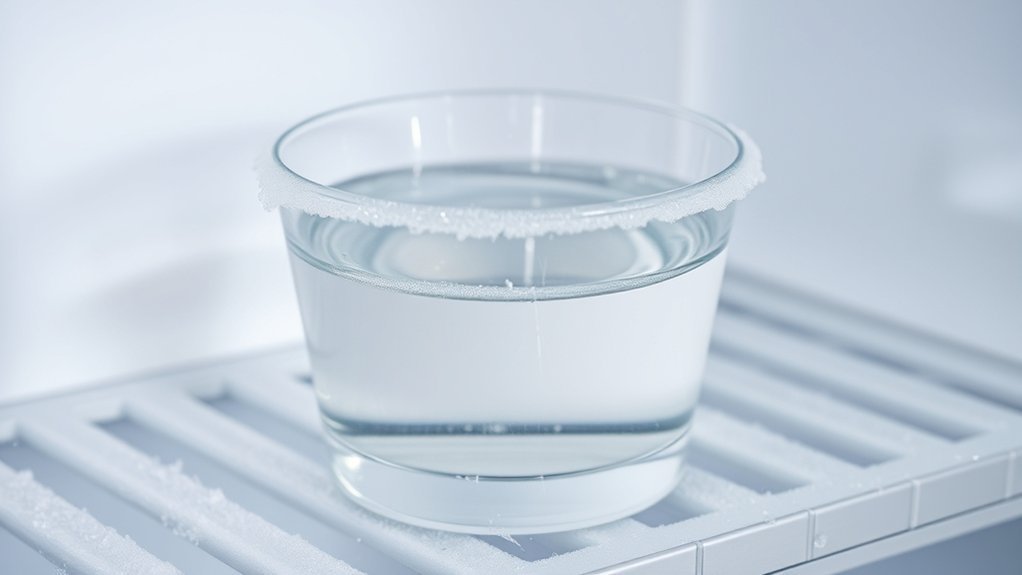
How safe is it to put glass in the freezer? When considering freezer etiquette, you need to evaluate glass durability carefully. Glass can withstand cold temperatures but is vulnerable to thermal shock caused by rapid temperature changes.
If you place warm glass directly into the freezer, it might crack or shatter due to uneven contraction. To maintain safety, always allow glass containers to cool to room temperature before freezing.
Additionally, avoid overfilling the container to allow expansion of liquids as they freeze, preventing stress on the glass. Using glass in the freezer requires attention to these factors to minimize breakage risk.
Which Glass Containers Are Freezer-Safe?
Understanding the safety measures for placing glass in the freezer naturally leads to identifying which types of glass containers can withstand freezing conditions. You should opt for tempered glass or borosilicate glass containers, designed to handle thermal stress. These materials resist cracking better than standard soda-lime glass.
Avoid containers with thin walls or decorative finishes, as they increase breakage risk. When selecting freezer-safe glass, check manufacturer labels or certifications explicitly stating freezer compatibility.
Addressing common freezer myths, tempered and borosilicate glass contradict the belief that all glass shatters in cold temperatures. Two word discussion ideas like “thermal resistance” and “stress tolerance” help evaluate container suitability. By prioritizing these technical factors, you ensure your glass containers remain intact, safeguarding your food and freezer without unnecessary hazards.
Why Does Glass Crack in the Freezer?
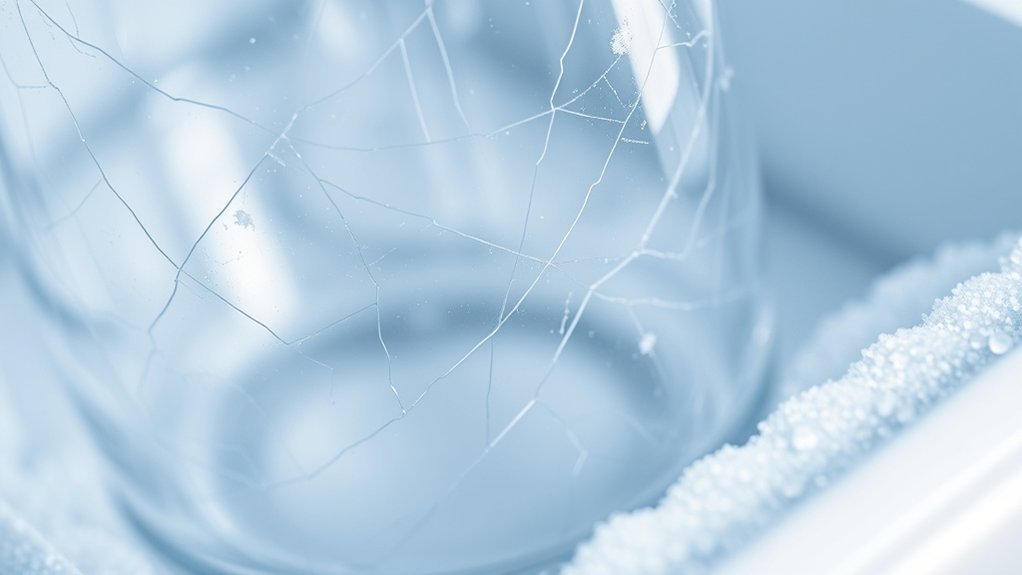
Why does glass often crack when placed in the freezer? It’s primarily due to the interplay of glass chemistry and freezer physics. Glass is an amorphous solid with low thermal conductivity, so it doesn’t evenly contract during rapid cooling.
Freezer temperatures cause differential contraction stresses within the glass structure. Additionally, if the contents expand upon freezing, internal pressure increases, further straining the glass.
| Factor | Cause | Effect |
|---|---|---|
| Thermal Shock | Rapid temperature drop | Surface cracks develop |
| Glass Composition | Varies thermal expansion coefficients | Uneven contraction |
| Internal Pressure | Expansion of frozen contents | Increased tensile stress |
| Structural Flaws | Microscopic imperfections in glass | Crack initiation points |
Understanding these factors helps explain why glass cracking in the freezer is common.
Can You Freeze Glass With Hot or Warm Food?
When you place hot or warm food directly into glass containers and then freeze them, you risk inducing thermal shock that can cause the glass to crack or shatter. This occurs because rapid temperature changes create stress points in the glass structure.
To minimize this risk while preserving food aesthetics and maintaining clear freezer branding, consider these guidelines:
To reduce glass breakage and keep your food looking great, follow these simple freezing tips.
- Allow food to cool to room temperature before transferring it into glass containers.
- Use glass types designed to withstand temperature fluctuations, such as borosilicate glass.
- Avoid overfilling containers, leaving space for food expansion during freezing.
How to Prepare Glass Containers for Freezing Food
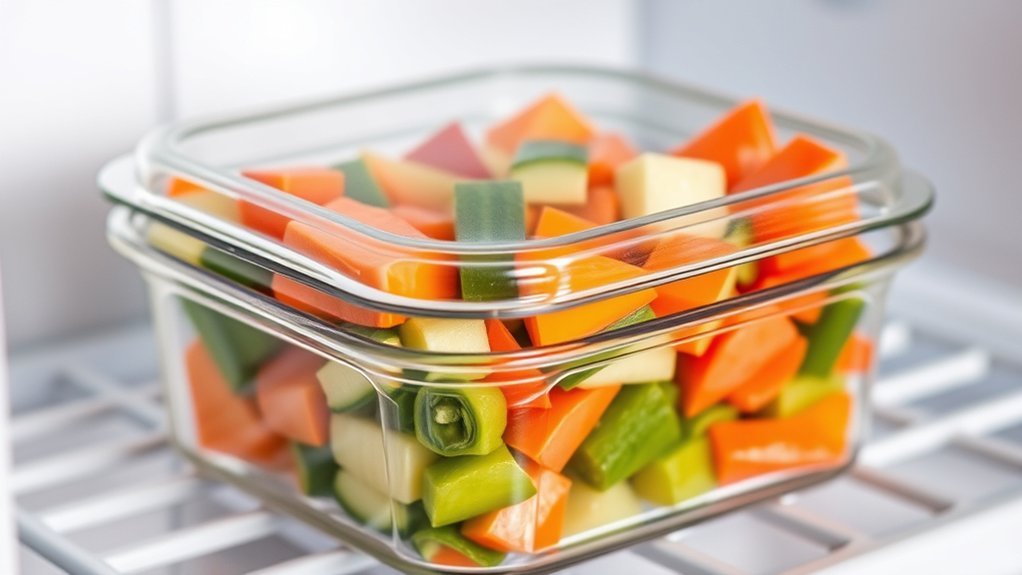
Before freezing food in glass containers, make sure you select ones labeled as freezer-safe to prevent cracking.
Always allow hot or warm food to cool to room temperature before transferring it to the glass. This step reduces thermal stress and helps maintain the integrity of the container.
Choosing Freezer-Safe Glass
How can you ensure your glass containers withstand the freezer’s extreme conditions without cracking or shattering? You need to select glass designed explicitly for freezer storage, focusing on material safety to avoid thermal stress damage. Here’s how to choose freezer-safe glass:
- Opt for tempered or borosilicate glass: These materials resist sudden temperature changes better than standard glass.
- Check manufacturer specifications: Confirm the glass is labeled freezer-safe to guarantee its durability under freezing temperatures.
- Avoid thin or decorative glass: Thin walls and intricate designs can weaken structural integrity during freezing.
Proper Cooling Techniques
Why does the way you cool food before freezing matter? Rapid temperature changes can cause thermal shock due to glass chemistry, leading to cracks or breakage. To ensure freezer safety, you should first let hot food cool to room temperature before transferring it into glass containers.
Avoid placing warm or hot glass directly into the freezer, as the sudden cold can stress the material. Instead, spread the food in a shallow container to expedite cooling. Once cooled, fill your freezer-safe glass containers, leaving space for expansion to prevent pressure buildup.
Seal containers tightly to reduce moisture loss and freezer burn. Following these steps minimizes the risk of glass failure, maintains food quality, and optimizes freezer safety by respecting the physical properties of glass during temperature transitions.
Best Ways to Thaw Food in Glass Containers
Although glass containers are durable and versatile for freezing, you need to thaw them carefully to prevent thermal shock and potential breakage. Thawing also affects staining patterns and colorfastness, especially with pigmented foods. To thaw food in glass containers safely and maintain quality, follow these steps:
- Refrigerator Thawing: Move the glass container to the refrigerator. This gradual temperature change reduces thermal stress and preserves colorfastness.
- Cold Water Bath: Submerge the sealed container in cold water, changing the water every 30 minutes. This speeds thawing without abrupt temperature shifts that can cause cracking or staining.
- Microwave Defrost Setting: Use only microwaves with defrost modes compatible with glass. Monitor carefully to avoid overheating that compromises the container’s integrity and alters staining patterns.
These methods ensure safe thawing, maintaining the glass’s durability and appearance.
How to Avoid Shattered Glass When Freezing
To prevent glass from shattering in the freezer, use containers specifically labeled as freezer-safe to withstand low temperatures. Avoid rapid temperature changes by allowing hot contents to cool before freezing and thawing glass gradually.
Also, leave adequate headspace in the container to accommodate liquid expansion during freezing.
Choose Freezer-Safe Glass
How can you prevent glass containers from shattering when freezing? The key lies in selecting the right type of glass, focusing on glass composition and container labeling. Here’s how to choose freezer-safe glass:
- Check container labeling: Look for explicit freezer-safe or tempered glass markings, indicating the manufacturer tested the glass for thermal stress resistance.
- Understand glass composition: Opt for borosilicate glass, which has low thermal expansion, reducing the risk of cracking under freezing temperatures.
- Avoid ordinary soda-lime glass: This common glass type is more prone to shattering due to higher thermal expansion and weaker structural integrity under cold stress.
Avoid Rapid Temperature Changes
Why do glass containers sometimes shatter in the freezer? Rapid temperature changes cause thermal stress, leading to cracks or breakage. When you place a warm glass container directly into the cold freezer, the outer surface cools and contracts faster than the inner layers, creating tension.
To avoid this, you need precise timing considerations. Let hot or warm contents cool to room temperature before freezing. This step prevents sudden temperature differentials that exceed glass tolerance.
Avoid unrelated topics like general freezer organization here; focus strictly on thermal shock prevention. By managing temperature transitions methodically, you reduce the risk of shattering.
Leave Space for Expansion
Along with controlling temperature shifts, you must account for the physical expansion of liquids or foods as they freeze. Ignoring this can cause glass containers to crack or shatter.
To ensure proper glass care, follow these steps:
- Leave at least 1 to 2 inches of headspace in your glass container to accommodate expansion.
- Avoid filling containers to the brim, especially with liquids, since water expands by approximately 9% upon freezing.
- Use freezer labeling to mark fill lines and contents, helping maintain consistent filling volumes and preventing overfilling.
Glass vs. Plastic Containers for Freezer Storage
When choosing containers for freezer storage, you must weigh the distinct properties of glass and plastic. Glass offers superior durability against staining and odor retention, making it ideal for maintaining label accuracy over time, which enhances freezer organization. However, glass is prone to thermal shock and requires careful handling to avoid cracking.
Plastic containers, on the other hand, are lightweight, flexible, and less likely to shatter, facilitating easier stacking and space optimization. Yet, plastics may degrade, warp, or absorb odors, potentially compromising label legibility and freezer organization.
To optimize your freezer’s layout, consider the trade-offs: use glass for long-term storage with clear labeling, and plastic for short-term, space-efficient needs. Your choice should align with both food safety and organizational priorities.
Signs Your Glass Container Isn’t Safe for Freezing
How can you tell if your glass container isn’t suited for freezing? Assessing glass safety and freezer durability is crucial to prevent damage. Here are three clear signs:
- Visible Cracks or Chips: Any imperfections compromise structural integrity, increasing the risk of shattering due to thermal stress.
- Non-Tempered Glass: Containers lacking a tempered or borosilicate label typically cannot withstand rapid temperature changes, reducing freezer durability.
- Incompatible Lid Seals: If the lid doesn’t fit tightly or is made from non-freezer-safe materials, it may allow moisture intrusion, affecting both food quality and the container’s performance.
Recognizing these indicators ensures you avoid using glass containers that could fail in freezing conditions, preserving safety and preventing costly breakage.
How to Extend Glass Container Life in the Freezer
Why does some glassware last longer in the freezer while others crack or break? The key factors are glass durability and freezer logistics. To extend your glass container’s lifespan, consider the type of glass, temperature changes, and handling methods.
Avoid sudden temperature shifts that stress the glass. Use containers designed for freezing with thicker walls and tempered glass. Proper freezer organization prevents impact damage.
| Factor | Impact on Glass Durability | Freezer Logistics Tip |
|---|---|---|
| Glass Type | Tempered resists thermal shock | Choose freezer-safe glassware |
| Temperature Change | Rapid shifts cause cracks | Cool items before freezing |
| Filling Level | Overfilling can deform glass | Leave headspace for expansion |
| Handling | Dropping increases break risk | Store securely, avoid stacking heavy |
| Freezer Placement | Pressure points cause stress | Arrange containers evenly |
Implement these strategies to maximize glass container durability in your freezer.
Frequently Asked Questions
Can Glass Containers Be Used in the Microwave After Freezing?
You can use glass containers in the microwave after freezing, but watch for brittle glass caused by thermal shock.
Ensure the glass maintains crystal clarity and is labeled microwave-safe to avoid cracking or shattering during heating.
Are There Specific Brands of Glass Containers Recommended for Freezing?
You should choose brands like Pyrex or Anchor Hocking, known for superior glass durability and proven freezer safety. Their tempered glass withstands temperature shifts, minimizing breakage risks and ensuring reliable performance during freezing and thawing cycles.
How Does Freezing Affect the Taste of Food in Glass Containers?
Freezing is like time’s pause button, preserving flavors with minimal taste impact when using compatible glass. Glass compatibility ensures no chemical interaction, maintaining food’s original profile.
This way, your meals stay fresh and true without altered taste nuances.
Can You Label Glass Containers for Freezer Storage?
Yes, you can label glass containers for freezer storage by using freezer-safe markers or waterproof labels. Proper labeling guarantees accurate food identification and maintains freezer safety by preventing container misuse or prolonged storage beyond safe limits.
Is It Safe to Put Glass Jars With Lids in the Freezer?
You shouldn’t freeze glass jars with lids tightly sealed, as glass expansion from freezing liquids can cause cracks or breakage.
Loosen the lid seal to allow pressure release, ensuring safety and preserving your contents effectively.
Conclusion
You can safely freeze glass by choosing tempered or borosilicate containers, avoiding thin or decorative glass, and never overfilling to allow expansion. You must cool hot food before freezing, leave adequate headspace, and thaw gradually to prevent stress fractures.
Inspect seals to avoid moisture loss and freezer burn. By following these steps, you protect your food, preserve your glassware, and extend container life.
Ensuring both safety and durability in your freezer storage will help you confidently put glass in the freezer.