How to Filter Salt Water
Filtering salt water is like navigating a complex circuit—each step must connect precisely to ensure a clean outcome. You’ll need to start by removing particulates and adjusting chemical balances before employing methods like distillation or reverse osmosis.
Skipping any stage can compromise the entire process, so understanding the technical details and common pitfalls is crucial. What follows will equip you with the knowledge to transform salt water into a reliable source of fresh water.
Key Takeaways
- Use distillation to evaporate and condense water, separating salt from liquid for safe consumption.
- Pre-filter salt water with sand and charcoal to remove large particulates before advanced filtration.
- Employ portable reverse osmosis devices that use pressure to filter out salt and impurities effectively.
- Regularly test salinity with calibrated meters to verify filtration success and water safety.
- Store filtered water in clean, food-grade, airtight containers labeled with filtration dates for safe use.
Why Drinking Salt Water As Is Can Harm You
Why does drinking salt water as is pose a serious health risk? When you consume salt water directly, the high concentration of sodium chloride disrupts your body’s osmotic balance. This imbalance triggers harmful effects, such as cellular dehydration, because your kidneys cannot process salt concentrations beyond a certain threshold.
Instead of hydrating you, salt water increases hydration risks by drawing water out of your cells to dilute the excess salt in your bloodstream. This leads to intensified dehydration, kidney strain, and electrolyte imbalances that can impair organ function.
In extreme cases, it can cause seizures, coma, or death. Understanding these physiological mechanisms clarifies why untreated salt water is unsafe to drink and why proper filtration or desalination methods are essential to mitigate these hydration risks and harmful effects.
Testing Salt Levels Before Drinking Water
Given the severe health risks associated with consuming untreated salt water, accurately evaluating its salt concentration becomes a necessary step before considering it safe to drink. You’ll need to perform testing salinity using a reliable salinity meter or refractometer.
Ensure calibration accuracy by regularly calibrating your device with standard solutions to prevent erroneous readings. Precise measurement informs whether further filtration is required.
| Salinity Level (ppt) | Safety Recommendation |
|---|---|
| 0 – 0.5 | Safe for consumption |
| 0.5 – 1.5 | Caution: Potential health risk |
| 1.5 – 3.5 | Not safe, requires treatment |
| > 3.5 | Highly dangerous to drink |
You must prioritize calibration accuracy and systematic testing salinity to avoid health hazards.
DIY Methods To Make Salt Water Drinkable In Emergencies
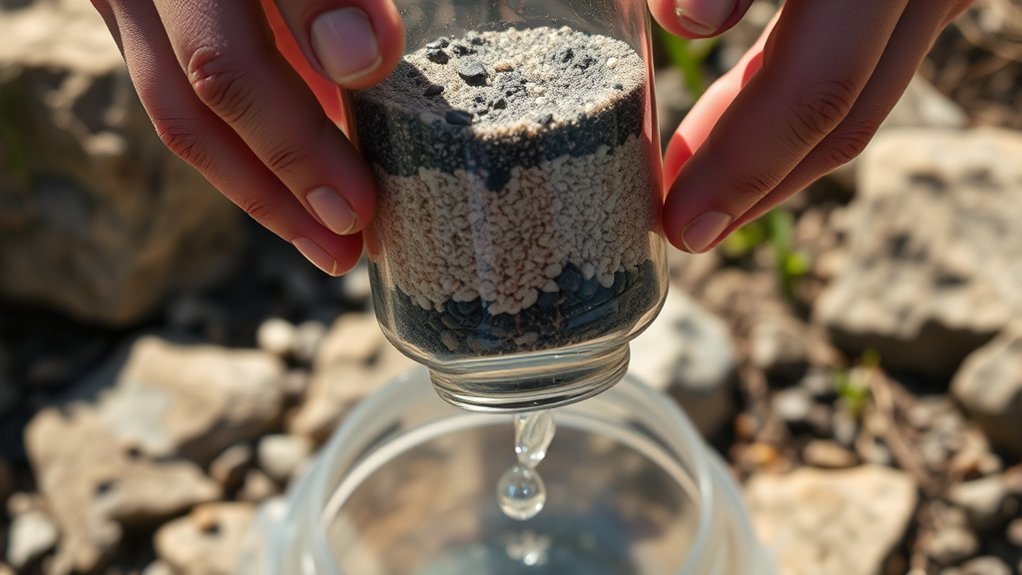
When you find yourself without access to potable water, several DIY methods can reduce the salt content in seawater to safer levels. One effective approach is simple boiling followed by condensation capture, which separates water vapor from salt crystals, significantly diminishing saltwater flavor intensity.
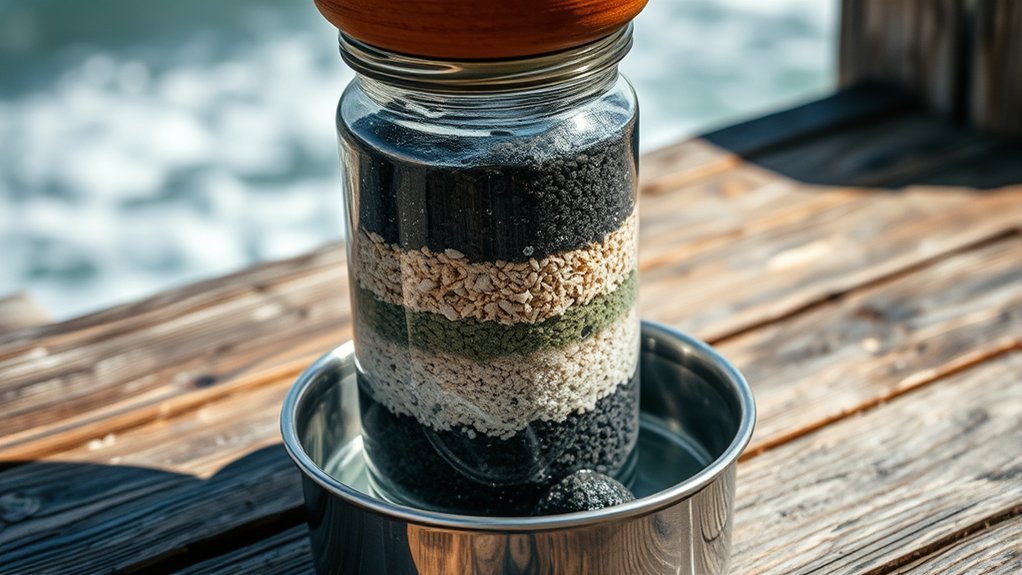
Another method involves makeshift filtration using charcoal and sand layers; while this won’t remove all salt, it can reduce particulates and some dissolved solids impacting saltwater flavor. You should avoid direct consumption without treatment, as excessive salt intake disrupts coastal ecosystems’ balance and harms your health.
Improvised evaporation trays also help by collecting distilled water, though efficiency depends on temperature and humidity. These techniques, while imperfect, can provide critical hydration until you access advanced filtration systems.
How To Use Solar Stills To Filter Salt Water
How can you efficiently separate freshwater from saltwater using only sunlight? Solar stills offer a practical water purification method by harnessing solar energy to evaporate water, leaving salt and impurities behind. You collect condensation on a sloped surface, which then drips into a clean container.
To optimize performance, consider these factors:
| Factor | Importance |
|---|---|
| Sunlight Intensity | Higher intensity speeds evaporation |
| Design Angle | Optimal slope improves condensation |
| Sealing Quality | Prevents vapor loss |
| Material Choice | Transparent covers maximize solar gain |
| Collection Method | Efficient drip system minimizes contamination |
How Distillation Removes Salt From Water
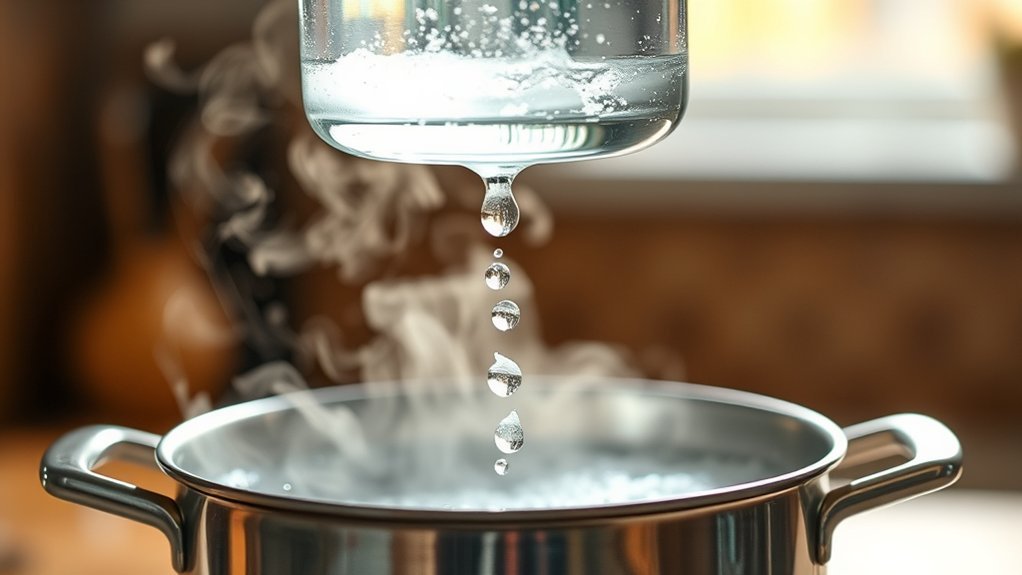
Why does distillation effectively remove salt from water? Distillation exploits evaporative mechanics, where you heat salt water until it vaporizes, leaving dissolved salts behind. The steam you collect is essentially pure water vapor, free from salt ions, which do not evaporate.
This process ensures high distillation purity because only volatile molecules transition into the vapor phase. When you condense this vapor back into liquid, you obtain fresh water with significantly reduced salinity.
Unlike filtration methods that rely on physical barriers, distillation separates components based on phase changes and boiling points. By controlling temperature and condensation conditions precisely, you maximize distillation purity.
This analytical approach leverages fundamental thermodynamic principles, making distillation a reliable method to remove salt and other non-volatile impurities effectively.
How Reverse Osmosis Can Turn Salt Water Into Fresh Water
Where does reverse osmosis fit into the process of desalinating salt water? Reverse osmosis employs a semipermeable membrane to force salt water through under high pressure, separating pure water from dissolved salts and contaminants.
This osmotic filtration process relies on pressure exceeding the natural osmotic pressure, effectively removing up to 99% of salts. When you implement reverse osmosis, you achieve a highly efficient barrier that rejects ions and molecules, resulting in fresh water suitable for consumption.
Post-filtration, taste testing is critical to ensure the water meets safety and palatability standards, as some residual compounds might affect flavor. By controlling pressure and membrane integrity, you optimize desalination performance, making reverse osmosis a precise and scalable method for turning salt water into fresh water.
How To Filter Salt Water With Portable Devices
While reverse osmosis systems provide highly effective desalination through controlled pressure and specialized membranes, their size and complexity often limit portability. When you need to filter salt water in the field, portable devices offer a practical alternative.
These compact units utilize manual pumps or solar power to force water through microfiltration or reverse osmosis membranes. As emergency equipment, they’re essential for survival scenarios where access to fresh water is critical.
Before relying on a portable desalination device, conduct thorough field testing to verify performance under varying conditions, including salinity and temperature fluctuations. This ensures you can depend on consistent freshwater output when it matters most.
Filtering Salt Water: Common Mistakes To Avoid
You can’t rely on standard filters to remove salt from water effectively, so using inappropriate filtration methods will leave you with undrinkable water.
Skipping essential pre-treatment steps, like sediment removal, can clog your system and reduce efficiency. Avoid these pitfalls to guarantee your filtration process works as intended.
Using Inappropriate Filtration Methods
How do you guarantee effective salt water filtration without wasting time or resources? Avoid inappropriate filtration methods that fail to remove salt ions. Relying on unreliable methods like simple sediment filters or cloth strainers won’t reduce salinity.
Instead, focus on techniques designed for salt water, such as reverse osmosis or distillation.
| Filtration Method | Suitability for Salt Water |
|---|---|
| Sediment Filtration | Ineffective for salt removal |
| Cloth Straining | Ineffective and unreliable |
| Reverse Osmosis | Highly effective |
| Distillation | Highly effective |
| Activated Carbon | Removes organics, not salt |
Using unsuitable filtration wastes effort and may produce unsafe water. Choose precise, salt-specific methods to ensure consistent, reliable results.
Overlooking Pre-Treatment Steps
Selecting the right filtration method is only part of effective salt water treatment; neglecting proper pre-treatment steps can severely compromise your system’s performance. Skipping these steps often leads to equipment damage, reduced filter lifespan, and inaccurate water quality results.
To avoid these pitfalls, consider these critical pre-treatment actions:
- Remove large particulates to prevent filter clogging.
- Adjust pH levels for optimal membrane efficiency.
- Conduct thorough water testing to identify contaminants accurately.
- Implement labeling risks clearly to ensure safe handling and maintenance.
Adhering to practical ethics means you must prioritize these steps to maintain system integrity and safety. Overlooking them increases operational costs and jeopardizes water purity, counteracting the purpose of your filtration system.
Safe Storage And Handling Tips For Filtered Salt Water
Where should filtered salt water be stored to maintain its purity and effectiveness? You should use food-grade, airtight containers made from non-reactive materials like high-density polyethylene or glass. Avoid metal containers, which can corrode and contaminate the water.
Store containers in a cool, dark environment to minimize microbial growth and chemical degradation. For safe handling, always use clean, sanitized tools and avoid direct contact with unclean surfaces.
Label containers clearly with filtration dates and contents to ensure proper rotation and timely use. Follow strict storage guidance by inspecting containers regularly for leaks or damage.
Frequently Asked Questions
Can Salt Water Be Used for Cooking After Filtration?
You shouldn’t use salt water for cooking after typical salt water filtration because standard filters don’t remove all salts.
Cooking with filtered salt water requires advanced desalination methods like reverse osmosis to ensure safety and taste.
How Does Salt Water Affect Marine Ecosystems?
You’ll find saltwater ecosystems rely on balanced salinity; filtration impacts can alter nutrient levels and disrupt habitats.
Changes in salt concentrations affect species survival and water chemistry, potentially destabilizing these complex marine environments.
What Are the Health Benefits of Minerals in Salt Water?
You gain improved skin hydration, enhanced circulation, and reduced inflammation from the mineral content in salt water.
These health benefits highlight salt water’s filtration viability for therapeutic uses, emphasizing its precise, analytical value in wellness applications.
Can Plants Survive if Watered With Filtered Salt Water?
Plants survive poorly if watered with filtered saltwater, as residual salts can cause osmotic stress and ion toxicity. You’ll need near-complete salt removal to avoid damaging roots and ensure proper water uptake for healthy growth.
How Long Does Filtered Salt Water Stay Fresh Without Refrigeration?
Filtered salt water can stay fresh for 24-48 hours without refrigeration, depending on storage conditions. You can use salt water for cooking after filtration, but microbial growth risks increase considerably over time without cooling.
Conclusion
When facing salt water, remember it’s not just a challenge but an opportunity to safeguard your well-being. By carefully testing, filtering, and choosing the right desalination method, you’re not just removing salt—you’re preserving life’s essential essence.
Avoid shortcuts that might compromise purity, and handle your treated water with respect. In doing so, you guarantee every drop nourishes rather than diminishes, turning a harsh resource into a quiet promise of survival.
Ultimately, mastering how to filter salt water ensures that you transform a difficult situation into a reliable source of clean, safe hydration.