Can You Eat Freezer Burned Meat
Imagine you find a steak in your freezer with dry, grayish patches but no foul smell or sliminess. You might wonder, can you eat freezer burned meat safely? Freezer burn results from moisture loss and oxidation, affecting the meat’s texture and flavor rather than its safety—provided there are no spoilage signs.
Understanding how to identify and handle freezer-burned meat can help you decide what to do next. Look for dry spots and color changes, but if the meat smells normal and feels firm, it’s usually safe to cook. While the taste and texture may be compromised, freezer burn itself doesn’t make the meat unsafe to eat.
Key Takeaways
- Freezer-burned meat is safe to eat if no signs of spoilage like off odors or sliminess are present.
- Trim away dry, discolored, or leathery freezer-burned areas before cooking for better taste and texture.
- Cooking meat to recommended internal temperatures kills pathogens and ensures safety despite freezer burn.
- Freezer burn affects meat quality, causing dryness and flavor loss, but does not cause foodborne illness by itself.
- Proper storage and packaging can prevent freezer burn and preserve meat quality for future consumption.
What’s Freezer Burn and How Does It Happen?
What causes freezer burn, and how does it develop on your meat? Freezer burn occurs when moisture inside the meat sublimates, turning from ice directly into vapor. This process happens when air reaches the meat’s surface, usually due to compromised packaging seals.
Understanding freezer basics helps you prevent this; airtight packaging is critical because it limits exposure to dry, cold air circulating in the freezer. When packaging seals are poor or damaged, moisture escapes, and the meat’s surface dehydrates, forming tough, discolored patches.
This dehydration impacts texture and flavor but is not a result of spoilage. Properly sealing your meat with vacuum-sealed bags or tightly wrapped materials minimizes air contact, reducing freezer burn risk and preserving meat quality during long-term storage.
How Can You Spot Freezer Burn on Your Meat?
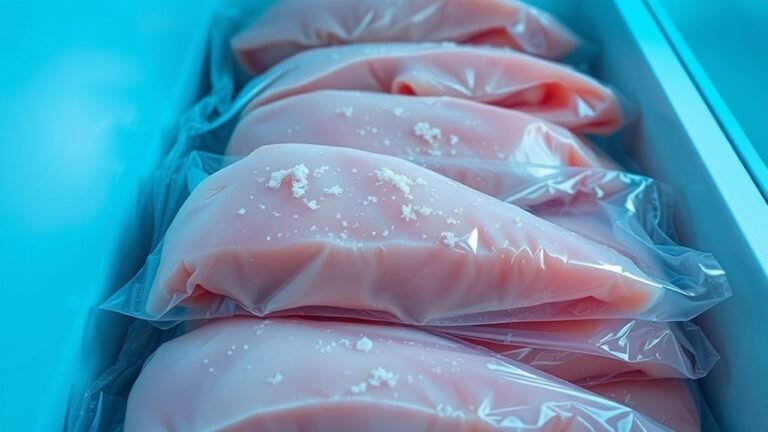
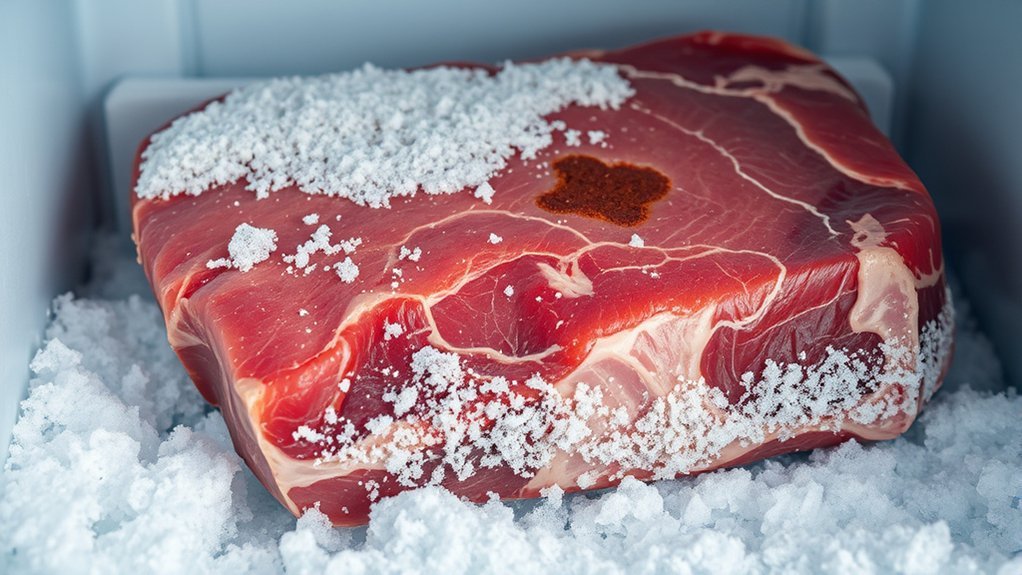
You can identify freezer burn by looking for dry, discolored patches on the meat’s surface, often appearing white or grayish. Pay attention to texture changes, such as tough or leathery areas that feel different from the rest of the meat.
Additionally, color shifts from the meat’s original hue can signal freezer burn, indicating moisture loss and oxidation.
Visual Signs To Watch
How can you accurately identify freezer burn on meat before cooking? Focus on specific visual cues that signal freezer burn. Typically, freezer burn appears as grayish-brown, dry patches on the surface. These areas are dehydrated and often have a leathery texture.
You might also notice ice crystals, indicating moisture loss. Recognizing these signs helps determine if the meat is still safe to consume or if quality is compromised.
| Visual Cue | Description | Implication |
|---|---|---|
| Discoloration | Gray, brown, or white patches | Freezer burn presence |
| Dry, leathery spots | Surface dehydration | Moisture loss |
| Ice crystals | Frost-like formations on surface | Prolonged freezer exposure |
| Texture change | Noticeably rough or tough patches | Quality degradation |
| Surface shrinkage | Meat appears shrunken or puckered | Water evaporation |
Texture Changes To Note
Alongside visual cues, texture changes provide critical indicators of freezer burn on meat. When meat undergoes freezer burn, ice crystals disrupt muscle fibers, causing texture degradation that you can feel.
You’ll notice the surface becomes dry, tough, and leathery, contrasting with the original pliability. This change compromises the meat’s structural integrity, making it less palatable and harder to cook evenly.
In terms of freezer safety, understanding these texture alterations helps you assess whether the meat is still suitable for consumption. Although freezer burn doesn’t make meat unsafe, significant texture degradation often signals a decline in quality.
Color Differences Explained
Where should you look to identify freezer burn on meat? Focus on the surface, as freezer burn primarily affects exposed areas. You’ll notice distinct color differences, such as grayish-brown or white dry patches contrasting with the meat’s natural red or pink hues.
These discolorations result from moisture loss and oxidation caused by air exposure. Freezer burn dehydrates the meat, leading to dull, dry spots that lack the fresh, vibrant color of properly stored meat. Recognizing these color differences helps you determine the extent of freezer burn damage.
Keep in mind, while freezer burn alters appearance and texture, it doesn’t necessarily indicate spoilage, but it can affect flavor and quality. Identifying freezer burn accurately ensures you make informed decisions about meat safety and usability.
Is Freezer Burned Meat Safe to Eat?
You can safely eat freezer burned meat if it shows no signs of spoilage like off odors or slimy texture. While freezer burn affects quality by causing dryness and discoloration, it doesn’t inherently pose health risks.
To minimize any potential issues, trim away affected areas and cook the meat thoroughly before consumption.
Health Risks Overview
How safe is freezer burned meat to eat? Freezer burn health claims often exaggerate risks, but understanding potential hazards is essential. Freezer burn itself results from moisture loss and oxidation, not bacterial contamination, so it doesn’t inherently cause foodborne illness.
However, storage errors, like fluctuating freezer temperatures, can promote microbial growth, increasing health risks. While freezer burned meat is safe if stored properly and cooked thoroughly, compromised texture and flavor may mask spoilage signs, making it important to handle meat carefully.
You should avoid consuming any meat that shows spoilage indicators, though freezer burn alone isn’t a direct health threat. Proper packaging and consistent freezing temperatures minimize freezer burn and related risks, ensuring your meat remains safe and nutritious.
Signs of Spoilage
When should you be concerned about freezer burned meat? Freezer burn itself isn’t a direct indicator of spoilage; it occurs due to moisture loss and oxidation, causing dry spots and discoloration. However, you should carefully evaluate spoilage signs before consuming.
Look for off-putting odors. Sour, rancid, or ammonia-like smells signal bacterial growth. Also, check the texture; sliminess or stickiness indicates microbial activity. Color changes beyond typical freezer burn browning, such as greenish or gray hues, suggest spoilage.
If the meat has thawed and refrozen, spoilage risk increases. Freezer burn damages surface quality but doesn’t inherently make meat unsafe. Still, the presence of spoilage signs means you should discard the item to avoid foodborne illness.
Always inspect freezer burned meat thoroughly before deciding to eat it.
Safe Consumption Tips
Why consider eating freezer burned meat at all? Because it’s often safe and can still be enjoyable if handled correctly. Freezer burn mainly affects meat texture and flavor, not safety, so you can reduce waste with proper preparation.
To safely consume freezer burned meat, follow these tips:
- Trim off freezer burned sections to improve meat texture and taste.
- Use marinating or slow cooking methods to rehydrate and tenderize the meat.
- Ensure thorough cooking to at least 145°F (63°C) for whole cuts or 160°F (71°C) for ground meat to eliminate bacteria.
How Does Freezer Burn Affect Meat’s Taste and Texture?
In what ways does freezer burn alter the taste and texture of meat? Freezer burn occurs when moisture sublimates from meat’s surface, leading to dehydration and oxidation. This process causes a distinct taste impact, often described as bland or off-flavored.
The texture also suffers, becoming dry and tough due to moisture loss.
| Aspect | Effect on Meat |
|---|---|
| Taste | Metallic, bland, or off-flavors |
| Texture | Dry, leathery, and less tender |
| Visual | Discolored, with grayish or whitish spots |
You’ll notice the combination of moisture loss and oxidation compromises flavor compounds and protein integrity, which directly affects your eating experience. Understanding these changes helps you assess whether freezer burn has significantly degraded your meat’s quality.
Can You Cook and Eat Freezer Burned Meat Safely?
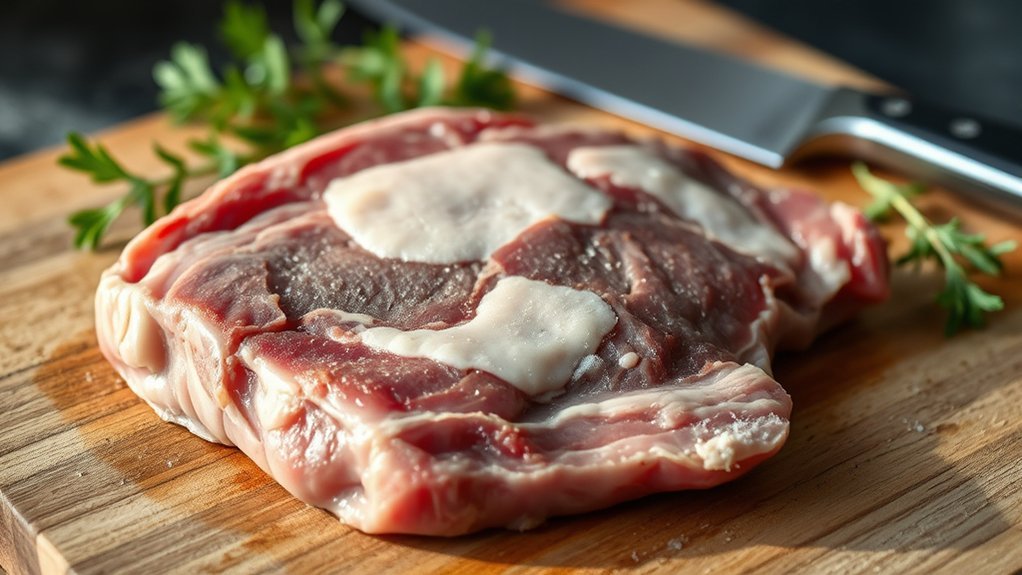
How safe is it to cook and eat meat affected by freezer burn? Freezer burn compromises meat quality but doesn’t make it unsafe if handled properly. Your primary concern is ensuring the meat’s freezer longevity hasn’t been exceeded and that it was stored under appropriate conditions.
Consider these points:
- Inspect the meat for off odors or slimy textures, signs of spoilage beyond freezer burn.
- Trim away freezer-burned areas to improve taste and texture before cooking.
- Cook meat to the recommended internal temperature to eliminate pathogens.
Following proper storage tips, such as airtight packaging and maintaining a constant freezing temperature, helps extend freezer longevity and reduces freezer burn risk. If you observe no spoilage signs and cook thoroughly, freezer-burned meat can be safely consumed despite diminished quality.
How Can You Prevent Freezer Burn and Keep Meat Fresh?
Where you store your meat and the packaging method you choose play essential roles in preventing freezer burn and maintaining freshness. Start by using airtight packaging like vacuum-sealed bags or heavy-duty freezer wrap, which minimize air exposure. This two word discussion idea1 is crucial for preserving meat quality.
Next, label and date your packages to implement first-in, first-out rotation, a two word discussion idea2 that reduces long-term storage. Keep your freezer at a constant 0°F (-18°C) or below to inhibit moisture loss and bacterial growth.
Avoid temperature fluctuations by not overloading the freezer and limiting door openings. Additionally, portion your meat before freezing to reduce thaw-refreeze cycles, which accelerate freezer burn. By combining optimal storage location and proper packaging, you effectively maintain meat freshness and reduce waste.
Frequently Asked Questions
Does Freezer Burn Affect the Nutritional Value of Meat?
Freezer burn doesn’t significantly affect meat’s nutritional value, despite common freezer burn myths. You shouldn’t worry about major nutrient loss misperceptions, as the damage mainly impacts texture and flavor, not essential nutrients like proteins or vitamins.
Can Freezer Burn Occur in Other Frozen Foods Besides Meat?
You’d think freezer burn could ruin the entire frozen world! Yes, freezer burn affects fruits, vegetables, and even baked goods, altering moisture and causing ice crystals that damage texture, much like it toughens meat texture and dehydrates surfaces.
How Long Does It Take for Freezer Burn to Develop?
Freezer burn duration varies but typically develops within 2-6 months. As meat thaws, moisture loss increases, causing texture and flavor degradation.
Proper packaging slows this process, preserving quality and minimizing freezer burn’s impact on your meat.
Are Certain Types of Meat More Prone to Freezer Burn?
You’ll find that fatty meats like pork and beef face higher freezer burn risks due to greater moisture loss compared to lean meats. This moisture loss accelerates freezer burn, compromising texture and flavor more quickly.
Can Marinating Meat Prevent Freezer Burn?
Marinating meat won’t prevent freezer burn because freezer burn results from moisture loss and air exposure.
However, marinades can add a protective layer that slightly reduces dehydration but won’t fully stop freezer burn from forming.
Conclusion
You can cautiously consume freezer-burned meat if you carefully check for spoilage signs and cut away the compromised, dry, discolored portions. Cooking to correct temperatures—145°F for whole cuts, 160°F for ground—curbs contamination risks. While freezer burn slightly saps savor and soft texture, safe handling and smart slicing save your supper.
Stay sharp: seal securely, store swiftly, and shield your supplies to prevent pesky freezer burn problems in the future. Remember, understanding can you eat freezer burned meat safely helps you reduce waste while keeping your meals enjoyable.