What Temp Should Freezer Be
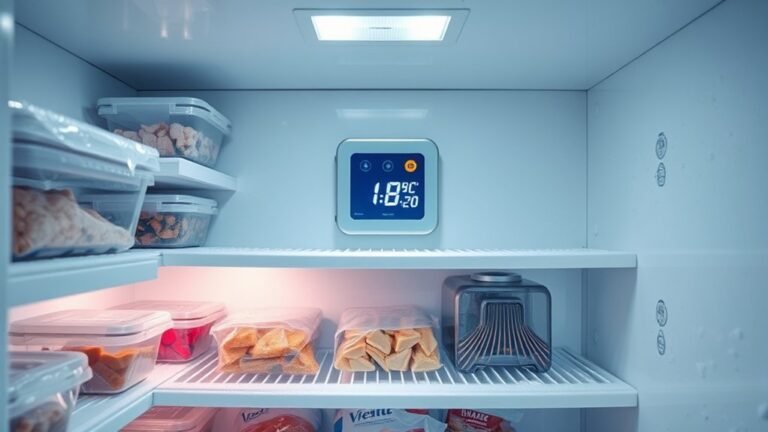
You should keep your freezer at around 0°F (-18°C) to maintain food quality and safety. This temperature slows bacterial growth and prevents ice crystals from damaging texture and flavor.
Setting it too low wastes energy, while higher temperatures risk spoilage.
Understanding how to monitor and adjust this setting can help you avoid common issues like freezer burn and inconsistent cooling.
These details could make a significant difference in your food’s longevity and your energy bills.
Key Takeaways
- The ideal freezer temperature is around 0°F (-18°C) for optimal food preservation and safety.
- Temperatures below 0°F waste energy without significant preservation benefits.
- Temperatures above 0°F increase the risk of spoilage, freezer burn, and texture loss.
- Consistent temperature control at 0°F reduces frost buildup and maintains food quality.
- Regularly check and calibrate the freezer thermometer to ensure it stays near 0°F.
What Is the Ideal Freezer Temperature and Why It Matters
Why does the temperature inside your freezer matter so much? Maintaining the ideal freezer temperature, typically around 0°F (-18°C), ensures optimal performance and energy efficiency.
When you set your freezer too low, you might waste energy, disrupting your energy budgeting and increasing utility costs unnecessarily. Conversely, a temperature that’s too high won’t preserve your food properly, shortening storage life.
You need to understand temperature psychology here: the perceived need to lower temperatures often stems from misconceptions rather than science. By setting your freezer correctly, you balance food preservation with energy consumption, ensuring your appliance runs efficiently without overburdening your electric bill.
Proper temperature management supports both operational efficiency and cost-effectiveness, making it essential to monitor and adjust your freezer’s thermostat precisely.
How Freezer Temperature Impacts Food Safety and Quality
You need to keep your freezer at or below 0°F (-18°C) to prevent bacterial growth and assure food safety. Maintaining this temperature also preserves texture, flavor, and nutritional value by slowing enzymatic reactions and moisture loss.
Understanding these guidelines helps you optimize both safety and quality in your frozen foods.
Food Safety Temperature Guidelines
How does freezer temperature directly affect the safety and quality of your stored food? Maintaining an ideal freezer temperature prevents bacterial growth and slows ice crystal formation, which degrades texture and flavor.
Proper freezer organization ensures consistent temperatures by allowing air circulation, reducing thaw and refreeze cycles that harm food safety and quality.
| Temperature Range | Food Safety Impact |
|---|---|
| 0°F (-18°C) or lower | Inhibits bacterial growth, preserves texture |
| -10°F to 0°F (-23°C to -18°C) | Minimal ice crystal formation, maintains quality |
| Above 0°F (-18°C) | Increased risk of spoilage, texture loss |
Set your freezer at 0°F (-18°C) or below to maximize safety and maintain food quality effectively.
Quality Preservation Tips
When exactly should you adjust your freezer settings to optimize food preservation? Maintaining an ideal temperature of 0°F (-18°C) is crucial to prevent bacterial growth and preserve food quality. However, the efficiency of freezer seals and door insulation directly affects temperature consistency, so ensure they are intact to avoid cold air loss.
Here are three key tips for quality preservation:
- Monitor freezer seals regularly to prevent air leaks that cause temperature fluctuations.
- Check door insulation for damage, as compromised insulation reduces cooling efficiency and accelerates food degradation.
- Avoid frequent or prolonged door openings to maintain steady internal temperatures, preserving texture and nutritional value.
Best Freezer Temperatures for Different Types of Food
Why does the ideal freezer temperature vary depending on the type of food you’re storing? Different foods have unique freezing points and storage needs that affect texture and safety. Proper appliance placement ensures consistent temperatures, enhancing energy efficiency while preserving food quality.
Adjusting your freezer to the optimal temperature for each food type prevents spoilage and freezer burn.
| Food Type | Ideal Temp (°F) | Storage Duration |
|---|---|---|
| Meat & Poultry | 0 | 6-12 months |
| Vegetables | 0 to 10 | 8-12 months |
| Bread & Baked | 0 to 10 | 1-3 months |
| Seafood | -10 to 0 | 3-6 months |
| Ice Cream | -10 to -20 | 1-2 months |
Tailoring temperatures optimizes food safety and energy use.
How to Check Your Freezer’s Temperature
Wondering if your freezer is maintaining the right temperature? Regularly checking your freezer’s temperature guarantees optimal food preservation and energy efficiency.
Start by verifying the calibration of your freezer’s built-in thermometer; inaccurate readings can lead to improper storage conditions. Use an appliance thermometer placed in the coldest part of the freezer to get a precise measurement.
Monitor the temperature for several hours without opening the door to avoid fluctuations.
Here’s how to check your freezer’s temperature effectively:
- Place a reliable appliance thermometer inside the freezer.
- Allow at least 4 hours for the thermometer to stabilize.
- Compare the reading with the recommended temperature, typically 0°F (-18°C), adjusting if necessary.
Consistent temperature monitoring supports checking calibration and improves energy efficiency.
How to Set Your Freezer to the Perfect Temperature
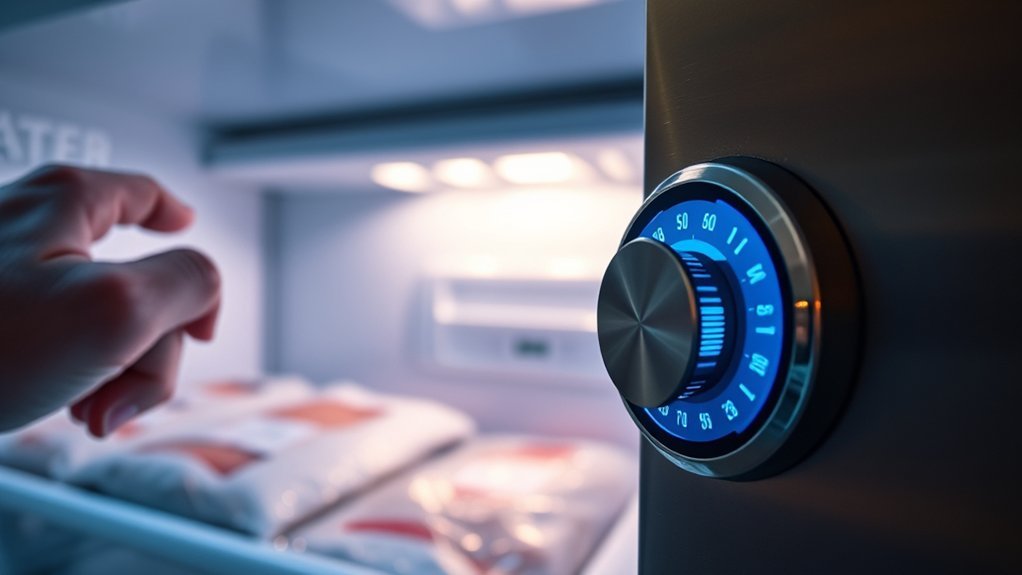
How exactly do you set your freezer to maintain the ideal temperature for food preservation? Start by locating the thermostat control, usually a dial or digital panel inside the unit. Adjust it to 0°F (-18°C), the recommended setting for optimal food safety and longevity.
Avoid two word discussion ideas like “cold level” or “temp range” that don’t specify exact settings. Don’t get sidetracked by irrelevant topics such as freezer brand comparisons or energy consumption here; focus strictly on temperature control.
After setting, wait 24 hours before checking the internal thermometer to ensure the temperature stabilizes. Precise adjustment prevents spoilage and freezer burn while conserving energy. By following these steps, you’ll maintain the perfect environment to keep your food fresh and safe.
How Often to Check and Adjust Your Freezer Temperature
Once you’ve set your freezer to the recommended 0°F (-18°C), regular monitoring ensures it stays within this ideal range. Consistent temperature verification helps prevent food spoilage and supports energy optimization by avoiding overcooling.
Maintaining your freezer at 0°F (-18°C) prevents spoilage and saves energy through consistent temperature checks.
To maintain accuracy:
- Check the temperature at least once a week using a reliable freezer thermometer to confirm stability.
- Adjust the thermostat promptly if readings deviate by more than 5°F (about 3°C) from the target temperature.
- Perform a more thorough inspection monthly, including door seals and airflow, to support consistent cooling performance.
Tips for Keeping Your Freezer Temperature Consistent
You should maintain your freezer temperature between 0°F (-18°C) and 5°F (-15°C) to keep food properly frozen. Avoid frequent door openings and ensure the door seals tightly to prevent temperature fluctuations.
Regularly defrost and clean your freezer to support consistent cooling performance.
Ideal Freezer Temperature Range
Where should you set your freezer to maintain crucial food preservation? The ideal temperature range is typically between -18°C (0°F) and -15°C (5°F). This range ensures that food maintains quality and safety, especially for sensitive items like dairy storage.
Keeping a consistent temperature is essential when scaling recipes that require freezing ingredients in bulk, as it prevents spoilage and texture changes.
Follow these guidelines for optimal settings:
- Set your freezer to -18°C (0°F) to halt bacterial growth and enzyme activity.
- Avoid temperatures colder than -23°C (-10°F) to prevent freezer burn.
- Regularly monitor the temperature with a reliable freezer thermometer.
Maintaining this range preserves nutritional value and extends shelf life effectively.
Preventing Temperature Fluctuations
Although maintaining the ideal freezer temperature is crucial, preventing fluctuations is equally important to guarantee consistent food preservation. Temperature swings can increase freezer humidity, accelerating ice crystal formation on your food, which degrades texture and nutritional quality.
To minimize fluctuations, avoid frequently opening the freezer door and ensure it seals tightly. Keep the freezer well-organized to allow cold air to circulate evenly, preventing localized warm spots.
Regularly defrost manual-defrost models to reduce frost buildup, which impairs temperature stability. Position the freezer away from heat sources, and check the thermostat calibration periodically to confirm accuracy.
Signs Your Freezer’s Temperature Is Too High or Too Low
How can you tell if your freezer’s temperature is off balance? Proper freezer calibration is essential to maintain energy efficiency and food safety.
Here are three signs indicating your freezer may be running too high or too low:
- Ice Buildup or Frost Accumulation: Excessive frost suggests the temperature is too low or the door seal is compromised, causing inefficiency.
- Soft or Partially Thawed Food: If items aren’t fully frozen, the temperature is likely too high, risking spoilage.
- Continuous Running Compressor: A freezer working nonstop may indicate improper calibration, leading to increased energy consumption.
Monitoring these signs helps you adjust settings promptly, ensuring optimal freezer performance and reducing energy waste. Regularly check the internal temperature with a reliable thermometer to maintain precise control.
How Freezer Temperature Affects Freezer Burn and Food Spoilage
You need to keep your freezer at the optimal temperature, usually around 0°F (-18°C), to minimize freezer burn and slow food spoilage. When the temperature rises above this level, ice crystals can form and damage food texture, leading to freezer burn.
Maintaining a consistent, sufficiently low temperature helps preserve food quality and extends shelf life.
Optimal Freezer Temperature
Why does setting the correct freezer temperature matter? Maintaining the optimal temperature, typically around 0°F (-18°C), ensures your freezer ecology remains stable, preventing fluctuations that accelerate food spoilage. Proper temperature control directly impacts humidity control, which is crucial for preserving food quality.
Here’s why you should keep your freezer at the ideal temperature:
- Minimizes microbial growth Low temperatures inhibit bacteria and mold, reducing spoilage risk.
- Preserves texture and flavor Consistent cold prevents ice crystal enlargement, maintaining food integrity.
- Controls humidity levels Proper temperature helps manage moisture, reducing frost buildup and potential freezer burn.
Preventing Freezer Burn
Where does freezer burn originate, and how does temperature play a role? Freezer burn occurs when moisture sublimates from food due to improper freezing conditions, leading to dehydrated spots and flavor loss. Maintaining the correct freezer temperature prevents such damage, unlike archaic practices of inconsistent freezing.
Keep your freezer at or below 0°F (-18°C) to minimize moisture migration and spoilage.
| Temperature Range | Effect on Food |
|---|---|
| Above 0°F | High risk of freezer burn and spoilage |
| 0°F to -10°F | Moderate moisture loss, some flavor loss |
| Below -10°F | Optimal preservation, minimal freezer burn |
| Fluctuating Temps | Accelerated spoilage and texture degradation |
How Managing Freezer Temperature Saves Energy and Money
How does adjusting your freezer’s temperature impact energy consumption and cost? Setting your freezer to the optimal temperature, typically 0°F (-18°C), ensures efficient operation without overcooling. Overcooling wastes energy and increases electricity bills.
Proper management also protects sensitive items like ice cream, preventing unnecessary thawing and refreezing that degrade quality. Additionally, maintaining this temperature supports emergency preparedness by preserving frozen essentials reliably.
- Energy Efficiency: Avoid temperatures colder than 0°F to reduce compressor workload and energy use.
- Cost Savings: Lower energy consumption directly translates to reduced utility expenses.
- Food Preservation: Correct temperature preserves food texture and nutritional value, minimizing waste and replacement costs.
Frequently Asked Questions
Can Freezer Temperature Affect the Taste of Ice Cream?
Yes, freezer temperature directly affects ice cream texture and flavor stability. If it’s too warm, ice crystals enlarge, ruining texture and dulling flavor.
Keeping consistent, optimum cold preserves smoothness and maintains flavor integrity over time.
Does Freezer Temperature Impact the Lifespan of the Appliance?
You’ll extend your freezer’s lifespan by up to 30% with proper freezer placement, avoiding heat sources. This ensures energy efficiency, reduces wear on components, and prevents overworking the compressor.
Keeping your appliance running efficiently longer.
How Do Power Outages Affect Freezer Temperature and Food Safety?
Power outages cause outdoor freezer and commercial freezers to warm, risking food spoilage. You should minimize door openings, use thermometers to monitor temperature, and consume perishable items quickly to maintain food safety during outages.
Can Freezer Temperature Settings Vary by Brand or Model?
Freezer temperature settings dance differently across brand variance and model differences, so you’ll find slight variations. Always consult your user manual to set the best temperature, ensuring your appliance runs efficiently and preserves food safely.
Is It Safe to Store Non-Food Items in a Freezer?
Yes, you can use non food storage in a freezer, but you should be cautious. Freezer risks include damage from moisture, temperature fluctuations, or contamination.
Ensure items are sealed and safe for freezing environments.
Conclusion
Maintaining your freezer at 0°F (-18°C) guarantees optimal food safety, quality, and energy efficiency. Remember, “a stitch in time saves nine”—regularly monitor and adjust the temperature to prevent spoilage and freezer burn. Use an appliance thermometer, check door seals, and defrost as needed to keep cooling consistent.
By managing your freezer temperature precisely, you protect your food, extend appliance life, and reduce energy costs. Consistency is key for lasting results. Always ensure you know what temp should freezer be to maintain these benefits effectively.