Why Is My Freezer Not Freezing
If your freezer is not freezing properly, it’s often due to airflow restrictions, faulty components, or incorrect settings. You might be dealing with a broken door seal, dirty condenser coils, or a malfunctioning thermostat—all of which disrupt cooling efficiency. Overloading the freezer or setting the temperature too high can also cause problems.
Understanding these issues is key to identifying the root cause and restoring optimal performance. Checking these common problems can help get your freezer back to the right temperature quickly.
Key Takeaways
- Freezer temperature set above 0°F (-18°C) or thermostat malfunction can prevent proper freezing.
- Overloading restricts airflow, causing uneven cooling and higher internal temperatures.
- Faulty door seals allow warm air in, forcing the compressor to work harder and reducing freezing efficiency.
- Frost buildup or broken evaporator fan obstructs cold air circulation and cooling performance.
- Dirty condenser coils or compressor failure reduce cooling capacity and cause rising freezer temperatures.
How To Tell If Your Freezer Isn’t Freezing Properly

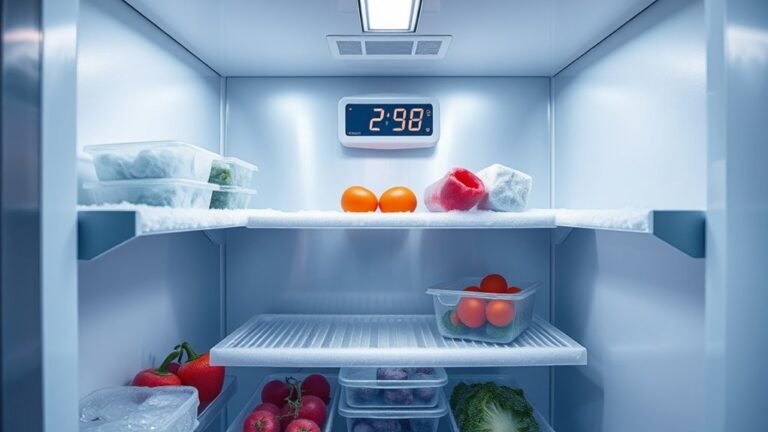
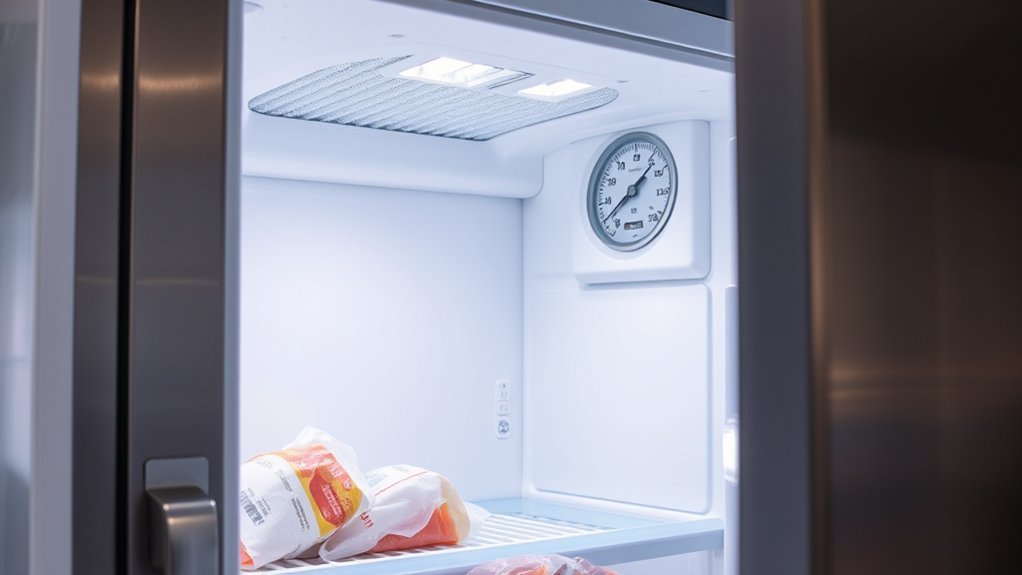
How can you quickly determine if your freezer isn’t freezing properly? First, check the temperature setting; it should be at or below 0°F (-18°C). Then, inspect for soft or partially thawed food, which signals inadequate cooling.
Check if your freezer is set to 0°F (-18°C) and watch for soft or partially thawed food.
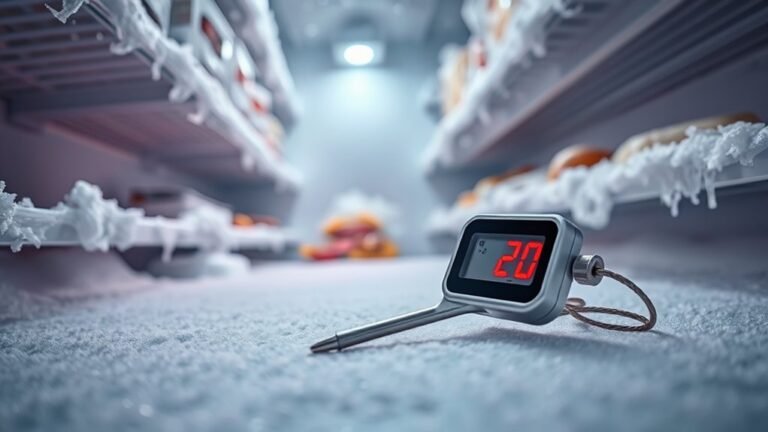
Avoid topic drift by focusing strictly on these direct indicators rather than unrelated context like overall appliance age or brand reputation. Use a thermometer inside the freezer to verify the actual temperature instead of relying on the built-in display.
Also, listen for the compressor running continuously, which may indicate a problem. If you detect frost buildup or ice crystals forming inside, that’s another sign.
Staying on point helps you diagnose the issue efficiently without getting sidetracked by irrelevant details. This approach ensures you identify freezing failures precisely and promptly.
How A Faulty Door Seal Stops Your Freezer From Freezing
If your freezer isn’t maintaining the correct temperature despite proper settings and no signs of frost buildup, the door seal might be the problem. A faulty door seal allows warm air to infiltrate the freezer, causing temperature fluctuations that prevent effective freezing.
This air exchange forces the compressor to work harder, reducing efficiency and increasing energy consumption. Check the seal for cracks, tears, or warping by running a simple paper test. Close the door on a piece of paper and try pulling it out. If it slides out easily, your seal isn’t tight enough.
Fixing or replacing the door seal restores airtight conditions, ensuring consistent cold temperatures. These two word discussion ideas, air leakage and seal integrity, are crucial for diagnosing why your freezer stops freezing effectively.
How A Malfunctioning Thermostat Stops Your Freezer From Freezing
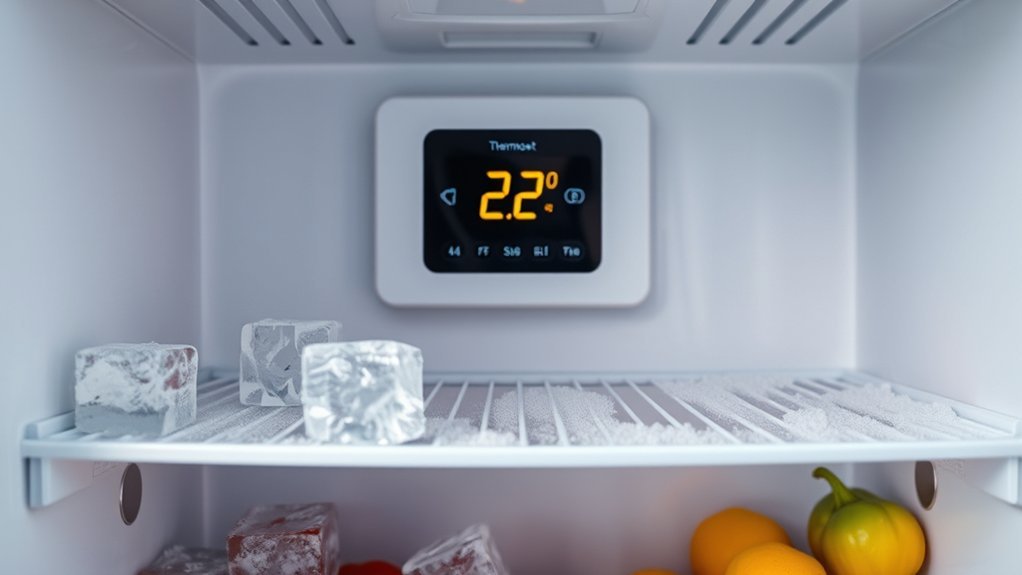
Why isn’t your freezer maintaining the set temperature despite proper usage? A malfunctioning thermostat often causes this issue by failing to regulate the cooling cycle accurately.
If the thermostat’s thermistor fails, it sends incorrect temperature readings to the control board, preventing the compressor from running long enough to freeze contents. Additionally, a coolant leak can exacerbate this problem by lowering cooling efficiency, making the thermostat work harder and potentially misread temperatures.
A faulty thermistor or coolant leak can disrupt temperature readings and reduce your freezer’s cooling efficiency.
To fix this, test the thermistor with a multimeter for consistent resistance values at various temperatures. If faulty, replace it promptly. Also, inspect for any signs of coolant leaks, such as oily residue or frost buildup.
Addressing these issues restores proper temperature control and ensures your freezer freezes reliably.
How A Dirty Condenser Coil Impairs Freezer Performance
If your freezer isn’t freezing properly, check the condenser coil for dirt buildup. A dirty coil causes the compressor to overheat, reducing cooling efficiency and driving up energy use.
Cleaning the coil regularly can restore peak performance and prevent further issues.
Coil Dirt Causes Overheating
How often do you clean the condenser coils on your freezer? Neglecting coil maintenance allows dirt and dust to accumulate, forcing the compressor to work harder and causing it to overheat.
When coils are dirty, heat dissipation slows, raising the compressor’s operating temperature. This overheating not only risks compressor failure but also disrupts the freezer’s ability to maintain low temperatures.
Over time, this can contribute to frost buildup inside the freezer, as the system struggles to regulate cold air properly. To prevent overheating, schedule regular coil cleaning every six months using a coil brush or vacuum.
Keeping coils clean ensures efficient heat exchange, protects your freezer’s components, and helps maintain optimal cooling performance without unnecessary strain on the compressor.
Reduced Cooling Efficiency
Where does your freezer lose its cooling power when the condenser coils are clogged with dirt? The coils play a critical role in releasing heat from inside the freezer. When dirt accumulates, it restricts heat dissipation, reducing cooling efficiency.
This forces the technician to work harder but less effectively, leading to insufficient cold air circulation. As a result, frost buildup can occur inside the freezer, disrupting temperature regulation.
This frost buildup blocks vents and airflow, accelerating cooling failure. If left unaddressed, this drop in performance can cause irreversible spoilage of your stored food.
To restore efficiency, clean the condenser coils regularly with a brush or vacuum. Proper maintenance prevents dirt buildup, ensures optimal heat exchange, and maintains consistent freezing temperatures, protecting your food from spoilage.
Increased Energy Consumption
Beyond reduced cooling efficiency, a dirty condenser coil forces your freezer’s compressor to run longer and work harder to maintain set temperatures. This increased workload leads to higher energy consumption, inflating your electricity bills unnecessarily.
Many freezer myths suggest that age or ambient temperature alone cause inefficiency, but neglecting coil maintenance is often the real culprit. To optimize performance and reduce energy use, clean the condenser coils regularly using a vacuum or brush.
This simple step improves heat dissipation, allowing your freezer to operate efficiently without overexertion. Incorporate this into your routine energy tips to extend your freezer’s lifespan and lower operational costs.
Addressing coil cleanliness directly counters common misconceptions and ensures your freezer freezes effectively without wasting energy.
How A Broken Evaporator Fan Causes Freezing Issues
Why isn’t cold air circulating properly inside your freezer? A broken evaporator fan could be the culprit. This fan is essential for pushing cold air generated by the evaporator coils throughout the freezer compartment.
When the fan stops working due to evaporator failure or motor issues, cold air distribution halts, causing uneven temperatures. Without proper airflow, frost buildup occurs around the evaporator coils, further restricting the fan’s operation and worsening freezing problems.
To fix this, first check if the fan is running when the door is closed. If it’s silent or noisy, replacing the evaporator fan motor is necessary. Addressing this promptly prevents extensive frost buildup and restores efficient cold air circulation, ensuring your freezer maintains consistent freezing performance.
How A Failed Defrost System Blocks Freezing
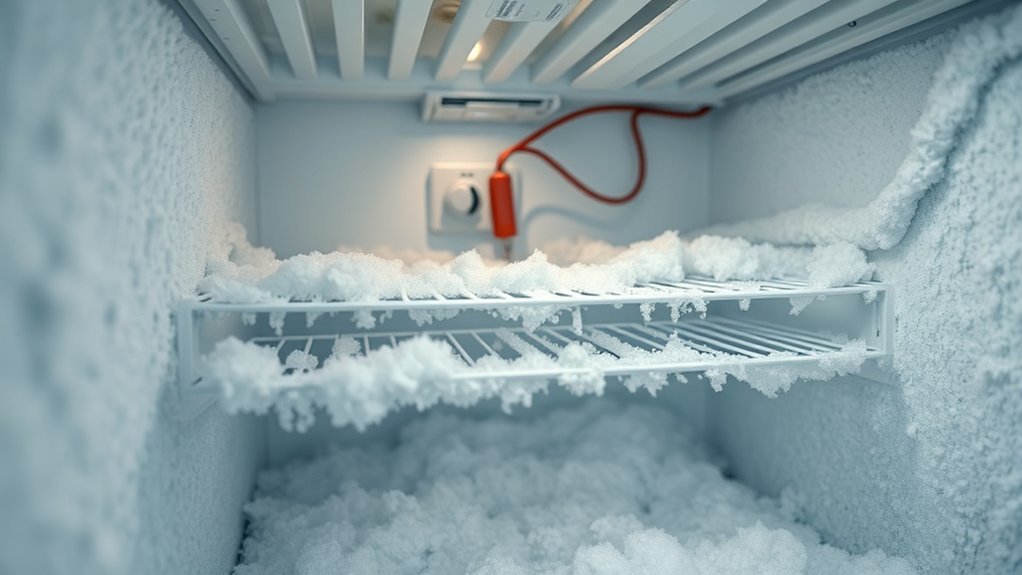
If the evaporator fan is working but your freezer still isn’t freezing properly, the defrost system might be to blame. During normal operation, the defrost cycle prevents frost buildup on the evaporator coils.
When the evaporator fan runs but freezing fails, check the defrost system for frost buildup issues.
If the defrost heater, thermostat, or control board fails, frost accumulates, insulating the coils and blocking cold air circulation. This frost layer disrupts heat exchange, causing your freezer temperature to rise.
For effective freezer troubleshooting, inspect the defrost components for continuity and proper function. Test the defrost heater with a multimeter and verify the defrost thermostat’s resistance at low temperatures.
If either part is faulty, replacing it usually restores proper freezing. Ignoring defrost system failures leads to excessive ice buildup, which severely hampers the freezer’s cooling efficiency and performance.
How A Faulty Compressor Causes Your Freezer Not To Freeze
How can a faulty compressor prevent your freezer from freezing properly? The compressor acts as the heart of your freezer’s cooling system, compressing refrigerant and circulating it through coils to remove heat.
If it fails, refrigerant flow halts, stopping the cooling cycle. This breakdown leads to rising internal temperatures and prevents proper freezing. When diagnosing, prioritize fact checks to confirm compressor malfunction rather than assuming other causes.
A reliable compressor ensures consistent temperature control, a critical branding angle for manufacturers promoting freezer efficiency. If you detect unusual noises, overheating, or no cooling, the compressor likely needs repair or replacement.
Addressing compressor issues promptly restores freezing capability and extends your freezer’s lifespan, reinforcing product trustworthiness and performance in your home.
How Overloading Your Freezer Prevents Proper Freezing
If you overload your freezer, you restrict airflow circulation, which prevents cold air from reaching all areas evenly. This leads to an increased internal temperature that forces the compressor to work harder than necessary.
To maintain proper freezing, keep your freezer organized and avoid packing it beyond its capacity.
Restricted Airflow Circulation
Why does your freezer struggle to maintain proper freezing when it’s packed full? Restricted airflow circulation is often the culprit. When you overload your freezer, air can’t flow freely around the stored items, disrupting efficient cold air distribution.
This uneven cooling prevents the freezer from reaching the necessary low temperatures to freeze items properly. To fix this, prioritize airflow management by arranging items with space between them, allowing air to circulate. Avoid blocking vents and ensure drainage optimization by clearing any clogged drain holes, which can cause moisture buildup and reduce cooling efficiency.
Increased Internal Temperature
Beyond restricted airflow, overloading your freezer raises its internal temperature, undermining its ability to freeze items effectively. When you pack too many items inside, cold air can’t circulate properly, causing uneven cooling and temperature spikes.
This increase in internal temperature forces the freezer to work harder, reducing its overall cooling efficiency. To maintain optimal freezing conditions, ensure you leave adequate space between items, allowing air to flow freely.
Regularly removing excess contents prevents heat pockets that compromise the freezer’s performance. Monitoring the internal temperature with a freezer thermometer helps you identify when overloading is an issue.
Compressor Overworking Issues
How does overloading your freezer lead to compressor overworking issues? When you cram too many items inside, airflow gets restricted, forcing the compressor to run longer to maintain the set temperature. This prolonged activity causes excessive wear, reduces efficiency, and may eventually result in compressor failure.
Avoid analysis mistakes by not assuming the compressor is always at fault; sometimes, simple overloading is the root cause. To prevent these issues, organize contents to allow proper ventilation and avoid irrelevant topics like door seal damage in this context.
Regularly defrost and clean coils to ease compressor load. By addressing overloading, you reduce compressor stress, ensuring optimal freezing performance and extending appliance lifespan.
Why Setting Your Freezer Temperature Too High Causes Problems
What happens when you set your freezer temperature too high? You disrupt optimal fridge thermodynamics, causing the cooling cycle to shorten. The freezer struggles to reach the desired low temperatures, forcing the compressor to cycle more frequently, which reduces energy efficiency.
This leads to inconsistent freezing, potential food spoilage, and increased wear on components. When the temperature setting is too high, the freezer can’t maintain a stable, cold environment, impairing its ability to preserve food properly.
To fix this, set your freezer temperature between 0°F and 5°F (-18°C to -15°C), which balances energy use and cooling performance. Regularly check the thermostat setting and avoid frequent adjustments, ensuring your freezer operates efficiently without unnecessary strain on its system.
When To Call A Professional For Freezer Repair
When should you call a professional for freezer repair? If your freezer isn’t freezing despite basic troubleshooting, it’s time to seek expert help. Attempting DIY fixes can risk irreversible damage, especially if you aren’t familiar with refrigeration systems.
Professionals can accurately diagnose issues such as compressor failure, refrigerant leaks, or thermostat malfunctions. Avoid using incompatible parts or brands during repairs, as brand incompatibility may cause system inefficiency or further breakdowns.
Certified technicians have the tools and knowledge to handle delicate components and ensure proper calibration. If your freezer shows signs of frost buildup, unusual noises, or persistent temperature fluctuations, don’t delay.
Prompt professional intervention prevents costly damage and restores optimal performance efficiently and safely.
Frequently Asked Questions
Can a Power Outage Affect My Freezer’s Freezing Ability?
Yes, a power outage can affect your freezer’s freezing ability by interrupting its cooling cycle. You should check for temperature fluctuations and allow time for it to stabilize once power returns to restore normal freezing performance.
Does the Location of My Freezer Impact Its Performance?
Yes, your freezer’s location placement impacts performance. Avoid direct sunlight, heat sources, or poor ventilation.
Proper temperature zoning ensures efficient cooling, so place it in a cool, well-ventilated area to maintain ensure freezing.
How Often Should I Defrost a Manual Defrost Freezer?
You should defrost your manual freezer every 3 to 6 months to maintain efficiency. Ignoring defrost frequency increases manual defrost risks like frost buildup, reduced cooling, and higher energy use, so stay consistent for optimal performance.
Can Using the Wrong Type of Freezer Bags Cause Freezing Issues?
Yes, using the wrong bagging can cause freezing issues by restricting airflow and causing improper sealing.
You should use freezer-specific bags that seal tightly to maintain ideal temperature and prevent frost buildup and freezer inefficiency.
Is It Normal for My Freezer to Make Loud Noises Sometimes?
Yes, occasional loud noise levels, including a compressor hum, are normal in freezers. If sounds become continuous or excessively loud, check for debris or fan issues. Consider servicing to prevent mechanical failure.
Conclusion
If your freezer’s not freezing, don’t let hidden issues freeze your frustration. Think of it as a delicate dance—blocked vents, faulty seals, or broken fans throw off the rhythm. At the same time, dirty coils and thermostats misread the beat.
Clear the stage by checking these parts and avoiding overload. Sometimes, a simple fix can bring back the chill. But when the cool won’t come back, it’s time to call a pro.
With the right moves, your freezer will chill like a well-tuned machine again. If you’re still wondering why is my freezer not freezing, these steps can help you find the answer.