What Should Your Freezer Temperature Be
Did you know that setting your freezer temperature to the right level can dramatically extend the life and safety of your food? Keeping your freezer at 0°F (-18°C) isn’t just a recommendation—it’s essential for halting bacterial growth and preserving quality.
But how do you know if your freezer is actually doing its job? Understanding the ideal temperature and how to maintain it can save you from costly spoilage and health risks.
Key Takeaways
- Set your freezer temperature to 0°F (-18°C) to halt bacterial growth and preserve food quality safely.
- Use a reliable freezer thermometer to regularly monitor and maintain the correct temperature.
- Keep the temperature steady to minimize ice crystal damage and prevent freezer burn.
- Check the door seal for gaps and avoid overfilling to ensure consistent airflow and temperature stability.
- Adjust the thermostat incrementally if temperature deviates by more than 5°F, verifying changes after 24 hours.
What’s the Best Freezer Temperature to Keep Food Safe?
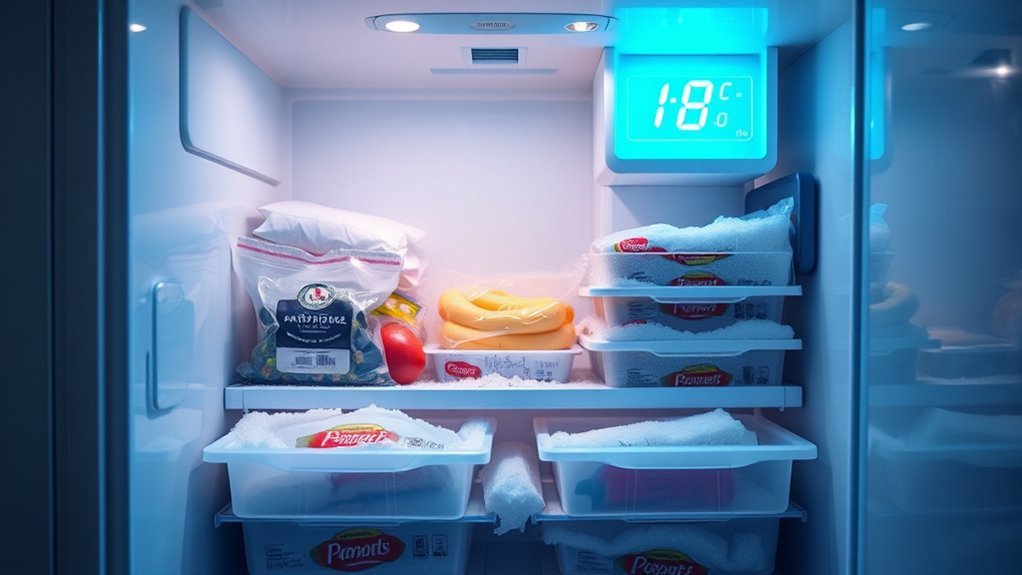
How cold should your freezer be to keep food safe? The best practices and storage guidelines recommend setting your freezer at 0°F (-18°C). This temperature halts bacterial growth and preserves food safely for extended periods.
Keeping your freezer at or below this point ensures that harmful pathogens can’t multiply, reducing foodborne illness risks. It also maintains the nutritional quality and texture of your stored items.
Don’t guess. Use a reliable freezer thermometer to monitor the temperature regularly. Avoid frequent door openings, which cause temperature fluctuations that compromise safety.
How Does Freezer Temperature Affect Food Quality?
Although maintaining the correct freezer temperature is essential for safety, it also plays a critical role in preserving your food’s quality. When your freezer is set too high, ice crystals grow larger, damaging cell structures and causing freezer burn, which degrades flavor and texture.
Keeping the temperature steady at or below 0°F (-18°C) minimizes this risk, ensuring your food stays fresh longer. Proper freezer organization helps maintain consistent airflow, preventing temperature fluctuations that can compromise quality.
Additionally, an organized freezer reduces the time you spend searching for items, limiting door openings and temperature spikes. Effective freezer organization also contributes to noise reduction by allowing better airflow and reducing overworking of the compressor.
How to Tell If Your Freezer Temperature Is Too High or Low
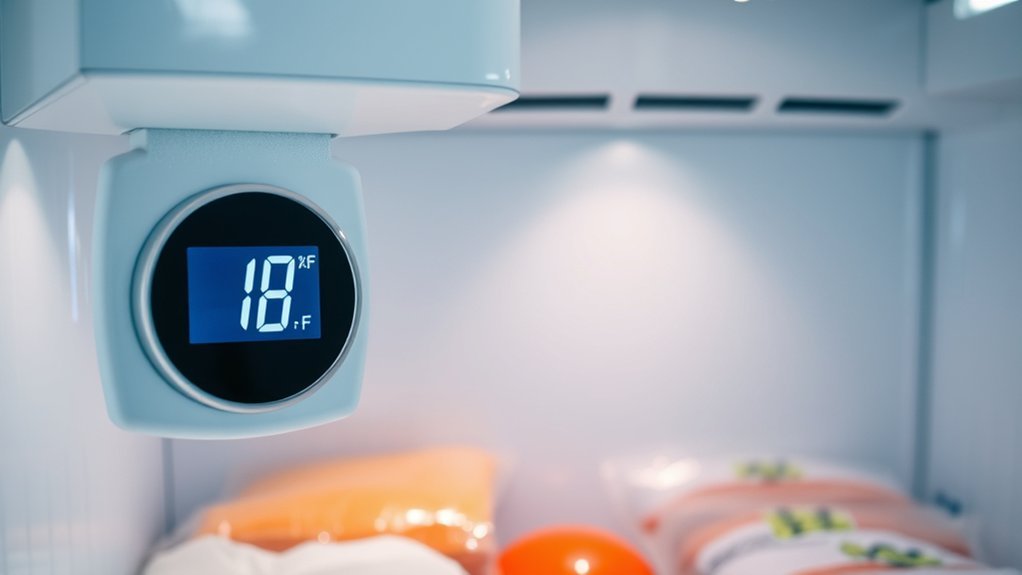
Maintaining the right freezer temperature is only effective if you can accurately determine whether it’s set too high or too low. Start by observing temperature stability; fluctuations often signal an incorrect setting or mechanical issue.
If your freezer feels warmer than usual or you notice ice crystals melting inside, the temperature is likely too high. Conversely, if items are frostbitten or excessively frozen, it’s probably too low.
Pay attention to noise indicators as well. Unusual or constant running sounds may indicate the compressor is overworking to maintain a set temperature. Regularly monitoring these signs helps you identify problems early, ensuring your freezer operates efficiently and preserves food quality.
How to Set and Check Your Freezer Temperature Correctly
Before adjusting your freezer temperature, you need to locate the thermostat control, which is usually inside the unit or on the front panel. To ensure temperature consistency, follow these steps:
- Set the thermostat to the recommended 0°F (-18°C) for optimal freezing.
- Use an appliance thermometer to verify the actual temperature after 24 hours.
- Check the door seal for any gaps or damage that could cause temperature fluctuations.
- Adjust the thermostat incrementally if the thermometer reading deviates by more than 5°F, allowing 24 hours between changes.
Maintaining a proper seal and regularly monitoring with a reliable thermometer helps you keep your freezer at a consistent temperature, preserving food quality and safety effectively.
Energy-Saving Tips to Maintain Your Freezer Temperature
How can you keep your freezer running efficiently without driving up your energy bills? Focus on proper appliance maintenance and minimizing unnecessary energy usage.
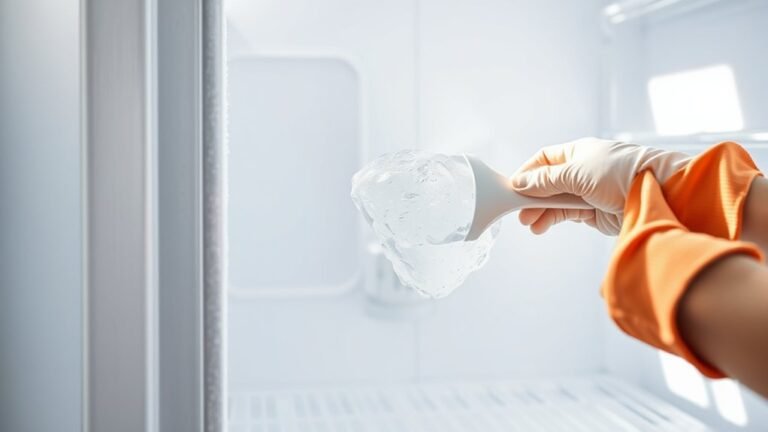
Regularly defrost your freezer to prevent ice buildup, which strains the compressor. Ensure door seals are tight to maintain consistent temperature. Avoid overfilling, as good air circulation optimizes cooling.
| Tip | Action | Benefit |
|---|---|---|
| Defrost Regularly | Remove ice buildup monthly | Reduces energy usage |
| Check Door Seals | Inspect and replace if weak | Maintains temperature |
| Avoid Overfilling | Leave space for airflow | Enhances appliance efficiency |
Frequently Asked Questions
Can Freezing Kill Bacteria in Food?
Freezing doesn’t kill bacteria; it only halts bacteria survival by slowing their growth. You can’t rely solely on freezing efficacy to ensure food safety, so proper cooking and handling remain essential to eliminate harmful bacteria effectively.
How Long Can Food Be Safely Stored in a Freezer?
You can safely store most foods for 3 to 12 months, depending on type. Maintain proper storage duration by practicing good freezer organization. Label items clearly and keep older food upfront to prevent spoilage and waste.
Does Freezer Frost Buildup Affect Temperature Accuracy?
Sure, frost buildup is your freezer’s way of saying, “I like surprises!” But seriously, excessive frost messes with frost measurement and throws off temperature calibration.
You should defrost regularly to keep your freezer accurate and efficient.
What Types of Freezers Maintain Temperature Best?
You’ll find that chest freezers and upright freezers with advanced freezer technology maintain temperature stability best. Their design minimizes air exchange, helping you keep consistent cold conditions, preserving your food effectively and preventing temperature fluctuations.
Can Freezer Temperature Impact Food Allergen Safety?
Think of your freezer as a fortress; without temperature accuracy, allergen safety weakens. You need consistent cold to halt allergen growth or cross-contamination, protecting those sensitive.
Conclusion
Keeping your freezer at 0°F (-18°C) is nothing short of a food-saving superpower. It locks in freshness, halts bacteria, and preserves quality like a pro. Don’t guess—use a reliable thermometer, organize your items, and check seals regularly.
Adjust temperatures slowly and avoid overfilling to keep your freezer running smoothly and efficiently. Master these steps, and you’ll guarantee your food stays safe and delicious, no matter what life throws your way.
To ensure optimal food preservation, always maintain the correct freezer temperature.