How to Filter Water at Home
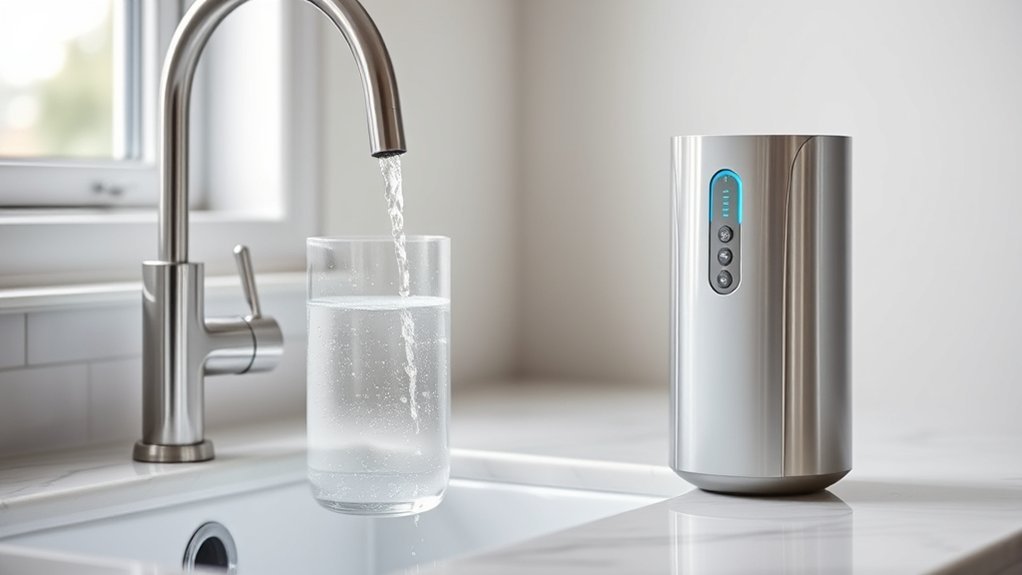
Think of your home’s water filter as a gatekeeper, controlling what flows into your daily life. When considering how to filter water at home, you need a clear understanding of your water’s unique composition and contaminants.
Choosing the wrong filter can be ineffective or costly, while the right one can guarantee safety and improve taste. To make an informed choice, it’s essential to analyze your water quality and filtration options carefully.
Key Takeaways
- Test tap water for contaminants like chlorine, lead, and bacteria before choosing a filtration method.
- Select filters based on water quality, such as activated carbon for chlorine or reverse osmosis for dissolved solids.
- Install filters appropriately, under-sink, countertop, or whole-house, for optimal performance and ease of maintenance.
- Replace filter cartridges every 3 to 6 months, monitoring flow rate and taste changes as replacement indicators.
- Regularly flush and sanitize the system to prevent clogging, biofilm buildup, and maintain water quality.
Why Filter Your Tap Water at Home?
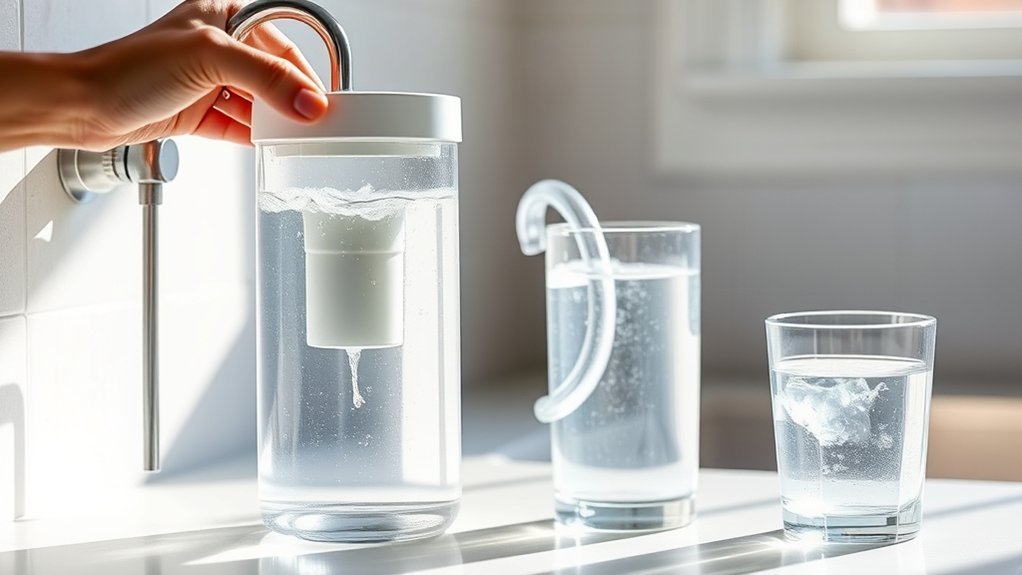
Why should you filter your tap water at home? Despite municipal treatment, tap water can contain trace contaminants like chlorine, heavy metals, and microbial residues that refrigerator filtration systems may not fully remove. Relying solely on refrigerator filtration limits your ability to address these impurities comprehensively.
Additionally, the bottled water myths suggest that bottled water is inherently safer or purer, but it often undergoes minimal treatment and lacks stringent regulatory oversight compared to home filtration. By installing effective filtration at home, you gain precise control over contaminant reduction, ensuring higher water quality.
Filtering tap water enhances safety, taste, and odor, providing a scientifically validated approach to hydration that surpasses the inconsistent standards of bottled water and basic refrigerator filtration methods.
How to Test Your Water Quality Before Filtering
Before installing a filter, you need to identify common water contaminants like chlorine, lead, and bacteria that may affect your supply.
You can assess water quality using methods such as test strips, digital meters, or sending samples to certified labs. Choosing the right testing approach ensures you target the specific impurities present in your water.
Common Water Contaminants
How can you accurately determine which contaminants affect your water supply? Understanding common water contaminants is essential before filtering. You’ll often encounter microbial pathogens, heavy metals like lead and arsenic, chemical pollutants from agricultural runoff, and sediment particles.
Even trace amounts can impact health and water taste. For example, residues from cleaning with soap around your kitchen sink design can introduce surfactants and phosphates into your water. Additionally, biofilm buildup in sink drains may contribute bacteria.
Recognizing these contaminants helps you choose the appropriate filtration method. Keep in mind, identifying contaminants requires precise analysis of water composition rather than assumptions based on smell or appearance. This analytical approach ensures effective filtration tailored to your water’s specific challenges, optimizing both safety and usability.
Testing Methods Overview
Where can you find reliable insights into your water’s quality? Accurate water testing is crucial before installing any filtration system. Various testing methods exist, each designed to detect specific contaminants like bacteria, heavy metals, or chemical pollutants.
You can use DIY test kits for quick, preliminary assessments; they measure parameters like pH, chlorine, and hardness. However, these kits have limited sensitivity.
For comprehensive analysis, consider laboratory testing, which utilizes advanced techniques such as spectrometry and chromatography. These methods offer precise quantification of contaminants, ensuring you understand your water’s composition.
Selecting the appropriate testing methods depends on your water source and suspected pollutants. By conducting thorough water testing, you’ll identify contaminants accurately, enabling you to choose a filtration system tailored to your water’s specific needs.
Common Home Water Filters You Should Know About
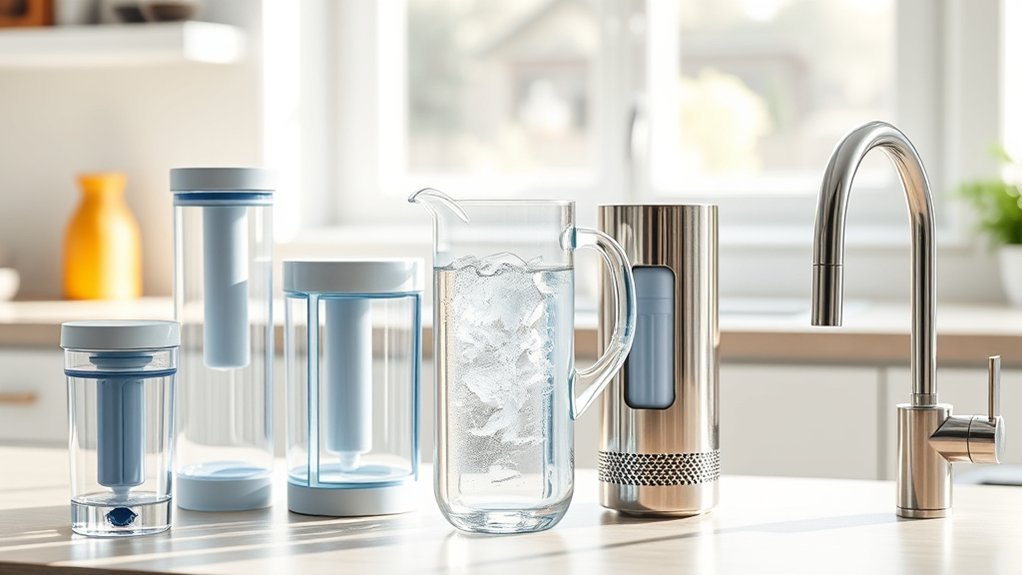
You’ll encounter several types of water filters, including activated carbon, reverse osmosis, and UV systems, each designed to target specific contaminants. Installation methods vary from countertop units to under-sink and whole-house setups, affecting both performance and maintenance.
Understanding these options helps you choose the most effective filter for your water quality and household needs.
Types Of Water Filters
Water filtration systems come in various designs, each tailored to address specific contaminants and household needs. You’ll encounter several types: activated carbon filters, reverse osmosis units, UV purifiers, and ceramic filters.
Each uses distinct filter terminology, like micron ratings for particle size or adsorption capacity for chemical removal. Activated carbon excels at chlorine and organic compounds, while reverse osmosis targets dissolved solids.
UV purifiers focus on microbial pathogens, and ceramic filters block sediment and bacteria. When selecting, consider warranty considerations to ensure long-term performance and manufacturer support.
Understanding these technical distinctions helps you match the filter type to your water quality issues effectively, optimizing your home filtration system’s efficiency and reliability without unnecessary complexity.
Filter Installation Methods
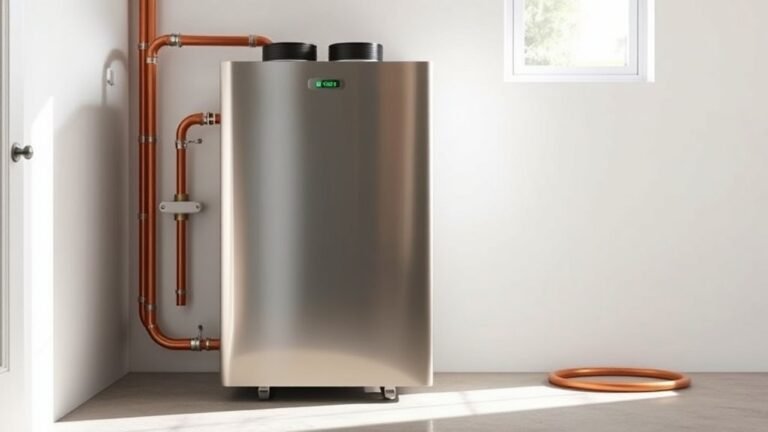
Although selecting the right filter is essential, proper installation guarantees optimal performance and longevity. You need to consider filter placement carefully; under-sink installations provide direct filtration at the tap, minimizing contamination risk, while whole-house systems require integration at the main water line to treat all incoming water.
Wall-mounted units often simplify maintenance but may limit flow rate. Precise alignment during installation prevents leaks and ensures consistent pressure. Following the manufacturer’s instructions is critical to avoid compromising filter efficiency or lifespan.
Additionally, establishing a strict maintenance schedule is vital. Regular cartridge replacements and system sanitization prevent bacterial growth and maintain filtration integrity. By focusing on correct filter placement and disciplined upkeep, you’ll maximize water quality and system durability in your home.
How to Choose the Right Water Filter for Your Needs
How do you determine which water filter best suits your specific needs? Start by analyzing your water source and contamination profile. Next, consider the mini filtration options available, as compact filters can be ideal for limited space or specific contaminants.
Conduct a thorough cost comparison, factoring in initial investment, replacement filters, and maintenance expenses to ensure long-term affordability.
Focus on these critical aspects:
- Filtration capacity and contaminant removal efficiency relevant to your water quality
- Filter lifespan and maintenance frequency for operational convenience
- Installation requirements and compatibility with your existing plumbing system
DIY Water Filtering Methods Without Special Equipment
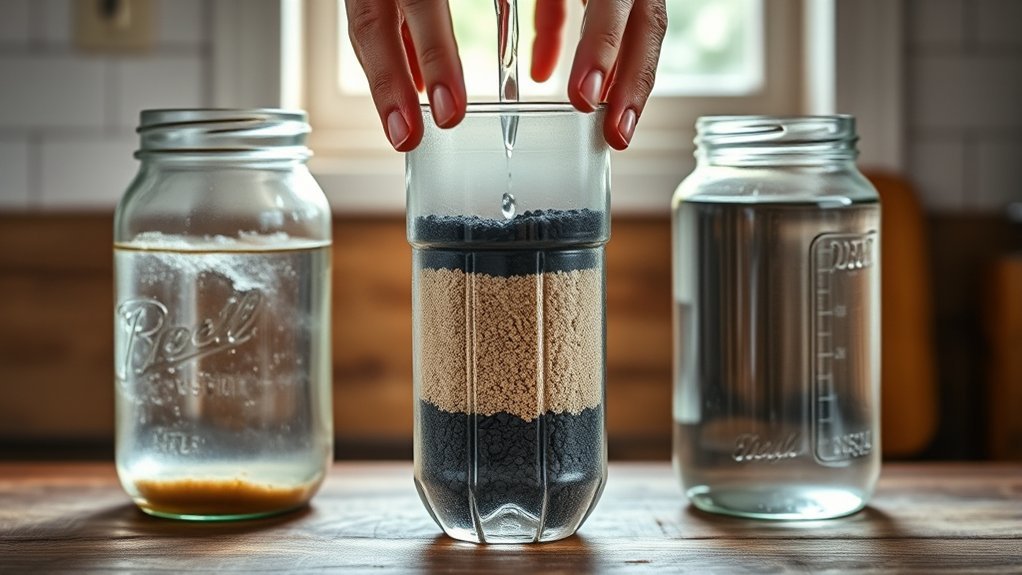
Where can you start if you lack specialized equipment for water filtration? Begin by constructing simple biodegradable filters using natural materials like sand, charcoal, and cloth layers. These effectively reduce sediment and some contaminants by mechanically trapping particles.
Charcoal, particularly, adsorbs impurities due to its porous structure. Additionally, you can employ solar distillation, a method that uses sunlight to evaporate water, leaving contaminants behind. Set up a clear plastic sheet over a container to collect condensed pure water drops.
This technique removes pathogens and dissolved solids without complex tools. Both methods rely on fundamental physical and chemical principles, offering accessible, low-cost filtration. While they don’t replace advanced systems, these DIY approaches can significantly improve water quality using available resources and minimal technical knowledge.
How to Install a Water Filter System
After improving water quality with basic, natural filtration methods, you might want to enhance purification by installing a dedicated water filter system. To ensure effective installation, first dispel common installation myths such as the need for extensive plumbing expertise. You can often complete the setup yourself with proper tools and instructions.
Begin by selecting the appropriate filtration unit for your water source and usage.
Key installation considerations include:
- Precise connection to the main water line to avoid leaks or pressure loss
- Proper orientation of filter cartridges according to manufacturer specifications
- Conducting taste testing post-installation to verify improvements and detect issues
How to Maintain and Replace Your Water Filter
When should you replace your water filter to maintain optimal performance? Typically, manufacturers recommend replacement every three to six months, but frequency depends on your water source and usage. Monitor flow rate reduction and taste changes as indicators.
Regular maintenance includes flushing the filter to prevent clogging and biofilm buildup, which impacts algae remediation efficiency. Neglecting replacement compromises filtration, risking contaminants, and degrades gourmet hydration quality.
To maintain peak function, inspect seals and housing for leaks or cracks during each replacement. Proper disposal of used filters is crucial to avoid environmental contamination.
Follow manufacturer guidelines to ensure compatibility and optimal filtration performance. By adhering to these protocols, you preserve your system’s integrity, ensuring consistent removal of impurities and supporting sustained gourmet hydration at home.
How to Improve Water Filter Taste and Odor
Maintaining your water filter’s performance extends beyond timely replacements and inspections. Addressing taste and odor issues guarantees the water you consume meets quality expectations. To improve taste and odor, start with systematic taste testing to identify persistent off-flavors or smells.
Then, enhance odor neutralization by incorporating activated carbon filters, which adsorb organic compounds responsible for unpleasant odors. Additionally, consider these technical approaches:
- Regularly flush the system post-filter replacement to remove residual contaminants affecting taste.
- Use pre-filters to reduce chlorine and sulfur compounds that compromise odor quality.
- Maintain proper filter housing cleanliness to prevent microbial growth causing off-odors.
Frequently Asked Questions
Can Filtered Water Help With Skin Conditions?
Yes, filtered water can improve your skin health by reducing contaminants that irritate skin.
However, filter efficacy varies, so you should choose a reliable system to effectively remove harmful substances impacting your skin conditions.
Is Filtered Water Safe for Watering Plants?
Of course, your plants demand only the purest filtered water, rejecting anything less. Luckily, filtered water enhances plant safety by removing harmful chemicals and contaminants, ensuring optimal nutrient absorption.
This promotes healthier growth with precise, contaminant-free hydration.
How Does Water Temperature Affect Filtration Efficiency?
You’ll find that higher water temperatures improve filtration efficiency by reducing viscosity and enhancing flow, but they can accelerate cleaning membranes’ wear and cause mineral leaching.
Balance temperature carefully to maintain system longevity and water quality.
Can Pets Drink Filtered Tap Water?
Yes, you can trust filtered tap water for your pets, ensuring filter health and pet safety. Regularly maintaining the filter preserves water purity, minimizes contaminants, and supports your pets’ hydration, digestion, and overall well-being effectively and reliably.
What Are the Environmental Impacts of Disposing of Used Filters?
You’ll face disposal impacts from used and unused filters, including landfill waste and chemical leaching. Proper recycling reduces environmental damage, so you shouldn’t discard filters casually.
Follow manufacturer guidelines to minimize ecological harm effectively.
Conclusion
Filtering your water at home is like tuning an instrument—precision guarantees purity. By testing your water and selecting the right filter type, you target specific contaminants effectively. Proper installation and timely maintenance keep your system performing optimally, preventing degradation.
Regular cartridge replacement and system checks preserve water quality and safety. With consistent care, your filtered water will stay clean and fresh, providing reliable protection for your health and home every day.
By following these steps, you ensure that filtering your water at home remains an effective and dependable solution for safe drinking water.