Are Heat Pump Hot Water Heaters Worth It
If you’re considering whether heat pump hot water heaters are worth it, they can be a smart choice to cut your water heating costs markedly. These systems use a refrigerant cycle to transfer heat, making them 2 to 3 times more efficient than standard electric heaters.
You could see energy savings of 50–60% annually, especially in warmer climates. But with higher upfront costs and some installation considerations, it’s important to evaluate if they fit your specific situation.
Key Takeaways
- Heat pump water heaters use ambient air heat, offering 2-3 times greater efficiency than electric resistance models.
- They can reduce energy use by 50-60%, saving significant electricity and lowering utility bills.
- Performance depends on climate, with best efficiency in moderate to warm regions and lower COP in cold climates.
- Higher upfront costs ($1,500-$3,000) are offset by energy savings and federal incentives over time.
- Regular maintenance, proper installation, and suitable space with airflow ensure reliability and sustained efficiency.
How Do Heat Pump Hot Water Heaters Work?
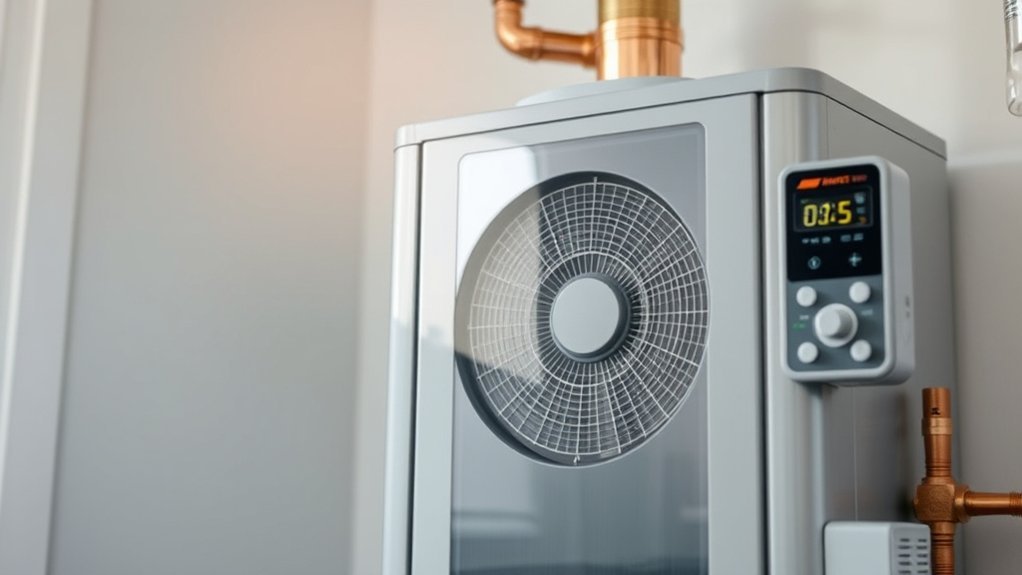
How exactly do heat pump hot water heaters operate to deliver efficiency? You should know they transfer heat from the surrounding air to heat your water, rather than generating heat directly like traditional electric heaters.
This process uses a refrigerant cycle, similar to an air conditioner in reverse, achieving efficiencies 2 to 3 times greater than conventional electric water heaters. Understanding this mechanism helps dispel common water heating myths, such as the idea that heat pumps are slow or unreliable.
Moreover, current energy policy increasingly supports heat pump adoption due to their reduced carbon footprint and operational costs. By leveraging ambient heat, these units align with energy efficiency standards and incentivize renewable energy integration, making them a smart, data-backed choice for sustainable water heating solutions.
How Much Energy Can You Really Save With Heat Pump Hot Water Heaters?
You can expect a heat pump hot water heater to use 50-60% less energy than a conventional electric model, translating to significant annual savings. However, actual performance depends on factors like climate, household size, and usage patterns.
Let’s examine how these variables impact your potential energy reduction.
Energy Efficiency Comparison
Exactly how much energy can heat pump hot water heaters save compared to traditional electric or gas models? Heat pump water heaters typically achieve a coefficient of performance (COP) between 2.5 and 3.5, meaning they use 50-70% less electricity than conventional electric resistance heaters.
Gas models, while efficient, still emit greenhouse gases and rely on fossil fuels. Your local energy policy may offer incentives that amplify these savings, especially when combined with solar integration.
Pairing a heat pump water heater with solar panels maximizes renewable energy use, reducing grid dependence and operational costs. By analyzing energy consumption data, you can quantify these efficiency gains and justify upfront investments.
This solution-oriented approach aligns with sustainability goals and evolving energy policies, making heat pump water heaters a technically sound choice for cutting energy use effectively.
Annual Energy Savings
Wondering what kind of annual energy savings heat pump hot water heaters can deliver? On average, these systems reduce electricity consumption by 50-60% compared to conventional electric water heaters.
This translates into significant savings on your utility bills without relying on fictional benefits often cited in unrelated topics.
| System Type | Annual Energy Usage (kWh) |
|---|---|
| Electric Resistance | 4,500 |
| Heat Pump (Average) | 1,800 |
| Heat Pump (High-Efficiency) | 1,600 |
Factors Affecting Performance
How much energy can heat pump hot water heaters truly save in your home? Performance depends on factors like climate, installation location, and usage patterns. Heat pumps are most efficient in moderate to warm climates, where ambient air temperatures support optimal heat transfer.
Placing the unit in a well-ventilated area enhances efficiency, while poor insulation or extreme cold reduces savings. Addressing durability myths, modern heat pumps use robust compressors and corrosion-resistant materials, ensuring long-term reliability.
Noise concerns are often overstated; most units operate between 40-60 decibels, comparable to a quiet conversation, making them suitable for indoor installation. By selecting the right model and installation spot, you can realistically achieve 50-60% energy savings over conventional electric water heaters, maximizing your investment and reducing your carbon footprint.
Comparing Heat Pump Hot Water Heaters With Traditional Water Heaters
You’ll find heat pump water heaters use up to 60% less energy than traditional electric models, but upfront installation can cost 20-40% more.
Maintenance expenses also vary, with heat pumps requiring occasional filter and refrigerant checks, while conventional units need less frequent servicing.
Additionally, performance shifts with climate. Heat pumps excel in moderate temperatures but lose efficiency in colder regions, affecting overall savings.
Energy Efficiency Comparison
Why do heat pump hot water heaters outperform traditional models in energy efficiency? Heat pump water heaters use electricity to transfer heat rather than generate it, achieving efficiency ratings of 200-300%, compared to 60-70% for conventional electric models.
When paired with solar panels, they leverage renewable energy, further reducing operational costs and carbon footprint. Additionally, heat pumps extract heat from ambient air, which can lower indoor humidity levels, a bonus in humid climates. This dual function enhances overall household energy performance.
In contrast, traditional water heaters rely solely on direct electrical resistance or gas combustion, consuming more energy and producing more emissions. By integrating heat pump technology, you optimize energy use, reduce utility bills, and contribute to sustainable home energy management without sacrificing hot water availability.
Installation and Maintenance Costs
Beyond energy efficiency, installation and maintenance costs play a significant role in determining the overall value of heat pump hot water heaters compared to traditional models. You should be aware of common installation pitfalls, like ensuring adequate space and ventilation, which can add to upfront costs if overlooked.
While heat pump units generally cost 20-50% more to install than conventional heaters, federal incentives often offset this. On maintenance, don’t fall for maintenance myths suggesting heat pumps require frequent costly repairs; in reality, routine checks involve simple filter cleaning and system inspections, similar to traditional models.
Proper installation minimizes service issues, ensuring long-term reliability. When you factor in lifecycle costs, heat pump water heaters often prove more economical despite higher initial expenses.
Performance in Different Climates
How does climate impact the efficiency of heat pump hot water heaters compared to traditional models? Heat pump water heaters rely on ambient air temperature, so their performance varies with climate.
In warmer regions, they achieve a coefficient of performance (COP) around 3.5, meaning they use 65% less energy than traditional electric heaters. However, in colder climates, COP can drop below 2.0, reducing efficiency and increasing reliance on backup electric elements.
Traditional water heaters maintain consistent output regardless of climate but consume more energy overall. For climate independence, you might consider hybrid models combining heat pumps and conventional heating to optimize performance year-round.
While retail pricing for heat pump units is higher upfront, energy savings in mild climates often justify the investment. In colder areas, weigh efficiency loss against potential energy costs before deciding.
Upfront and Installation Costs for Heat Pump Hot Water Heaters
What can you expect to pay upfront when choosing a heat pump hot water heater? Typically, upfront costs range from $1,200 to $3,000, substantially higher than traditional electric or gas models. Installation complexity influences this price. If your home requires electrical upgrades or space modifications, expect additional expenses.
Heat pump units need at least 1,000 cubic feet of well-ventilated space, which can complicate installation in tight areas. Labor costs vary between $500 and $1,500 depending on local rates and required adjustments. However, these upfront costs often reflect long-term energy savings and potential rebates.
Understanding installation complexity upfront helps you budget accurately and avoid surprises. Carefully assess your existing infrastructure and consult a qualified installer to optimize your investment and ensure efficient operation.
Who Benefits Most From Heat Pump Hot Water Heaters?
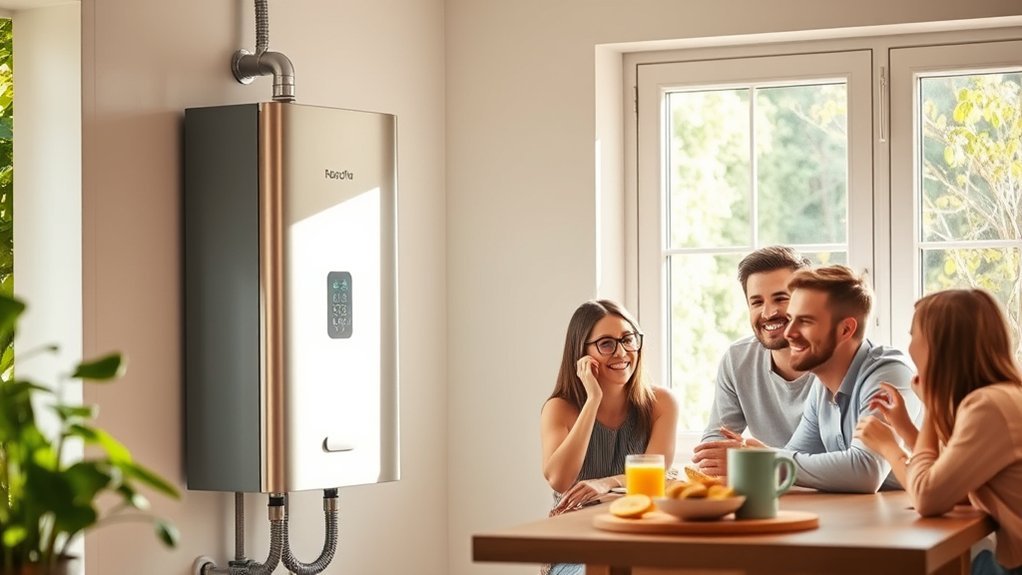
Who stands to gain the most from installing a heat pump hot water heater? If you’re among concerned homeowners aiming to reduce energy bills and environmental impact, this technology offers measurable benefits. Skeptic researchers highlight its efficiency, but data shows it excels in specific scenarios:
- Households in moderate climates, where ambient air temperature supports optimal heat pump performance.
- Homes with high hot water demand, ensuring consistent energy savings due to frequent water heating cycles.
- Owners planning long-term investments, because initial costs are offset by lower operating expenses over time.
Common Challenges and Maintenance Tips for Heat Pump Hot Water Heaters
Maintaining peak performance in heat pump hot water heaters requires addressing several common challenges that users frequently encounter. One key issue is managing energy storage efficiently; you should regularly inspect insulation integrity around the storage tank to minimize thermal losses and maintain energy efficiency above 3.5 COP (Coefficient of Performance).
Noise concerns also arise from the compressor and fan operation. Keeping these components clean and ensuring proper mounting can reduce sound levels by up to 15 decibels. Routine maintenance includes cleaning or replacing air filters every 6 months to prevent airflow restrictions that degrade performance.
Additionally, periodically checking refrigerant levels ensures the system maintains peak heat transfer rates. By proactively tackling these challenges, you’ll extend the lifespan of your unit and sustain its energy-saving benefits.
How Heat Pump Hot Water Heaters Can Reduce Your Carbon Footprint
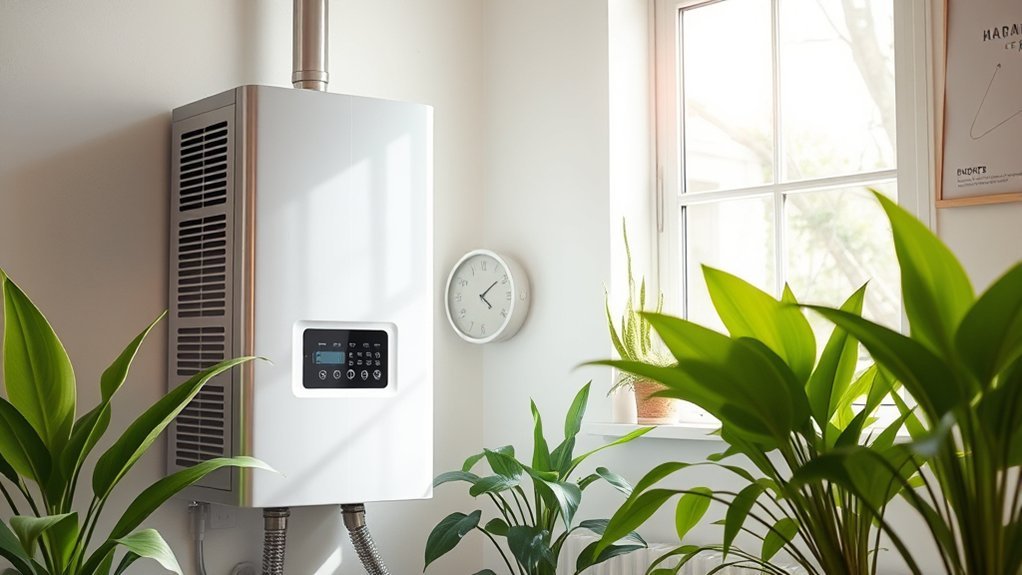
Addressing common maintenance challenges not only optimizes your heat pump hot water heater’s efficiency but also maximizes its environmental benefits. By avoiding innovation pitfalls, like ignoring regular filter cleaning or incorrect thermostat settings, you ensure your system operates at peak performance, reducing energy waste.
Practicing proper user etiquette, such as minimizing simultaneous hot water demand, helps maintain steady energy consumption and lowers your carbon footprint. Consider these actions:
- Schedule biannual professional inspections to detect inefficiencies early.
- Maintain optimal temperature settings (typically 120°F) to balance comfort and energy use.
- Use water-saving fixtures to decrease hot water demand, enhancing system efficiency.
Implementing these steps will reduce greenhouse gas emissions significantly, making your heat pump hot water heater a key component in sustainable home energy management.
Is a Heat Pump Hot Water Heater the Right Choice for Your Budget?
A heat pump hot water heater can offer significant long-term savings, but assessing its upfront costs against your budget is essential. Initial expenses typically range from $1,500 to $3,000, higher than traditional units. However, energy savings averaging 50-60% can offset this over time.
When assessing budget considerations, factor in installation complexity and potential need for space with adequate airflow. Additionally, analyze warranty coverage closely. Many models offer 10-year warranties on tanks and compressors, providing financial protection against defects.
You should also consider local incentives or rebates that reduce net costs. By balancing these data points, you can determine if the investment aligns with your financial goals and usage patterns, ensuring that your choice maximizes both efficiency and value.
Frequently Asked Questions
Are Heat Pump Hot Water Heaters Noisy During Operation?
You won’t find heat pump hot water heaters noisy during operation; they typically produce around 50 decibels, comparable to a quiet conversation. They deliver superior energy efficiency that cuts your utility bills dramatically.
Can Heat Pump Hot Water Heaters Work in Cold Climates?
Heat pump hot water heaters can work in cold climates, but efficiency drops below 40°F. You’ll find geothermal systems perform better in such conditions, offering more consistent output and energy savings when temperatures plunge.
How Long Is the Typical Warranty on Heat Pump Hot Water Heaters?
Think of your heat pump hot water heater’s warranty duration as a safety net, typically lasting 10 years, aligning with its typical lifespan. This ensures you’re covered while maximizing energy-efficient performance over time.
Do Heat Pump Hot Water Heaters Require Specific Electrical Requirements?
Yes, heat pump hot water heaters require specific electric requirements, typically 240 volts and dedicated circuits.
You should ensure proper electrical safety by consulting a licensed electrician to comply with local codes and avoid overloads or hazards.
Can Heat Pump Hot Water Heaters Be Installed in Small Spaces?
Think about fitting a heat pump water heater in your closet. Small space considerations matter. You’ll need at least 1,000 cubic feet for airflow, and noise concerns mean choosing quieter models to avoid disturbances in tight areas.
Conclusion
If you want to slash your water heating bills by half and shrink your carbon footprint without turning your home into a sauna, heat pump hot water heaters are your smartest bet. They deliver 2–3 times the efficiency of traditional heaters, especially in warmer climates, and pair perfectly with solar.
Sure, upfront costs are higher, but the long-term energy savings and environmental impact make them a no-brainer for anyone serious about sustainable, cost-effective heating. When considering energy-efficient solutions, heat pump hot water heaters are definitely worth it.