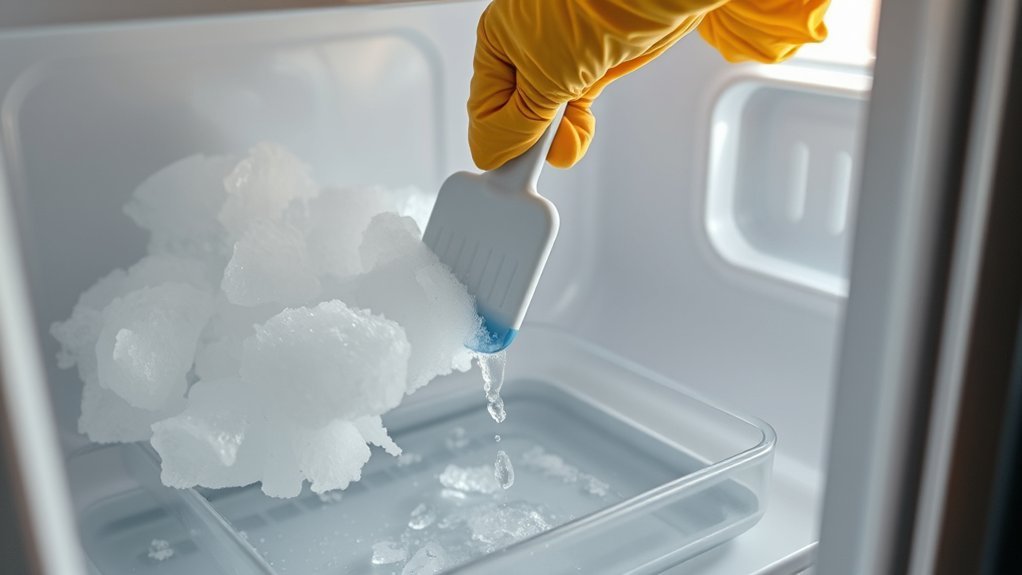
How Do You Defrost a Freezer
When you defrost a freezer, you start by unplugging it and removing all contents to prevent spoilage. This initial step is crucial to ensure safety and avoid any mess from melting ice.
Next, you’ll want to prepare towels and a heat source like hot water to soften the ice efficiently.
Using sharp tools is a no-go to avoid damaging the interior. Instead, allow the ice to melt gradually with the help of warm air or water.
Following these steps carefully ensures a thorough defrost.
There are additional techniques to speed up the process and maintain your freezer’s performance you should consider.
Proper defrosting not only clears ice buildup but also helps your freezer run more efficiently in the long run.
Key Takeaways
- Unplug the freezer and remove all items to prevent spoilage and electrical hazards.
- Place towels inside and around the freezer to absorb melting ice and water.
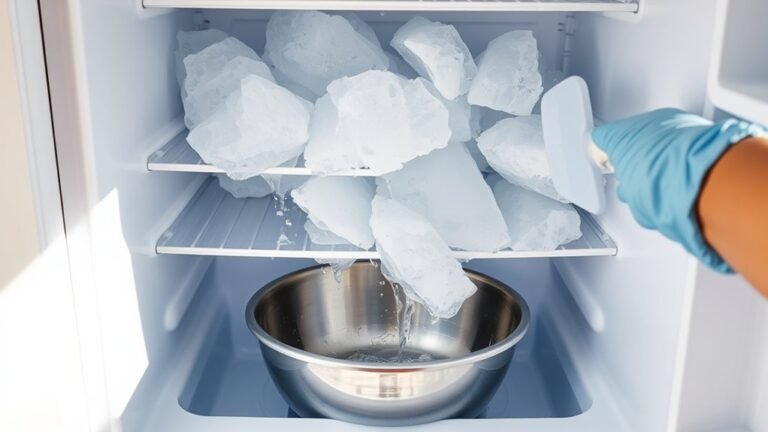
- Use a bowl of hot water inside to speed up ice melting and gently remove softened ice.
- Avoid sharp tools to prevent damaging freezer components during ice removal.
- After defrosting, clean and dry the interior, check seals, and maintain components for optimal performance.
Why Regular Freezer Defrosting Is Essential
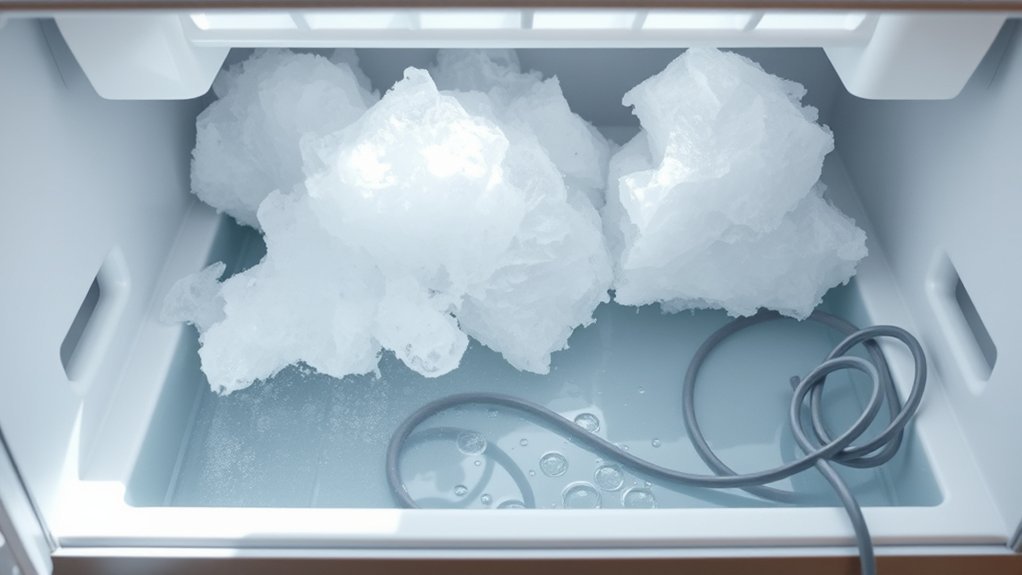
Why should you regularly defrost your freezer? Regular defrosting prevents excessive frost buildup, which can impair your freezer’s cooling efficiency. When frost accumulates, it forces the compressor to work harder, increasing energy consumption and reducing energy savings.
Regular defrosting prevents frost buildup, ensuring efficient cooling and reducing energy consumption in your freezer.
Avoid common defrost mistakes like waiting until frost exceeds a quarter-inch or using sharp tools that damage the interior. Instead, schedule defrosting routinely to maintain optimal performance.
Regular defrosting also preserves storage capacity and prevents uneven cooling, which can spoil food. By adhering to a defrosting schedule, you ensure your freezer operates efficiently, extends its lifespan, and minimizes energy costs.
Proper maintenance through timely defrosting is crucial for energy savings and avoiding costly repairs linked to frost-related malfunctions.
Get Your Freezer Ready for Defrosting
Before you begin defrosting, remove all items from your freezer and store them in a cooler or insulated bag to keep them frozen. Effective defrost planning ensures you minimize food spoilage and optimize energy efficiency.
Next, unplug your freezer to prevent electrical hazards and allow defrosting to proceed safely. Prepare towels or absorbent cloths to manage melting ice and avoid water damage. Also, ensure proper ventilation around the freezer to aid in faster ice melting.
Key preparatory steps include:
- Clearing the freezer interior completely
- Gathering tools like towels, a plastic scraper, and a bowl for water
- Locating the freezer’s drip pan for water collection
Following these steps sets a solid foundation for efficient defrosting and preserves your freezer’s performance.
Step-by-Step Guide to Defrosting Your Freezer Safely
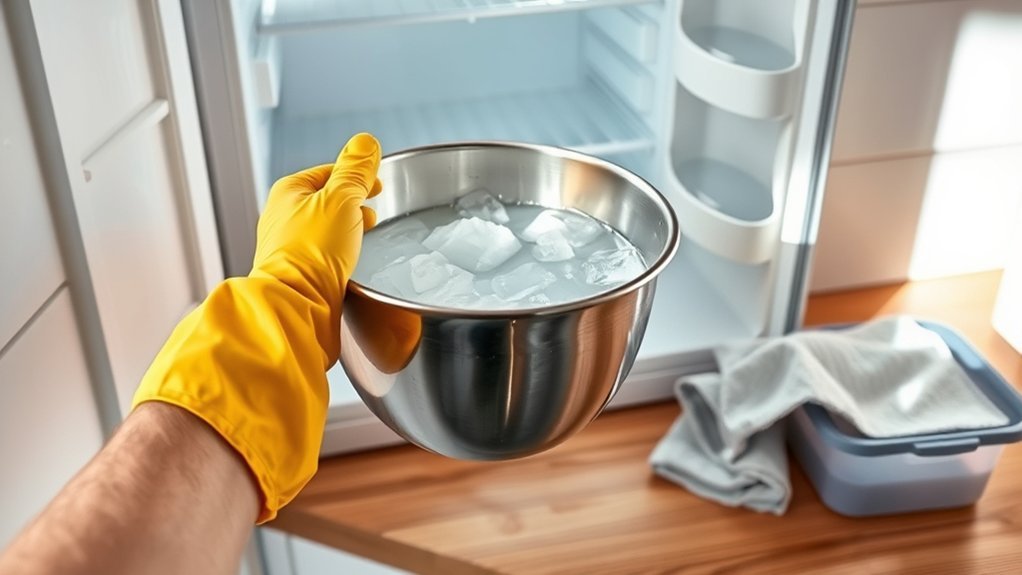
You’ll start by preparing your freezer. Unplug it and remove all contents to prevent spoilage. Then, follow safe defrosting methods like using towels to catch water and avoiding sharp tools that can damage the appliance. These steps ensure an efficient and secure defrosting process.
Preparing Your Freezer
How should you prepare your freezer to ensure a safe and effective defrosting process? Start by clearing out all food items to prevent spoilage. Remove any containers or shelves that can be detached to facilitate cleaning. This preparation helps address ice buildup, which compromises energy efficiency and cooling performance.
Before you begin, take these steps:
- Unplug the freezer to cut power and avoid electrical hazards.
- Place towels or a shallow pan at the freezer’s base to catch melting ice water.
- Ensure adequate ventilation in the room to prevent humidity buildup during defrosting.
Proper preparation minimizes risks and maximizes the effectiveness of the defrosting procedure, restoring optimal energy efficiency and preventing future ice accumulation.
Safe Defrosting Methods
A reliable defrosting method involves carefully melting the ice buildup without damaging the freezer’s components or risking injury. Avoid defrosting myths such as using sharp objects or boiling water, which can cause harm or reduce energy efficiency.
Instead, unplug the freezer and keep the door open. Place towels to absorb water and use a bowl of hot water inside to accelerate ice melting safely.
| Step | Action |
|---|---|
| 1. Unplug | Disconnect power supply |
| 2. Prepare | Place towels and hot water |
| 3. Remove Ice | Gently remove loosened ice |
Following this ensures safe defrosting and maintains energy efficiency.
Tips to Speed Up Freezer Defrosting
You can speed up defrosting by placing a bowl of hot water inside the freezer to loosen ice buildup. Increasing air circulation with a fan also accelerates melting.
These methods reduce waiting time without risking damage to your appliance.
Use Hot Water
Why wait hours for ice to melt when you can accelerate the process with hot water? Using hot water expedites defrosting by transferring heat quickly to the frost, causing it to loosen and melt faster. To do this safely and effectively:
- Pour hot water into a shallow pan and place it inside the freezer compartment, then close the door to trap steam.
- Use a cloth soaked in hot water to gently rub thick ice patches, avoiding direct contact with bare skin to prevent frostbite.
- Regularly replace the water to maintain temperature and maximize melting efficiency.
Always prioritize frostbite safety by wearing gloves and avoiding prolonged skin contact with cold surfaces. This method reduces defrost time without damaging freezer components or compromising safety.
Increase Air Circulation
How can increasing air circulation speed up your freezer’s defrosting process? By enhancing air movement, you increase air circulation efficiency, which accelerates ice melting by distributing warmer air evenly.
To increase air circulation, position a fan near the freezer’s open door to direct airflow inside. This method prevents cold spots and speeds up defrosting without extra heat.
| Action | Benefit | Tip |
|---|---|---|
| Place fan nearby | Boosts air movement | Use oscillating fan |
| Open freezer door | Allows warm air entry | Keep door fully open |
| Remove food items | Improves air circulation | Store perishables temporarily |
Applying these steps will increase air circulation efficiency, reducing defrost time effectively.
How to Clean and Maintain Your Freezer After Defrosting
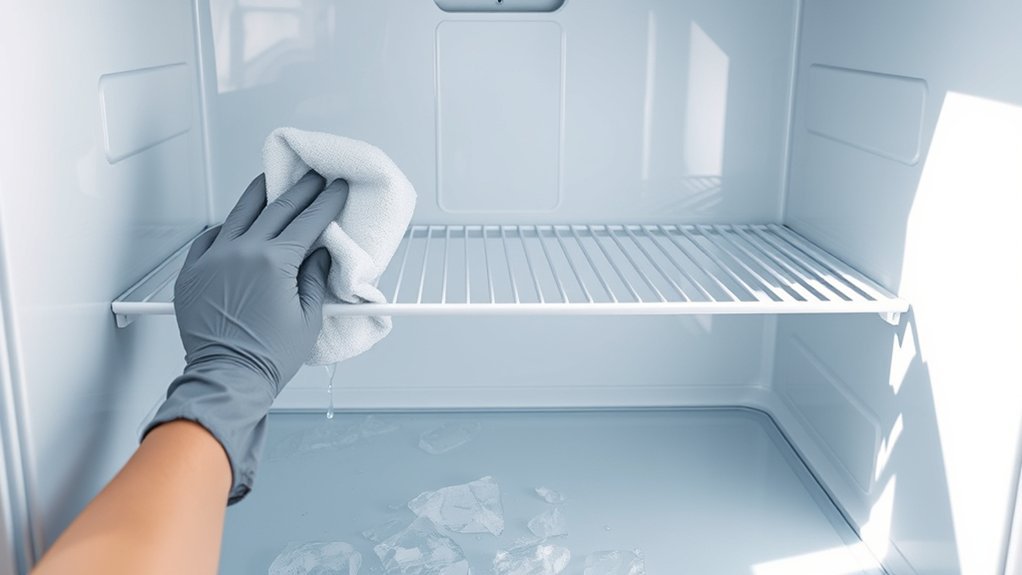
A clean, well-maintained freezer guarantees optimal performance and prolongs its lifespan. After defrosting, focus on thorough cleaning and routine maintenance to ensure efficiency and effective frost prevention. Start by wiping all interior surfaces with a mixture of warm water and mild detergent to remove residue.
Dry surfaces completely to prevent moisture buildup. Check and clean door seals to maintain airtight closure. Regularly inspect the drain hole and clear any blockages to avoid water accumulation.
Key steps for defrosting and maintenance:
Sanitize interior surfaces to inhibit mold and odors.
Lubricate door seals to preserve flexibility.
Examine and clean condenser coils for optimal cooling.
Following these precise steps ensures your freezer operates smoothly and minimizes frost recurrence.
Prevent Frost Build-Up With Easy Defrost Tips
Maintaining a clean freezer sets the foundation for preventing frost build-up, but adopting specific defrost habits will further protect your appliance. To optimize defrost efficiency, defrost your freezer regularly before frost exceeds ¼ inch thickness.
Avoid leaving the door open for extended periods, as warm air accelerates frost formation. Ensure door seals are intact and clean to prevent moisture ingress. Use airtight containers or freezer bags to minimize humidity inside.
When defrosting, remove all items to allow even temperature distribution. After defrosting, dry the interior thoroughly before restarting.
These steps reduce frost accumulation, maintain optimal cooling, and enhance defrost efficiency. Consistent application of these easy defrost tips supports effective frost prevention, prolonging your freezer’s lifespan and ensuring reliable performance.
Frequently Asked Questions
Can I Defrost My Freezer Using a Hairdryer?
You can use a hairdryer for defrosting methods but avoid direct contact with water to prevent electric shock.
Prioritize safety concerns by unplugging the freezer first and keeping the hairdryer at a safe distance to avoid damage.
How Often Should I Defrost a Frost-Free Freezer?
You don’t need a sundial to track defrost frequency for a frost-free freezer because it auto-defrosts regularly. Don’t fall for frost-free misconceptions; maintain it every 6-12 months by cleaning coils to ensure optimal performance and efficiency.
Is It Safe to Use a Knife to Remove Ice?
You shouldn’t use a knife for ice removal; it risks damaging the freezer and causing injury. For defrosting safety, use plastic or wooden tools and follow recommended techniques to gently chip away ice without harming the appliance.
Can Defrosting Affect the Taste of Frozen Food?
Yes, defrosting can cause taste impact and texture changes in frozen food. You’ll want to minimize thawing time to preserve flavor and avoid moisture loss, which directly affects both taste and the food’s original texture.
What Should I Do if My Freezer Won’T Defrost?
When your freezer’s frost fortress won’t melt, start defrost troubleshooting by unplugging it, removing ice manually, and checking the defrost heater.
Regular freezer maintenance ensures smooth operation and prevents stubborn ice buildup.
Conclusion
Defrosting your freezer is like hitting the reset button on its efficiency. Start by unplugging the freezer and removing all the items inside. This creates a safe environment to work in and prevents food spoilage.
Next, allow the ice to soften naturally or use a bowl of hot water inside to speed up the process. Avoid using sharp tools to chip away the ice, as this can damage the freezer’s interior.
Once the ice has melted, thoroughly clean and dry the inside of the freezer. Don’t forget to inspect the seals for any damage before plugging it back in.
Regular defrosting prevents frost buildup and keeps your freezer running smoothly. By following these steps, you can maintain a reliable, frost-free freezer and ensure efficient performance year-round. Defrosting a freezer regularly saves energy and extends its lifespan.