How Often to Replace Water Filter
You might not realize that how often to replace a water filter varies significantly not just by brand, but also by your daily water usage and local water quality.
For example, a pitcher filter can last around two months, while an under-sink system may stretch up to a year.
Ignoring these variables can lead to diminished filtration and potential health risks.
Understanding the precise signs your filter needs replacement is crucial before problems arise.
Key Takeaways
- Replace pitcher filters every 2 to 3 months or after 40 to 100 gallons, depending on brand and usage.
- Refrigerator filters typically require replacement every 6 months or after filtering 200–300 gallons.
- Under-sink filters generally need replacement every 6 to 12 months or after 500–1,000 gallons.
- Higher daily water consumption shortens filter lifespan; for example, 10 gallons/day means about 3 months replacement interval.
- Use manufacturer guidelines, indicator lights, or digital reminders to track and ensure timely filter replacement.
Key Signs Your Water Filter Needs Replacing
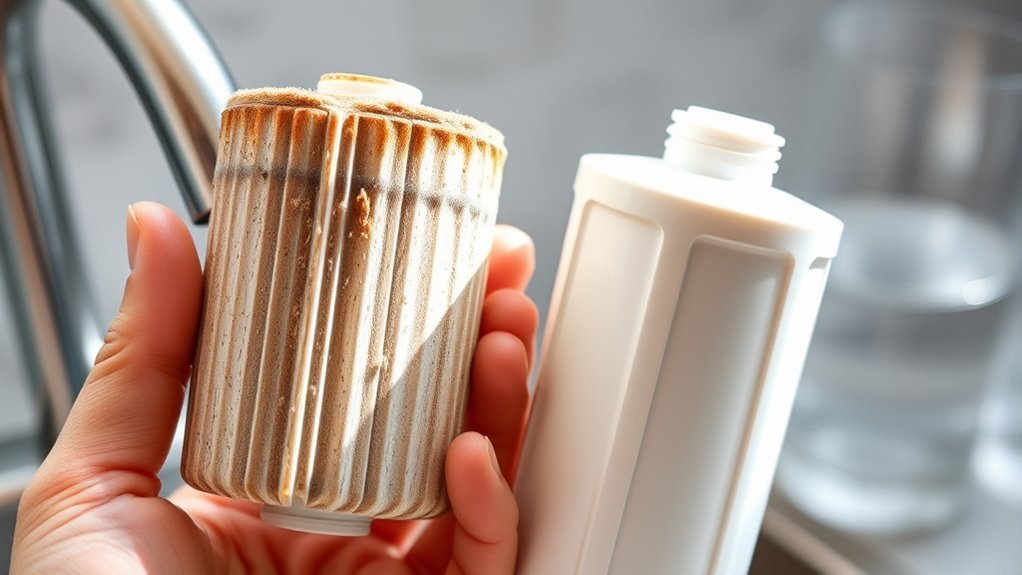
How can you tell when your water filter needs replacing? You should monitor changes in water quality and adhere to recommended replacement timing based on the filter lifespan. Diminished taste or odor often signals that your filter’s effectiveness is waning.
During filter maintenance, note any visible discoloration or buildup, which compromises filtration efficiency. Evidence shows that prolonged use beyond the suggested lifespan allows contaminants to bypass the filter, reducing water quality and potentially posing health risks.
Tracking usage duration precisely ensures optimal performance. Ignoring these signs can lead to clogged filters, increased water flow resistance, and reduced contaminant removal.
How Long Do Different Water Filters Last?
You’ll find that pitcher filters typically last about two months or 40 gallons, depending on usage. Refrigerator filters often require replacement every six months, as recommended by manufacturers based on average water consumption.
Under-sink filters can vary widely but generally need changing every six to twelve months to maintain optimal performance.
Pitcher Filter Lifespan
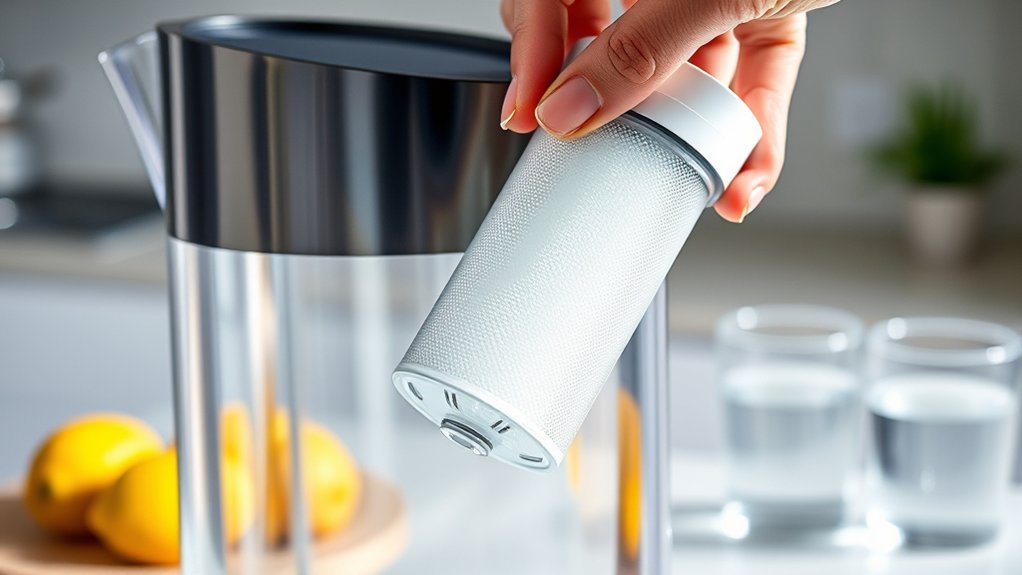
When should you replace your pitcher water filter to maintain peak performance? Typically, pitcher filters last between 40 to 100 gallons or about 2 to 3 months, depending on usage and water quality.
Ignoring replacement can reduce filtration efficiency, leading to taste and odor issues. Think of it like solving quirky riddles; each filter has a lifespan puzzle you must crack.
For frequent travelers, consider travel tips for maintaining freshness. Timely filter changes ensure clean water wherever you go.
| Filter Brand | Lifespan (Gallons) | Duration (Months) |
|---|---|---|
| Brand A | 40 | 2 |
| Brand B | 100 | 3 |
| Brand C | 80 | 2.5 |
Replace filters promptly to ensure optimal contaminant removal and water quality.
Refrigerator Filter Duration
Wondering how long your refrigerator water filter can effectively purify water? Typically, these filters last about six months or filter approximately 200 to 300 gallons, depending on your water quality and usage.
Regular replacement is crucial to maintain optimal performance in refrigerator maintenance. As the filter approaches the end of its lifecycle, it becomes less efficient at removing contaminants like chlorine, lead, and particulates, which can affect taste and safety.
Monitoring your filter’s condition through manufacturer guidelines or indicator lights helps ensure timely changes. Neglecting replacement increases the risk of bacterial buildup and reduced flow rate.
Under-Sink Filter Replacement
While refrigerator filters typically require replacement every six months or after filtering 200 to 300 gallons, under-sink water filters operate under different conditions that influence their lifespan. Under-sink filters generally last between six months to one year, depending on water quality and usage.
You should monitor your water flow rate and taste; a decrease or change often signals the need for filter replacement. These filters handle higher volumes and diverse contaminants, so manufacturers recommend filter replacement intervals ranging from 500 to 1,000 gallons.
To maintain optimal filtration, adhere strictly to the specific under sink filter replacement schedule provided. Ignoring timely replacement can reduce filter efficiency and allow contaminants to pass through, compromising water safety.
Regular maintenance ensures consistent water quality and prolongs the filter system’s effective service life.
How Your Water Quality Changes When to Replace Filters
How can you tell when your water filter needs replacing based on changes in water quality? As your filter approaches the end of its lifespan, you’ll notice measurable declines. Contaminant removal efficiency drops, leading to altered taste, odor, or clarity.
For example, increased chlorine or sediment levels indicate compromised filtration. These changes result from filter media saturation or degradation, which reduces its ability to trap impurities.
Monitoring water quality through periodic testing provides objective data to assess filter performance. Relying solely on time-based replacement ignores real-time water conditions that directly impact filter lifespan.
How Household Water Usage Affects Replacement Time
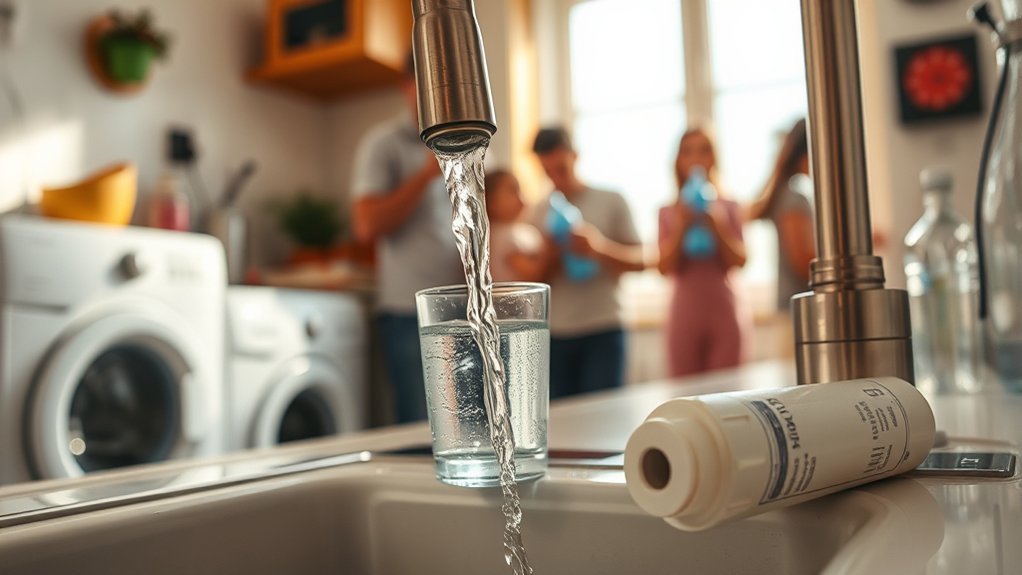
Your daily water consumption directly influences how quickly your filter reaches capacity, so higher usage means more frequent replacements. Additionally, the number of appliances drawing filtered water, like refrigerators and dishwashers, adds to the total volume processed.
Tracking these factors helps you predict when your filter’s effectiveness will decline.
Daily Water Consumption Impact
Why does daily water consumption directly influence the timing for replacing your water filter? The more water you use, the faster contaminants accumulate, reducing filter efficiency. Your daily intake, combined with faucet ergonomics, how easily and frequently you access filtered water, impacts filter lifespan. A well-designed faucet encourages more use, accelerating wear.
| Daily Water Consumption (Gallons) | Approximate Replacement Interval |
|---|---|
| 5 | 6 months |
| 10 | 3 months |
| 15 | 2 months |
| 20+ | 1 month |
Tracking your household’s consumption helps predict replacement needs accurately. Adjusting faucet ergonomics can optimize usage without prematurely shortening filter life.
Appliance Usage Frequency
Households that frequently use appliances like dishwashers, refrigerators with water dispensers, or coffee makers accelerate the depletion of their water filter’s capacity. This increased usage impacts the timing of filter replacement and can lead to issues if you don’t adjust your maintenance schedule accordingly.
To manage this effectively, consider these factors:
- Appliance water consumption: Higher water flow through filters shortens their lifespan.
- Filter type compatibility: Some filters handle appliance water demands better than others.
- Usage patterns: Consistent heavy use demands more frequent replacements than occasional use.
Signs Your Water Filter Isn’t Working Right
Often, subtle changes in water taste, odor, or clarity indicate that a filter isn’t functioning properly. You might notice a metallic aftertaste, a faint chemical smell, or increased cloudiness, signaling diminished filtration efficiency.
To assess your filter’s condition accurately, consider structured quiz questions focusing on sensory changes and performance metrics. These help you identify malfunction signs early. Data trends reveal that future water filtration systems will integrate smart sensors, offering real-time feedback on filter status.
Meanwhile, monitoring flow rate reductions and sediment buildup provides tangible evidence of wear. By systematically evaluating these signs, you ensure timely replacements and maintain optimal water quality. Staying informed on these indicators prevents unnoticed filter failure and supports proactive maintenance aligned with evolving filtration technologies.
Health and Performance Risks of Overdue Replacement
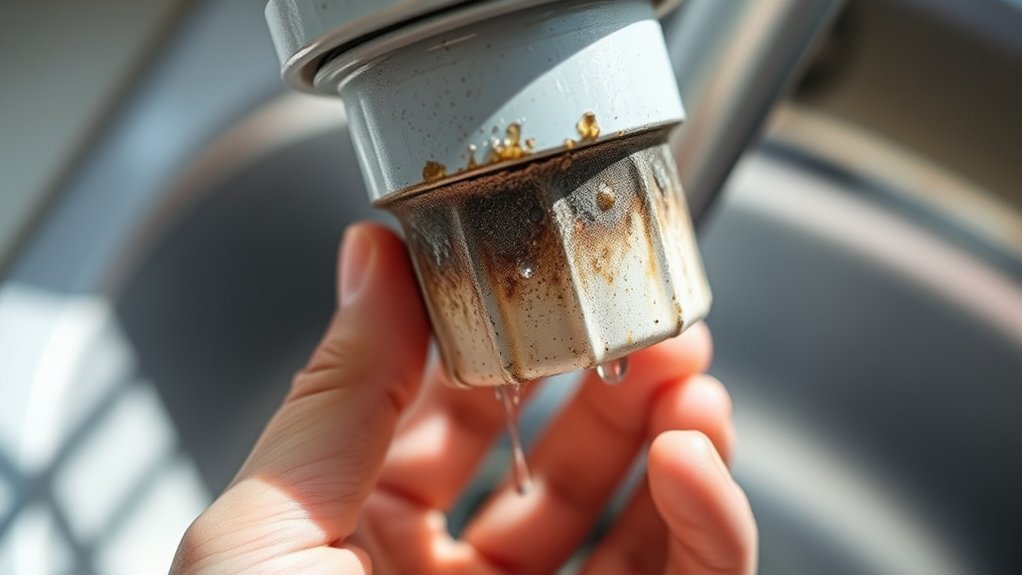
Recognizing signs of a failing water filter is only the first step; neglecting timely replacement can lead to significant health and performance issues. When you delay changing your water filter, contaminants accumulate, increasing health risks like exposure to bacteria, heavy metals, and chemical residues.
Simultaneously, you’ll notice a performance decline as the filter clogs, reducing water flow and filtration efficiency. Research shows that overdue replacement compromises both safety and taste, potentially causing gastrointestinal problems.
Key risks you face include:
- Increased microbial contamination leading to illness
- Reduced filtration capacity causing poor water quality
- Clogged filters straining your water system and lowering flow rate
How to Track and Remember Water Filter Changes
How can you guarantee your water filter gets replaced on time without relying on memory alone? Implementing tracking reminders is a proven strategy to maintain consistent filter maintenance.
You can use digital tools, such as smartphone apps or calendar alerts, which provide timely notifications based on your filter’s recommended lifespan. Alternatively, manual methods like marking replacement dates on the filter housing or maintaining a dedicated maintenance log can be equally effective.
Research indicates that systematic tracking reduces the risk of overdue replacement, which can compromise water quality and appliance efficiency. By establishing a reliable reminder system, you ensure you never miss the optimal replacement interval.
This approach supports evidence-based maintenance, extending filter functionality and safeguarding your water’s purity without guesswork.
Choosing the Right Replacement Filter
Once you’ve set up a reliable system to track filter changes, the next step is selecting a replacement filter that matches your water system’s specifications and your water quality needs. Choosing the right filter directly impacts replacement frequency and helps optimize maintenance scheduling.
Consider these factors carefully:
- Filter compatibility: Ensure the replacement fits your specific model to maintain filtration efficiency and avoid leaks.
- Filtration capacity: Choose a filter rated for your water’s contaminants, based on local water quality reports or testing results.
- Certified standards: Opt for filters certified by recognized institutions (e.g., NSF/ANSI) to guarantee performance and safety.
How to Replace Your Water Filter Safely
Replacing your water filter involves several critical steps to ensure safety and maintain water quality. First, turn off the water supply to prevent leaks. Then, carefully remove the old filter, avoiding contact with contaminated surfaces to minimize bacterial exposure.
Turn off the water supply before removing the old filter to avoid leaks and bacterial exposure.
Dispose of the used filter according to local guidelines. Before installing the new filter, clean the housing with a mild disinfectant to inhibit microbial growth.
Install the replacement precisely, ensuring a secure fit to prevent leaks and maintain optimal flow. After installation, flush the system as recommended to eliminate trapped air and residual particles, which can cause taste degradation.
Monitoring filter nutrition parameters, like mineral retention, helps maintain water quality. Following these evidence-based steps reduces contamination risks and supports consistent, safe hydration.
Frequently Asked Questions
Can Water Filters Remove All Types of Contaminants?
You can’t rely on water filters to remove all contaminants since their contaminant scope varies. Understanding filter limitations helps you choose the right one, as no single filter eliminates every pollutant or pathogen effectively.
Are There Eco-Friendly Water Filter Options Available?
Yes, you’ll find eco-friendly water filtration options using biodegradable materials and reusable cartridges. These reduce plastic waste and energy use, offering effective contaminant removal while supporting sustainable water filtration practices backed by recent environmental studies.
How Do Water Filter Pitchers Compare to Under-Sink Filters?
Choosing between a water pitcher vs under sink filter is like picking a tool for precision. Pitchers offer convenience and portability, while under sink filters provide thorough filtration with higher capacity and less frequent maintenance.
Can Using a Water Filter Improve the Taste of Tap Water?
Yes, using a water filter can improve the taste of tap water by removing chlorine and contaminants. Its taste improvement depends on the filtration effectiveness, which varies by filter type and water quality, so choose accordingly.
Do Water Filters Affect Water Pressure in Plumbing Systems?
Think of your plumbing like a garden hose; clogs slow flow. Poor filter maintenance or improper installation considerations can reduce water pressure noticeably.
Regular upkeep ensures your filter won’t choke your system’s natural flow.
Conclusion
You might think replacing your water filter is just routine, but it’s essential for health and water quality. Evidence shows filters degrade based on usage, type, and water conditions, so ignoring replacement risks contaminants and reduced performance.
By tracking usage and recognizing signs of wear, you guarantee safe, clean water. This proactive approach reveals that timely filter changes aren’t just maintenance—they’re vital for your well-being and appliance longevity.
Understanding how often to replace water filter ensures you maintain optimal water purity and protect your health effectively.