What Does Freezer Burn Look Like
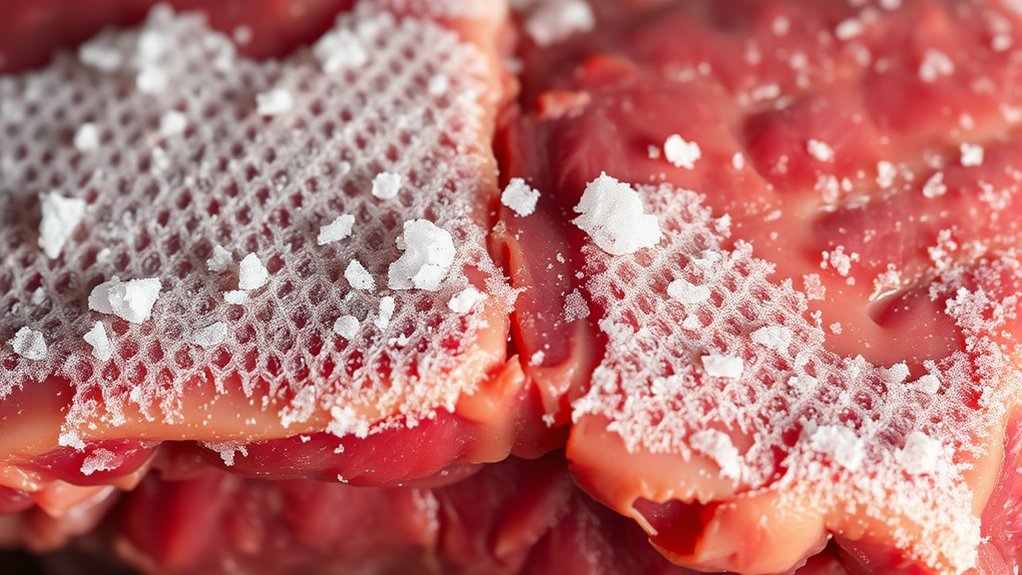
You know how frost on a window reveals cold’s quiet work? Freezer burn looks similar on your frozen food’s surface, marked by dry, grayish or whitish patches that often appear crusty or leathery.
These changes result from moisture loss and air exposure, subtly altering texture and appearance.
Understanding these signs can help you decide whether to salvage or discard your food, but it’s not always straightforward.
Key Takeaways
- Freezer burn appears as dry, grayish or whitish patches on the food surface caused by moisture loss and dehydration.
- These patches often look crusty, leathery, or dull, indicating sublimation and texture changes.
- Ice crystals on the food or packaging may be present but are not definitive signs of freezer burn.
- Discoloration, such as grayish-brown on meats or faded spots on fruits and vegetables, signals freezer burn.
- Visual signs help assess quality decline but do not alone determine food safety.
Why Does Freezer Burn Happen?
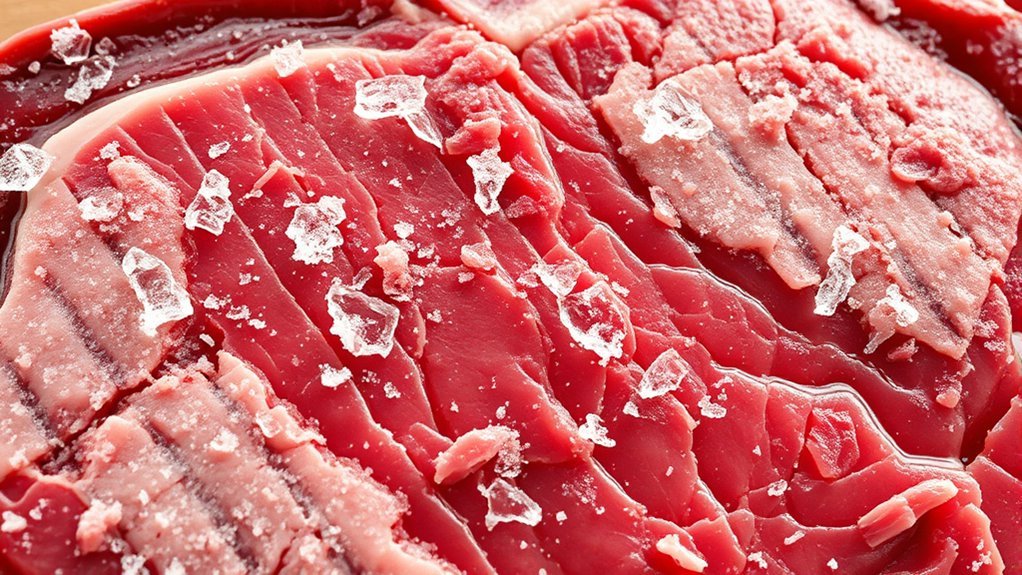
Why does freezer burn happen? It occurs when moisture escapes from food and sublimates into ice crystals on the surface, causing dehydration and oxidation.
Freezer burn happens when moisture leaves food and forms ice crystals, leading to dehydration and oxidation.
You might encounter freezer burn misconceptions, such as believing it results from prolonged freezing or contaminated packaging. However, the primary cause is inadequate airtight sealing that allows water vapor to migrate.
Labeling confusion often arises because some packaging claims “freezer safe” without ensuring proper moisture barriers, leading to misunderstanding about protection levels.
When you store food, ensure packaging is airtight and moisture-resistant to prevent sublimation. Understanding this mechanism helps you avoid freezer burn by focusing on minimizing exposure to air rather than merely shortening storage time or relying on misleading packaging labels.
Common Visual Signs of Freezer Burn
Freezer burn manifests through distinct visual indicators that signal moisture loss and surface dehydration. You’ll notice dry, grayish or whitish patches on the surface of frozen food, often appearing crusty or leathery. These patches result from sublimation, where ice directly evaporates from the food’s surface.
Common myths suggest freezer burn changes the food’s safety, but it primarily affects texture and flavor. You may also observe discoloration or a dull appearance, which are reliable visual indicators of freezer burn.
Ice crystals on packaging or food can accompany these signs but aren’t definitive alone. Recognizing these visual indicators helps you assess freezer burn without relying on misconceptions. Staying aware of these signs ensures you can make informed decisions about the quality of your frozen items.
How to Spot Freezer Burn on Different Foods
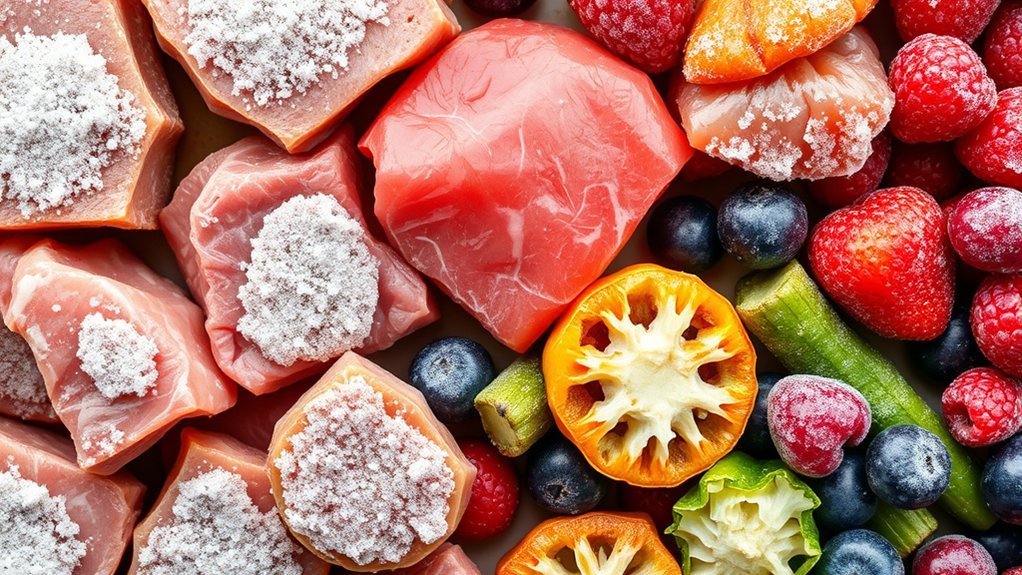
Recognizing freezer burn involves understanding how its appearance varies across different types of food. For meats, freezer burn typically appears as grayish-brown or white dry patches on the surface, indicating moisture loss and oxidation.
Freezer burn on meats shows as grayish-brown or white dry patches from moisture loss and oxidation.
In fruits and vegetables, look for ice crystals and dehydrated, discolored spots, often pale or darkened areas that affect the cell structure. Bread or baked goods with freezer burn show hard, dry, and discolored spots, especially on crusts.
Dairy products may develop icy crystals and color changes. You should always inspect frozen food packaging for damage, which can increase freezer burn risk.
Identifying these signs is crucial for food safety, as freezer burn compromises texture and quality, though it doesn’t necessarily indicate spoilage or harmful bacterial growth.
What Freezer Burn Does to Taste and Texture
You’ll notice freezer burn causes a significant loss of flavor due to moisture evaporation and oxidation. The texture changes as ice crystals damage cell structure, making food dry or tough.
These effects collectively reduce the overall quality and palatability of your frozen items.
Flavor Loss Effects
How exactly does freezer burn affect the taste and texture of your food? Primarily, freezer burn induces a significant flavor decline by causing dehydration on the food’s surface. This dehydration disrupts the distribution of natural oils and water content, which are essential for preserving the original taste.
Additionally, scent loss occurs as volatile compounds responsible for aroma evaporate or degrade during prolonged exposure to cold, dry freezer air. These changes lead to a muted or off-flavor experience when you consume the affected items.
While freezer burn does not make food unsafe, the compromised flavor and diminished scent reduce overall palatability. Understanding these effects helps you recognize why freezer burn negatively impacts your food’s sensory qualities, prompting proper storage techniques to minimize such degradation.
Texture Changes Noticeable
Beyond flavor and aroma degradation, freezer burn also causes noticeable alterations in the texture of affected food. When you encounter freezer burn, the primary texture changes result from moisture loss due to sublimation, where ice crystals directly turn into vapor.
This dehydration affects the structural integrity of the food, making it dry, tough, and leathery. You’ll notice that once-firm meats become crumbly or spongy, and frozen fruits lose their crispness, becoming mushy upon thawing.
These texture changes compromise the food’s mouthfeel and can make it less palatable. Understanding that moisture loss is the key factor allows you to identify freezer burn not just by appearance but by the altered tactile properties, helping you assess the usability of frozen items more accurately.
Impact on Food Quality
Why does freezer burn substantially degrade food quality? Freezer burn causes moisture loss through sublimation, which alters the cellular structure of food, leading to dryness and tough texture. You’ll notice a decline in taste due to oxidation, which affects fats and proteins, resulting in off-flavors.
Proper freezer maintenance minimizes temperature fluctuations, reducing the risk of freezer burn. Additionally, consistent labeling practices help you track storage duration, preventing prolonged exposure that worsens quality.
When you manage freezer conditions and label items accurately, you preserve moisture and flavor integrity. In contrast, neglecting these practices accelerates texture degradation and flavor loss, making food less palatable.
Understanding these mechanisms enables you to optimize food preservation and maintain acceptable taste and texture despite freezing.
Is Freezer Burn Safe to Eat? When to Toss It
You can safely eat food with minor freezer burn, but it may have altered taste and texture.
However, if you notice discoloration, off odors, or slimy texture, it’s best to discard the item. These signs indicate potential spoilage and increased safety risks.
Safety Risks of Freezer Burn
How safe is it to eat food affected by freezer burn? Despite common freezer burn myths and storage misconceptions, freezer burn itself doesn’t make food unsafe. However, it does pose some risks you should consider:
- Nutrient Degradation: Freezer burn causes moisture loss, leading to diminished vitamins and minerals, reducing nutritional value.
- Texture and Taste Changes: You’ll notice dry, tough spots and off-flavors, which might make food unpalatable.
- Bacterial Growth Potential: While freezer burn doesn’t cause bacteria, damaged packaging or prolonged thawing can increase contamination risk.
You can safely consume freezer-burned food if you trim affected areas and cook thoroughly. Still, understanding these risks helps you make informed decisions and avoid storage misconceptions that might compromise your health or meal quality.
Signs to Discard
Determining when to discard freezer-burned food requires evaluating the extent of damage and potential safety risks. If the affected area covers more than 25% of the food’s surface, or if you notice significant discoloration, off-odors, or texture degradation, it’s best to discard the item.
Minor freezer burn typically doesn’t pose health risks but compromises quality. You can apply freezer burn remedies like trimming affected sections or using marinades to mask dryness in some cases.
However, extensive freezer burn reduces nutritional value and palatability, making disposal the safest option. To minimize waste, adopt storage best practices such as airtight packaging, appropriate freezer temperatures, and timely consumption.
These steps prevent freezer burn and limit the need to discard food prematurely.
Easy Tips to Prevent Freezer Burn
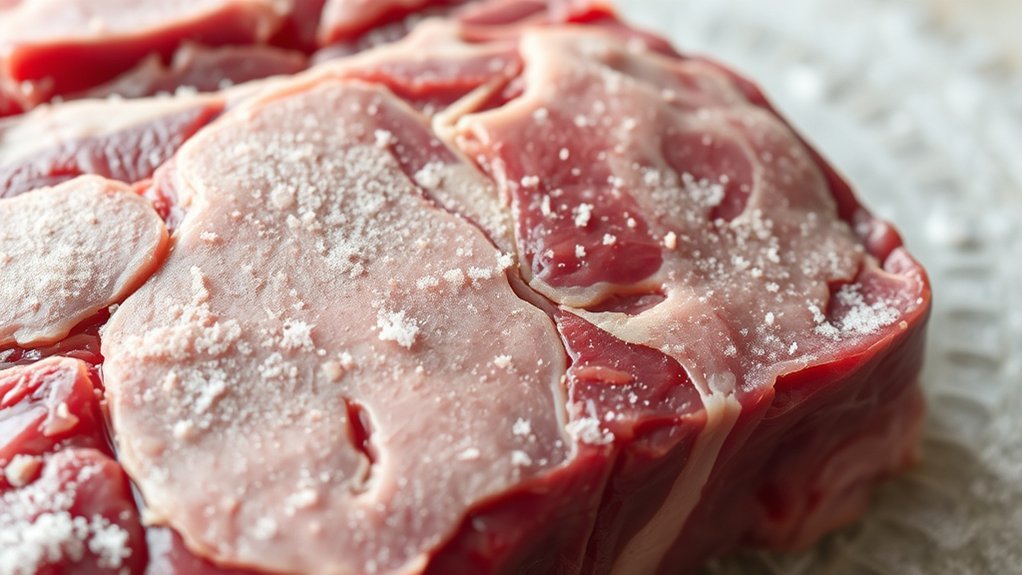
Why does freezer burn occur, and how can it be effectively prevented? Freezer burn results from moisture loss and air exposure, causing dehydration and oxidation in frozen food.
Freezer burn happens when moisture escapes and air exposure causes dehydration and oxidation in frozen foods.
Preventing freezer burn requires minimizing air contact and controlling storage conditions. Here are easy tips to help you:
- Use airtight packaging: Vacuum-sealed bags or containers reduce air exposure, significantly slowing moisture loss.
- Maintain consistent freezer temperature: Keep your freezer at or below 0°F (-18°C) to inhibit ice crystal growth that leads to freezer burn.
- Limit storage time: Even with proper packaging, prolonged freezing increases freezer burn risk; label and rotate inventory promptly.
Frequently Asked Questions
Can Freezer Burn Affect the Nutritional Value of Food?
Yes, freezer burn can reduce freezer burn nutrition by degrading vitamins and proteins. You’ll notice storage impact as texture and flavor deteriorate, though calorie content remains largely unaffected despite these nutritional losses.
How Long Does It Take for Freezer Burn to Develop?
Freezer burn typically develops after 2-3 months of improper storage duration in the freezer. Unlike the fridge, the freezer’s low temperature causes moisture loss, leading to surface dehydration and ice crystal formation on food exposed to air.
Does Freezer Burn Occur in All Types of Freezers?
Freezer burn can occur in any freezer, like frost forming on glass. Don’t buy freezer specific myths; it’s more about packaging nuances and airtight sealing than the freezer type, which influences moisture loss and ice crystal formation.
Can Freezer Burn Be Reversed or Repaired?
You can’t reverse the effects of freezer burn once it occurs, but you can minimize damage by using airtight packaging options. Proper sealing reduces moisture loss, helping prevent freezer burn and maintaining food quality during storage.
Are There Specific Packaging Materials Best for Preventing Freezer Burn?
Like a fortress against frost, airtight packaging is best for preventing freezer burn by minimizing moisture migration. Materials such as vacuum-sealed bags or heavy-duty plastic wrap effectively block air, preserving food quality and preventing dehydration.
Conclusion
Freezer burn is like a silent thief, stealing moisture and quality from your food without warning. When you spot dry, grayish patches or leathery textures, you know it’s time to act. Trim or cook the affected areas if it’s safe, but don’t ignore severe damage.
Proper sealing and stable freezing are your best defenses against this issue. Keeping your food well-wrapped prevents exposure to air, which causes freezer burn. Maintaining a consistent freezing temperature also helps preserve your food’s quality.
Understanding these signs helps you maintain food quality and avoid waste. By recognizing what freezer burn looks like, you can ensure your frozen goods stay fresh and flavorful longer.