Are Heat Pump Hot Water Heaters Better
If you’re considering upgrading your water heater, you might wonder if heat pump hot water heaters really offer better efficiency and cost savings. These systems use electricity more efficiently by transferring ambient heat rather than generating it directly, often cutting energy use by half.
However, their performance depends on factors like climate, installation space, and upfront costs. Understanding these variables can help you decide if a heat pump water heater fits your specific needs.
Key Takeaways
- Heat pump water heaters use a refrigerant cycle to efficiently transfer ambient heat into water, maintaining temperatures between 120°F and 140°F.
- They offer 50% to 60% electricity savings compared to conventional electric resistance heaters due to a typical COP around 3.0.
- Higher upfront costs are offset by a 2 to 4-year payback period, often improved by available rebates and incentives.
- Best suited for moderate to warm climates above 40°F, with adequate space and airflow for optimal performance.
- Require regular maintenance and proper installation but provide significant long-term energy and cost benefits.
How Do Heat Pump Water Heaters Work?
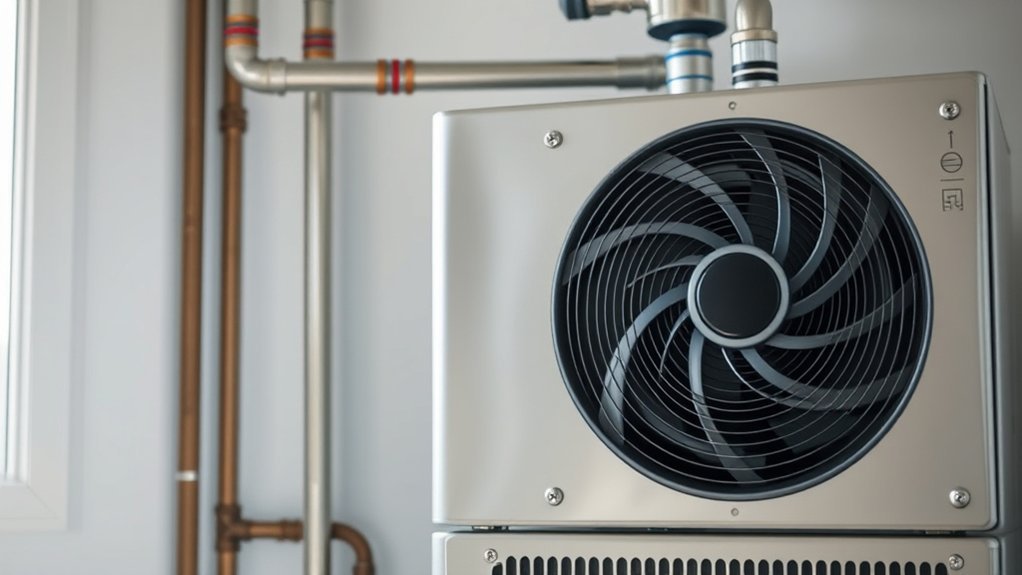
How exactly do heat pump water heaters operate to deliver energy-efficient hot water? You rely on the heat pump mechanism, which extracts heat from surrounding air and transfers it to water, using substantially less electricity than traditional resistance heaters.
The system employs a refrigerant cycle: the refrigerant absorbs ambient heat, evaporates, and compresses to increase temperature. Then, it releases heat into the water tank through a condenser coil before expanding and starting the cycle anew.
This closed-loop refrigerant cycle enables continuous heat transfer, maintaining water temperatures typically between 120°F and 140°F. By leveraging ambient thermal energy, the heat pump mechanism achieves a coefficient of performance (COP) around 3.0, meaning it produces three times more energy in heat than it consumes in electricity, offering a technically efficient solution for water heating needs.
Energy Savings and Cost Benefits of Heat Pump Water Heaters
Typically, heat pump water heaters consume 50% to 60% less electricity compared to conventional electric resistance models, translating into significant energy savings for your household. This efficiency stems from transferring heat rather than generating it, reducing energy input.
Over time, these savings directly impact your utility bills, lowering operational costs substantially. Although the initial investment is higher, often 1.5 to 3 times that of traditional units, the reduced electricity consumption typically recoups this difference within 2 to 4 years, depending on usage and local energy prices.
Additionally, many regions offer rebates or incentives, improving the overall cost benefits. By choosing a heat pump water heater, you optimize energy consumption, reduce expenses, and contribute to environmental sustainability through decreased electrical demand.
What Climates and Homes Are Best for Heat Pump Water Heaters?
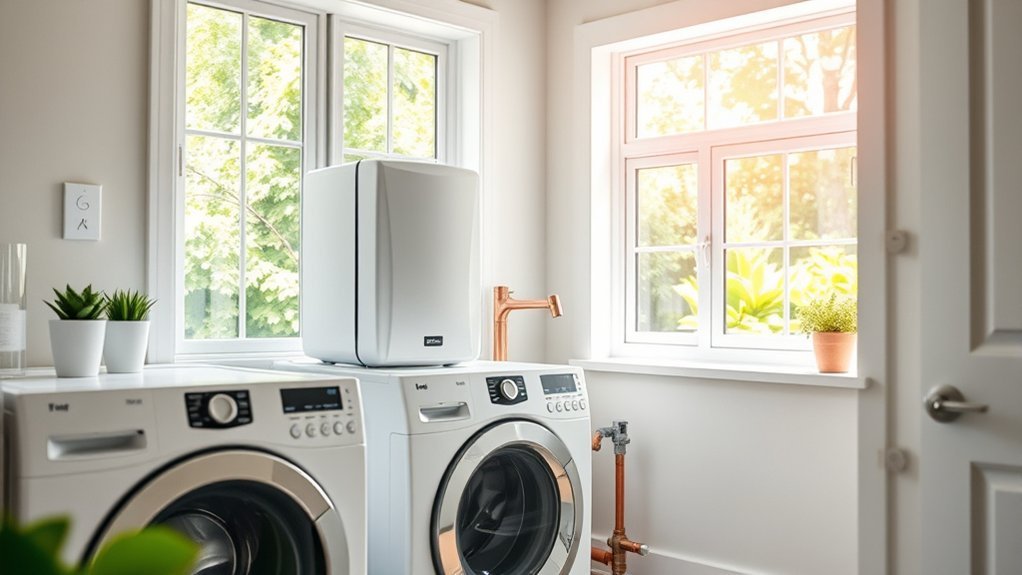
Where do heat pump water heaters perform most efficiently? They excel in moderate to warm climates with ambient temperatures consistently above 40°F (4°C). Their climate suitability decreases in colder regions, where lower temperatures reduce heat extraction efficiency and increase reliance on backup electric resistance heating.
For optimal performance, you should ensure your home has adequate insulation, as well-insulated spaces help maintain ambient heat levels that support the heat pump’s operation. Poor home insulation can lead to increased energy consumption and reduced system efficiency.
Additionally, homes with unconditioned spaces, such as basements or garages, can benefit from heat pump water heaters if those areas maintain sufficient temperatures. Evaluating both local climate data and your home insulation quality will guide you in selecting the right water heating system for efficient, cost-effective operation.
Common Drawbacks and Maintenance Needs of Heat Pump Water Heaters
What challenges might you face with heat pump water heaters? While they offer low noise risks compared to conventional units, you still need to consider proper installation. Heat pump water heaters require adequate space with good airflow to operate efficiently, which can complicate placement in smaller or enclosed areas.
Installation considerations also include electrical requirements and potential modifications to your existing plumbing system. Maintenance needs involve regular cleaning of air filters and coils to prevent efficiency loss; neglecting this can increase energy consumption by up to 15%. Additionally, you should monitor refrigerant levels and check for any refrigerant leaks, as these affect performance.
Being proactive with maintenance ensures your heat pump water heater runs reliably, but it demands more attention than traditional electric or gas heaters.
Is a Heat Pump Water Heater Right for Your Home?
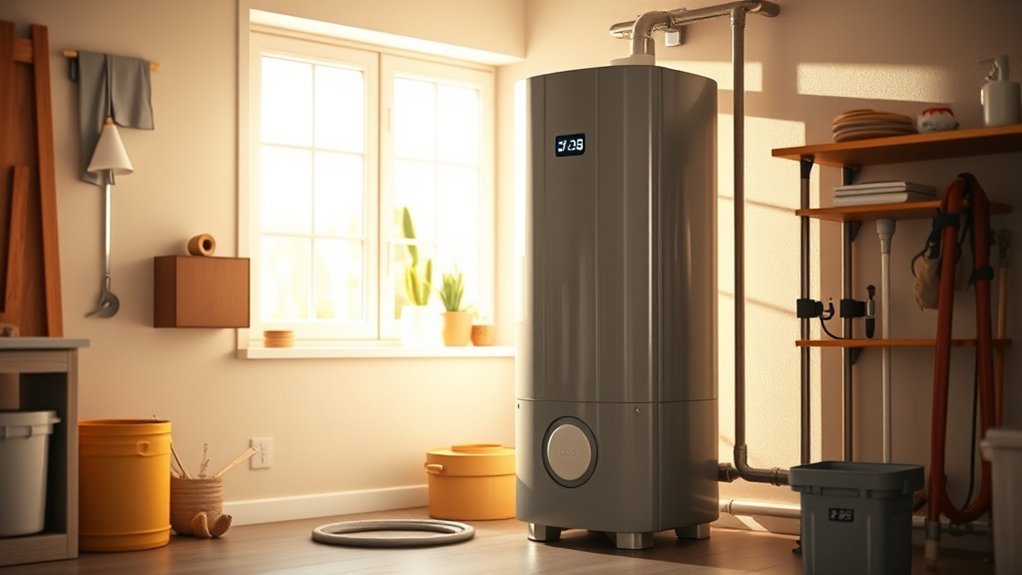
Understanding the installation and maintenance demands of heat pump water heaters helps you evaluate whether their benefits align with your home’s characteristics. If you’re considering an eco friendly retrofit, you must assess your space’s ambient temperature, as heat pumps operate efficiently between 40°F and 90°F.
Noise considerations are also crucial; typical units emit 50-60 decibels, comparable to a quiet conversation, which may affect placement options. Installation requires adequate clearance and electrical capacity, potentially increasing upfront costs.
However, these units can reduce energy consumption by up to 60% compared to conventional heaters, offering long-term savings. If your home’s layout and climate suit these parameters, a heat pump water heater can be a technically sound, energy-efficient upgrade. Otherwise, alternative solutions may better match your specific needs.
Frequently Asked Questions
How Long Does Installation of a Heat Pump Water Heater Take?
You can expect the installation timeline for a heat pump water heater to take about 3 to 5 hours.
This process ensures optimal energy efficiency by correctly integrating the system with your existing plumbing and electrical setup.
Are There Any Government Rebates for Heat Pump Water Heaters?
You might be surprised: yes, you can access heat pump incentives and appliance rebates that considerably reduce costs. Check your local utility programs and federal offers, as these rebates vary by region and energy efficiency standards.
Can Heat Pump Water Heaters Be Used in Apartments or Condos?
You can use heat pump water heaters in apartments and condos, but apartment feasibility depends on available space and ventilation.
Condo integration requires assessing electrical capacity and shared system compatibility to optimize performance and comply with building codes.
What Noise Levels Do Heat Pump Water Heaters Produce?
Imagine a quiet hum like a refrigerator; heat pump water heaters produce about 45-60 decibels. Their noise comparison shows minimal vibration concerns, making them suitable for apartments without disturbing your peace or neighbors.
How Do Heat Pump Water Heaters Compare to Tankless Water Heaters?
In a heat pump, tankless comparison, you’ll find heat pumps use less energy, offering 2-3 times efficiency. Tankless heaters deliver instant hot water but consume more power, making heat pumps better for sustained, energy-efficient heating.
Conclusion
If you want to slash your energy bills by more than half, a heat pump water heater is a smart choice—delivering efficiency with a typical COP around 3.0. While upfront costs and space needs aren’t trivial, the 2–4 year payback and long-term savings make it worth serious consideration.
Just ensure your home’s climate stays above 40°F and you’re ready for occasional maintenance. In short, it’s a powerhouse solution for energy-conscious homeowners.
When evaluating your options, remember that heat pump hot water heaters offer an efficient and cost-effective way to reduce energy consumption and expenses over time.