Do Water Filters Filter Out Lead
You might be surprised to learn that not all water filters effectively remove lead, despite common assumptions.
When it comes to water filters filtering out lead, the ability to reduce this harmful contaminant depends heavily on the filter’s technology and proper certification.
Understanding which filters are proven to target lead and how they work is essential for your safety.
Before choosing a filter, it’s important to take these factors into account to guarantee your drinking water is truly protected.
Key Takeaways
- Some water filters, especially those certified for lead removal, effectively reduce lead levels in drinking water.
- Filters certified under NSF/ANSI Standard 53 specifically target and reduce lead contamination.
- Activated carbon filters can reduce lead but may not meet strict safety standards alone.
- Reverse osmosis systems remove up to 99% of lead by filtering through a semipermeable membrane.
- Regular maintenance and timely filter replacement are crucial for consistent lead removal performance.
How Lead Enters Your Drinking Water
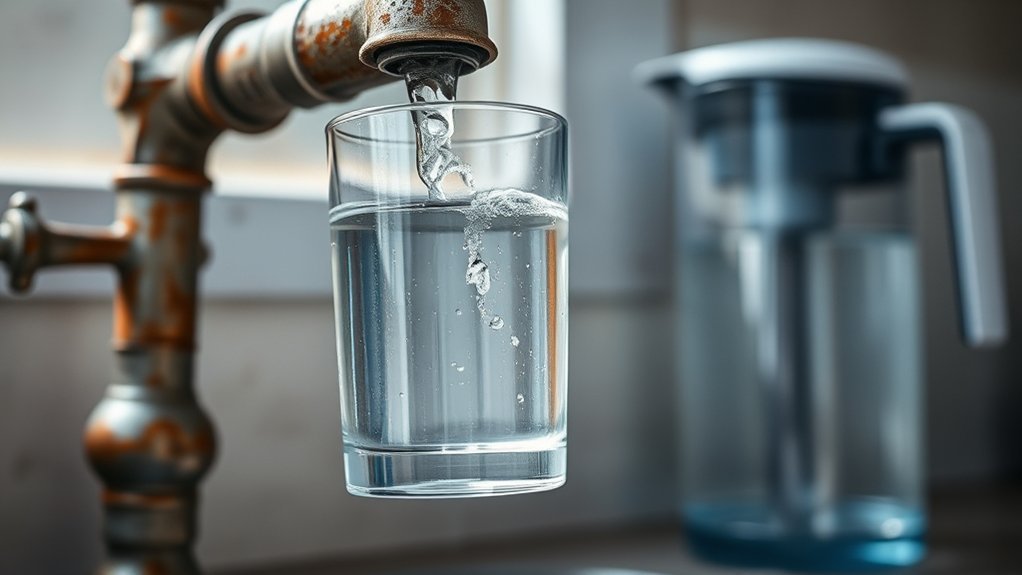
How exactly does lead find its way into your drinking water? Lead exposure primarily occurs when water passes through pipes, fixtures, or solder containing lead.
Lead enters drinking water mainly through pipes, fixtures, or solder that contain lead materials.
Older infrastructure, especially in homes built before 1986, often includes these materials, which can corrode over time, releasing lead particles. Additionally, changes in water chemistry or disturbances from plumbing repairs can increase lead leaching.
You might think filtration alone solves the problem, but without proper filtration maintenance, filters can become ineffective or even contaminated. Regularly replacing or cleaning filters is essential to ensure they continue to reduce lead levels effectively.
Understanding these pathways helps you manage risks better and underscores why consistent upkeep of your filtration system matters for minimizing lead exposure in your household water supply.
Why Removing Lead From Water Is Critical
Knowing how lead enters your drinking water highlights the importance of actively removing it to protect your health. Lead exposure, even at low levels, can cause serious health problems, particularly for children and pregnant women.
It affects neurological development, leading to cognitive impairments and behavioral issues. Adults exposed to lead may face increased risks of cardiovascular and kidney problems.
Because lead doesn’t have a safe threshold, ensuring water safety is critical. Contaminated water is a primary source of lead exposure, especially in areas with aging plumbing.
Which Types of Water Filters Remove Lead Best
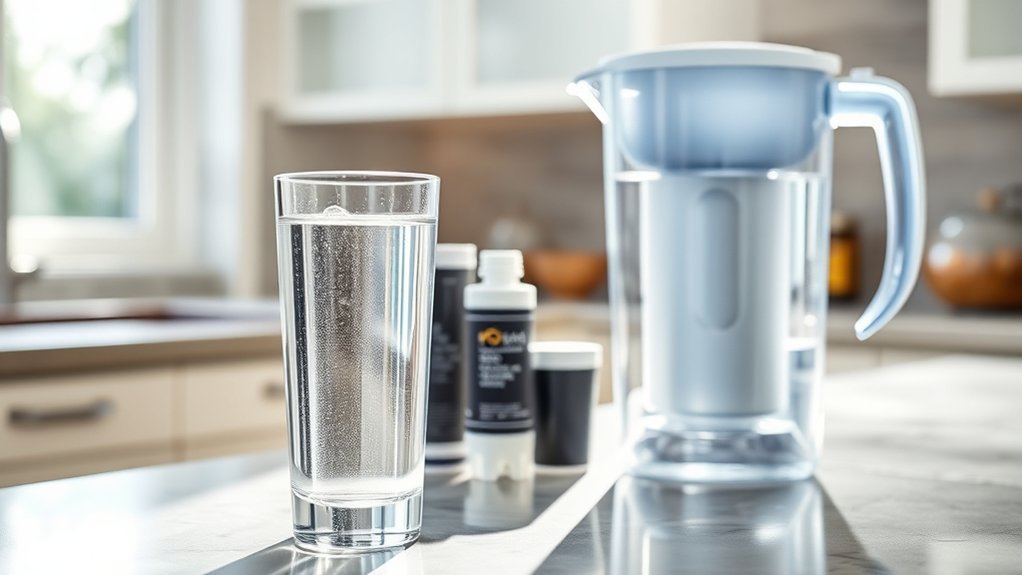
You’ll want to choose water filters that are certified specifically for lead removal to ensure effectiveness. Different filter technologies, such as activated carbon and reverse osmosis, vary in their ability to reduce lead levels.
Understanding these differences helps you select the best option for your water quality needs.
Certified Lead Removal Filters
Which water filters remove lead most effectively? Certified lead removal filters are your best option, as they undergo rigorous testing to meet NSF/ANSI Standard 53 for lead reduction. These filters specifically target lead corrosion by adsorbing and trapping lead particles, ensuring safer water for your household.
Using a certified filter guarantees consumer safety because the product has been independently verified to reduce lead to levels below EPA action limits. Commonly, activated carbon filters and reverse osmosis systems achieve certification for lead removal.
When selecting a filter, look for certification labels indicating compliance with lead reduction standards. This evidence-based approach helps you confidently reduce lead exposure from corrosion in your water supply, protecting your health and that of your family.
Filter Technologies Comparison
Certified lead removal filters provide reliable protection, but understanding how different water filter technologies perform can help you choose the best option for lead reduction. Activated carbon filters effectively reduce lead by adsorbing particles, but their efficiency depends on regular filter maintenance to prevent breakthrough.
Reverse osmosis systems offer superior lead removal by physically filtering out contaminants, though they require periodic membrane replacement and maintenance. Distillation also removes lead by vaporizing water and leaving contaminants behind, but it can be energy-intensive and slow.
Ion exchange filters target lead ions specifically, but their capacity varies, demanding timely cartridge changes. To minimize lead exposure, select a filter certified for lead reduction and commit to proper maintenance schedules. This ensures consistent performance and safe drinking water over time.
How Do Water Filters Actually Remove Lead?
How exactly do water filters remove lead from your drinking water? Most effective filters use activated carbon or ion exchange resins that attract and trap lead particles, preventing them from passing through. This process ensures significant lead removal while minimally affecting taste, striking a balance between lead removal vs taste impact.
However, you must consider maintenance vs cost concerns: filters require regular replacement to maintain efficiency, which involves ongoing expenses and effort. Neglecting upkeep can reduce lead removal effectiveness, allowing contaminants through.
Choosing a filter involves weighing its lead removal capability against how it influences water taste and the practical costs of maintenance. By understanding these mechanisms and trade-offs, you can select a water filter that reliably reduces lead without compromising palatability or becoming a financial burden.
How to Identify Lead Removal Filter Certifications
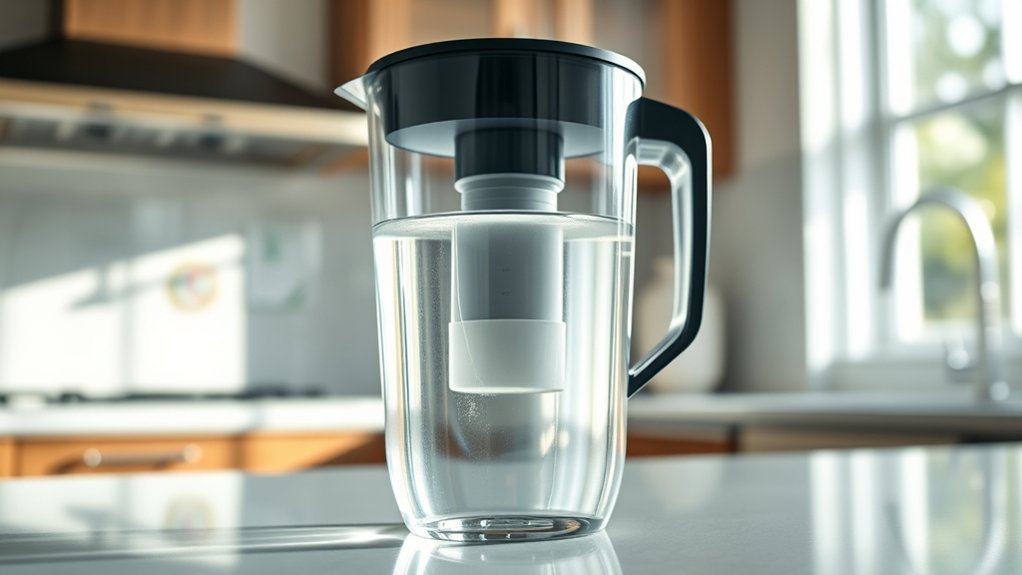
You’ll want to look for specific certification standards that verify a filter’s ability to remove lead effectively. Recognizing labels from organizations like NSF International or the Water Quality Association can help you identify trusted products.
These certifications provide evidence that the filter meets rigorous testing for lead reduction.
Certification Standards Overview
Where can you find reliable proof that a water filter effectively removes lead? Look for certifications from recognized organizations like NSF International or the Water Quality Association. These certifications require rigorous lead testing under standardized conditions, ensuring the filter’s performance is verified.
Additionally, certified filters must demonstrate material compatibility, meaning the filter components won’t leach lead or other contaminants into the water. Certification standards such as NSF/ANSI 53 focus specifically on health-related contaminants, including lead.
Recognizing Lead Removal Labels
Wondering how to quickly verify if a water filter effectively removes lead? Look for specific certification labels from recognized organizations. These labels ensure the filter has undergone rigorous testing to reduce lead exposure, critical for safe water storage and consumption.
Here’s how to identify reliable labels:
| Certification Label | Meaning |
|---|---|
| NSF/ANSI 53 | Certified for lead reduction |
| NSF/ANSI 42 | Focuses on aesthetic effects, not lead |
| WQA Gold Seal | Meets performance and safety standards |
Filters bearing NSF/ANSI 53 or WQA Gold Seal confirm tested lead removal capabilities. Avoid relying solely on labels like NSF/ANSI 42, which don’t guarantee lead reduction. Checking certifications helps you select filters that effectively minimize lead exposure in your water storage, ensuring safer drinking water.
Comparing Lead Removal Pitcher, Faucet, and Whole-House Filters
Although all three types of filters, pitcher, faucet-mounted, and whole-house, aim to reduce lead contamination, they differ substantially in their filtration capacity, installation requirements, and maintenance needs. Pitcher filters are portable and easy to use but typically have limited capacity and require frequent filter changes, making them suitable for small-scale lead testing or short-term use.
Faucet-mounted filters offer a balance between convenience and efficiency, requiring straightforward faucet installation and providing higher filtration rates than pitchers. Whole-house filters, installed at the main water supply, deliver comprehensive lead removal for all water outlets but involve more complex installation and higher upfront costs.
To choose the right option, you should consider your lead testing results, water usage, and willingness to maintain the system regularly for optimal lead reduction.
The Best Filter Materials for Getting Rid of Lead
When choosing a water filter to remove lead, you should consider materials like activated carbon, reverse osmosis membranes, and ion exchange resins. Activated carbon can adsorb lead effectively, while reverse osmosis physically blocks lead particles.
Ion exchange resins exchange harmless ions for lead, providing another reliable removal method.
Activated Carbon Effectiveness
How well does activated carbon remove lead from water? Activated carbon is effective at reducing lead, but its performance depends on the filter’s design and the presence of other materials like filtration membranes. Here’s what you should know:
- Activated carbon adsorbs lead ions, trapping them within its porous structure, but its capacity is limited compared to specialized filtration membranes.
- Combining activated carbon with filtration membranes enhances lead removal by physically blocking particles and improving adsorption efficiency.
- Filters relying solely on activated carbon may reduce lead to some extent but often don’t meet strict safety standards without complementary technologies.
Reverse Osmosis Benefits
Why is reverse osmosis considered one of the best methods for removing lead from water? Reverse osmosis (RO) uses a semipermeable membrane to physically block contaminants, including lead ions, from passing through.
This process has been scientifically validated to reduce lead concentrations by up to 99%, making it highly effective for lead conscience consumers. You’ll find RO systems particularly useful if you want consistent, reliable lead reduction, as they don’t rely on chemical reactions or adsorption alone.
Instead, they force water through a fine membrane, removing dissolved solids and heavy metals like lead. For anyone concerned about lead exposure, reverse osmosis offers a precise, evidence-based solution that surpasses many other filtration methods in lead removal efficiency.
This makes RO a top choice when selecting a water filter.
Ion Exchange Resins
While reverse osmosis relies on a physical barrier to remove lead, ion exchange resins use a chemical process to target and eliminate lead ions from water. This method is highly effective, as resin beads exchange harmless ions, like sodium or hydrogen, for lead ions based on lead science principles.
When you conduct water testing, you’ll often find ion exchange resins rated for their lead removal efficiency.
Here’s why ion exchange resins stand out:
- They selectively bind lead ions, ensuring precise removal without affecting other minerals.
- Resins are rechargeable, allowing for cost-effective long-term use after proper regeneration.
- They work well under varying pH levels, maintaining consistent performance confirmed by water testing.
Using ion exchange resins, you leverage advanced chemistry to effectively reduce lead contamination.
How Often You Should Replace Lead Removal Filters
Regularly replacing your lead removal filters is essential to maintain their effectiveness in reducing lead contamination. Most manufacturers recommend changing filters every 3 to 6 months, depending on water usage and lead levels. You should follow the replacement schedule specified by the manufacturer to ensure optimal performance.
Frequent lead testing can help you determine whether your filter continues to meet safety standards, especially if your water source is subject to fluctuating lead levels. Municipal compliance data also provides insight into local water quality trends, guiding your filter maintenance decisions.
Ignoring replacement timelines can lead to filter saturation, reducing lead removal efficiency and potentially exposing you to harmful contaminants. Staying proactive about filter replacement protects your health and ensures compliance with recommended water safety standards.
Signs Your Filter Isn’t Removing Lead Properly
How can you tell if your water filter isn’t effectively removing lead? Recognizing signs early is crucial to minimize lead risks. You might notice:
- Unusual taste or odor: A metallic or chemical taste can indicate lead presence despite filtration.
- Changes in faucet placement: If you’ve recently altered faucet placement or plumbing, the filter’s efficiency may drop due to altered flow or contamination sources.
- Failure in routine testing: Regular water tests showing lead levels above EPA limits signal the filter isn’t performing as intended.
If you encounter any of these signs, it’s important to act promptly. Ignoring them increases exposure to lead, which poses serious health risks. Monitoring your filter’s performance maintains safe drinking water and reduces lead contamination effectively.
Key Tips for Choosing the Best Lead-Removing Water Filter
Noticing signs that your filter isn’t removing lead properly highlights the importance of selecting the right water filter from the start. Prioritize filters certified for lead removal by NSF/ANSI standards and conduct regular water testing to guarantee lead safety.
Consider filter lifespan and maintenance requirements to maintain effectiveness. Here’s a quick comparison:
| Feature | Activated Carbon | Reverse Osmosis | Distillation |
|---|---|---|---|
| Lead Removal | Moderate | High | High |
| Maintenance | Low | Moderate | High |
| Cost | Low | High | High |
Choosing a filter with proven lead removal, supported by regular water testing, ensures you maintain lead safety effectively without unnecessary expense or upkeep.
Frequently Asked Questions
Can Lead Filters Remove Other Heavy Metals Besides Lead?
Yes, lead filtration systems can remove other heavy metals like mercury and cadmium. You’ll want to check the filter’s specifications since effectiveness varies by technology and heavy metal type, ensuring thorough heavy metals reduction in your water.
Are Filtered Water and Bottled Water Equally Safe From Lead?
Filtered water can be safer from lead due to lead adsorption, but you must maintain filters properly.
Bottled water’s safety varies by source and testing. So, you shouldn’t assume both are equally safe without verification.
Does Boiling Water Remove Lead Contamination?
You wouldn’t rely on a steam engine to fix lead filtration today, just like you shouldn’t boil water to remove lead contamination.
Boiling doesn’t improve water safety against lead; it may even concentrate harmful metals.
How Does Water pH Affect Lead Filter Efficiency?
You’ll find that lead adsorption efficiency varies with water pH interaction; lower pH can reduce filter performance by increasing lead solubility, while neutral to slightly alkaline pH enhances lead removal by promoting optimal adsorption onto filter media.
Can Lead Filters Remove Lead From Well Water?
You can remove lead from well water effectively; lead adsorption filters reduce lead by up to 99%.
Just monitor cartridge lifespan closely, as performance drops once saturation occurs, ensuring safe, clean water consistently.
Conclusion
You can’t afford to take chances with lead in your water—it’s a silent threat that demands action. Choosing a water filter certified under NSF/ANSI 53 or by trusted organizations guarantees you’re effectively reducing lead exposure.
Remember, even the best filters need timely replacement to stay sharp. Treat your water like a precious resource; with the right filter and proper care, you’ll keep lead out and peace of mind in.
When selecting a product, be sure to use a water filter that filters out lead to ensure your safety and health.