Why Is My Freezer Frosting up
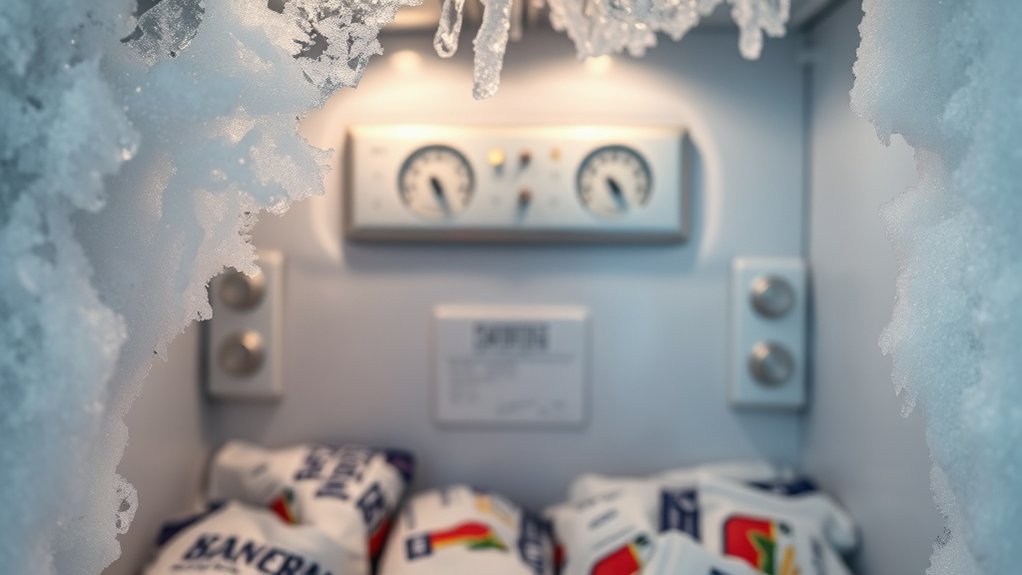
If you’ve noticed your freezer frosting up faster than usual, it’s often a sign that warm, humid air is sneaking inside or moisture isn’t being properly managed. This freezer frosting up issue can stem from several technical factors like faulty door seals, incorrect temperature settings, or problems with the defrost cycle.
Understanding these causes is crucial because ignoring them can lead to inefficiency and potential damage. So, what exactly triggers this persistent frost buildup? Identifying the root cause will help you address the problem effectively before it worsens.
Key Takeaways
- Frost forms when moist air enters the freezer, condensing and freezing on cold surfaces.
- Frequent door openings introduce warm, humid air, increasing frost buildup inside.
- Damaged or worn door seals allow air leaks, causing moisture to enter and freeze.
- Incorrect temperature settings, either too cold or inconsistent, promote frost formation.
- Malfunctioning thermostat, defrost system, or compressor can cause persistent and excessive frost.
What Causes Frost Buildup Inside Your Freezer?
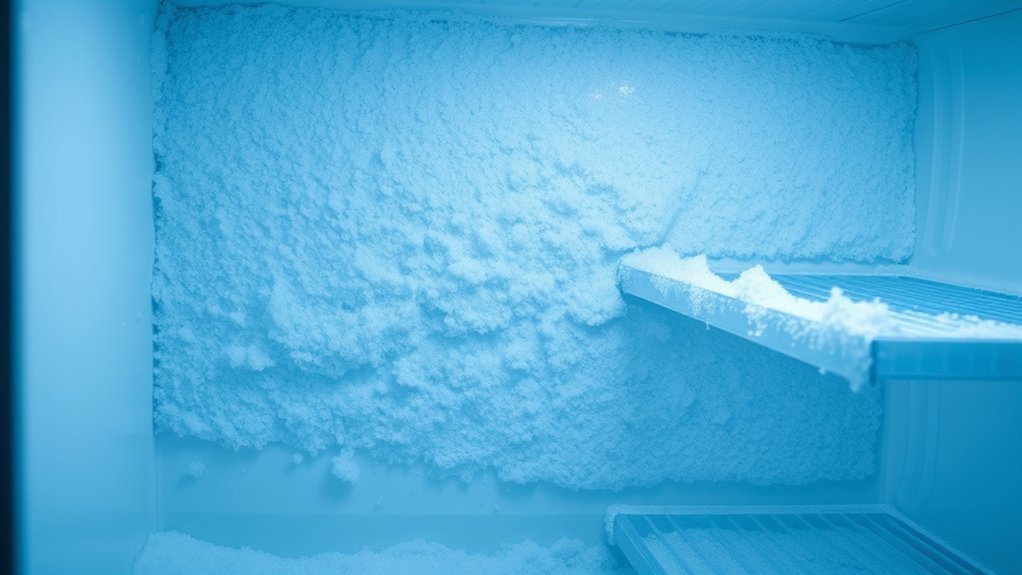
Why does frost build up inside your freezer? Frost formation occurs when moisture-laden air enters the freezer and contacts cold surfaces, causing the water vapor to condense and freeze.
Every time you open the door, warm air infiltrates, increasing humidity levels inside. This moisture then deposits as frost on evaporator coils or walls.
Over time, frost accumulates and thickens, which impairs heat exchange efficiency. As a result, your freezer’s compressor works harder, reducing energy efficiency and increasing electricity consumption.
Additionally, excessive frost reduces storage space and may interfere with airflow inside the compartment. Preventing frost buildup requires minimizing air exchange and controlling moisture infiltration.
Understanding these underlying causes helps you maintain optimal freezer performance and energy use.
How Your Freezer’s Temperature Settings Cause Frost
How do your freezer’s temperature settings influence frost buildup? Setting your freezer too cold causes excessive moisture in the air to freeze on interior surfaces, accelerating frost accumulation. Conversely, if it’s too warm, the freezer struggles to maintain consistent temperatures, allowing humidity to condense and freeze intermittently.
Proper calibration ensures the compressor cycles efficiently, minimizing frost. Your freezer’s foaming insulation plays a crucial role here; compromised insulation leads to temperature fluctuations, causing the thermostat to overcompensate and increase frost risk.
During energy audits, technicians often assess temperature settings alongside insulation integrity to optimize performance and reduce frost buildup. Maintaining a steady temperature, typically between 0°F and 5°F (-18°C to -15°C), balances preservation needs while preventing excessive frost caused by improper settings or insulation issues.
Why Faulty Door Seals Lead to Freezer Frost
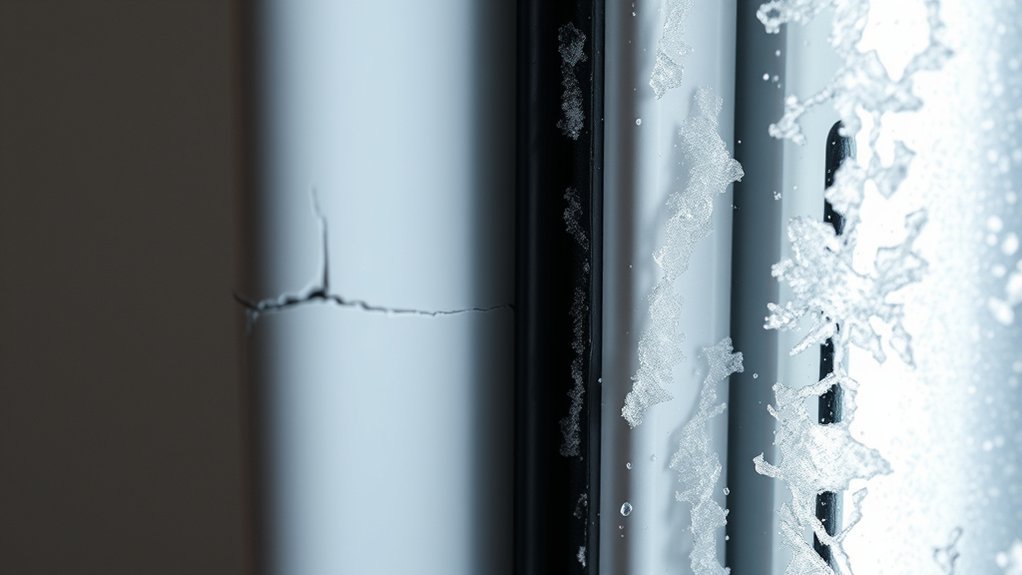
If your freezer door seal is damaged, it compromises the airtight barrier designed to keep cold air in and warm air out. This air leakage introduces moisture, which then condenses and freezes inside the unit.
Understanding how seal damage causes frost buildup helps you identify and fix the problem promptly.
Seal Damage Effects
Where does frost inside your freezer often originate? It usually starts at points where seal damage exists. When the door seal is compromised, it no longer maintains an airtight barrier. This damage creates gaps, allowing warm, moist air to enter the freezer compartment.
As this air contacts the cold interior surfaces, the moisture condenses and freezes, resulting in frost buildup. Seal damage can include cracks, tears, or warping of the gasket material. Even minor imperfections cause air leakage, undermining the freezer’s efficiency.
Over time, this frost accumulation forces your freezer to work harder, increasing energy consumption and potentially shortening the appliance’s lifespan. By regularly inspecting and promptly repairing seal damage, you can prevent frost formation and maintain optimal freezer performance.
Air Leakage Consequences
Why does a faulty door seal cause frost buildup in your freezer? When the seal leaks, warm, humid air enters, condenses, and freezes on internal surfaces. This frost accumulation reduces efficiency and can damage stored items, including delicate glassware.
Proper kitchen placement also matters; placing freezers near heat sources increases moisture ingress through compromised seals, accelerating frost buildup.
| Air Leakage Impact | Result |
|---|---|
| Increased humidity | Frost forms on freezer walls |
| Temperature fluctuations | Ice clogs air circulation |
| Energy inefficiency | Higher electricity usage |
Maintaining door seals ensures optimal glassware maintenance and consistent internal temperatures. Regularly inspect seals and consider relocating your freezer to minimize exposure to heat, preserving both appliance function and stored contents.
How Humidity Makes Your Freezer Frost Up
You’ll find humidity enters your freezer through warm, moist air when the door opens or from stored damp foods. This moisture condenses and freezes on cold surfaces, creating frost buildup.
Understanding these humidity sources helps you control and reduce frost formation effectively.
Humidity Sources Explained
How does humidity infiltrate your freezer and cause frost buildup? Primarily, humidity sources include warm air entering when you open the freezer door and moisture from improperly sealed containers or damp items stored inside.
Each time warm, humid air enters, it cools rapidly, causing water vapor to condense and freeze on the cold surfaces, forming frost buildup. Additionally, leaks in door gaskets or worn seals allow continuous humid air intrusion, exacerbating frost accumulation.
Another source is placing uncovered or warm food inside, which releases moisture directly into the freezer environment. Understanding these humidity sources is crucial because controlling them minimizes frost buildup, maintaining optimal freezer efficiency and preventing ice blockages.
Moisture’s Impact On Freezing
What happens when moisture enters your freezer is a rapid transformation from vapor to ice that directly contributes to frost buildup. Moisture control is essential because excess humidity condenses on cold surfaces, freezing instantly and forming frost.
This frost layer reduces efficiency and leads to energy waste. Understanding how humidity interacts with freezing surfaces helps you implement effective frost prevention strategies.
| Factor | Impact on Frost Formation |
|---|---|
| Ambient Humidity | High levels increase frost risk |
| Door Opening | Introduces moist air |
| Food Temperature | Warmer items release moisture |
| Freezer Seal | Poor seal allows humid air entry |
| Defrost Cycle | Removes accumulated frost |
How Often Should You Defrost Your Freezer?
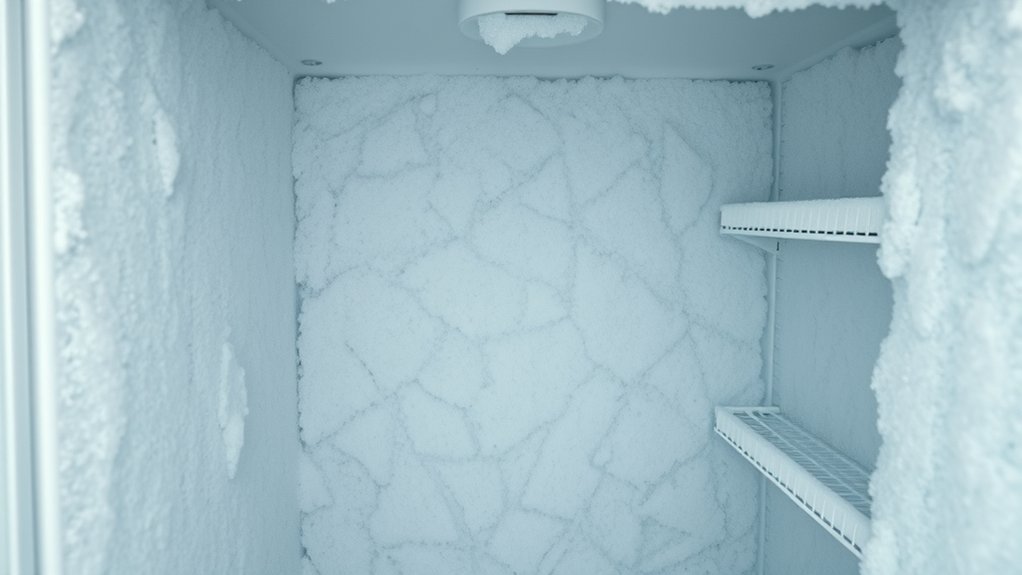
When should you defrost your freezer to maintain optimal performance? The defrost frequency depends on the frost causes and the freezer’s design. Generally, you should defrost your freezer when frost accumulation reaches about 1/4 inch thick.
Excess frost reduces cooling efficiency and increases energy consumption. Frost causes include moisture entering during door openings and leaks in the seal.
If your freezer lacks an automatic defrost cycle, manual defrosting every 3 to 6 months is recommended. However, if you notice rapid frost buildup, increase defrost frequency accordingly.
Regularly monitoring frost levels allows you to adjust defrost intervals precisely, preventing ice buildup from impairing compressor function and food preservation. Maintaining proper defrost frequency ensures your freezer operates efficiently and extends its lifespan.
Safe Tips to Reduce Freezer Frost Buildup
Regularly defrosting your freezer helps manage frost buildup, but implementing additional preventive measures can markedly reduce its occurrence. First, avoid frequent door openings, as warm, moist air accelerates frost formation.
Regular defrosting controls frost, but minimizing door openings significantly slows its formation.
Ensure door seals are intact and clean to maintain an airtight environment. Don’t rely on frost free misconceptions; even frost-free models require proper maintenance to prevent ice buildup.
Limit storing hot or warm items in the freezer, as they increase internal humidity. Debunk maintenance myths by understanding that overloading your freezer restricts air circulation, promoting frost.
Also, regularly check and clean the drain hole and drip pan to prevent water accumulation. By following these precise steps, you’ll significantly reduce frost buildup, enhancing your freezer’s efficiency and lifespan.
When to Call a Pro for Freezer Frost Problems
How can you tell if your freezer frost problem requires professional intervention? While minor freezer frost issues can often be resolved with basic frost troubleshooting, certain symptoms indicate the need for expert help. You should call a pro when:
- Persistent Frost Buildup: Despite regular defrosting, frost returns quickly and excessively, pointing to potential thermostat or defrost system malfunctions.
- Temperature Fluctuations: If your freezer struggles to maintain a stable cold temperature, affecting food preservation, it may signal compressor or sensor failures.
- Unusual Noises or Leaks: Strange sounds or water leakage inside or around the freezer can indicate complex mechanical or refrigerant issues.
Addressing these problems promptly with professional service ensures efficient freezer operation and prevents further damage.
Simple Habits to Keep Your Freezer Frost-Free Long Term
Although frost buildup can sometimes feel inevitable, adopting a few simple habits can substantially reduce its occurrence and maintain your freezer’s efficiency. First, always ensure the door seals tightly; even minor gaps invite moisture, causing frost.
Avoid leaving the door open unnecessarily, as this triggers the compressor to work harder, leading to loud humming and unnecessary energy waste. Regularly defrost your freezer when frost thickness exceeds 1/4 inch to prevent strain on components.
Keep your freezer organized, so you minimize door openings and exposure to warm air. Also, check and clean the condenser coils periodically; dirty coils reduce cooling efficiency, increasing energy consumption.
Frequently Asked Questions
Can Frost Buildup Affect the Taste of My Frozen Food?
Yes, frost impact can cause taste changes in your frozen food by creating freezer burn. This dehydrates food, altering texture and flavor.
Controlling frost buildup is vital to maintaining your food’s original taste and quality.
Is Frost Buildup Harmful to My Freezer’s Motor?
Yes, excessive frost buildup strains your freezer’s motor, causing it to work harder and potentially overheat. This frost vs motor conflict reduces efficiency and can indirectly affect taste implications by compromising consistent freezing temperatures.
Does Frost Buildup Increase My Electricity Bill?
Yes, frost accumulation reduces your freezer’s energy efficiency, forcing it to work harder and use more electricity.
Regularly defrosting helps maintain optimal performance and prevents unnecessary increases in your electricity bill over time.
Can Using Freezer Liners Prevent Frost Buildup?
Think of freezer liners as a shield, blocking moisture like a fortress wall. You can effectively reduce frost buildup and improve frost prevention by using freezer liners, which create a barrier that limits ice formation on your freezer’s surfaces.
Are Frost-Free Freezers Completely Maintenance-Free?
Frost-free freezers aren’t completely maintenance-free; you still need occasional frost free maintenance like cleaning coils and checking seals.
Using freezer liners helps reduce frost buildup, but regular upkeep ensures optimal performance and efficiency over time.
Conclusion
If you want to keep your freezer frost-free, treat it like a well-tuned machine—regularly check door seals, control humidity, and maintain proper temperature settings. Ignoring small issues is like letting a snowball grow; frost buildup can quickly spiral out of control.
Stay proactive with defrosting and upkeep, and don’t hesitate to call a pro if problems persist. With these steps, you’ll ensure your freezer runs smoothly and efficiently for the long haul, helping you prevent why your freezer frosting up in the first place.