What Is Freezer Burn
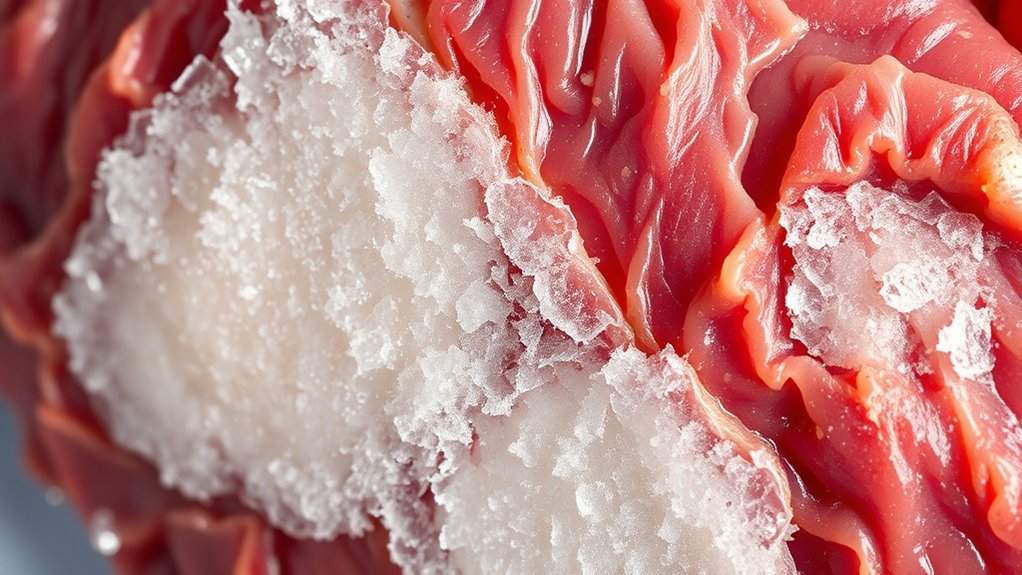
You might have noticed dry, discolored patches on your frozen food and wondered what caused them. This phenomenon, known as freezer burn, occurs when moisture escapes from the food’s surface, leading to dehydration and ice crystal formation. Freezer burn is a common issue that results from improper sealing or temperature fluctuations during storage.
Understanding exactly how freezer burn develops and affects your food’s quality is essential before deciding what to do next. Recognizing the signs can help you prevent further damage and maintain the taste and texture of your frozen items.
Key Takeaways
- Freezer burn occurs when moisture evaporates from frozen food, forming ice crystals on its surface.
- It results from sublimation, where water changes from solid to vapor without melting.
- This process causes food dehydration, leading to dry, discolored, and leathery patches.
- Freezer burn is caused by air exposure, improper sealing, temperature fluctuations, and prolonged storage.
- Although it affects food quality, freezer burn does not make food unsafe to eat if kept frozen.
What Is Freezer Burn and How Does It Happen?
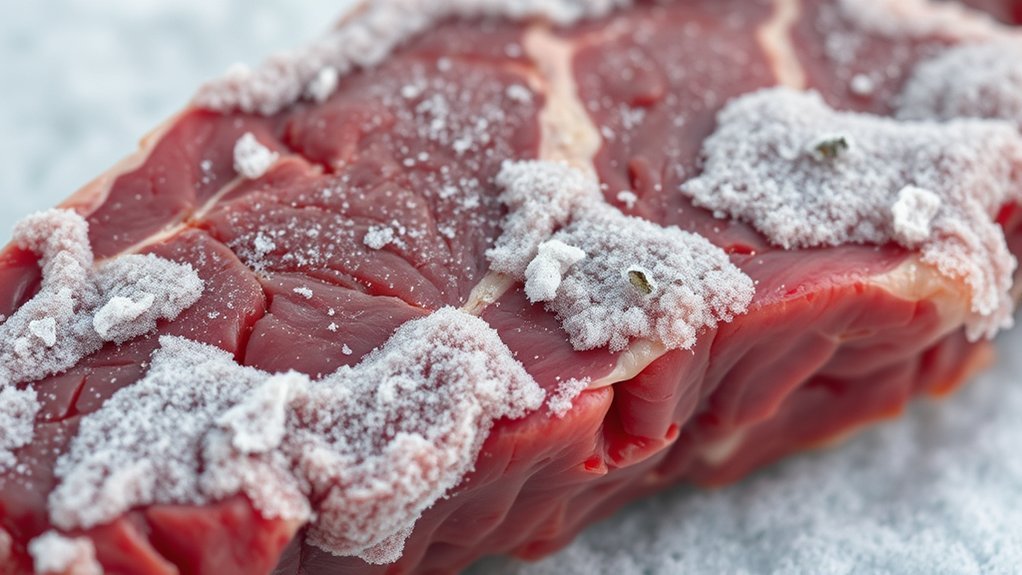
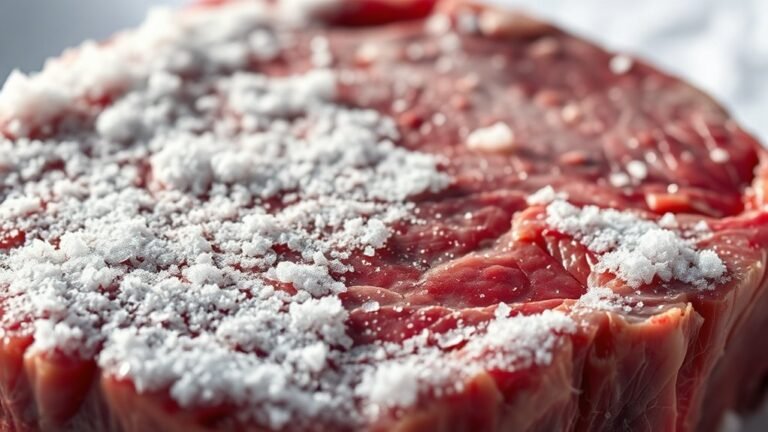
Freezer burn occurs when moisture inside your food evaporates and forms ice crystals on its surface, damaging the texture and flavor. This process relates directly to freezer chemistry, where sublimation causes water molecules within the food to transition from solid to vapor without becoming liquid.
As moisture escapes, your food dehydrates and develops those characteristic dry, discolored patches. Understanding this mechanism helps you better prevent freezer burn. Consumer psychology plays a role, too. Once you spot freezer burn, you might instinctively discard the food, assuming it’s spoiled, even though it’s safe to eat.
Recognizing the science behind freezer burn empowers you to manage your frozen goods more effectively, minimizing waste and preserving quality, despite the visual and textural changes caused by moisture loss and ice crystal formation.
Which Foods Are Most Prone to Freezer Burn?
Understanding how moisture escapes and ice crystals form gives you a clearer picture of which foods are most vulnerable to this damage. Foods with high water content, such as fruits, vegetables, and lean meats, tend to develop freezer burn more quickly. Their cellular structure allows moisture to migrate to the surface, where it sublimates and forms ice crystals.
Processed foods and items with uneven packaging also pose higher risks due to inconsistent protection. To enhance freezer safety, follow strict storage guidelines: use airtight, moisture-resistant packaging and minimize air exposure. Proper sealing and temperature control slow moisture loss, reducing freezer burn’s impact.
Common Signs to Identify Freezer Burn Quickly
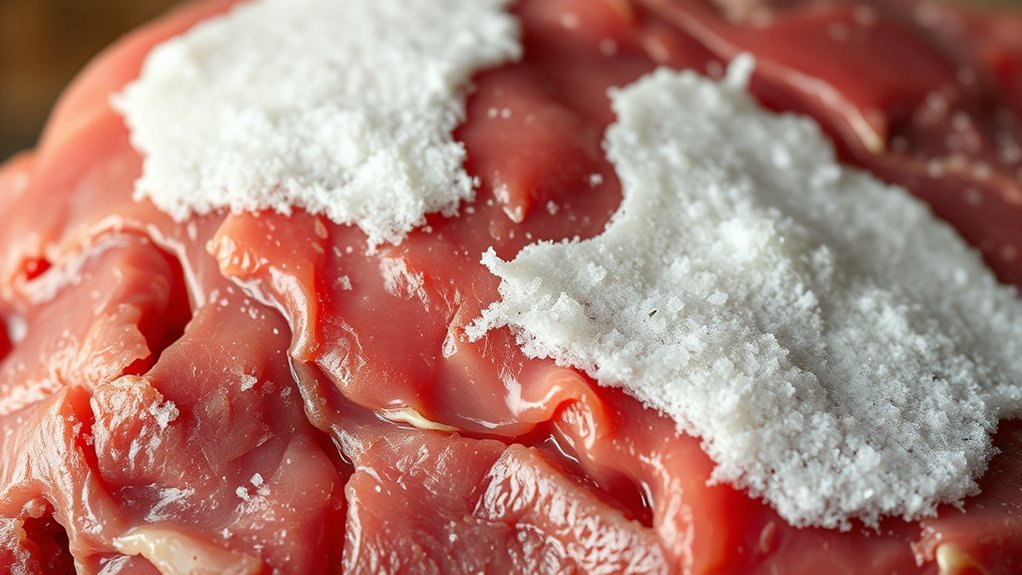
How can you quickly spot freezer burn before it affects your food’s quality? Recognizing freezer burn early is essential for maintaining freezer safety and preventing food waste. Look for these common signs:
- Frost or ice crystals on the surface of the food or packaging
- Discoloration, such as grayish-brown or white spots
- Dry or leathery patches indicating moisture loss
- Changes in texture, including firmness or brittleness
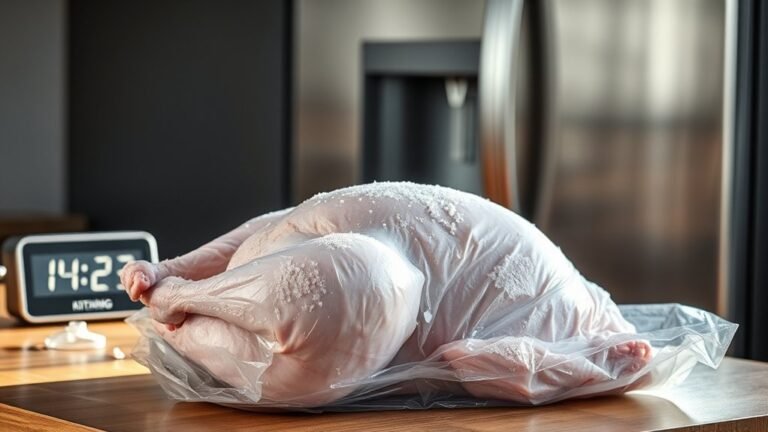
- Wrinkled or shriveled packaging due to air exposure
These indicators signal that your food is exposed to air and losing moisture, which can compromise its quality. By identifying freezer burn quickly, you can decide whether to use the food promptly or discard it, ensuring optimal freezer safety and minimizing the impact of texture changes on your meals.
How Freezer Burn Changes Your Food’s Texture and Taste
What happens to your food’s texture and taste once it suffers from freezer burn? Freezer burn causes a texture transformation by drying out the surface, leading to tough, leathery, or grainy food.
Simultaneously, flavor alteration occurs as moisture loss concentrates unpleasant, stale tastes and diminishes natural flavors.
| Texture Transformation | Flavor Alteration |
|---|---|
| Dry, leathery surface | Stale, off-flavors |
| Grainy or crumbly | Diminished sweetness |
| Toughened fibers | Metallic or bitter |
| Loss of juiciness | Faded aroma |
| Surface crystallization | Concentrated saltiness |
Understanding these changes helps you recognize freezer burn’s impact on food quality, guiding better storage and consumption decisions.
Is Freezer-Burned Food Safe to Eat?
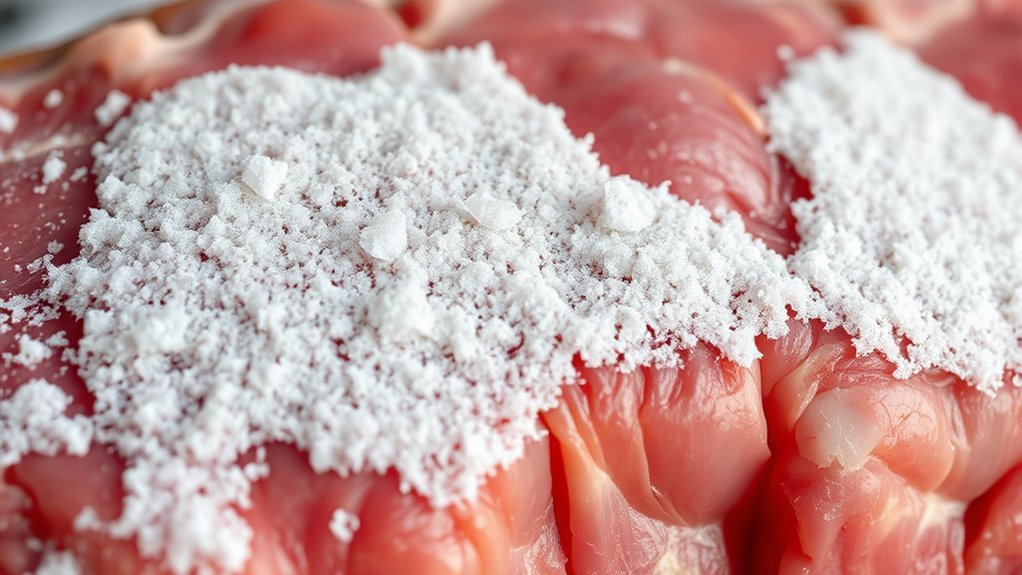
You can safely eat freezer-burned food since the process does not cause bacterial growth, but the quality and nutritional value may decline. It’s important to inspect the food for any signs of spoilage beyond freezer burn, like off odors or textures.
When freezer burn is extensive or combined with spoilage indicators, it’s best to discard the item to avoid potential health risks.
Safety Concerns Explained
Although freezer burn affects the texture and flavor of your food, it doesn’t make it unsafe to eat. Freezer burn results from dehydration and oxidation due to improper freezer safety practices, primarily exposure to air. While the texture changes often cause dryness and toughness, they pose no health risk. You should still evaluate food quality before consumption.
Consider these safety points regarding freezer-burned food:
- Freezer burn doesn’t promote bacterial growth if food remains frozen.
- Discoloration and off-flavors indicate quality loss, not contamination.
- Always inspect packaging integrity to maintain freezer safety.
- Texture changes can affect cooking performance and palatability.
- Severely freezer-burned areas can be trimmed to improve eating experience.
Nutritional Impact Overview
How does freezer burn affect the nutritional value of your food? Freezer burn primarily causes moisture loss and oxidation, which can degrade certain vitamins, particularly vitamin C and some B vitamins. However, the overall macronutrient content—proteins, fats, and carbohydrates—remains largely unaffected.
You can still safely consume freezer-burned food, but its nutritional quality may be reduced. The texture alteration impact, such as dryness and toughness, results from ice crystal formation damaging cell structures, which may affect palatability and nutrient bioavailability.
Implementing effective freezer burn mitigation strategies like proper packaging, airtight seals, and maintaining consistent freezer temperatures helps preserve both nutrition and texture. While freezer burn doesn’t pose safety risks, being mindful of texture and nutrient loss ensures better food quality and satisfaction when you eat freezer-stored items.
When to Discard
When should you consider discarding freezer-burned food? While freezer burn doesn’t make food unsafe, severe cases can degrade texture and flavor beyond palatability. Evaluate your food based on these factors before deciding:
- Extensive ice crystals indicating prolonged exposure to air
- Discoloration suggesting significant oxidation
- Off-putting odors or strange tastes upon thawing
- Compromised packaging due to poor freezer maintenance
- Inadequate label organization leading to forgotten, old items
Maintaining proper freezer maintenance and clear label organization helps prevent freezer burn by minimizing exposure and tracking storage duration. If freezer burn affects minor surface areas, trimming can salvage the rest. However, discard items that exhibit the above signs to ensure quality and safety.
How Long Can You Keep Food Frozen Without Freezer Burn?
Determining the best duration for freezing food without risking freezer burn depends on the type of food and its packaging. Generally, lean meats like poultry can stay frozen for up to 12 months, while fatty meats last about 4 to 6 months before freezer burn becomes likely.
Vegetables and fruits typically maintain quality for 8 to 12 months. However, these timeframes assume optimal packaging that minimizes air exposure.
It’s important to avoid an unrelated concept or off topic discussion like expiration dates on fresh products, as freezing durations specifically address freezer burn risk, not food safety alone.
How to Properly Store Food to Prevent Freezer Burn
Three key practices help you store food properly to prevent freezer burn: minimizing air exposure, maintaining consistent freezing temperatures, and using appropriate packaging materials. Prioritize freezer safety by keeping your freezer at or below 0°F (-18°C) to inhibit ice crystal growth that damages food texture. Take advantage of packaging innovations designed to reduce moisture loss and oxygen infiltration.
To enhance your storage technique, consider these tips:
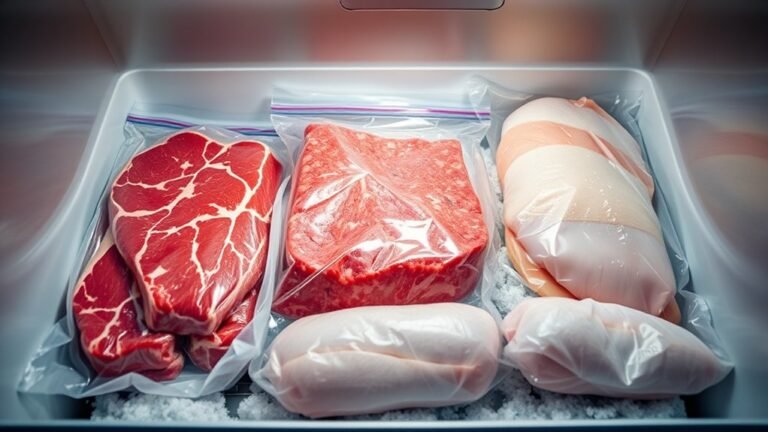
- Remove as much air as possible before sealing
- Use airtight, moisture-resistant containers or bags
- Avoid frequent freezer door openings to maintain temperature
- Label and date packages for organized rotation
- Store food in portions to limit repeated thawing and refreezing
Following these practices ensures optimal preservation and prevents freezer burn effectively.
The Best Ways to Wrap Food to Prevent Freezer Burn
To prevent freezer burn effectively, you need to choose the right wrapping materials that provide a strong moisture barrier. Focus on airtight sealing techniques, such as using vacuum sealers or tightly wrapping with plastic wrap and aluminum foil.
Additionally, label your packages clearly with dates to manage storage time and maintain food quality.
Choosing Proper Wrapping Materials
How you wrap your food directly impacts its susceptibility to freezer burn. Selecting the right wrapping materials ensures minimal air exposure, preserving quality and texture.
When choosing wrapping materials, consider these key factors:
- Use heavy-duty aluminum foil for a moisture-resistant barrier.
- Opt for freezer-grade plastic wrap with low permeability.
- Choose vacuum-seal bags designed to prevent air infiltration.
- Employ freezer paper with a plastic-coated side facing food.
- Avoid standard sandwich bags that lack sufficient protection.
These wrapping materials create effective barriers against moisture loss and air exposure. While sealing techniques also matter, focusing on proper material selection is essential to prevent freezer burn.
Techniques For Airtight Sealing
Why does airtight sealing matter so much in preventing freezer burn? It blocks moisture loss and air exposure, the primary causes of freezer burn. To achieve this, start by using high-quality materials like heavy-duty freezer bags or vacuum-seal bags designed to block air effectively.
Wrap food tightly, eliminating air pockets, similar to how non food materials in consumer electronics packaging are sealed to prevent moisture damage. Double wrap with plastic wrap before placing items in freezer bags for enhanced protection.
If you use containers, ensure they have airtight seals without cracks or gaps. Avoid relying on loose wraps or standard plastic wrap alone, as they allow air infiltration. Mastering these techniques will significantly reduce freezer burn risk by maintaining an airtight environment around your food.
Labeling And Storage Tips
Where should you start when labeling and storing food to prevent freezer burn? Begin by ensuring labeling accuracy; this improves freezer security by minimizing unnecessary exposure during searches. Use durable, moisture-resistant labels and a permanent marker for clear, legible dates and contents.
For optimal freezer security, wrap food tightly using multiple layers that block air and moisture. Follow these best practices:
- Use heavy-duty freezer bags or vacuum-sealed packaging
- Remove as much air as possible before sealing
- Wrap items in plastic wrap, then aluminum foil for extra protection
- Store similar items together to reduce opening time
- Maintain consistent freezer temperature below 0°F (-18°C)
Tips to Avoid Freezer Burn With Regular Freezer Use
When do you know if your freezer is set up to prevent freezer burn effectively? Avoid common storage myths like “freezing kills bacteria instantly” or “air exposure doesn’t matter.” You must minimize air contact and control freezer aromas, which can degrade food quality.
Use airtight packaging and maintain a consistent temperature below 0°F (-18°C).
| Tip | Explanation |
|---|---|
| Use airtight containers | Prevents moisture loss and air exposure |
| Wrap food tightly | Limits freezer aromas and dehydration |
| Avoid overloading freezer | Ensures proper air circulation |
| Keep temperature steady | Prevents ice crystal growth |
| Label and rotate stock | Reduces time food spends frozen |
Following these tips consistently helps you avoid freezer burn and maintain food quality longer.
Can You Fix Freezer-Burned Food? Cooking Tips to Use It
How effectively can you salvage freezer-burned food? While freezer burn affects texture and flavor, you can often use the food safely with proper techniques. Prioritize freezer maintenance and label accuracy to minimize waste.
If you encounter freezer-burned items, try these tips:
- Trim off discolored, dry patches before cooking.
- Use strong seasoning or sauces to mask off-flavors.
- Incorporate food into soups, stews, or casseroles where texture changes are less noticeable.
- Thaw slowly in the refrigerator to preserve moisture.
- Avoid refreezing thawed freezer-burned food to prevent quality loss.
Frequently Asked Questions
Does Freezer Burn Affect Nutritional Value of Food?
Freezer burn effects minimally impact nutritional value, but you’ll notice changes in texture and flavor. While vitamins and minerals remain mostly intact, prolonged exposure to air causes dehydration, slightly reducing quality without significant nutritional impact.
Can Freezer Burn Occur in Ice Cream and Frozen Desserts?
You wouldn’t expect a knight’s armor to crack, yet freezer burn can occur in ice cream and frozen desserts if ice cream preservation techniques fail.
Proper frozen dessert packaging prevents moisture loss and ice crystal formation, avoiding texture and flavor damage.
Is Freezer Burn Contagious to Other Foods in the Freezer?
No, freezer burn contagion doesn’t occur between foods. You’ll notice moisture loss dynamics affect individual items independently, so freezer burn impacts texture and flavor only where air exposure happens, not by spreading to nearby frozen foods.
Can Vacuum Sealing Completely Prevent Freezer Burn?
Vacuum sealing reduces moisture loss by up to 90%, but it can’t completely prevent freezer burn.
Tiny air pockets and temperature fluctuations still allow some moisture escape, so occasional freezer burn might still develop despite vacuum sealing efforts.
How Does Freezer Burn Differ From Freezer Frost Buildup?
You’ll notice freezer burn differences in texture and flavor, while frost buildup distinctions lie in surface ice accumulation.
Freezer burn dehydrates food, causing tough spots; frost buildup is just ice crystals forming on freezer walls or food surfaces.
Conclusion
Freezer burn might seem like a frostbitten shadow creeping over your food’s quality, but it doesn’t spell the end. By sealing tightly and keeping your freezer’s rhythm steady, you can lock moisture in and keep those icy crystals at bay.
When freezer burn strikes, think of it as a signal to act—trim away the damaged edges, and you’ll still savor flavors preserved by your careful, technical touch. Stay sharp; protect your frozen treasures from freezer burn.