How Cold Should a Freezer Be
If your freezer isn’t cold enough, you might as well be storing food on your kitchen counter. Knowing how cold a freezer should be is crucial for food safety and quality. Keeping your freezer at 0°F (-18°C) or below is essential to stop microbial growth and preserve food quality, as recommended by the USDA.
But temperature alone isn’t the whole story—fluctuations and improper storage can undermine safety and taste. Understanding these factors will help you maintain optimal conditions and avoid costly mistakes.
Key Takeaways
- Set your freezer temperature to 0°F (-18°C) for optimal food safety and long-term preservation.
- Temperatures above 0°F allow microbial growth and degrade food quality.
- Maintaining a consistent 0°F prevents large ice crystals and preserves texture and nutrients.
- Use a reliable freezer thermometer to verify and adjust the temperature after 24 hours.
- Avoid colder settings to reduce energy use and prevent excessive frost buildup.
What’s the Best Freezer Temperature to Keep Food Safe?
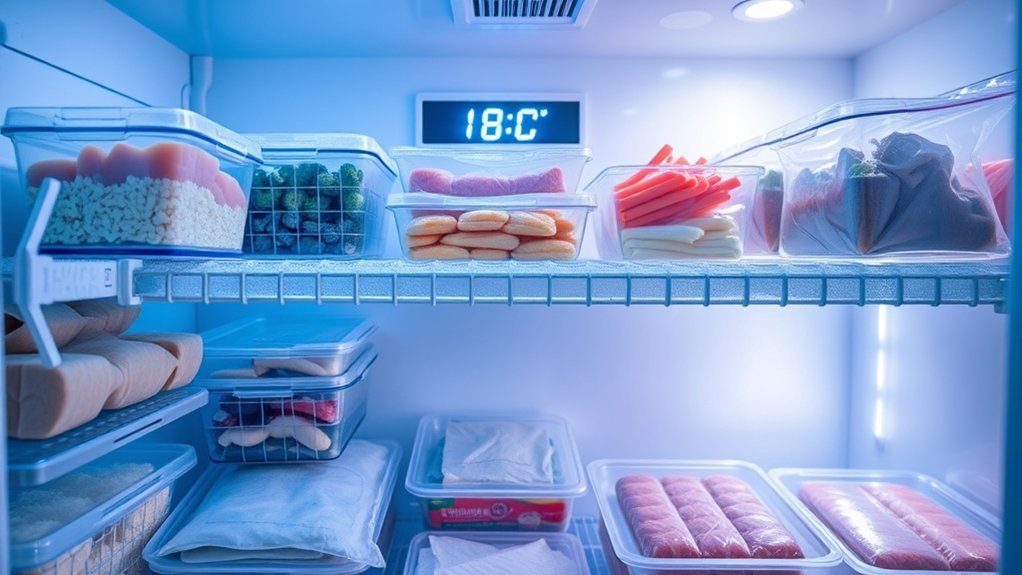
How cold should your freezer be to assure food stays safe? For optimum freezer safety, maintain a temperature at or below 0°F (-18°C). This threshold halts microbial growth and enzymatic activity that lead to food spoilage and potential foodborne illnesses.
Regulatory agencies like the USDA recommend this standard to ensure long-term preservation and inhibit pathogen proliferation. Consistent temp maintenance is critical; fluctuations above 0°F can compromise food safety, increasing risks of spoilage.
Use a reliable freezer thermometer to monitor and verify the internal temperature regularly. Avoid overloading the freezer, as restricted airflow can cause uneven cooling, impacting freezer safety. By adhering to a steady 0°F or lower, you effectively safeguard your food’s integrity and reduce health risks associated with improper freezing.
How Freezer Temperature Impacts Food Taste and Nutrition
Although maintaining a freezer at 0°F (-18°C) ensures safety, the exact temperature can also influence the taste and nutritional quality of your food. At this temperature, cellular water freezes rapidly, minimizing ice crystal size, which preserves food texture and flavor preservation effectively.
Temperatures significantly colder than 0°F don’t improve quality but increase energy waste and promote frost buildup, which can degrade food texture over time. Conversely, warmer settings risk slower freezing, causing larger ice crystals that rupture cell walls, diminishing texture and nutrient retention.
Maintaining a consistent 0°F balance optimizes flavor preservation and nutrient stability without incurring unnecessary energy costs or frost buildup, ensuring your frozen food retains its intended quality until consumption.
How to Know if Your Freezer Is Too Warm or Too Cold
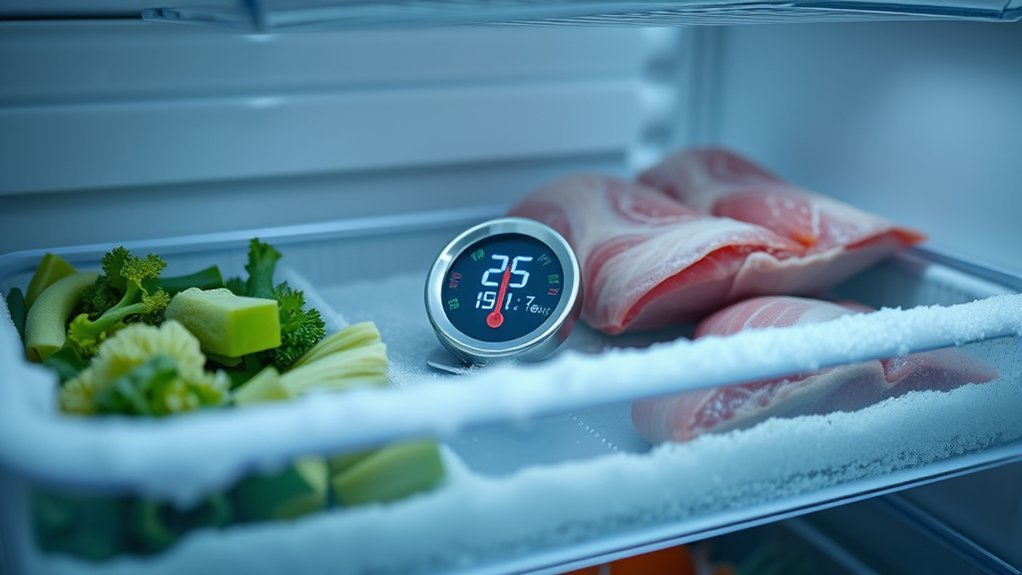
Wondering whether your freezer is maintaining the ideal temperature? Identifying if it’s too warm or too cold requires attention to subtle signs often caused by tiny freezer mistakes like improper sealing or overloading.
Noisy appliance dynamics, such as unusual hums or clicks, can indicate temperature regulation issues or mechanical strain. You should monitor these indicators carefully:
- Frost buildup beyond normal levels, signaling excessive cold
- Soft or partially thawed food, indicating warmth
- Excessive noise changes, hinting at compressor stress
- Ice crystals forming inside packaging, showing temperature fluctuations
- Condensation inside the freezer, a sign of poor sealing or warm air intrusion
Recognizing these signs helps maintain optimal freezing conditions, preserving food quality and appliance longevity.
Easy Ways to Set and Check Your Freezer’s Temperature
Where should you start when setting your freezer’s temperature for optimal performance? Begin by locating the internal thermostat or digital control panel. Set the temperature to 0°F (-18°C), the scientifically recommended level to ensure food safety while maximizing energy efficiency.
To check the accuracy, use a freezer thermometer placed in the coldest section, ideally away from walls or door vents. After 24 hours, verify the reading; adjust the setting slightly if it deviates more than 2°F.
Maintaining the correct temperature supports frost prevention by minimizing moisture buildup, reducing defrost cycles, and lowering energy consumption. Regularly monitoring and calibrating your freezer’s temperature ensures consistent cold, prolongs appliance lifespan, and optimizes energy use, making it both cost-effective and environmentally responsible.
Simple Tips to Keep Your Freezer Temperature Stable and Efficient
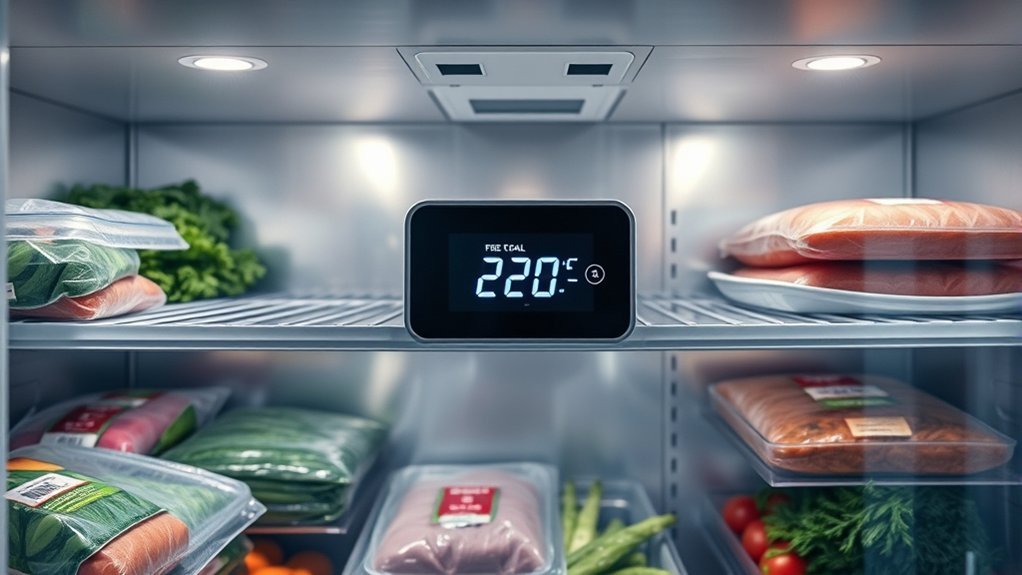
How can you maintain a stable freezer temperature without increasing energy costs? Achieving optimal freezer efficiency hinges on minimizing temp fluctuations and reducing overwork on the compressor.
You can enhance temp stability by implementing these evidence-based strategies:
- Keep the freezer full but not overcrowded to maintain consistent internal temperature.
- Avoid frequent door openings to prevent warm air infiltration.
- Regularly defrost manual-defrost freezers to prevent ice buildup that impairs cooling.
- Ensure door seals are intact and airtight to prevent cold air leakage.
- Position the freezer away from heat sources and allow proper ventilation for efficient compressor operation.
Frequently Asked Questions
Can Freezer Temperature Affect the Lifespan of the Appliance?
Yes, setting your freezer too cold strains its compressor, reducing lifespan. Proper freezer maintenance guarantees optimal energy efficiency and prevents overworking components.
Regularly monitoring and adjusting temperature preserves both appliance durability and performance effectively.
What Is the Ideal Freezer Temperature for Storing Ice Cream?
For flawless freezing, fix your freezer at -20°F (-29°C) to optimize ice cream storage and maintain freezer efficiency. This precise point preserves creamy consistency while preventing icy crystallization, ensuring peak performance and product perfection every time.
How Does Freezer Temperature Vary in Different Freezer Types?
You’ll find freezer temperature varies by type: upright freezers often maintain -18°C, chest freezers stay colder, around -20°C.
Follow specific storage guidelines to optimize preservation and avoid temperature fluctuations that compromise food quality.
Are There Health Risks From a Freezer That’s Too Cold?
Imagine your freezer like a deep freeze vault; improper cooling, especially excessively low temperatures, can cause food texture damage but poses minimal direct health risks.
Still, avoid freezer burn and nutrient loss from overly cold settings to guarantee quality and safety.
How Long Can Food Stay Safe if the Freezer Loses Power?
If your freezer maintains temperatures below 0°F during a power outage, food stays safe for about 48 hours.
To ensure power outage safety, keep the door closed and monitor how freezer temperatures rise over time.
Conclusion
You might wonder if colder than 0°F improves food safety, but research shows temperatures below -18°C offer no additional microbial control and risk freezer burn. Keeping your freezer consistently at 0°F (-18°C) ensures ideal preservation without compromising taste or nutrition.
Use a reliable thermometer, avoid frequent door openings, and maintain proper storage to uphold this standard. This balance maximizes safety, quality, and energy efficiency—proven critical by food science and USDA guidelines.
For optimal results, remember that knowing how cold should a freezer be is essential to maintain food safety and quality.