How Long Does Chicken Last in Freezer
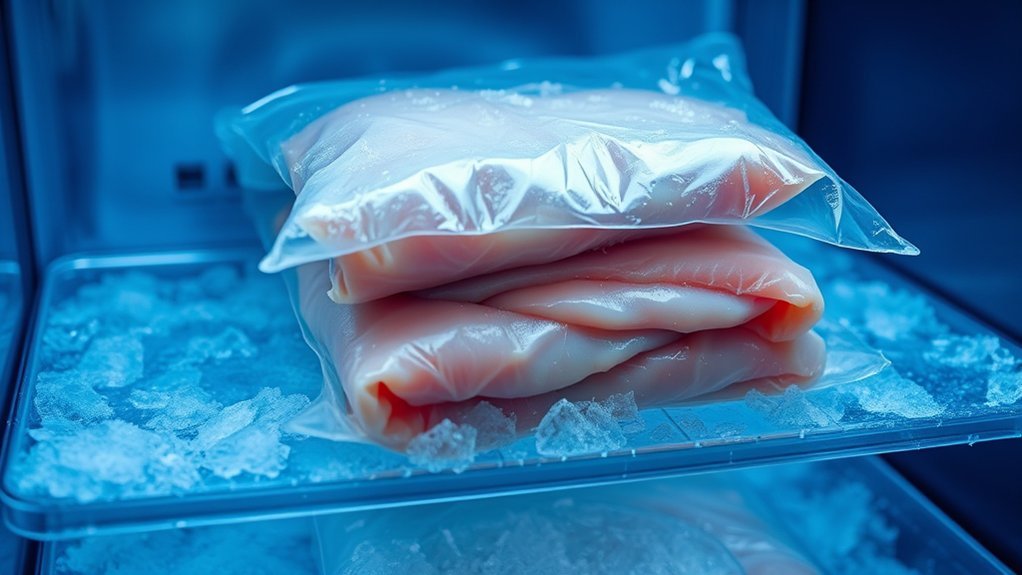
You might assume chicken lasts forever in the freezer, but how long does chicken last in the freezer depends on quality as much as safety. At 0°F (-18°C) or below, chicken stays safe indefinitely, yet taste and texture degrade over time.
Whole chickens can keep up to 12 months, while parts and ground chicken require shorter storage. Knowing precise timelines and proper storage techniques can help you avoid waste and guarantee your meals stay enjoyable.
What’s the best way to store and identify frozen chicken’s freshness? Proper packaging, labeling with dates, and using airtight containers or freezer bags are key to maintaining quality.
Key Takeaways
- Whole chicken maintains optimal taste and texture for up to 12 months when frozen at 0°F (-18°C) or below.
- Chicken parts like breasts, thighs, and wings retain best quality for up to 9 months in the freezer.
- Ground chicken and giblets are best used within 3 to 4 months for optimal flavor and texture.
- Frozen chicken stays safe indefinitely at consistent freezing temperatures, but quality and taste decline over time.
- Proper airtight packaging and stable freezing conditions prevent freezer burn and preserve chicken quality longer.
How Long Can You Keep Chicken Frozen Safely?
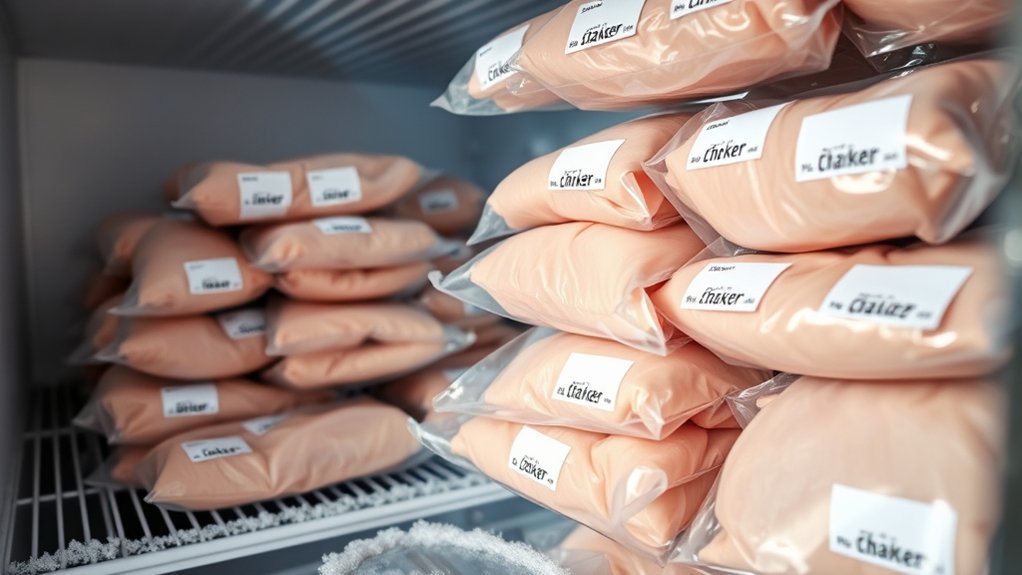
How long can you keep chicken frozen safely? The USDA recommends maintaining chicken at 0°F (-18°C) or below to ensure freezer safety and prevent bacterial growth. Proper packaging optimization significantly extends quality retention by minimizing exposure to air and moisture.
Use airtight, moisture-vapor-resistant containers or vacuum-sealed bags to reduce freezer burn and oxidation. While chicken remains safe indefinitely at consistent freezing temperatures, its sensory qualities degrade over time.
For optimal taste and texture, freeze raw whole chicken up to 12 months, and cut pieces up to 9 months. Cooked chicken maintains quality for 2 to 6 months.
You should avoid frequent temperature fluctuations, as thaw-refreeze cycles compromise freezer safety and accelerate spoilage. Accurate packaging and storage conditions are crucial to preserving chicken’s safety and quality in the freezer.
Freezing Times for Different Types of Chicken
When should you consider different freezing durations for various cuts and preparations of chicken? Whole chickens maintain optimal quality for up to one year, while parts like breasts, thighs, or wings are best frozen for 9 months.
Ground chicken and giblets have shorter quality timelines, typically 3 to 4 months. These durations help preserve frozen chicken textures by minimizing moisture loss and cellular damage. Overextended freezing increases the risk of freezer burn, which deteriorates texture and flavor.
To counter freezer burn, wrap chicken tightly in airtight packaging and consider vacuum sealing. Although freezer burn doesn’t make chicken unsafe, it compromises quality. By adhering to these evidence-based freezing times, you ensure safety and maintain the best texture and taste for each type of chicken cut or preparation.
How to Store Frozen Chicken for Maximum Freshness
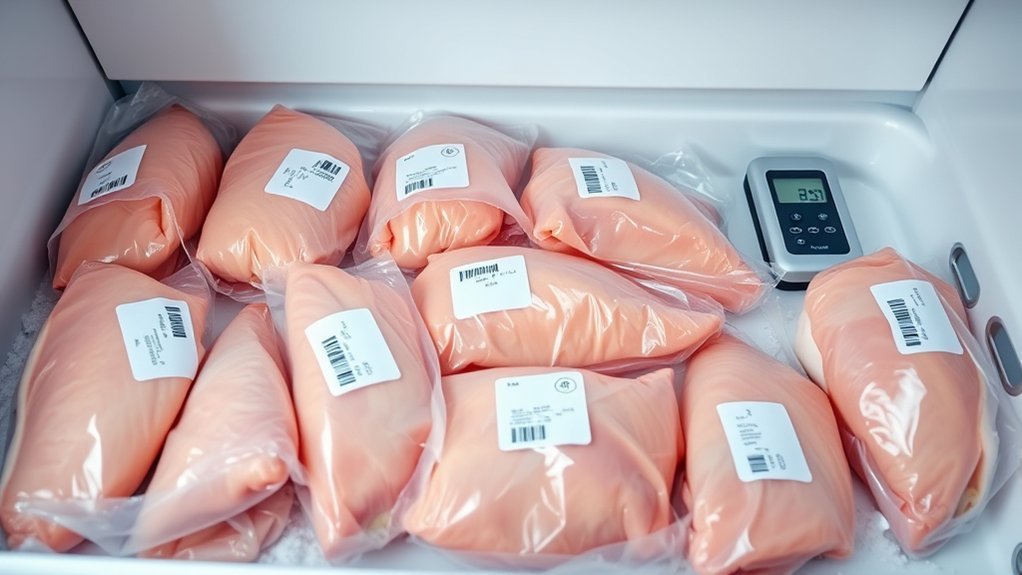
Proper storage techniques directly influence the quality and safety of frozen chicken beyond just adhering to recommended freezing durations. To maximize freshness, focus on the packaging method and storage duration. Follow these guidelines:
Effective storage methods are key to maintaining frozen chicken quality and safety beyond freezing times alone.
- Use airtight, moisture-proof packaging such as vacuum-sealed bags or heavy-duty freezer bags to prevent freezer burn and moisture loss.
- Remove as much air as possible before sealing to minimize oxidation and bacterial growth.
- Label packages with the date of freezing to monitor storage duration and ensure you use chicken within optimal timeframes (generally up to 12 months).
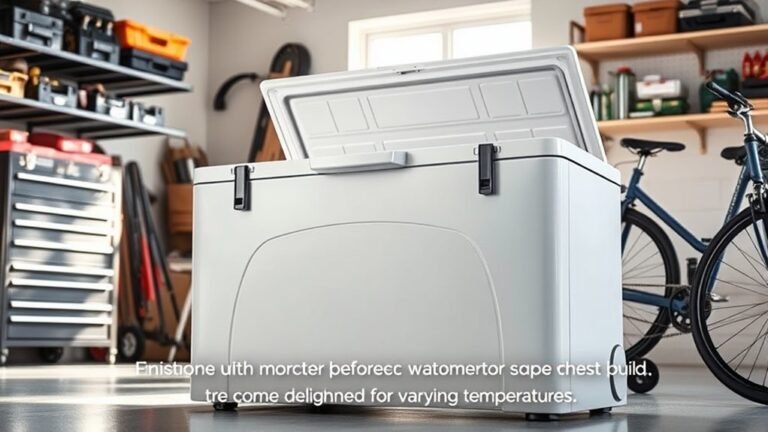
- Store chicken in the coldest part of the freezer, maintaining a consistent temperature at or below 0°F (-18°C), which inhibits microbial activity and preserves texture.
These evidence-based practices help preserve chicken quality and safety throughout extended freezer storage.
How to Tell If Frozen Chicken Has Gone Bad
Can you reliably identify spoiled frozen chicken before cooking? Yes, by focusing on sensory cues and packaging details, you can determine safety. First, examine the chicken’s color; fresh frozen chicken should be pale pink without gray or greenish hues, which signal spoilage.
Next, check for freezer burn, dry white patches caused by ice crystal formation, which can affect texture but not safety. Smell the thawed chicken; a sour or ammonia-like odor indicates bacterial growth.
Always refer to freezer safe labeling for storage duration guidelines, as exceeding recommended times increases spoilage risk. Additionally, assess the packaging integrity; torn or unsealed bags allow air exposure, accelerating degradation.
Using these methods, you’ll know how to tell if your frozen chicken is safe to cook or should be discarded.
Tips to Keep Frozen Chicken Tasty and Reduce Waste
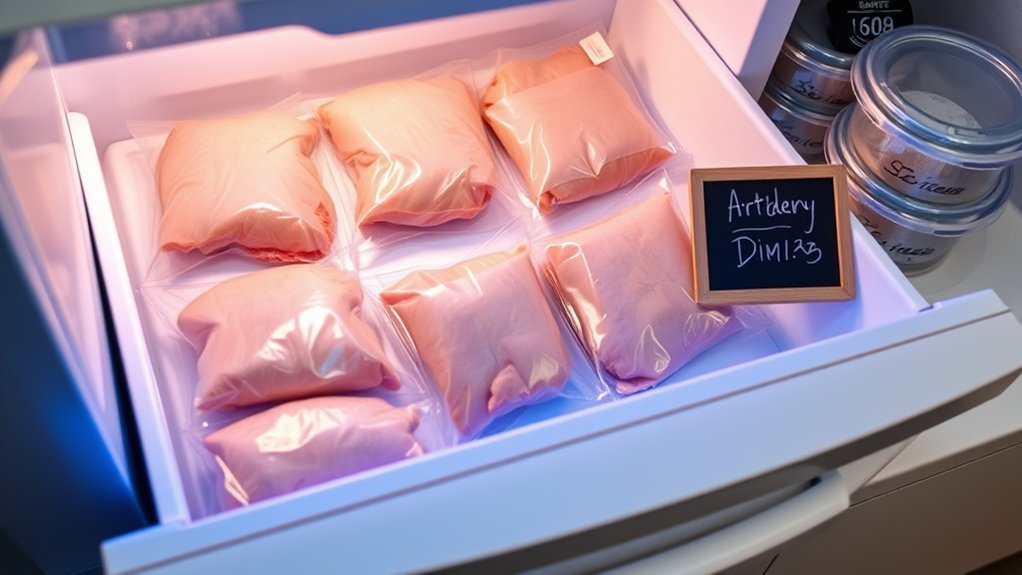
How can you guarantee your frozen chicken stays flavorful and minimizes waste? Follow these evidence-based tips to maintain quality and safety:
- Use frozen marinade: Marinate chicken before freezing to lock in flavor and moisture, reducing freezer burn.
- Package airtight: Wrap tightly in vacuum-sealed bags or heavy-duty freezer wrap to prevent oxidation and dehydration.
- Practice thawing safety: Thaw chicken in the refrigerator or cold water, never at room temperature, to inhibit bacterial growth.
- Label and rotate: Date packages and use the oldest first to avoid prolonged storage that degrades taste and safety.
These steps ensure optimal taste retention and reduce the risk of spoilage, helping you minimize food waste while enjoying safe, delicious chicken.
Frequently Asked Questions
Can You Refreeze Chicken After Thawing?
You can’t safely refreeze chicken after thawing unless you thawed it in the fridge and kept it under 40°F.
Refreezing safety depends on proper thawing timing to prevent bacterial growth and maintain quality.
Does Freezing Chicken Kill Bacteria?
Freezing chicken doesn’t kill bacteria; it only stops their growth by lowering temperatures. When you thaw chicken, bacteria can reactivate, so you should cook it promptly to guarantee safety and prevent foodborne illness.
How Does Freezing Affect Chicken’s Nutritional Value?
Freezing nutrition in chicken remains mostly stable, as low temperatures slow nutrient degradation. However, thawing impact can cause slight nutrient loss, especially water-soluble vitamins.
Proper thawing methods minimize this effect, preserving chicken’s overall nutritional value.
Can Frozen Chicken Be Cooked From Frozen?
Just like knights in armor, you can cook frozen chicken safely by adjusting cooking time, usually 50% longer. Avoid refreezing after thawing to prevent bacterial growth and preserve optimal texture and safety, backed by food science.
What Is the Best Way to Thaw Frozen Chicken?
You should thaw frozen chicken in the refrigerator for thawing safety, as it maintains a safe temperature.
Alternatively, use cold water or microwave thawing methods, but cook immediately afterward to prevent bacterial growth and ensure safety.
Conclusion
You can keep whole chickens frozen safely for up to 12 months, but quality starts to decline after that. Chicken parts last about 9 months, while ground chicken and giblets are best used within 3–4 months.
Remember, freezing keeps chicken safe indefinitely at 0°F (-18°C), but taste and texture suffer over time. Using airtight packaging and avoiding thaw-refreeze cycles helps preserve quality.
Staying aware of these timelines helps you reduce waste and enjoy better meals. Knowing how long chicken lasts in the freezer ensures you get the best flavor and safety every time.