How to Filter Water in the Wilderness
When you’re out in the wilderness, knowing how to filter water is essential. Finding and filtering water isn’t just about quenching thirst—it’s about staying healthy. You need to know where to find the safest water sources and how to remove harmful contaminants effectively.
Skipping proper filtration can lead to serious illness, so understanding each step—from locating water to boiling it—is crucial. Before you settle for a drink, consider what you really need to do to ensure that water is safe.
Key Takeaways
- Collect water from clear, flowing sources, avoiding stagnant or polluted areas near industrial or agricultural runoff.
- Pre-filter water using layers of gravel, sand, and charcoal to remove debris and improve clarity before further treatment.
- Use a cloth or bandana to remove large particles before applying portable water filters to reduce clogging.
- Boil water vigorously for at least one minute (three minutes at high elevations) to kill pathogens after filtration.
- Store filtered and boiled water in clean, airtight containers away from contamination and label with the filtration date.
How To Spot Safe Water Sources Before Filtering
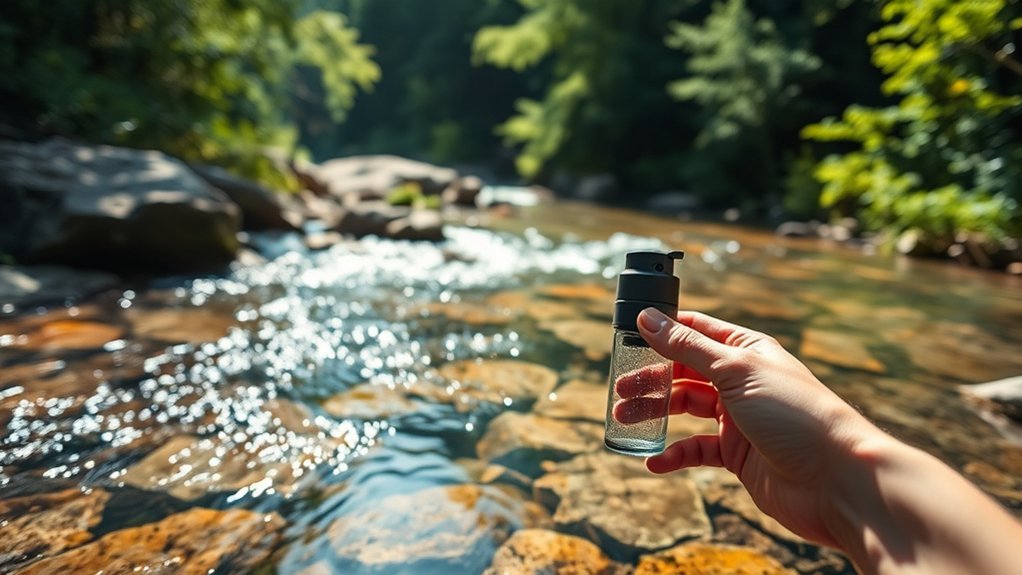
Where can you find the safest water in the wilderness? Start by spotting contaminated sources. Avoid water near industrial sites, agricultural runoff, or areas with visible pollution.
Find the safest wilderness water by avoiding areas near industrial sites, agricultural runoff, or visible pollution.
Look for clear, flowing water like streams or springs, which are less likely to harbor harmful bacteria. Avoid stagnant water, as it often contains pathogens and parasites that can make you sick.
Check for signs of animal activity. Water heavily used by wildlife may need extra treatment. Also, steer clear of water with unusual colors, odors, or debris.
You can’t rely solely on appearance, but these clues help minimize risk before filtering. Prioritizing clean, moving water sources reduces the burden on your filtration system and keeps you safer in the wild.
How To Pre-Filter Water Using Natural Materials
You’ll want to choose natural materials like sand, gravel, and charcoal for effective pre-filtration. Layer these materials carefully to trap larger particles and improve water clarity.
This simple setup will make your final filtration step more efficient and safer.
Selecting Effective Natural Filters
Natural materials like sand, charcoal, and gravel work well as pre-filters to remove large particles and debris from water before purification. When selecting effective natural filters, focus on the source materials’ quality. Clean, uncontaminated sand and charcoal maximize sediment removal.
Gravel acts as a sturdy base, preventing clogging and ensuring flow. Avoid materials from polluted areas to reduce health risks. Your choice directly impacts filter efficiency and water clarity.
| Material | Emotional Impact |
|---|---|
| Sand | Trustworthy barrier |
| Charcoal | Confidence in purity |
| Gravel | Stability and strength |
| Leaves | Fragility, caution |
| Mud | Unreliability, risk |
Use this guidance to choose filters that safeguard your water and your well-being.
Layering Materials For Filtration
How do you effectively combine materials to create a reliable pre-filter? Start by understanding layering materials in proper sequence, which is key to effective filtration techniques.
Begin with a coarse layer like gravel to catch large debris. Next, add a finer layer such as sand to trap smaller particles. Finally, top it off with activated charcoal or charcoal from a campfire to absorb impurities and improve taste.
Arrange these layers in a container or fabric so water flows through each stage, ensuring thorough filtration. This method removes sediments and reduces contaminants before boiling or chemical treatment.
How To Use Portable Water Filters Effectively

A portable water filter becomes an essential tool when you’re relying on wilderness water sources. To use it effectively, start by assessing water quality. Clear water filters faster and reduces clogging.
Don’t fall for filtration myths; not all filters remove viruses or chemicals, so choose one suited to your needs. Follow these steps for optimal use:
| Step | Action | Tip |
|---|---|---|
| 1 | Collect water | Avoid stagnant sources |
| 2 | Pre-filter debris | Use cloth or bandana |
| 3 | Attach filter securely | Prevent leaks |
| 4 | Pump or squeeze slowly | Avoid filter damage |
| 5 | Store filtered water | Keep container clean |
Maintain your filter by backflushing regularly. This ensures efficiency and prolongs its lifespan.
How To Make A DIY Water Filter
Building a DIY water filter can be a lifesaver when you don’t have access to commercial options. Start with a clean container, like a plastic bottle, and layer materials to filter water effectively.
First, add a piece of cloth or coffee filter at the bottom to prevent debris from escaping. Next, layer sand, activated charcoal, and fine gravel. Each layer traps different contaminants, improving water clarity.
Pour water slowly through the filter, collecting it in a clean container. Avoid any unrelated topic or off topic discussion when preparing your filter, as staying focused ensures safety and effectiveness.
Boiling Water To Purify It: When And How
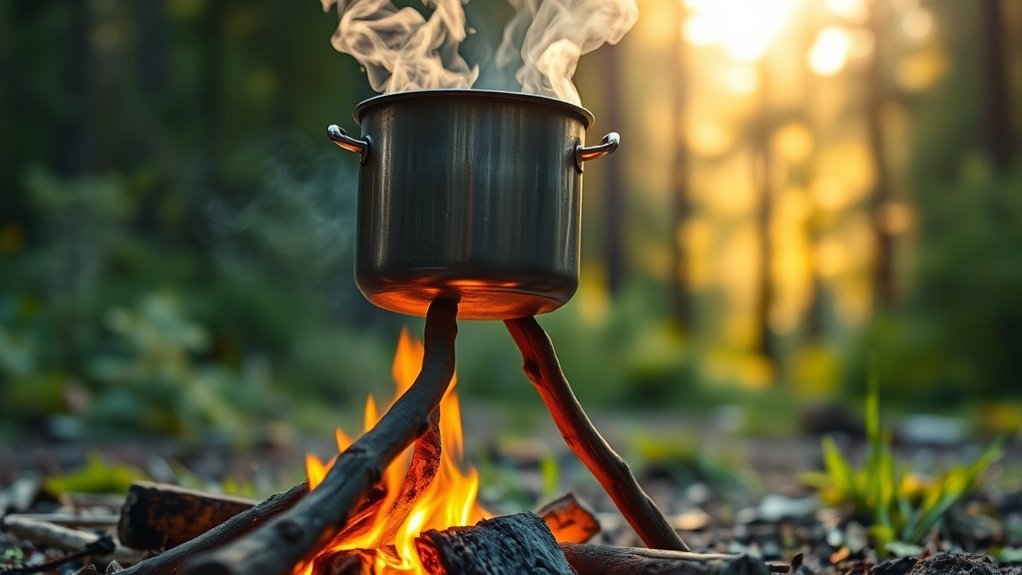
When you boil water to purify it, make sure it reaches a rolling boil for at least one minute to kill harmful pathogens. At higher altitudes, extend boiling time to three minutes for safety.
Always use a clean container and avoid recontaminating the water after boiling.
Boiling Time Recommendations
How long should you boil water to guarantee it’s safe to drink? Boil it vigorously for at least one minute at sea level; this kills most pathogens. If you’re above 6,500 feet, extend boiling to three minutes due to lower boiling temperatures.
Boiling water not only ensures camp safety by preventing waterborne illnesses but also supports effective rescue signaling. Clean water means you stay healthy and alert.
Avoid guessing boiling time; use a timer to be precise. After boiling, let the water cool naturally without adding ice or contaminants.
Safety Tips For Boiling
Why must you handle boiling water carefully in the wilderness? Boiling water poses burn hazards and fire risks, especially in unpredictable outdoor settings.
Before you start, conduct a thorough risk assessment of your surroundings. Check for stable ground and a clear area free of flammable materials.
Always wear proper safety gear, such as heat-resistant gloves and sturdy footwear, to protect yourself from spills or splashes. Use reliable containers designed for boiling and avoid makeshift vessels that can crack or tip over.
Keep children and pets at a safe distance. Never leave boiling water unattended; sudden wind or movement can cause accidents.
How To Remove Harmful Bacteria And Parasites From Water
Where can you find reliable methods to eliminate harmful bacteria and parasites from water in the wilderness? When you rely on unsafe water, you risk contracting waterborne pathogens that cause serious illness. To protect yourself, follow these proven steps:
- Boil water for at least one minute to kill most pathogens.
- Use a portable water filter with a pore size of 0.1 microns or smaller to physically remove bacteria and parasites.
- Treat water with chemical disinfectants like iodine or chlorine tablets as a backup.
- Combine filtration and chemical treatment for maximum safety, especially in uncertain water sources.
Tips For Storing Filtered Water Safely
Properly storing filtered water guarantees it stays safe and free from contamination. Use clean, airtight containers to prevent bacteria and debris from entering. Avoid reusing unwashed bottles, as residue can compromise water quality.
Keep your water storage in a cool, shaded area to limit bacterial growth and maintain taste. Label containers with the filtration date to track freshness, and rotate your supply regularly.
When accessing water, use a dedicated spout or pour carefully to avoid introducing germs. These purification hacks help maintain hygiene and ensure reliable water access during your wilderness stay.
How To Stay Safe Without Water Filters
How can you guarantee safe drinking water when you don’t have a filter on hand? Avoiding safety missteps is critical, especially when equipment failure leaves you without your primary protection. Here’s how to stay safe:
- Boil water for at least one minute to kill pathogens.
- Use chemical treatments like iodine or chlorine tablets when boiling isn’t possible.
- Collect water from clear, flowing sources rather than stagnant pools.
- Avoid contaminating water by washing hands and gear away from your collection site.
Relying on these methods minimizes risks and ensures your hydration needs are met despite the lack of filters. Stay vigilant—improvising without proper precautions can quickly lead to illness and jeopardize your survival.
Why You Need To Filter Water When You’re Outdoors
Why should you prioritize filtering water when you’re outdoors? Because unfiltered water often contains dangerous toxins, bacteria, and parasites that can make you seriously ill. Even if the water looks clear, it may harbor invisible contaminants, especially after events like meteor showers, which can introduce unusual pollutants into natural water sources.
Drinking untreated water puts you at risk of infections, gastrointestinal issues, and dehydration. These problems can quickly escalate in the wilderness. Filtering water removes these hazards, ensuring it’s safe to drink and helps maintain your strength and focus.
You can’t afford to gamble with your health when you’re away from medical help. Filtering water is a simple, essential step to protect yourself and enjoy your outdoor experience without unnecessary risks.
Frequently Asked Questions
Can I Use Solar Energy to Purify Water in the Wilderness?
Yes, you can use solar purification in the wilderness. Solar distillation captures and condenses water vapor, removing impurities.
It’s effective but slow, so you’ll need patience and proper setup for wilderness distillation to ensure safe drinking water.
What Are the Best Plants for Natural Water Flavoring?
You’ll want to use mint, lemon balm, or elderflower for natural flavoring. They’re safe for plant edibility, easy to identify, and add revitalizing taste.
Always double-check plant edibility before using them in your water.
How Often Should I Replace Portable Water Filter Cartridges?
You should replace portable water filter cartridges according to the manufacturer’s maintenance schedules, typically after filtering 100-300 gallons.
Don’t skip recharging filters if specified; it extends life and ensures consistent water quality during your outdoor adventures.
Can Chemical Tablets Be Combined With Filtering Methods?
Yes, you can combine chemical tablets with filtering methods to enhance water safety. Filtering removes sediments and protozoa, while tablets kill viruses and bacteria.
This combination gives you cleaner, safer water when you’re outdoors or in emergencies.
What Are Signs of Dehydration When Water Is Scarce?
Thirst screams louder than a desert wind. That’s your first dehydration indicator. Scarce water signs include dry mouth, dizziness, dark urine, and fatigue.
Act fast; ignoring these dehydration indicators risks serious health consequences in the wild.
Conclusion
When you’re out in the wild, thinking of water as a delicate guest needing careful treatment will keep you safe. By choosing clear, moving sources and giving your water a thorough cleanse—whether with natural layers or boiling—you’re giving yourself a fresh start.
Remember, filtered and properly handled water isn’t just a luxury; it’s your lifeline. Treat it well, and your body will thank you with every step you take. Proper water filtration in the wilderness can make all the difference in staying healthy and strong.